
Critical thinking skills Reading Worksheets for Ages 7-9
10 filtered results
Difficulty Level
Grade
Age
-
From - To
Subject
Activity
Standards
Our "Critical Thinking Skills Reading Worksheets for Ages 7-9" are designed to cultivate young minds through engaging exercises that challenge and inspire. These worksheets help children develop essential critical thinking skills such as analysis, inference, and problem-solving while they read and comprehend various texts. Perfect for classroom or at-home learning, these activities encourage deeper understanding and logical reasoning. With relatable topics and fun activities, children are motivated to think beyond the text, ask questions, and draw connections, laying a strong foundation for lifelong learning and cognitive development. Watch your child's confidence soar as they master critical thinking skills!
Favorites
With answer key
Interactive
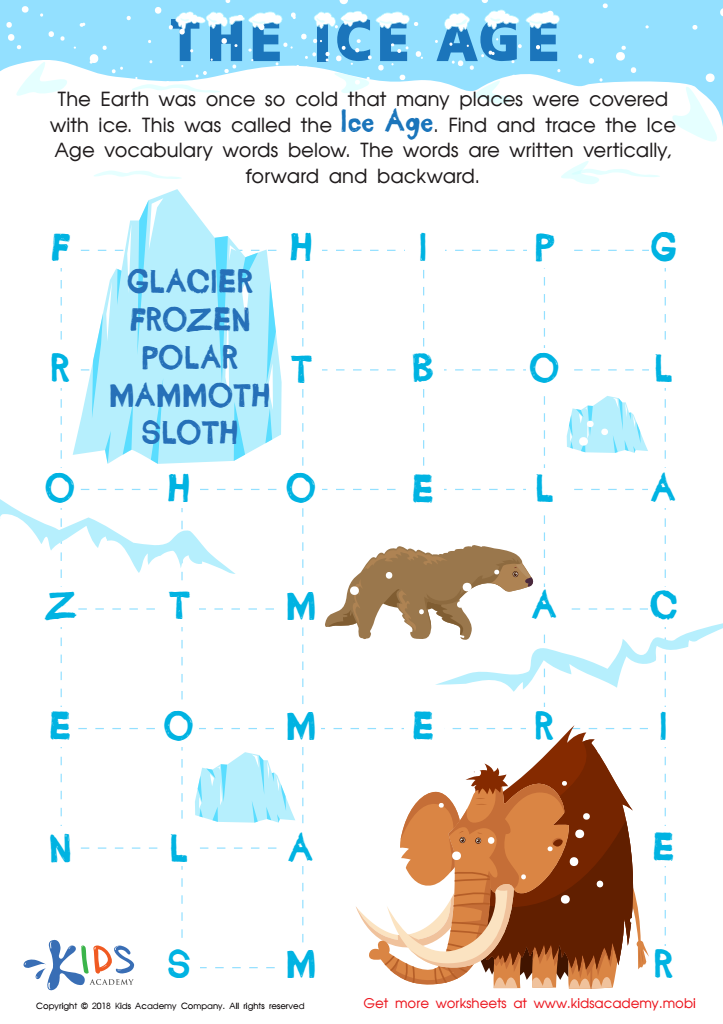
The Ice Age Worksheet
Let your child explore the Ice Age with this fun word search from Kids Academy! They can find words like glacier, frozen, polar, mammoth, and sloth. After finding each, discuss the meaning to help them build a better vocabulary and understanding of ancient history.
 Assign to My Students
The Ice Age Worksheet
Worksheet
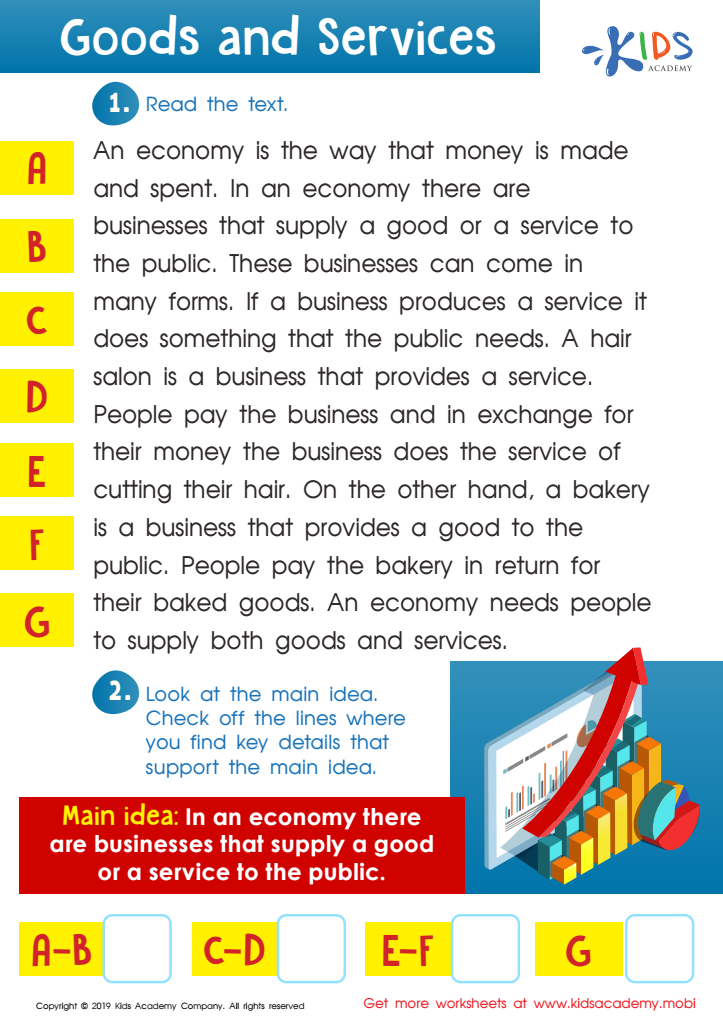
Goods and Services Worksheet
Teach your kids about the economy and businesses with this worksheet. Ask them if they know what goods and services are. After they complete the worksheet, they'll have a better understanding. Read the text to them and guide them step-by-step through the instructions. Help them learn!
Goods and Services Worksheet
Worksheet
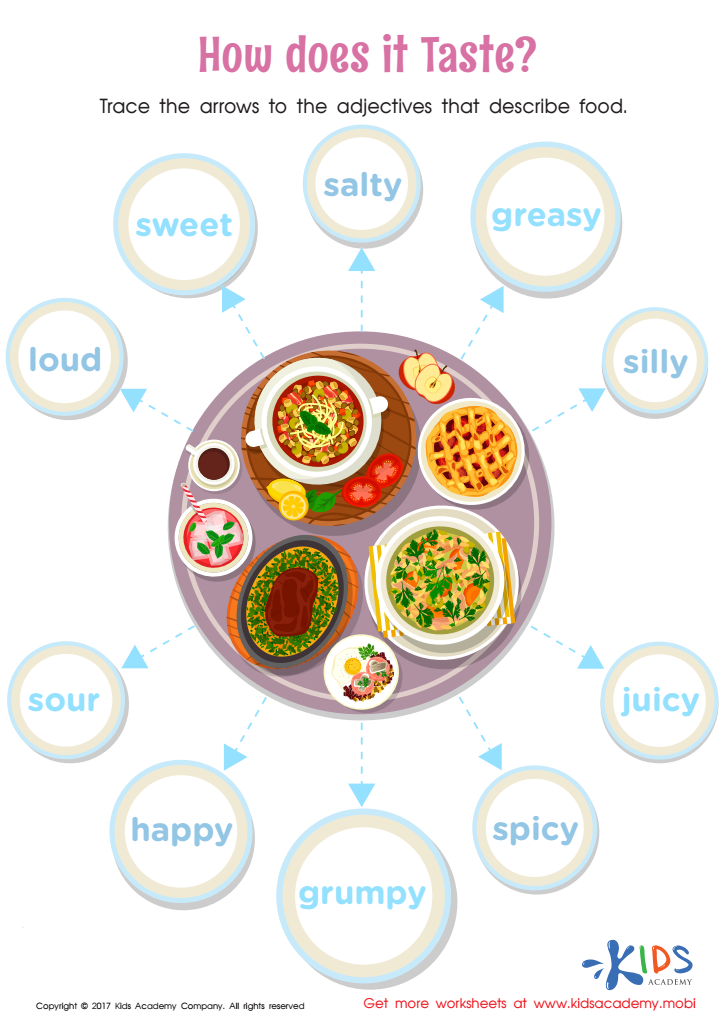
Food Adjectives Worksheet
Here’s a fun PDF worksheet to get your child’s taste buds tingling and help build descriptive language skills!
Food Adjectives Worksheet
Worksheet
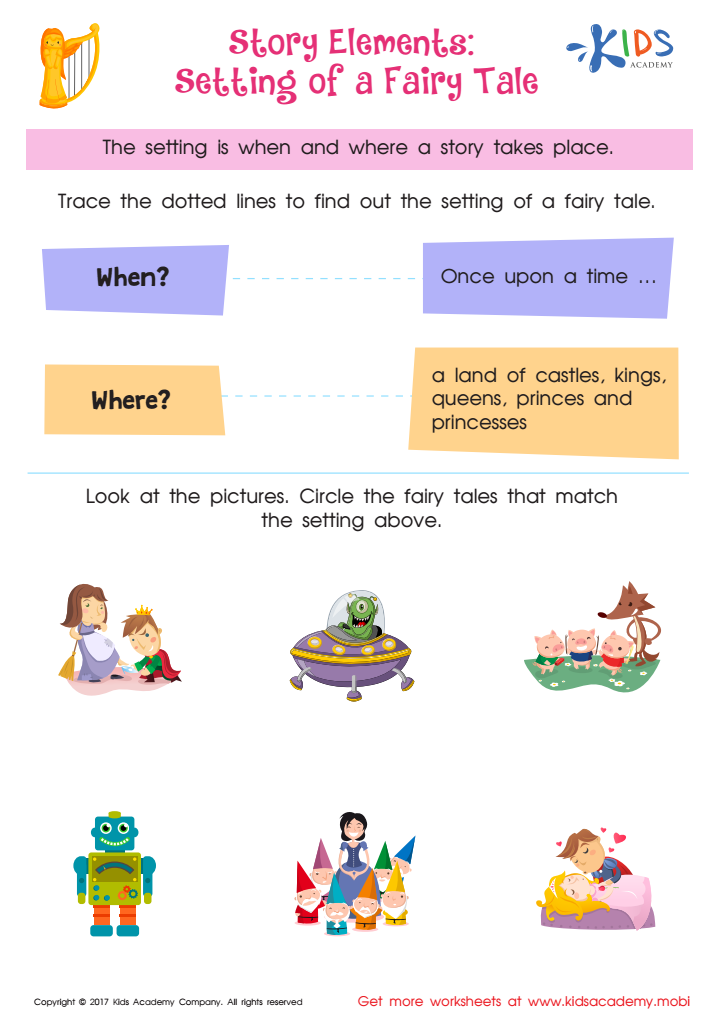
Story Elements: Setting of a Fairy Tale Printable
Help your child learn to analyze stories starting with setting. Use Story Elements worksheet to break down setting into two parts. This will help your child recognize setting quickly and understand its importance in the plot.
Story Elements: Setting of a Fairy Tale Printable
Worksheet
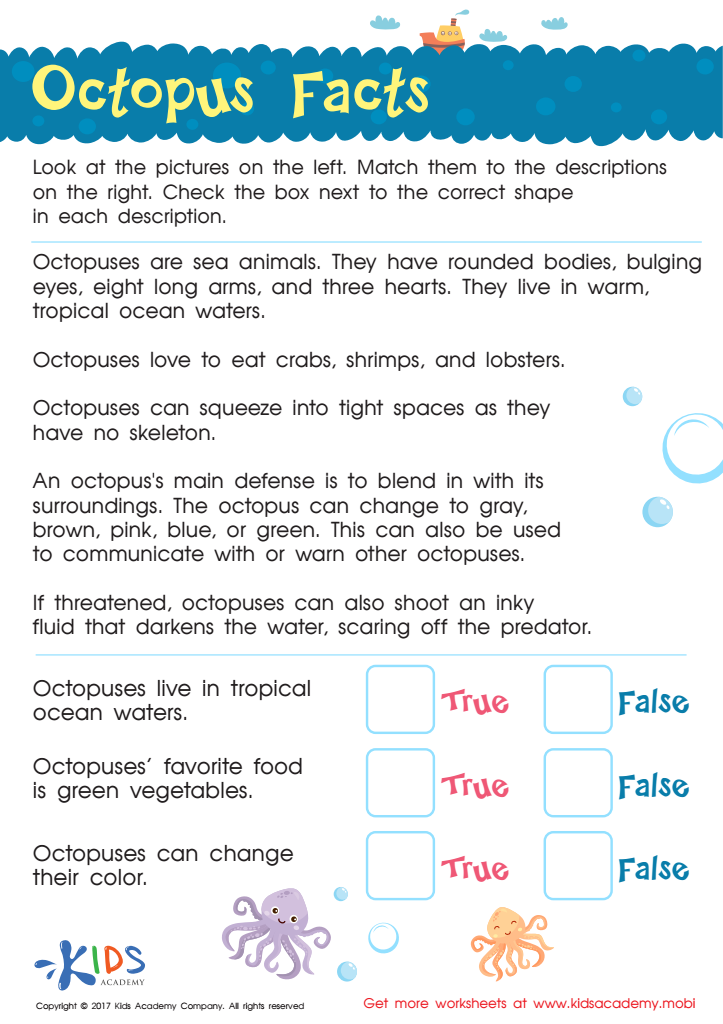
Octopus Facts Worksheet For Kids
Let your child dive into the world of octopuses with this fun worksheet. It offers invaluable practice in reading non-fiction texts, while they learn interesting facts about these strange sea creatures. It's a great way to help them hone their skills in reading comprehension.
Octopus Facts Worksheet For Kids
Worksheet
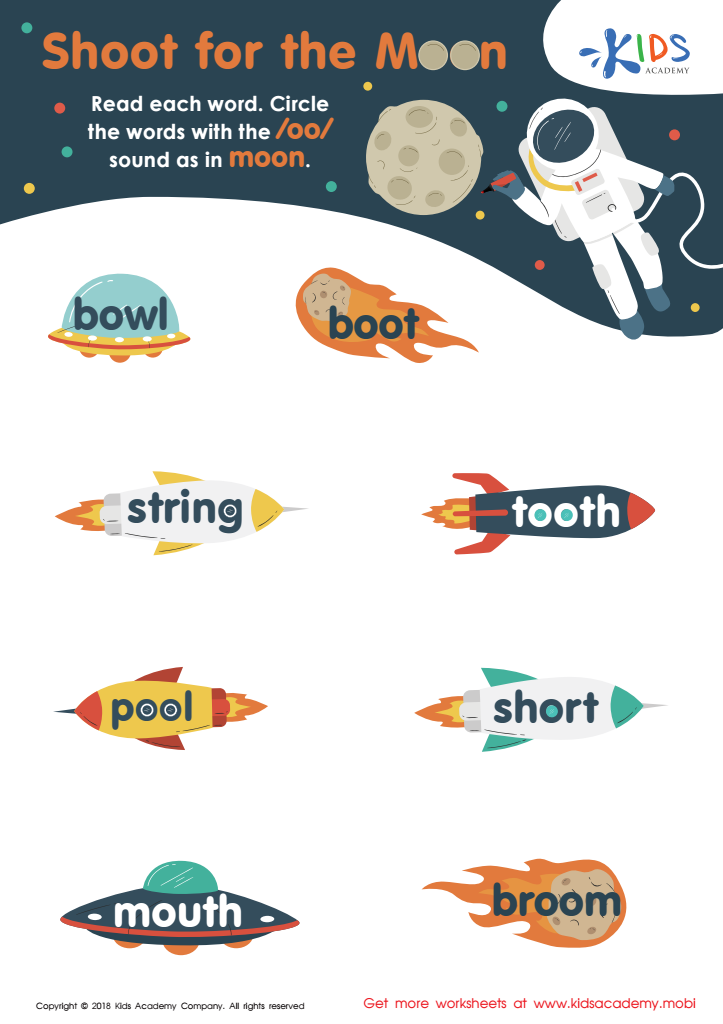
Reading: Shoot for the Moon Worksheet
Ask your kids if they can name any common words with the /oo/ sound. Read each word with them and help them pronounce it. Then, have them circle the words that have the /oo/ sound as in moon.
Reading: Shoot for the Moon Worksheet
Worksheet
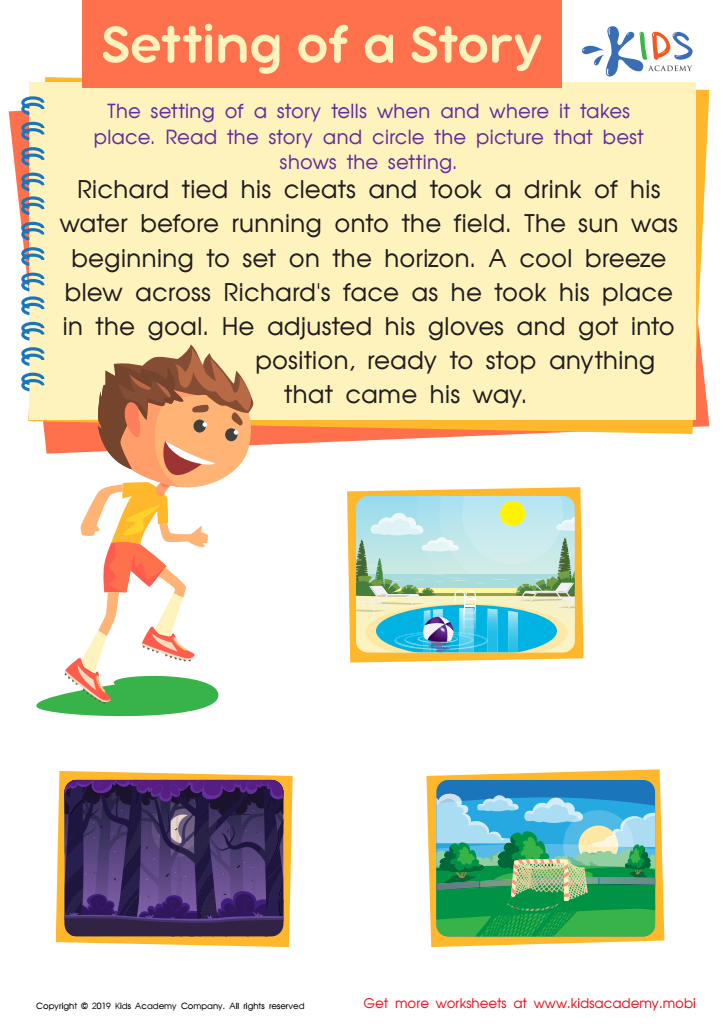
Setting of a Story Worksheet
You need characters, theme, POV, plot and setting to tell a good story. Ask your kids to explain them and use this worksheet with a story to teach them about setting. Read the story with your kids, then have them circle the picture that best shows the setting.
Setting of a Story Worksheet
Worksheet
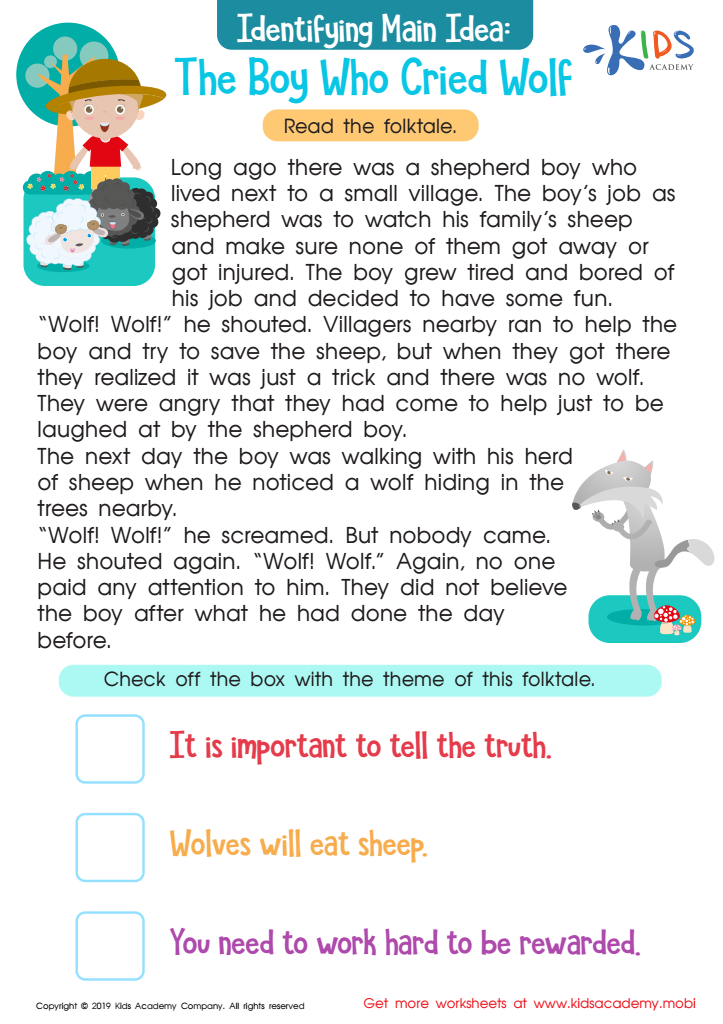
The Boy Who Cried Wolf Part 2 Worksheet
Kids love story time - no doubt they know their favorites! This worksheet tells a story with a theme or main idea. Read it carefully with your kids and ensure they understand every word. Then, help them answer the simple questions at the bottom of the page.
The Boy Who Cried Wolf Part 2 Worksheet
Worksheet
Join Kids Academy for Free
Who is primarily going to use this learning content?





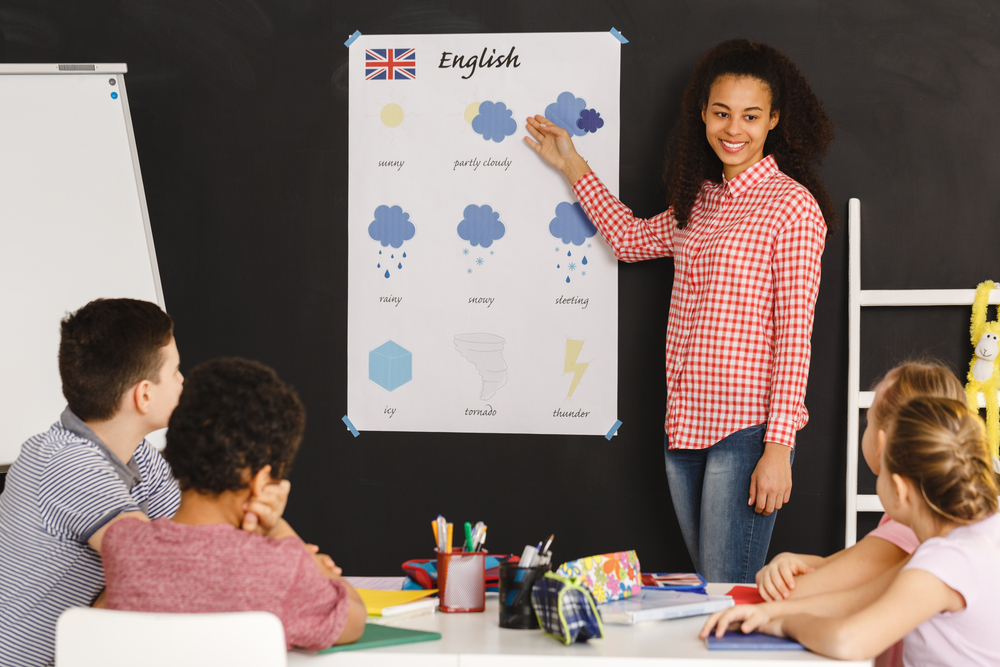


Critical thinking skills are pivotal for children aged 7-9 as they form the foundation for lifelong learning and problem-solving. During these formative years, students are transitioning from learning to read to reading to learn. Engaging in critical thinking while reading helps them understand the text beyond the surface level, fostering deep comprehension and the ability to make connections with their own experiences and other knowledge.
Encouraging critical thinking in reading tasks promotes cognitive development, empowering children to question, analyze, and evaluate information. This skill is essential in navigating a world overflowing with information, enabling them to discern facts from opinions and make informed decisions. Furthermore, these skills enhance academic success across subjects, as children who critically engage with reading material learn to absorb and reflect on content in subjects like science, history, and mathematics.
For parents and teachers, fostering critical thinking in reading cultivates curiosity and a love for learning. Children become active participants in their education, improving communication and reasoning skills. These abilities not only contribute to classroom success but also to future personal and professional growth.
Ultimately, instilling critical thinking skills at a young age sets the stage for adaptive, creative, and resilient thinkers equipped to face complex challenges with confidence.








