
Hand-eye Coordination Reading Worksheets for Ages 7-9
5 filtered results
Difficulty Level
Grade
Age
-
From - To
Subject
Activity
Standards
Enhance your child’s reading skills and hand-eye coordination with our engaging Hand-eye Coordination Reading Worksheets, designed for children ages 7-9. Our carefully crafted worksheets combine fun activities with educational content to improve both reading proficiency and motor skills. Each worksheet provides interactive exercises that challenge young minds while fostering essential coordination abilities crucial for their overall development. Perfect for home or classroom use, our downloadable and printable resources support a holistic learning experience that keeps children motivated. Visit our page to explore our handpicked selection of rigorously tested tools that meet educational standards while making learning enjoyable.
Favorites
With answer key
Interactive
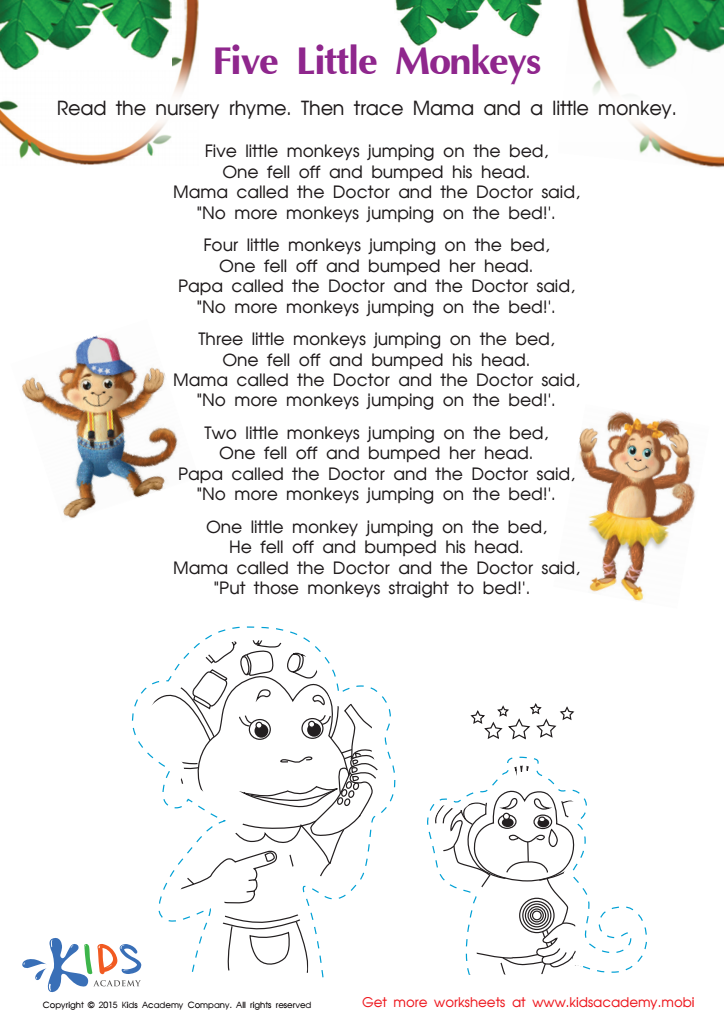
The Five Little Monkeys Nursery Rhyme Worksheet
Sing the beloved nursery rhyme "Five Little Monkeys" with your child, and add a finger play for extra fun! After a few times, encourage them to join in and fill the songs with laughter. Also, have fun coloring the worksheet featuring the monkeys and their Mama.
The Five Little Monkeys Nursery Rhyme Worksheet
Worksheet

Long and Short U Worksheet
Revised: Spice up your lesson on long and short vowels with this fun printout! Kids read the words "tube" and "tub," then reinforce the sound by coloring in the words and pictures. It's a great way to make phonics class enjoyable!
Download (PDF)
 Assign to My Students
Assign to My Students
Long and Short U Worksheet
Worksheet
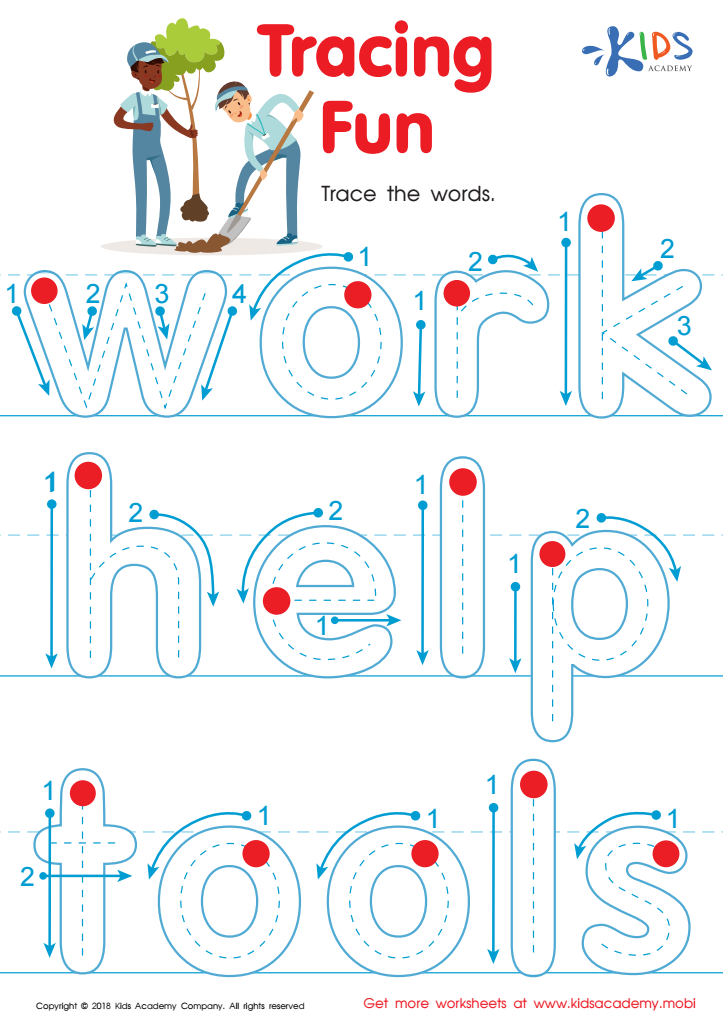
Tracing Fun Worksheet
Believe it or not, good handwriting helps with reading! Starting at the top left and writing legibly builds reading skills. This free worksheet helps little learners practice basic sight words. Red dots show them where to start and the words provide reinforcement without them realising. An enjoyable way to boost their reading and writing.
Tracing Fun Worksheet
Worksheet
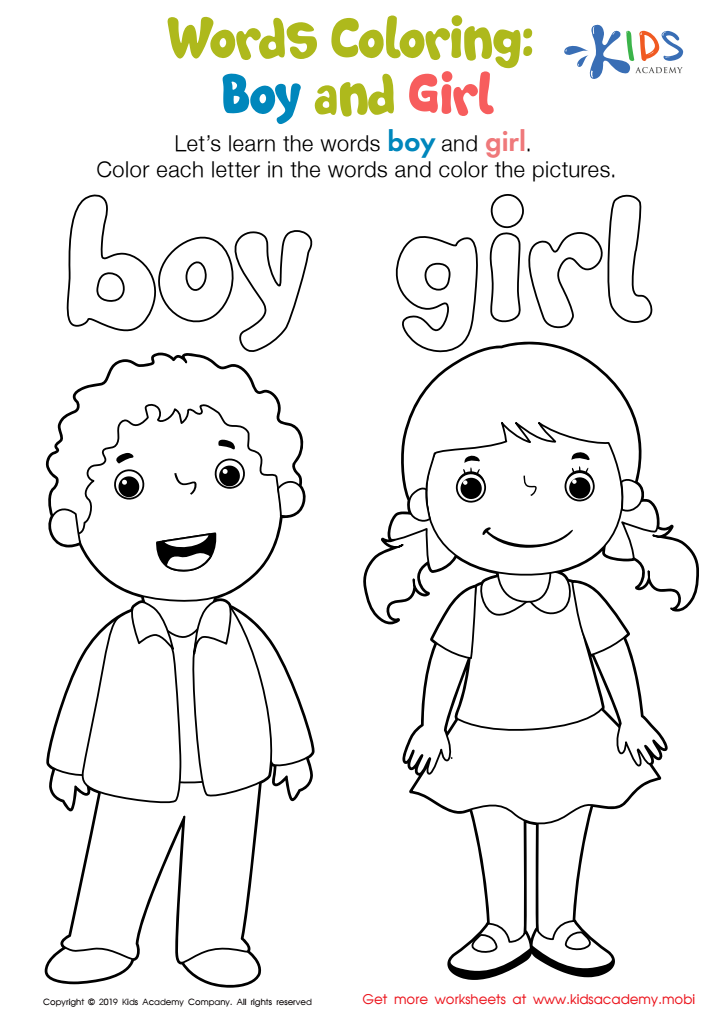
Boy and Girl Words Coloring Worksheet
Help your students build their sight word vocabulary! Early readers may not be able to sound out all words, so this worksheet teaches them to read two important sight words: boy and girl. They will color the letters and a picture of each, making it a fun and educational way to learn. Download the PDF now.
Download (PDF)
Assign to My Students
Assign to My Students
Boy and Girl Words Coloring Worksheet
Worksheet
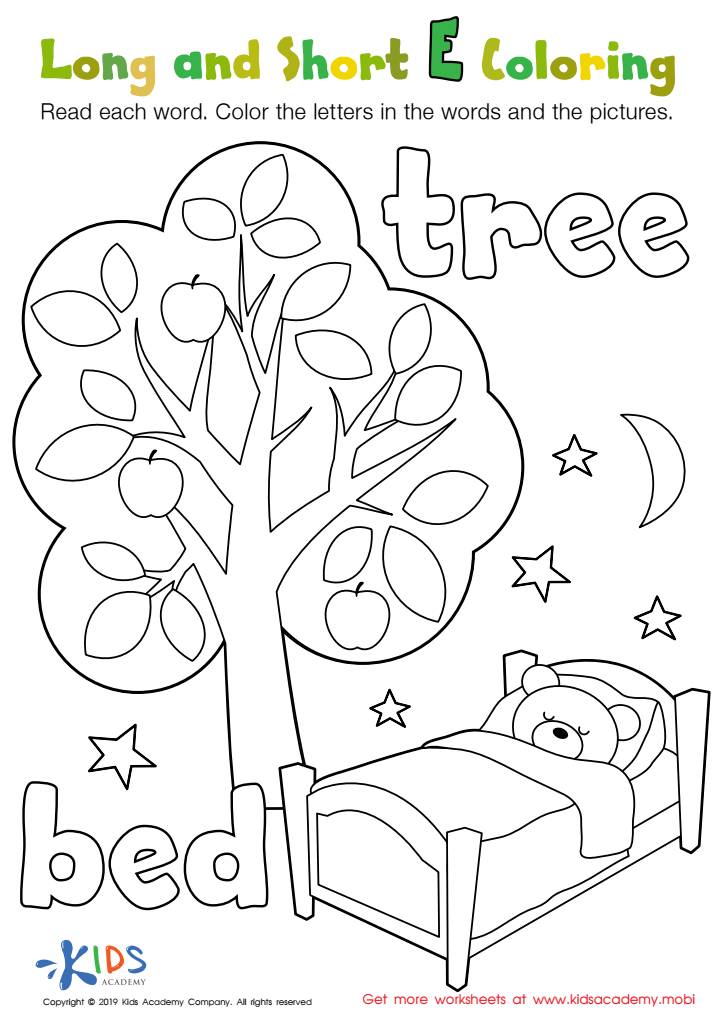
Long and Short E Worksheet
This fun printout makes learning phonics enjoyable for Grade 3 students. Get them to read the words “tree” and “bed” to recognize the different sounds of the letter “E”. After hearing the words they can color the words and the pictures to understand differences between long and short vowels.
Download (PDF)
Assign to My Students
Assign to My Students
Long and Short E Worksheet
Worksheet
Join Kids Academy for Free
Who is primarily going to use this learning content?








Hand-eye coordination is a crucial developmental skill for children, and fostering it through activities like reading is essential, especially for ages 7-9. This period marks a significant phase in a child’s growth, both academically and physically. Improving hand-eye coordination at this stage enhances their ability to efficiently control their eye movements with hand motions, which is key in numerous daily tasks and learning processes.
For academic excellence, this skill is vital. Reading itself demands the coordination of eye movement across texts fluently, understanding storied content, and decoding complex words, while hands may be involved in tracking sentences with a finger or turning pages smoothly. Effective hand-eye coordination enables children to read more fluidly, comprehend better, and ultimately perform better in all subjects, boosting their confidence.
Additionally, good hand-eye coordination benefits physical activities such as writing, drawing, and participating in sports, contributing to overall cognitive development and fine motor skills. It also helps in the development of spatial awareness and increases a child’s ability to follow instructions, thus promoting discipline.
Furthermore, fostering this skill can lay a foundational base for technology use, as devices often require coordinated multitasking of the eyes and hands. This broad-based development makes hand-eye coordination a priority for parents and teachers supporting children’s growth between ages 7-9.








