
Rhyme recognition Reading Worksheets for Ages 7-9
5 filtered results
Difficulty Level
Grade
Age
-
From - To
Subject
Activity
Standards
Discover our engaging Rhyme Recognition Reading Worksheets, specially designed for children ages 7-9! These interactive resources will help young learners sharpen their phonemic awareness and reading skills while having fun. Through varied activities like word matching, fill-in-the-blanks, and rhyming games, students will develop a solid understanding of rhymes and improve their comprehension. Each worksheet is crafted to reinforce literacy skills in an enjoyable and relatable way, ensuring that your child becomes a confident reader. Ideal for homeschooling or classroom use, our worksheets are easy to print and integrate into any learning environment. Explore our collection and make reading a joy!
Favorites
With answer key
Interactive
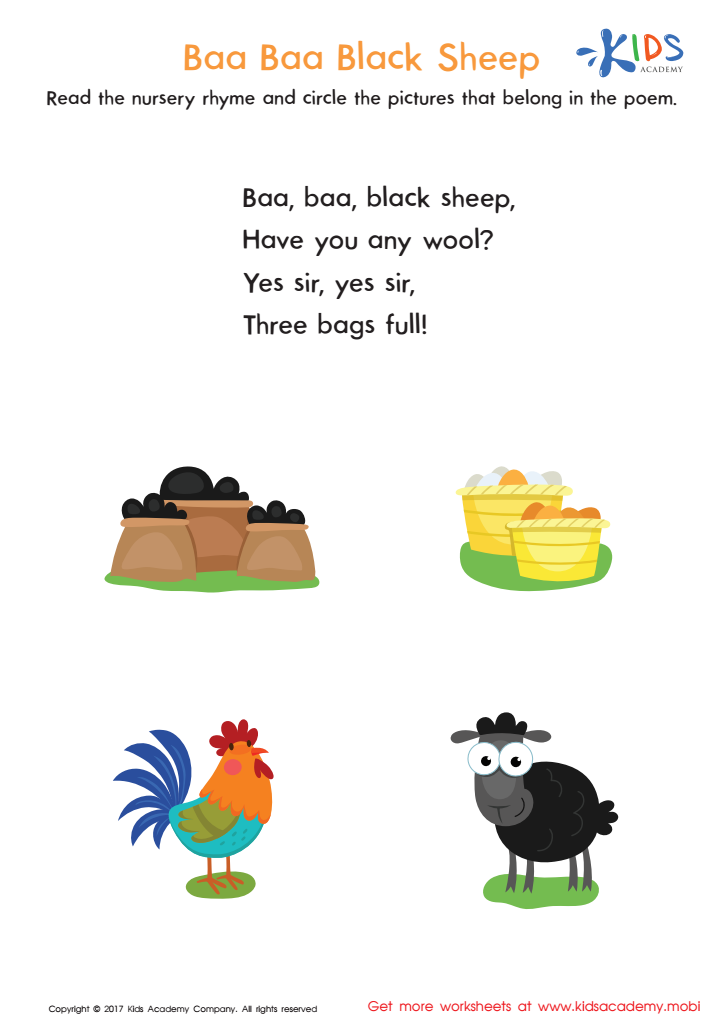
Baa Baa Black Sheep Printable
Jumpstart your child's reading skills with this printable Baa Baa Black Sheep worksheet! Recite the lines with them, then have them select the pictures associated with the poem to test comprehension. Fun and educational!
 Assign to My Students
Baa Baa Black Sheep Printable
Worksheet
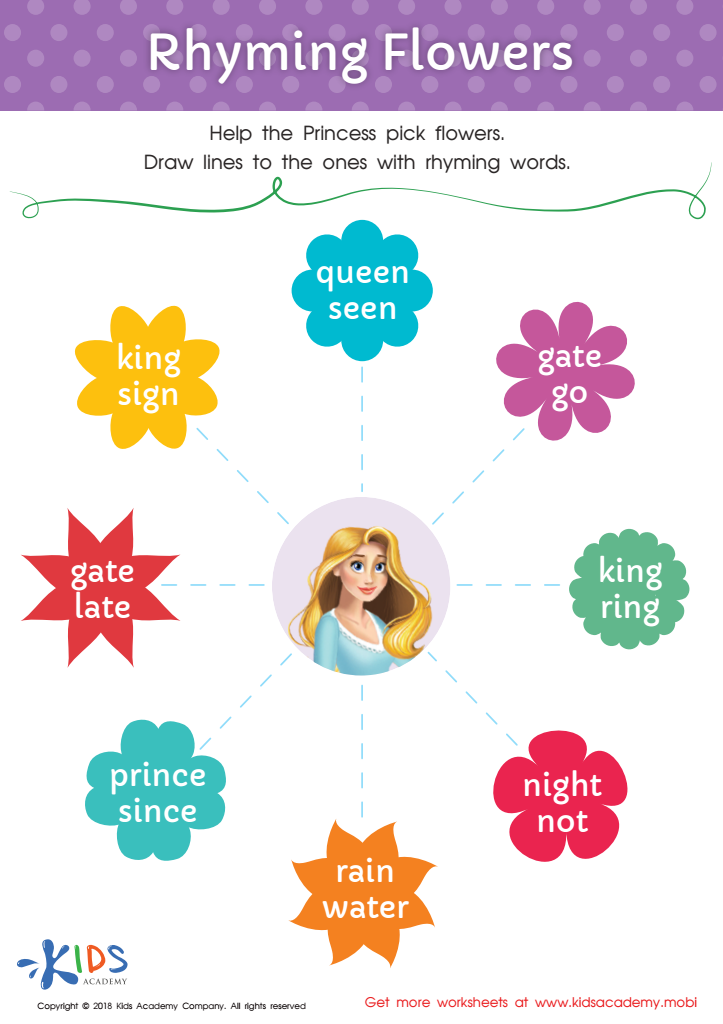
Rhyming Flowers Worksheet
Recognizing rhyming words boosts phonological awareness. With this skill, students can identify similar sounds in words and predict new words more accurately. This worksheet provides practice and is ideal for the reading classroom. Download and find the rhyming words! (80 words)
Rhyming Flowers Worksheet
Worksheet
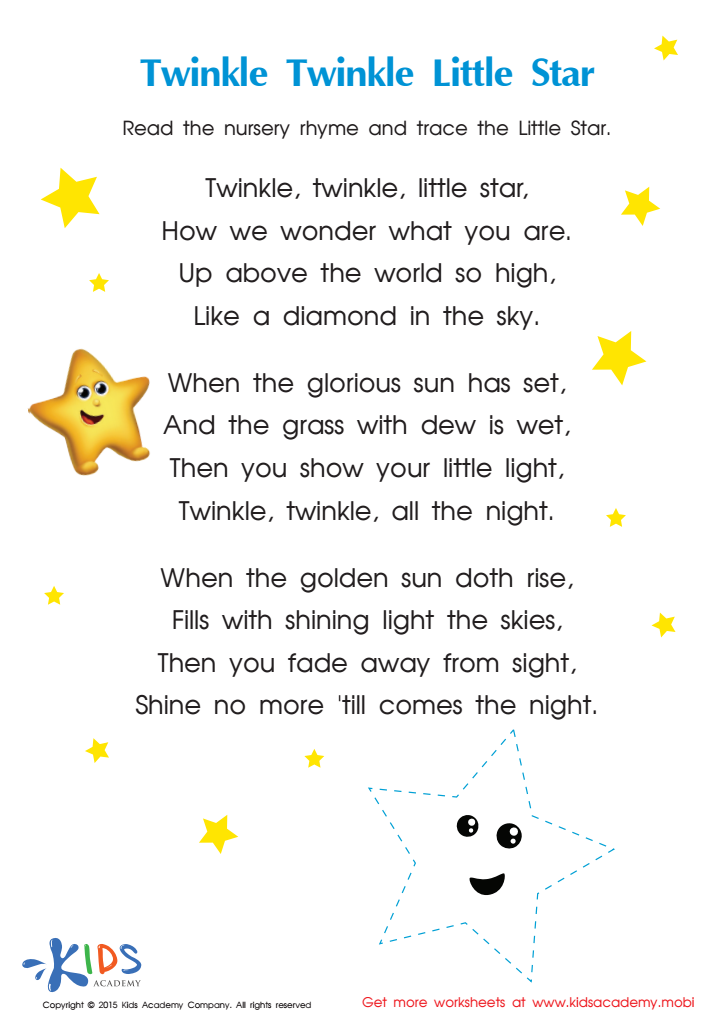
Nursery Rhymes: Twinkle Little Star Worksheet
Introduce your kindergartener to nursery rhymes using this printable worksheet. Sing Twinkle Little Star with your child and incorporate some simple actions. Even as a lullaby, it's a great way to teach letters and counting - have your child find and count all the letter 'S's in the song. For extra fun, try the Twinkle Little Star coloring page.
Nursery Rhymes: Twinkle Little Star Worksheet
Worksheet
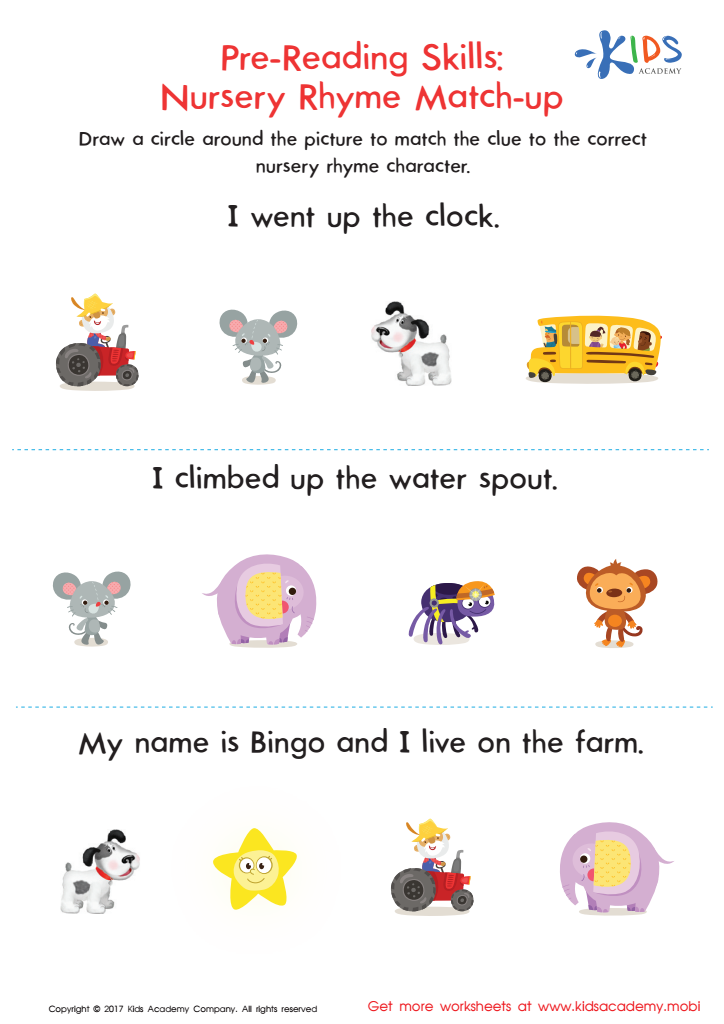
Nursery Rhyme Match–Up Worksheet
This worksheet helps kids build pre-reading skills using stories they know and love! By connecting with prior knowledge, kids can develop ideas about characters and set the stage for reading strategies.
Nursery Rhyme Match–Up Worksheet
Worksheet
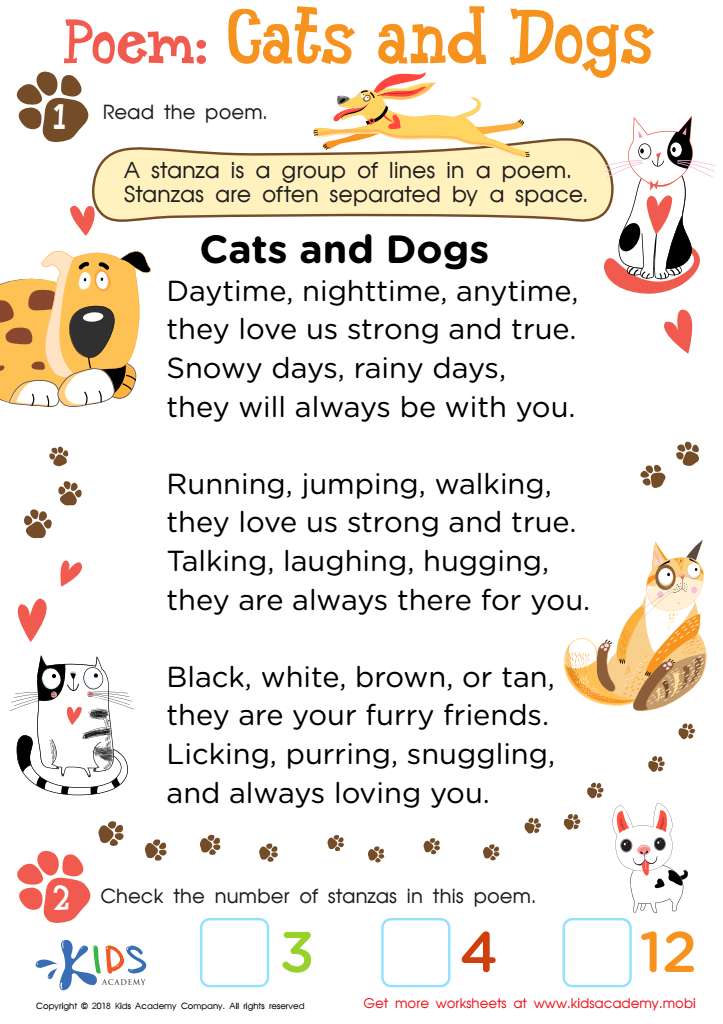
Poem: Cats and Dogs Worksheet
Read the poem to your child and point out where each stanza ends. Ask if they know what a stanza is (if not, explain it's a group of lines in a poem). Help them answer the question at the bottom of the printout. This simple, sweet poem about cats is easy for your child to relate to.
Poem: Cats and Dogs Worksheet
Worksheet
Join Kids Academy for Free
Who is primarily going to use this learning content?








Rhyme recognition is a crucial skill in early literacy development for children aged 7-9, offering a range of benefits that parents and teachers should prioritize. At this age, children are transitioning from learning to read to reading to learn; hence, a strong foundation in phonemic awareness, including rhyme recognition, enhances their reading fluency and comprehension.
When children recognize rhymes, they become more attuned to the sounds in words, which aids in decoding unfamiliar words and promotes vocabulary expansion. Rhyme recognition also fosters spelling skills by helping children understand phonetic patterns. Engaging with rhyming texts cultivates a love for language and reading, making literacy an enjoyable experience rather than a chore.
Moreover, rhyming activities can support social and emotional development. Singing songs, reciting nursery rhymes, or participating in playful rhyming games can strengthen bonds between parents and children, as well as between peers in a classroom setting. These interactions also encourage creativity and critical thinking as children play with language. Ultimately, rhyme recognition lays the groundwork for future reading and writing success, making it an essential focus for both parents and educators in fostering lifelong learners.








