
Shape identification Reading Worksheets for Ages 7-9
3 filtered results
Difficulty Level
Grade
Age
-
From - To
Subject
Activity
Standards
Explore our engaging Shape Identification Reading Worksheets designed specifically for children aged 7-9. These worksheets provide a fun and interactive way for young learners to enhance their reading and shape recognition skills. Each activity features vibrant visuals that captivate attention while fostering cognitive development. Students will enjoy identifying various shapes through informative texts and related exercises, reinforcing essential literacy and critical thinking skills. Ideal for both classroom settings and at-home learning, these worksheets help build a solid foundation for future reading success. Visit our website to download these resources and support your child's learning journey through the world of shapes!
Favorites
With answer key
Interactive
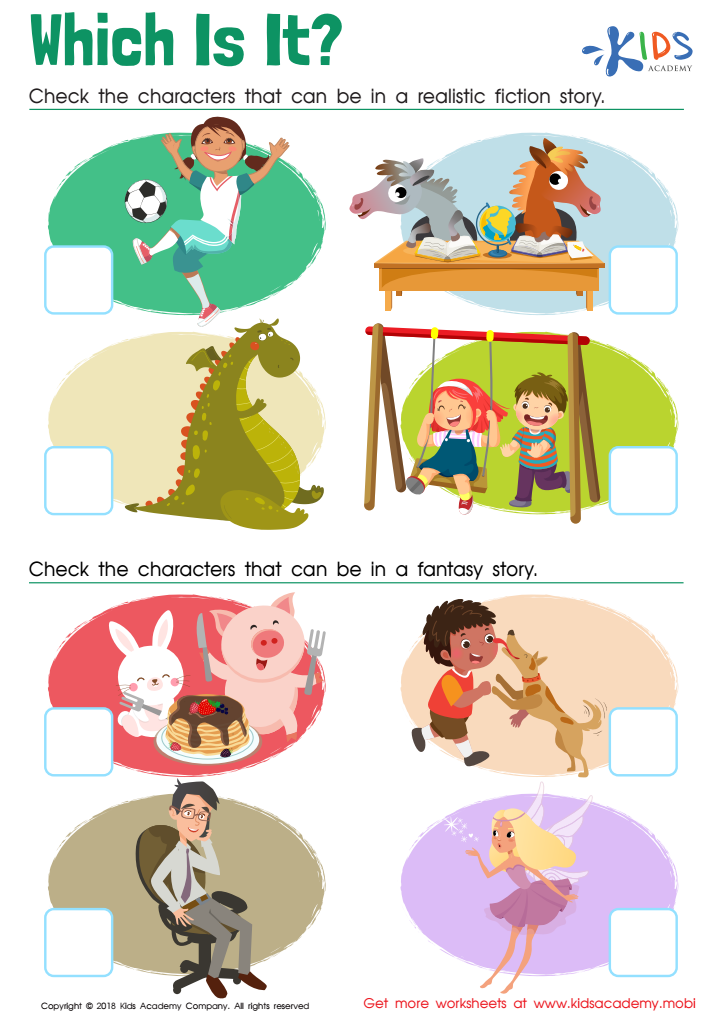
Which Is It? Worksheet
This colorful worksheet helps young readers identify elements of fact and fiction using fun picture clues. They can check off characters who exist in realistic fiction stories, which makes learning the difference between the two genres fun and engaging.
 Assign to My Students
Which Is It? Worksheet
Worksheet
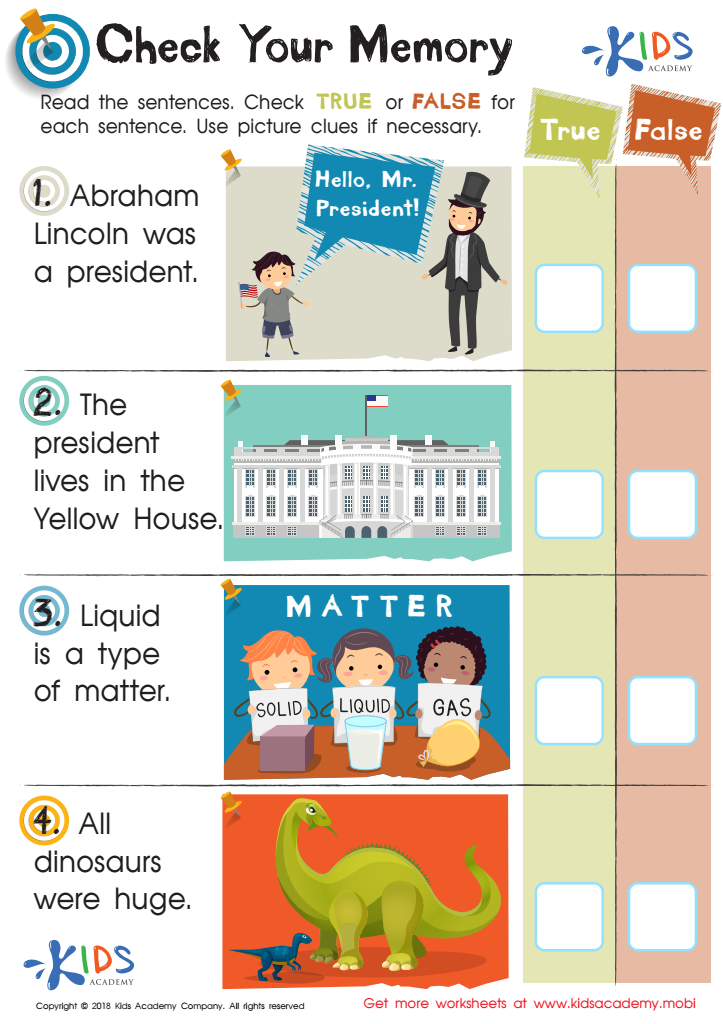
Check Memory Worksheet
Assisting your kids with their homework and using worksheets is a great way for them to learn. The vibrant visuals in this printout can help stimulate the mind and motivate your child. Have them read the sentences and then point to the associated images. Afterwards, ask them to state True or False for each sentence. If they are still uncertain, offer them the picture clues to assist further.
Check Memory Worksheet
Worksheet
Join Kids Academy for Free
Who is primarily going to use this learning content?








Shape identification plays a crucial role in the cognitive development of children aged 7-9, making it essential for parents and teachers to prioritize this skill. At this age, children build a foundation for advanced math concepts, such as geometry, measurement, and spatial reasoning. Recognizing shapes enhances their problem-solving abilities and logical thinking, which are vital for academic success.
Furthermore, shape identification nurtures creativity, as children learn to visualize and manipulate objects in their minds. This skill fosters confidence in expressing ideas through art and design, encouraging exploration and innovation. As shape recognition ties into literacy, it can be integrated into reading activities, where stories might involve shapes as characters or focal points, reinforcing their importance in both areas.
Additionally, understanding shapes aids children in real-world applications, such as navigating their environment or understanding structures around them. It empowers them to make sense of their surroundings, contributing to their overall learning experience.
For parents and teachers, emphasizing shape identification not only supports academic achievement but also enriches children's social and emotional development. Engaging in fun, interactive learning experiences related to shapes can foster stronger parent-child and teacher-student bonds, ultimately promoting a love of learning.








