Shape Recognition Reading Worksheets for Ages 7-9
7 filtered results
-
From - To
Unlock the world of learning with our "Shape Recognition Reading Worksheets for Ages 7-9." Tailored to engage young minds, these worksheets blend fun with education, enhancing kids' ability to recognize and read various shapes. Perfect for developing critical thinking and spatial awareness, our comprehensive collection supports early reading skills while keeping children captivated through playful activities. Ideal for both classroom use and extra practice at home, these worksheets equip kids with the tools they need to excel in reading and geometry. Explore our unique approach to shape recognition and help your child build a solid academic foundation today.
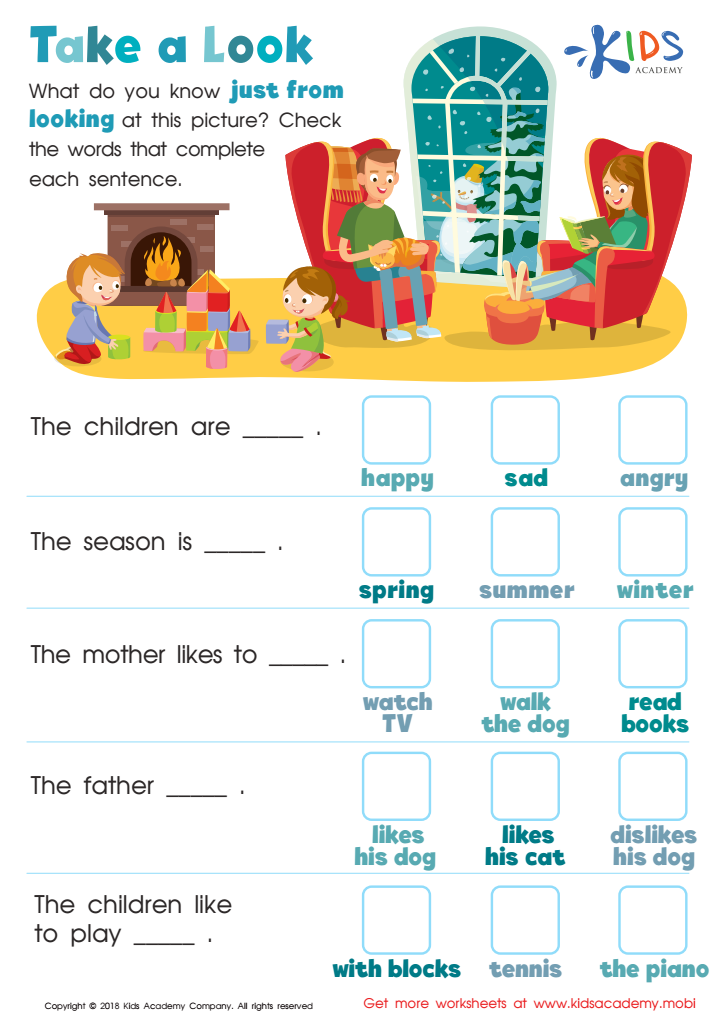
Take a Look - Part 1 Worksheet
 Assign to My Students
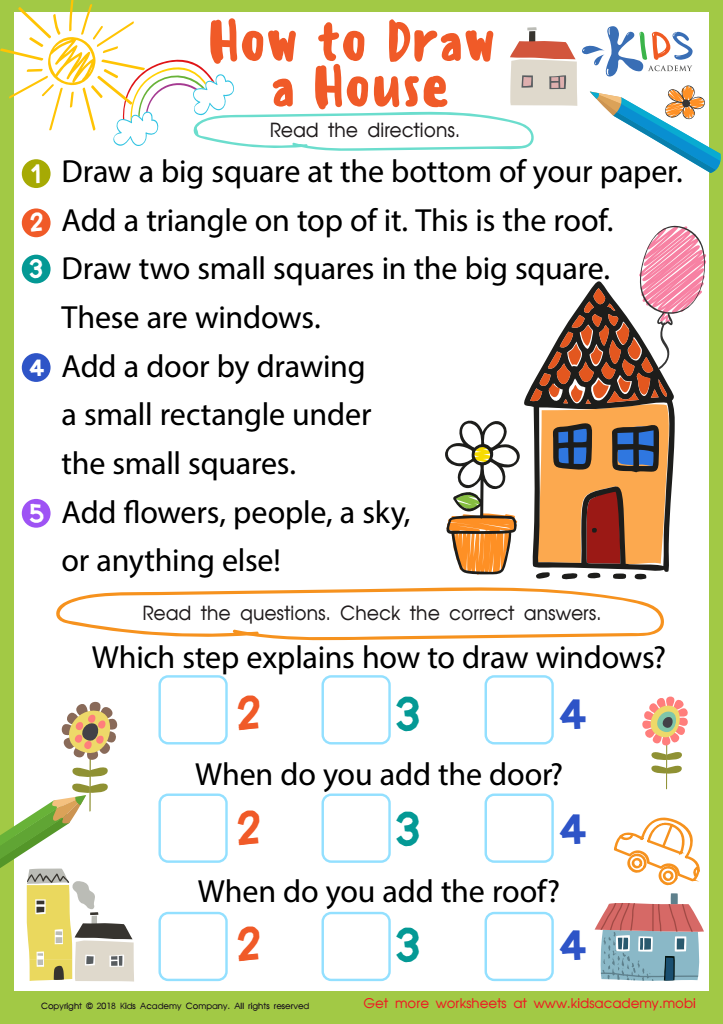
How to Draw House Worksheet








Shape recognition is a crucial developmental skill for children aged 7-9. This age range often marks a meaningful transition in cognitive growth and academic responsibilities, making the ability for children to identify and understand shapes fundamentally significant.
Firstly, shape recognition supports early math skills. When children learn to identify and differentiate between shapes, they develop the foundational understanding necessary for geometry and various aspects of both basic and advanced math. Recognizing patterns, understanding symmetry, and spatial awareness all spring from shape recognition.
Secondly, literacy skills also benefit. Words and letters have shapes and being able to distinguish one shape from another helps in decoding unfamiliar words, improving reading fluency and comprehension. This skill grows into the ability to write legibly by recognizing the proper shapes of letters and numbers.
Moreover, shape recognition aids in categorization and data handling, which are important cognitive skills essential for problem-solving and logical thinking. Children become more adept at seeing the relationships between different objects, boosting their general cognitive development.
Lastly, incorporating shape recognition into education can be a fun and engaging way for children to learn, further fostering a love of learning. Activities such as drawing, block building, and interactive games heavily rely on shape recognition, making learning both enjoyable and impactful.
Ensuring that children acquire strong shape recognition skills equips them with essential tools for academic success and holistic cognitive development.








