Understanding life cycles Reading Worksheets for Ages 7-9
3 filtered results
-
From - To
Unlock the wonders of life cycles with our engaging reading worksheets designed for children ages 7-9. These worksheets provide an interactive way for young learners to explore the fascinating processes of growth and development in various organisms, from plants to animals. Each activity fosters reading comprehension skills through thoughtfully crafted content that encourages critical thinking and vocabulary expansion. Ideal for enhancing not only literacy skills but also a child's understanding of biology, these worksheets make learning fun and accessible. Incorporate these resources into your lesson plans and watch your students thrive as they discover the beauty of life and its cycles!
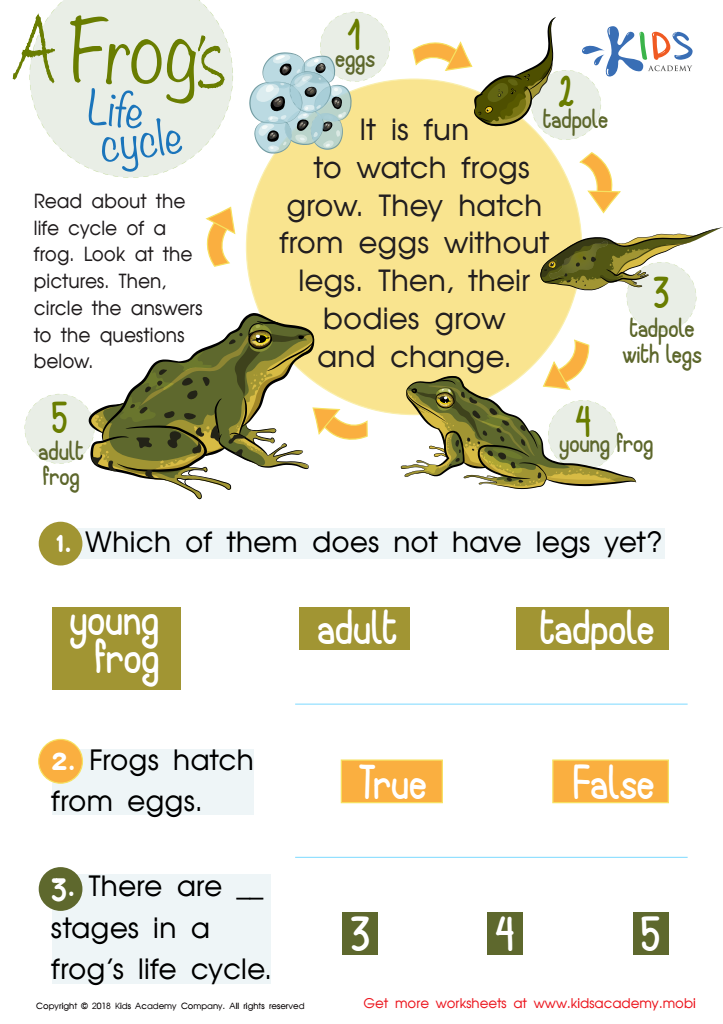
A Frog’s Life Cycle Worksheet
 Assign to My Students
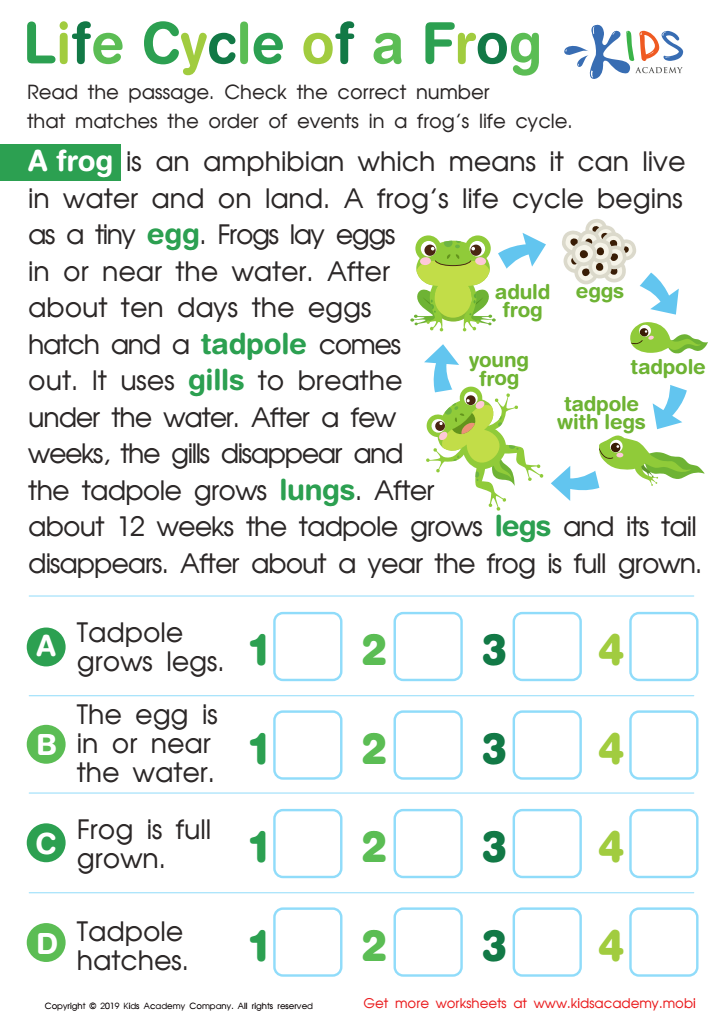
Life Cycle of a Frog Worksheet
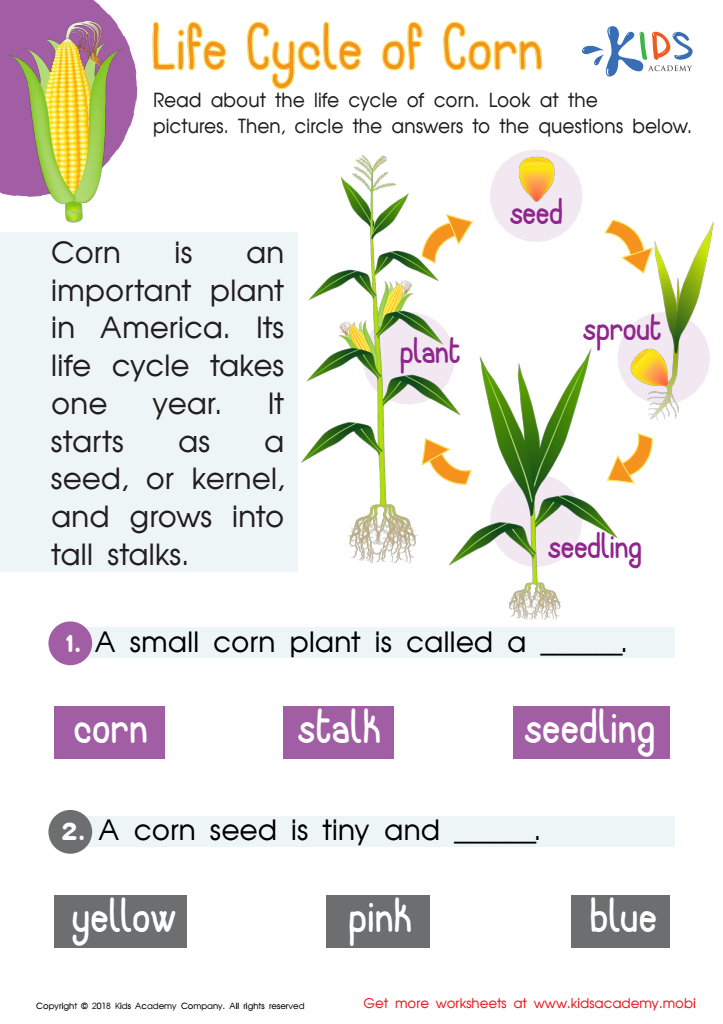
Life Cycle of Corn Worksheet






Understanding life cycles is crucial for children aged 7 to 9 as it fosters both scientific literacy and an appreciation for the natural world. At this age, children are naturally curious about their surroundings, and studying life cycles allows them to explore concepts such as growth, change, and interdependence within ecosystems.
Learning about life cycles inspires a sense of wonder and nurtures critical thinking skills. Children can engage in observation, experimentation, and inquiry, promoting a hands-on approach to science. This age is ideal for introducing complex ideas in an accessible way, using fun narratives and relatable examples, such as the lifecycle of butterflies or frogs.
Furthermore, understanding life cycles enhances children's reading comprehension and vocabulary. As they encounter various species’ life journeys in narrative texts, they develop key literacy skills, including making connections, predicting outcomes, and summarizing information.
Lastly, this knowledge encourages responsibility and empathy towards living things, reinforcing the importance of conservation and respect for nature. When parents and teachers prioritize understanding life cycles, they equip children with essential life skills, both academically and personally, paving the way for informed, caring future stewards of the environment.








