Understanding perspectives Reading Worksheets for Ages 7-9
3 filtered results
-
From - To
Our "Understanding Perspectives Reading Worksheets for Ages 7-9" offer an engaging and educational way to enhance young readers' skills. These worksheets are designed to foster critical thinking and empathy by exploring different viewpoints within texts. Through a variety of exercises, children will practice identifying and understanding different perspectives, improving their comprehension and analytical abilities. Fun and interactive, these worksheets are ideal for classroom use or at-home learning, helping kids to confidently navigate the nuances of communication. Perfect for ages 7-9, they align with core learning standards and support the development of key reading skills.
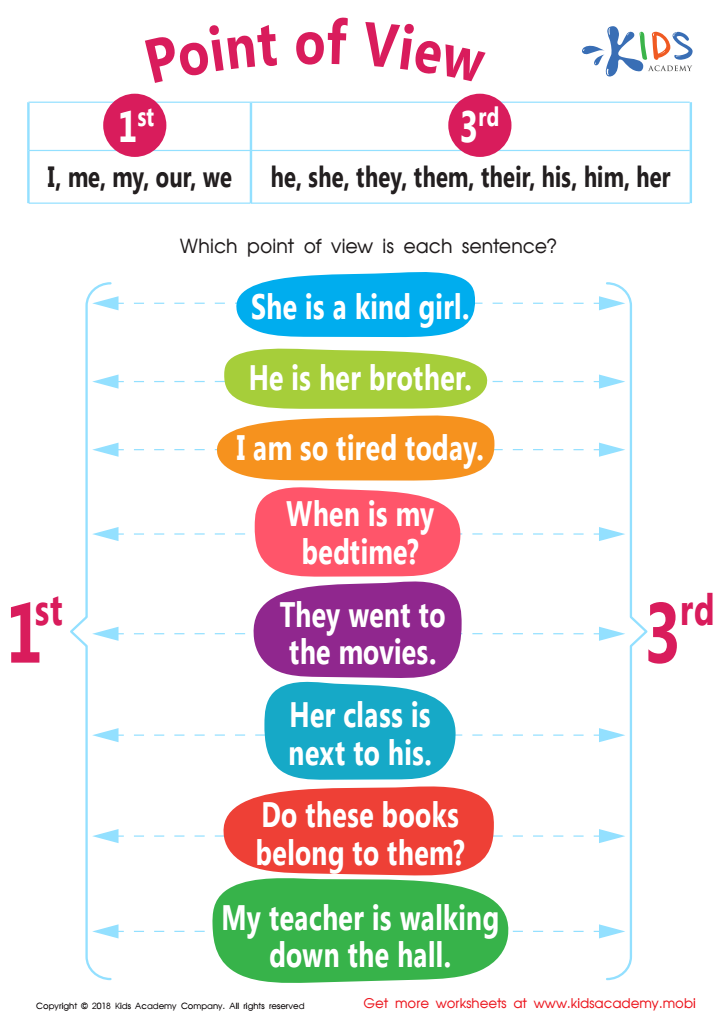
Point of View Worksheet
 Assign to My Students
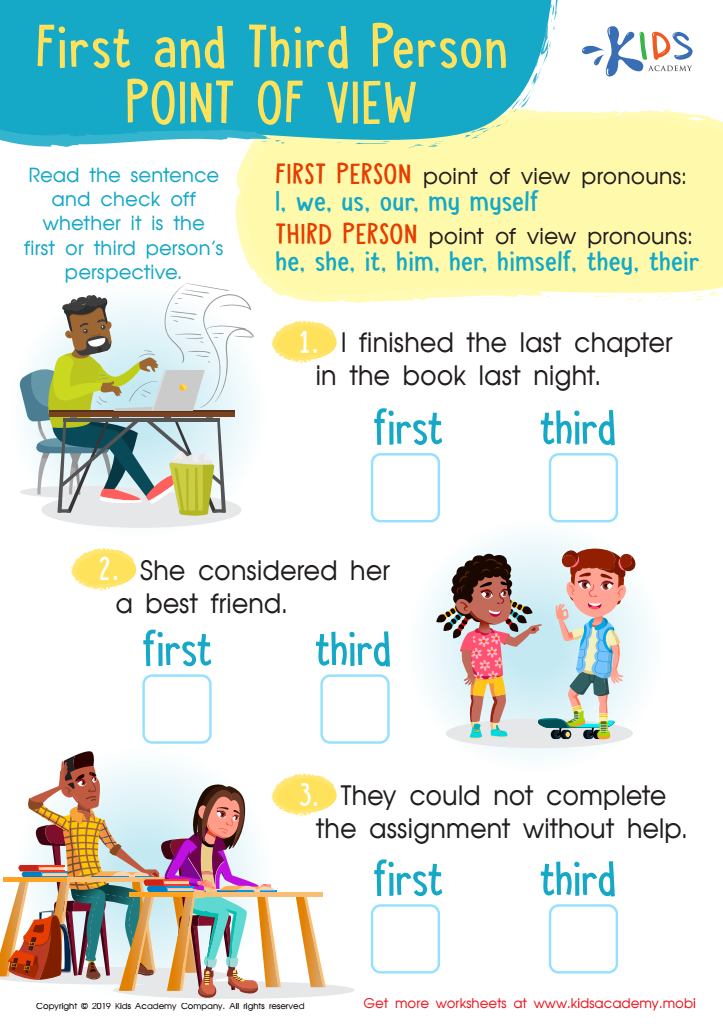
First and Third Person Point of View Worksheet
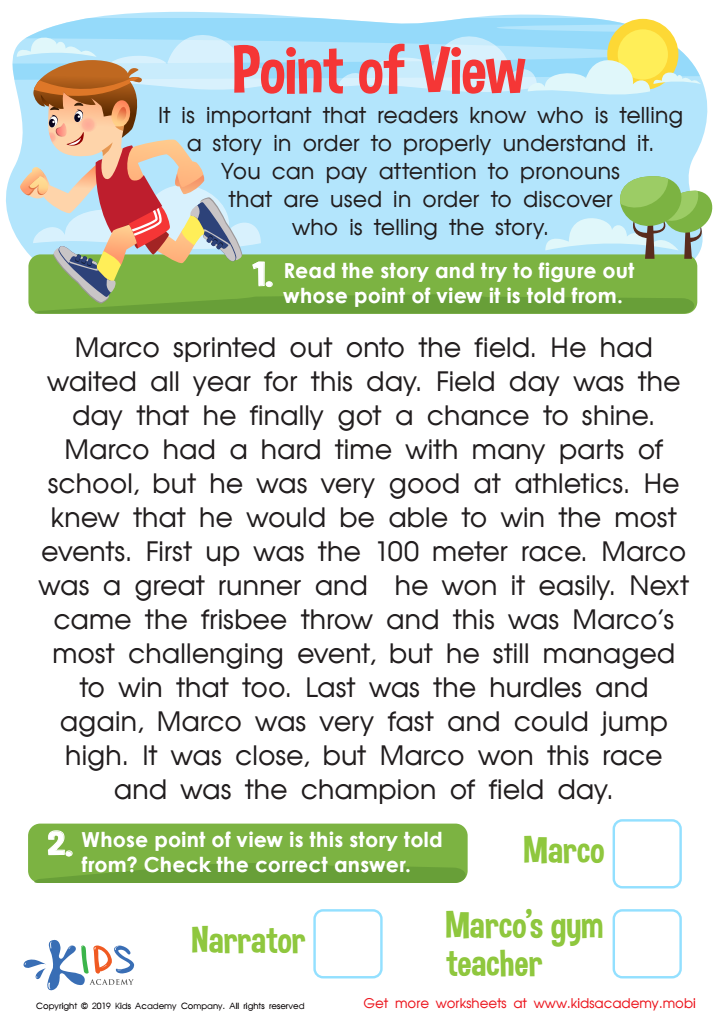
Point of View Worksheet








Understanding different perspectives in reading is crucial for children aged 7-9 as it fuels their cognitive and emotional development. At this age, kids are starting to move beyond basic comprehension and beginning to think critically about what they read. When children learn to see things from another’s point of view, they develop empathy, tolerance, and social skills that are essential for healthy interactions both in and out of the classroom.
For parents and teachers, fostering this capability helps in nurturing well-rounded, intuitive young minds. When kids understand different perspectives, they learn to appreciate diversity and are better prepared to address conflicts respectfully. This skill transcends beyond reading and helps them build stronger relationships.
From an educational standpoint, comprehending various perspectives enhances analytical thinking and boosts academic performance. It helps children approach problems creatively, considering multiple angles before arriving at solutions. Activities like discussing characters’ feelings, predicting outcomes, and comparing viewpoints cultivate open-mindedness and critical reasoning.
Implementing programs or exercises that encourage perspective-taking will not only enrich reading experiences but also equip children with vital life skills. Early intervention sets a foundation for future social and academic success, making it imperative for parents and teachers to invest time and energy into nurturing this understanding in young readers.








