
Number Recognition Reading Comprehension Worksheets for Ages 7-9
4 filtered results
Difficulty Level
Grade
Age
-
From - To
Subject
Activity
Standards
Enhance your child’s reading comprehension and number recognition skills with our engaging worksheets designed for ages 7-9. These printable resources combine fun activities with educational content, helping young learners identify and understand numbers while improving their reading abilities. Each worksheet features colorful illustrations and engaging text that motivate children to practice essential skills in a playful manner. With a variety of exercises tailored to different learning styles, you can support your child's growth in literacy and mathematics. Perfect for at-home use or classroom activities, these worksheets are an excellent tool to foster a love for learning in your child!
Favorites
With answer key
Interactive
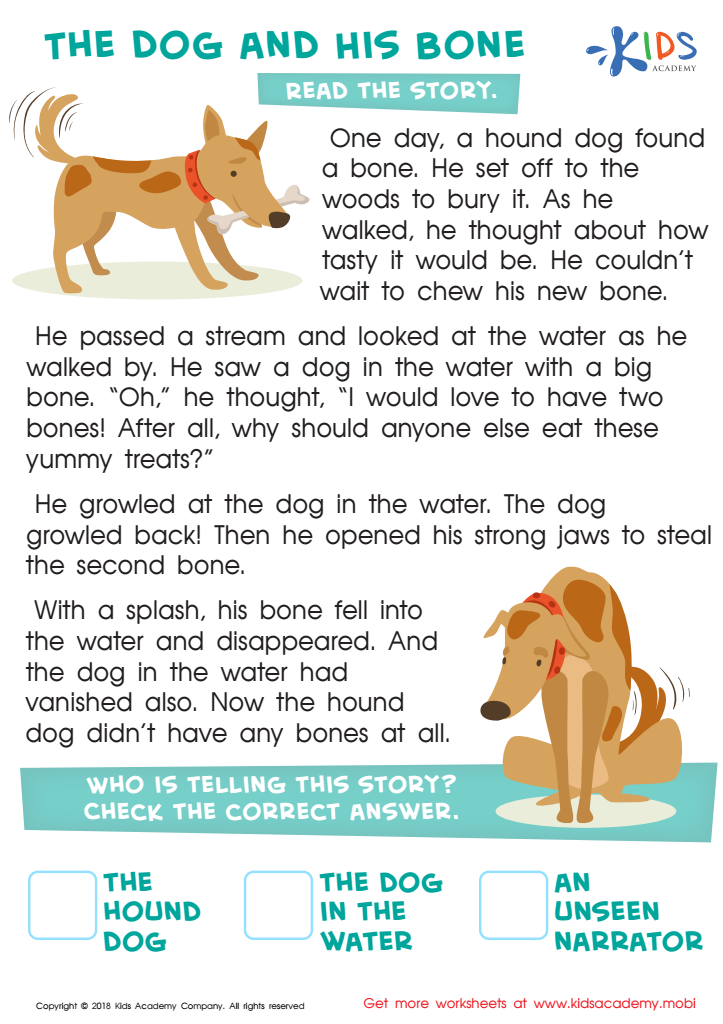
The Dog and His Bone Worksheet
Read the story of The Dog and His Bone to your kids, making sure they take in the details. Ask them the questions in this worksheet and help them check the answers. Encourage them to think carefully.
 Assign to My Students
The Dog and His Bone Worksheet
Worksheet
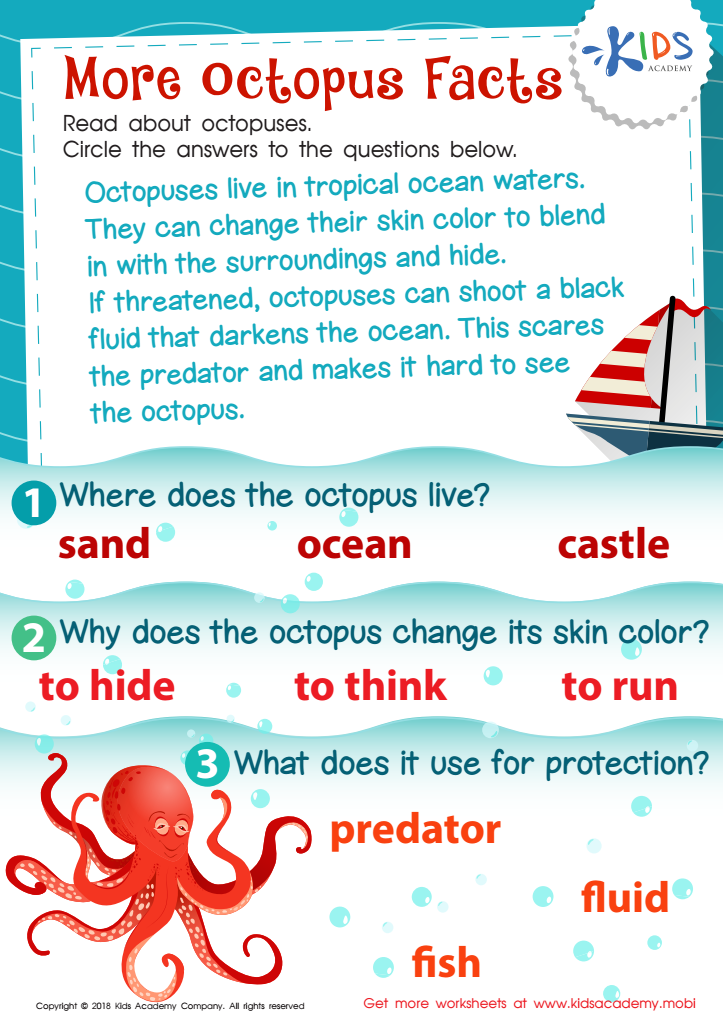
More Octopus Facts Worksheet
This worksheet will help your kids learn about the Octopus. Read the text carefully and have kids read with you. Now, ask them questions based on it and help them answer them by circling the right choices. Teaching your kids facts about animals will help them in the long run.
More Octopus Facts Worksheet
Worksheet
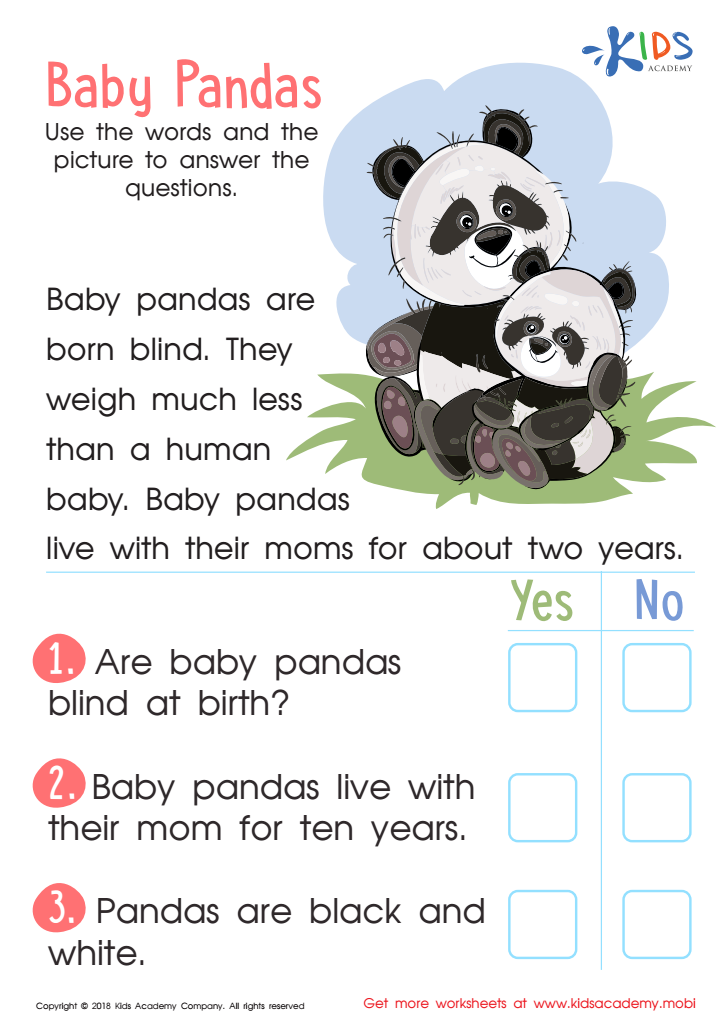
Baby Pandas Worksheet
Kids can't usually see pandas in person, but they can learn more about them with this fun worksheet! It includes a passage and picture, plus questions at the end to check kids' reading comprehension. Just ask them to read the text, check the "yes" and "no" boxes, and enjoy the fascinating facts about baby pandas!
Baby Pandas Worksheet
Worksheet
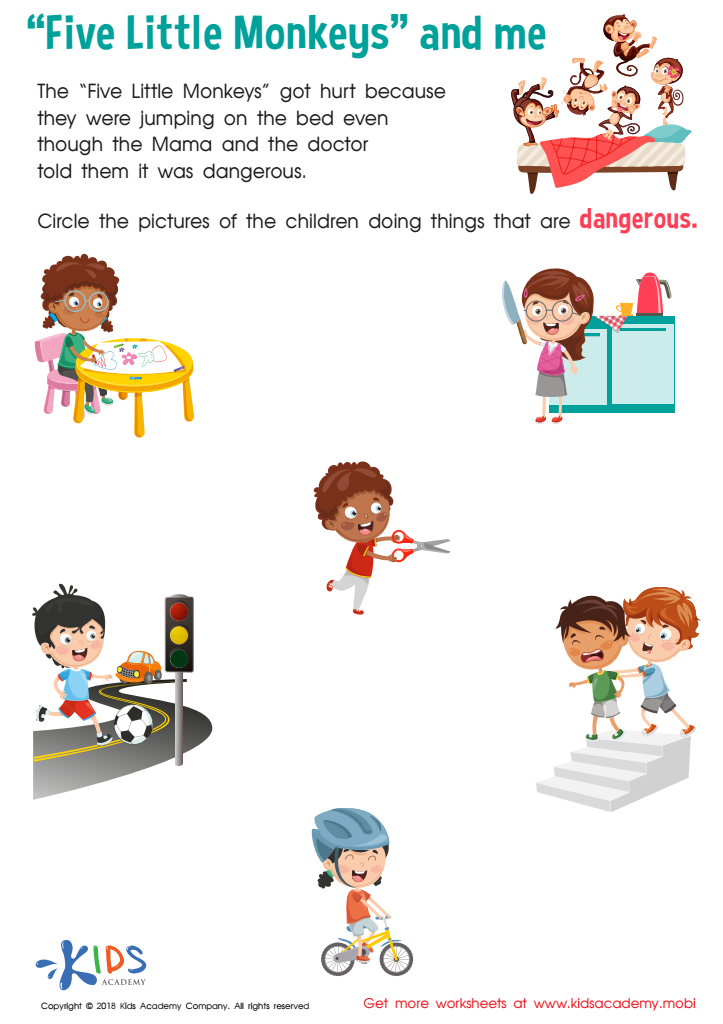
Five Little Monkeys and Me Worksheet
This free PDF worksheet provides preschoolers an understanding of danger and appropriate play. It allows them to recognize dangerous situations and why they can be risky, granting kids perspective from both parents and teachers. It's a fun, safe way to help them internalize what's dangerous and what's not.
Five Little Monkeys and Me Worksheet
Worksheet
Join Kids Academy for Free
Who is primarily going to use this learning content?






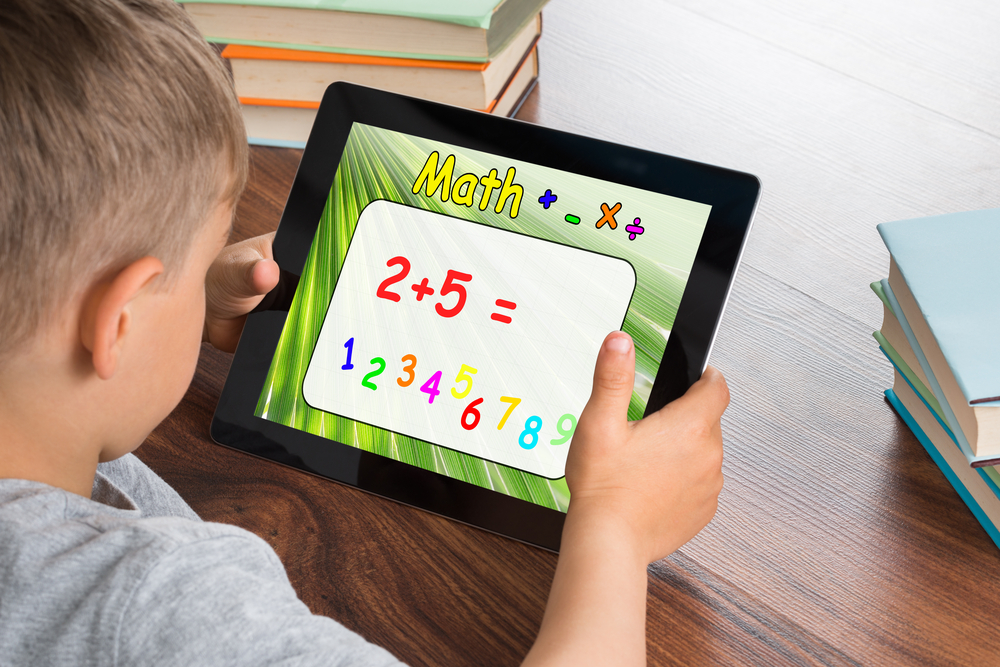
Number recognition and reading comprehension are fundamental skills that significantly influence a child's overall academic success and confidence, particularly for ages 7-9. At this developmental stage, children begin to encounter more complex mathematical concepts and diverse texts, making mastery of these skills crucial.
Number recognition lays the foundation for future math learning by helping children understand quantity, patterns, and basic operations. It supports their ability to engage with word problems, analyze data, and apply math in real-life scenarios. This skill intersects with reading comprehension as children often encounter numerical information within texts, such as graphs or data in story problems.
Reading comprehension enables children to extract meaning from what they read, facilitating not only academic achievement but also the development of critical thinking. Understanding diverse materials including stories, instructions, and informational texts by engaging with them cultivates a love for reading, enhancing vocabulary and cognitive skills.
Moreover, both of these skills promote confidence and independence in learning. When parents and teachers prioritize number recognition and reading comprehension, they empower children to navigate and thrive in an increasingly complex world, fostering lifelong learning skills from an early age. Investing in these areas ultimately enriches their educational experience and future opportunities.








