
Understanding Sequences Reading Comprehension Worksheets for Ages 7-9
3 filtered results
Difficulty Level
Grade
Age
-
From - To
Subject
Activity
Standards
Explore our "Understanding Sequences" reading comprehension worksheets designed specifically for children aged 7-9. These engaging activities help young learners grasp the concept of sequences by identifying the order of events in stories. With carefully crafted passages and questions, our worksheets encourage critical thinking and enhance comprehension skills. Students will improve their ability to recognize chronological order, making connections between events and improving their overall reading proficiency. Perfect for classroom use or at-home practice, these worksheets provide an interactive way to develop essential literacy skills. Start nurturing your child's understanding of sequences today!
Favorites
With answer key
Interactive
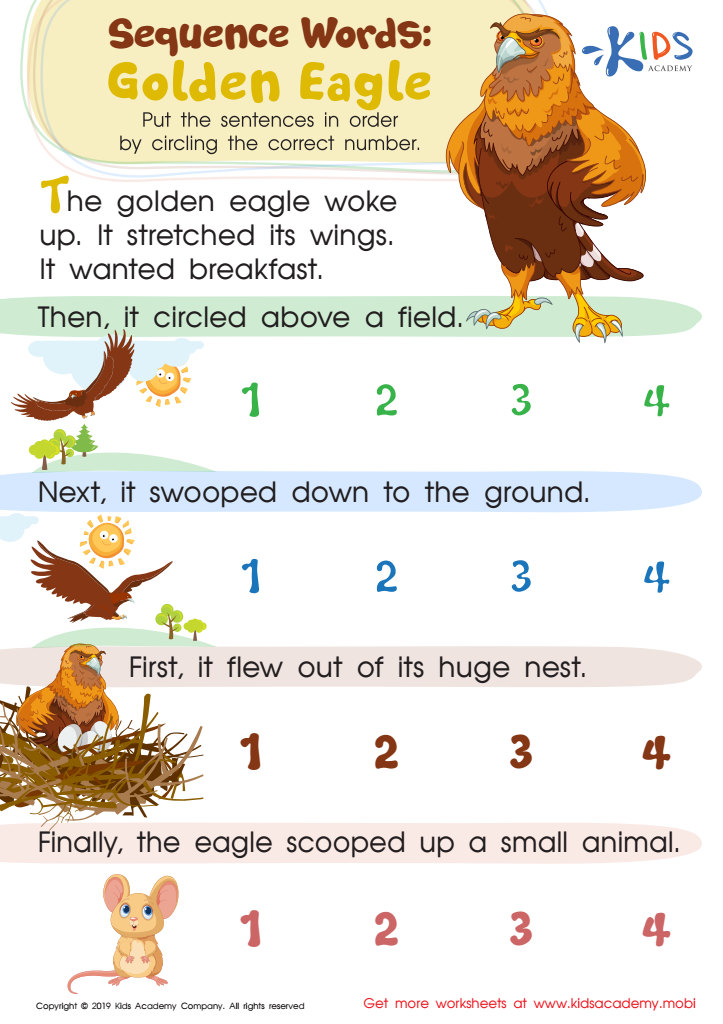
Sequence Word Eagle Worksheet
Help your child brush up on reading and writing with this fun worksheet. Read the story of the golden eagle's day, then have the child circle the numbers in the right order. Point out the sequence words that tell the order of events. This helps learners understand how to make their writing clear and understandable to others.
 Assign to My Students
Sequence Word Eagle Worksheet
Worksheet
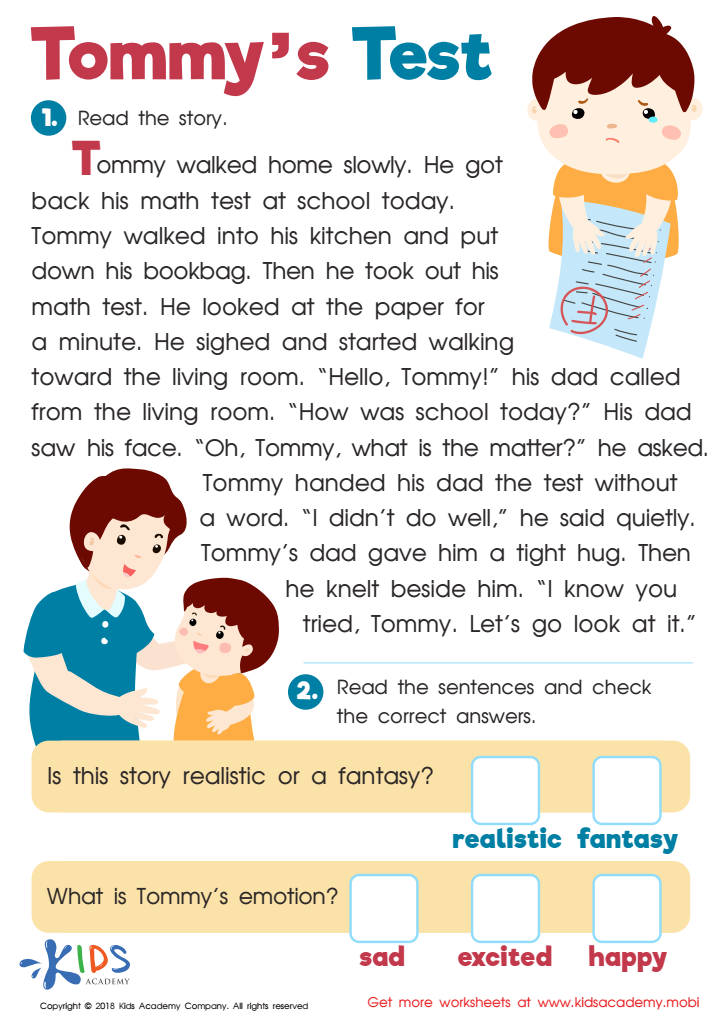
Tommys Test Worksheet
Reading short stories to your students builds a bond, teaches new words and lessons. Read the story aloud and then have them listen for details. Ask them the questions at the bottom and help them check the answers.
Tommys Test Worksheet
Worksheet
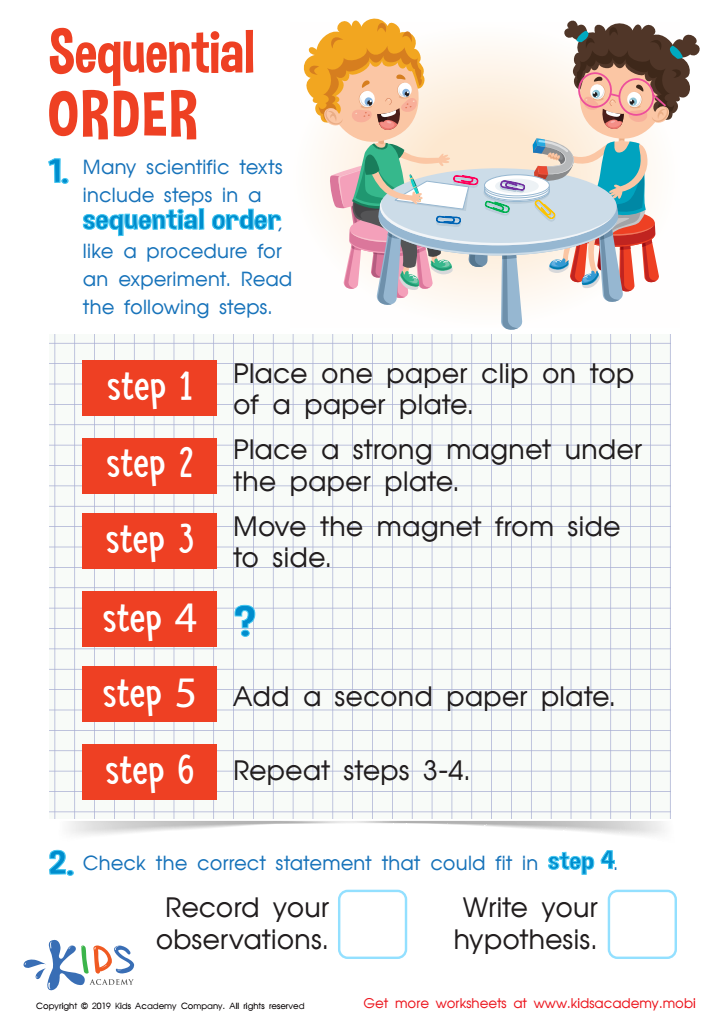
Sequencential Order Worksheet
This worksheet is perfect for science-lovers: it'll test how good your child is at following instructions by asking them to complete the steps in the right order. Have them read the steps and then choose the statements that correctly fill in the blanks. It's more than just fun experiments and results - science also requires careful procedure.
Sequencential Order Worksheet
Worksheet
Join Kids Academy for Free
Who is primarily going to use this learning content?







Understanding sequences is crucial for reading comprehension, especially for children aged 7-9, as it supports their ability to make sense of the story’s structure and context. In this developmental stage, children transition from decoding words to comprehending narratives, and recognizing sequences aids in this shift.
Sequences help students grasp the order of events, which is foundational for summarizing stories and inferring meaning. For example, identifying the sequence in which events occur allows children to predict outcomes and understand cause-and-effect relationships, enhancing their engagement and enjoyment of reading.
Moreover, developing sequence comprehension skills strengthens critical thinking. Children learn to analyze what happens first, next, and last, equipping them with tools to articulate their thoughts verbally or in writing. These skills are not only essential for literacy but are also applicable across subjects, such as mathematics and history, where understanding order and process is crucial.
In essence, parents and teachers play a vital role in fostering these abilities, enabling children to become proficient and confident readers. By emphasizing sequence comprehension, they help prepare kids for academic success and inspire a lifelong love of reading.








