Color recognition Reading Fiction Worksheets for Ages 7-9
5 filtered results
-
From - To
Enhance your child's reading journey with our engaging Color Recognition Reading Fiction Worksheets designed specifically for ages 7-9. These worksheets combine fun stories with vibrant visual elements, helping young learners identify and understand colors while diving into captivating narratives. Each activity is thoughtfully crafted to encourage creativity and improve reading comprehension, making learning enjoyable and effective. Kids will not only sharpen their color recognition skills but also spark their imagination as they explore fictional worlds. Perfect for classroom use or at-home learning, our worksheets provide a unique blend of education and entertainment, empowering children to become confident readers and critical thinkers.
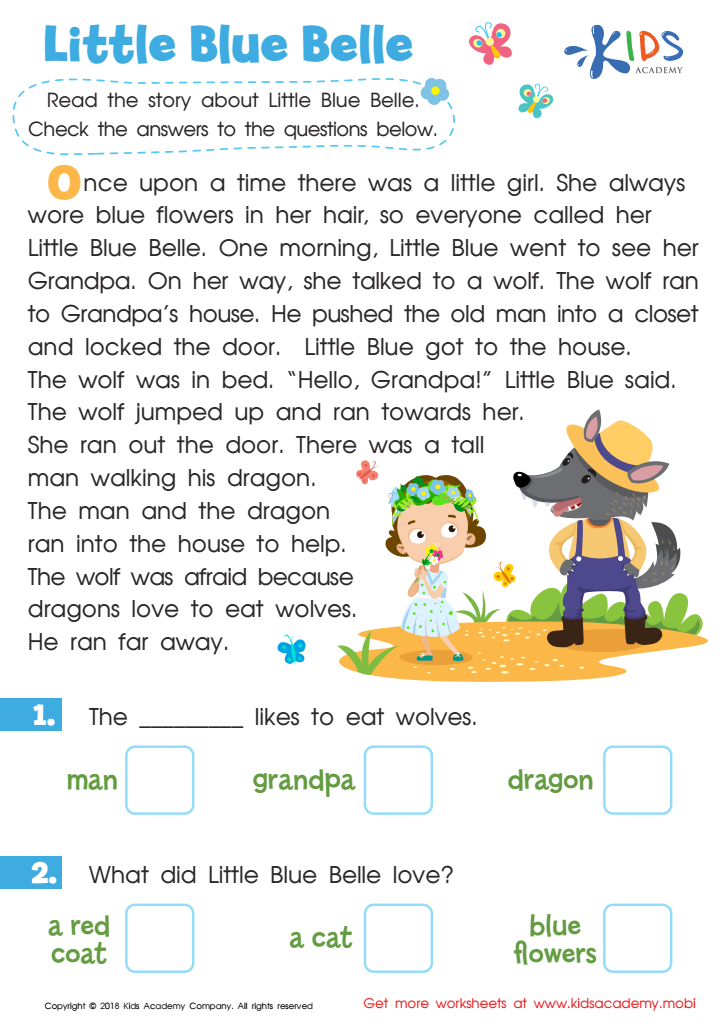
Little Blue Belle Worksheet
Twinkle Twinkle Little Star Coloring Page
 Assign to My Students
Hickory Dickory Dock Coloring Page
Assign to My Students
Red Riding Hood Coloring Page
Assign to My Students
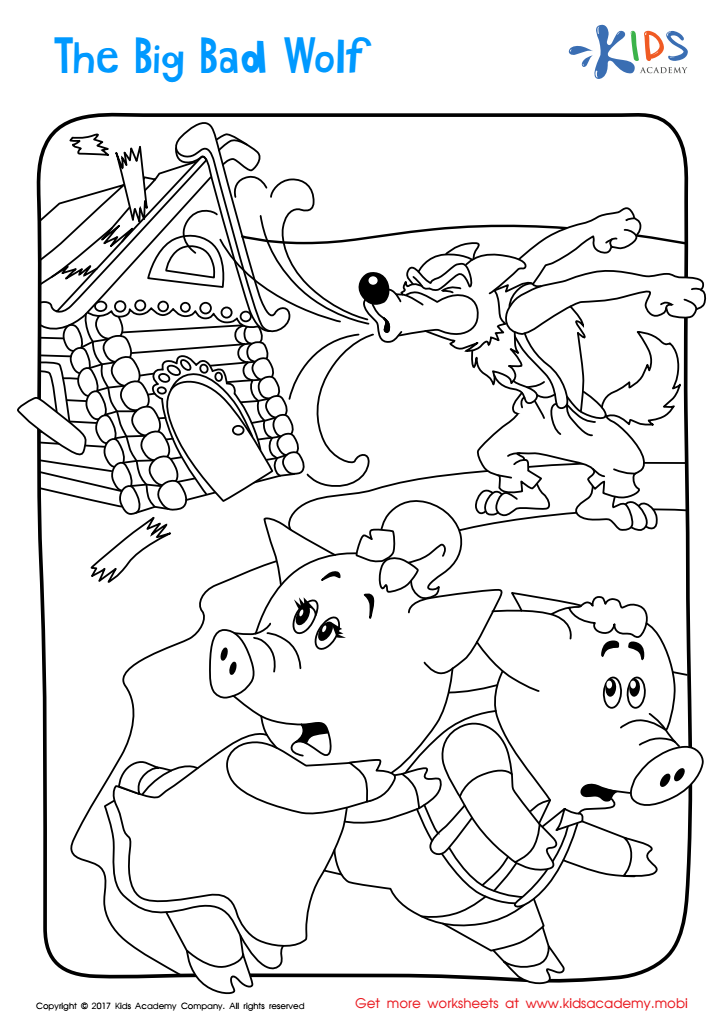
Big Bad Wolf Printable Coloring Page
Assign to My Students






.jpg)

Color recognition is a foundational skill that plays a crucial role in children's cognitive development and literacy, especially in ages 7-9 when they are becoming more proficient readers. During this period, children encounter a myriad of fictional texts often filled with rich imagery and nuanced language. Understanding colors enhances their ability to interpret and engage with stories more deeply, as colors often convey emotions, settings, and character traits.
For parents and teachers, fostering color recognition through reading fictional texts can spark creativity and imagination. Engaging children in discussions about colors can enhance their comprehension and analytical skills, allowing them to make connections between colors and narrative elements. This can also lead to enriched vocabulary as they learn descriptive words associated with colors.
Moreover, color recognition supports artistic expression, helping children articulate their thoughts and feelings effectively. By encouraging reading that emphasizes color, parents and teachers foster a holistic approach to learning — integrating visual literacy with reading skills. Ultimately, this helps cultivate well-rounded, more expressive individuals who appreciate the nuances of storytelling and can communicate their interpretations confidently. Engaging in color recognition would not only aid literacy but also nurture children's emotional intelligence and creativity.








