Identifying story elements Reading Fiction Worksheets for Ages 7-9
3 filtered results
-
From - To
Enhance your child's reading skills with our "Identifying Story Elements" worksheets, specially designed for ages 7-9. These fun, educational printables help young readers develop an understanding of key story elements such as characters, setting, plot, and conflict. Each worksheet provides engaging activities that improve comprehension and analytical abilities, fostering a deeper love for reading fiction. Encouraging independent learning, these worksheets are ideal for at-home practice or classroom use, making reading an exciting adventure. Visit Kids Academy to explore these valuable resources and watch your child’s storytelling and critical thinking skills flourish!
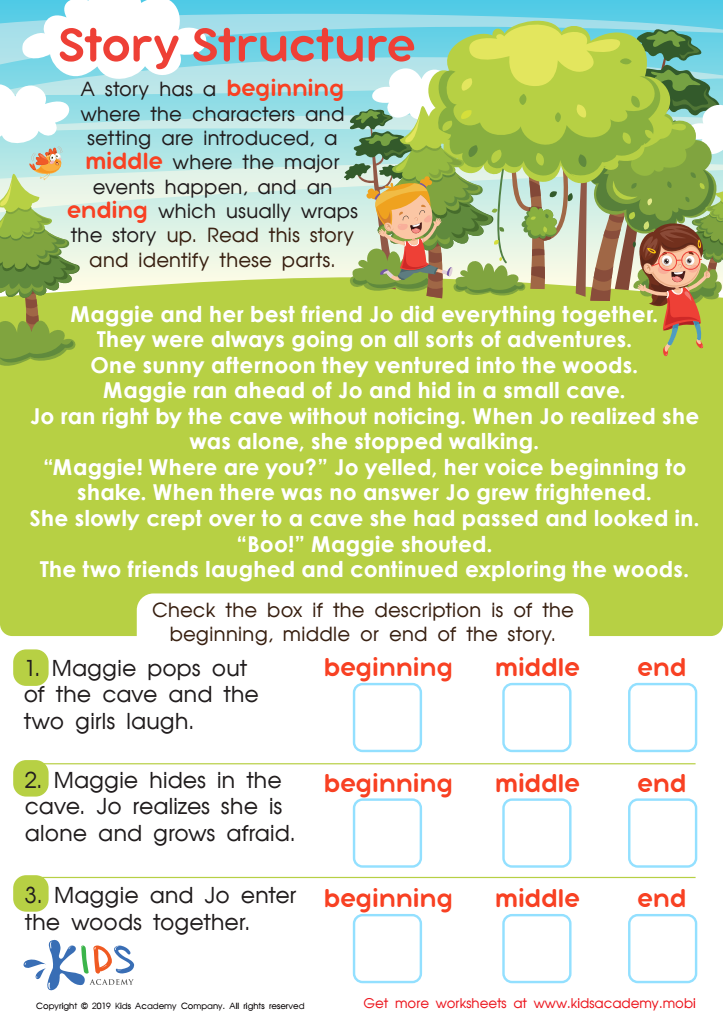
Story Structure Worksheet
 Assign to My Students
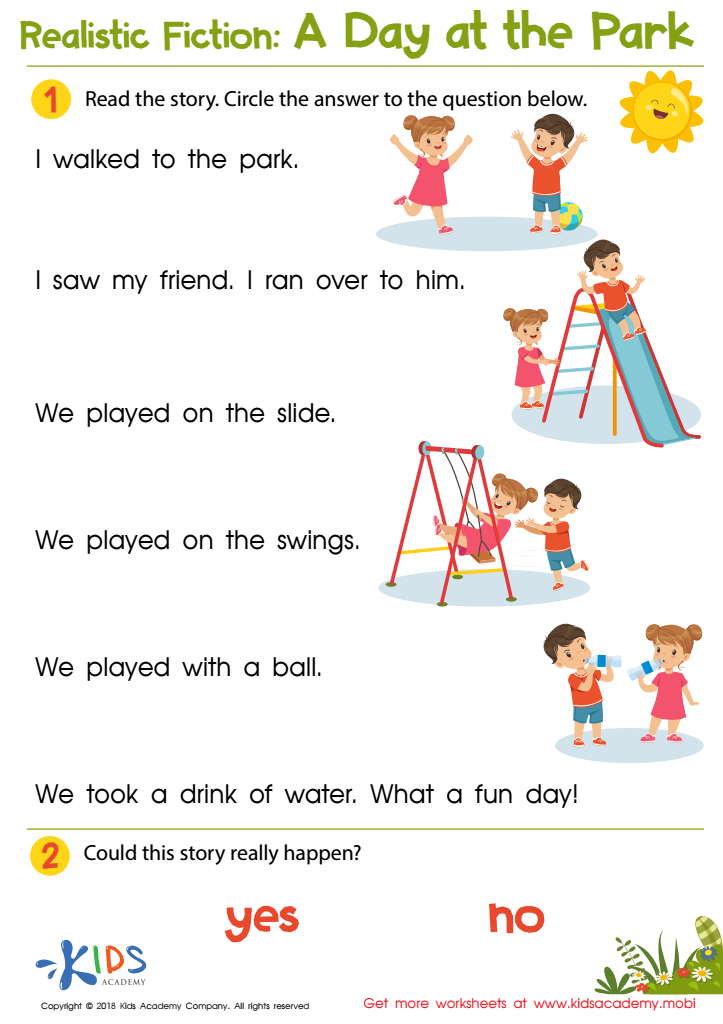
A Day at the Park Worksheet
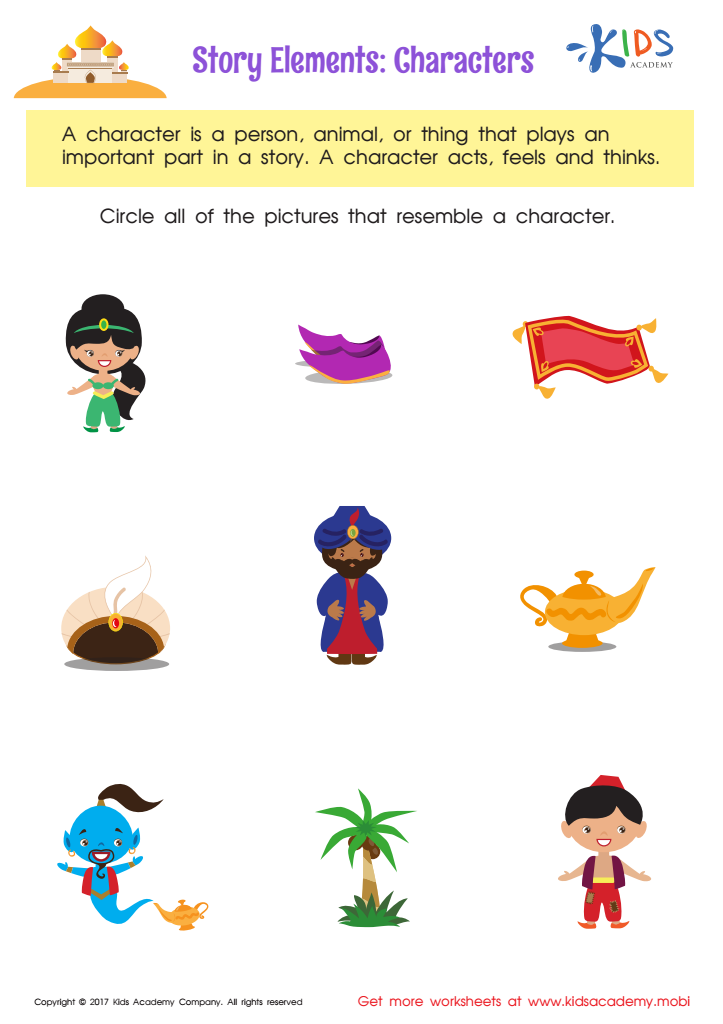
Story Elements Printable







Identifying story elements, such as characters, setting, plot, conflict, and resolution, is crucial for young readers aged 7-9 because it enhances comprehension, critical thinking, and engagement with the text. At this developmental stage, children are transitioning from learning to read to reading to learn.
Firstly, understanding story elements helps children grasp the structure of a narrative, making it easier to follow and enjoy. When they can identify the main characters or the setting, they are more likely to be engrossed in the story, leading to a positive reading experience and fostering a lifelong love for books.
Secondly, recognizing these elements also boosts comprehension and retention. By pinpointing key aspects of the plot, children can better predict outcomes, understand cause and effect, and connect the story to their own experiences, thereby enriching their cognitive and emotional intelligence.
Thirdly, discussing story elements encourages critical thinking and communication skills. Parents and teachers can ask questions that prompt children to explain their reasoning or express their opinions about a character's actions or a story's moral. This dialogue not only reinforces understanding but also builds vocabulary and oral language skills.
In essence, identifying story elements equips young readers with the tools to analyze and enjoy literature, laying a strong foundation for future academic success and personal growth.








