Story analysis Reading Fiction Worksheets for Ages 7-9
3 filtered results
-
From - To
Explore our engaging Story Analysis Reading Fiction Worksheets designed specifically for children ages 7-9. These interactive worksheets help young readers develop critical thinking and comprehension skills by analyzing characters, settings, and plots. With a variety of fun activities, your child will enhance their ability to understand and interpret stories, fostering a love for reading. Each worksheet is tailored to stimulate creativity and analytical skills, making reading more enjoyable and educational. Perfect for classroom use or at-home learning, these resources aim to empower children as confident readers and thinkers. Ignite your child's imagination and comprehension today with our engaging story analysis worksheets!
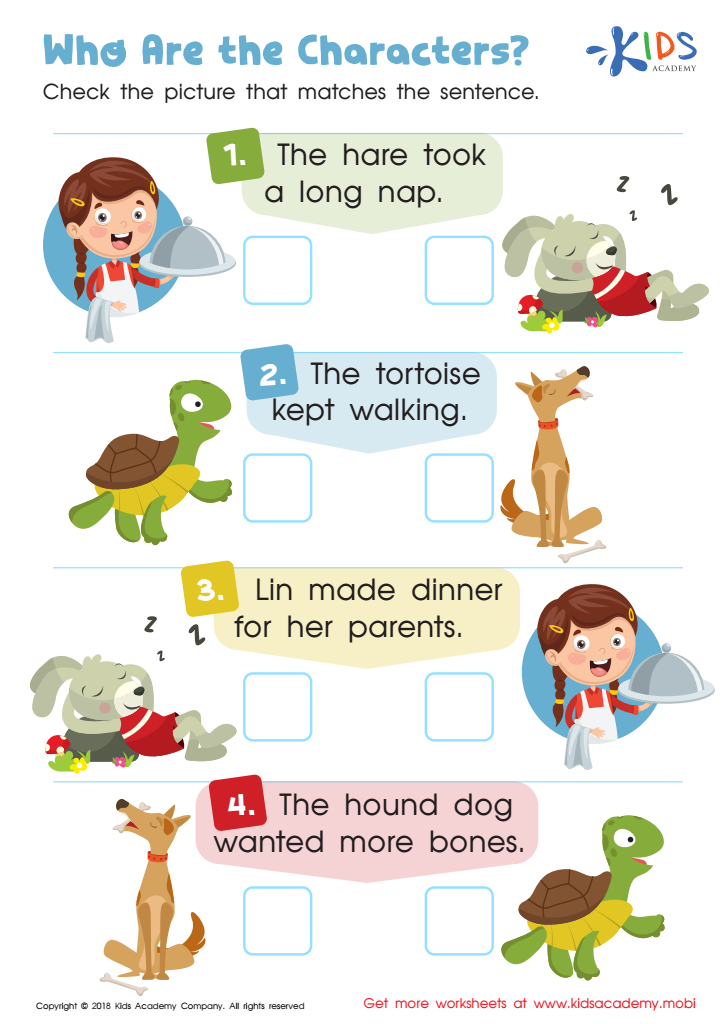
Who Are The Characters Worksheet
 Assign to My Students
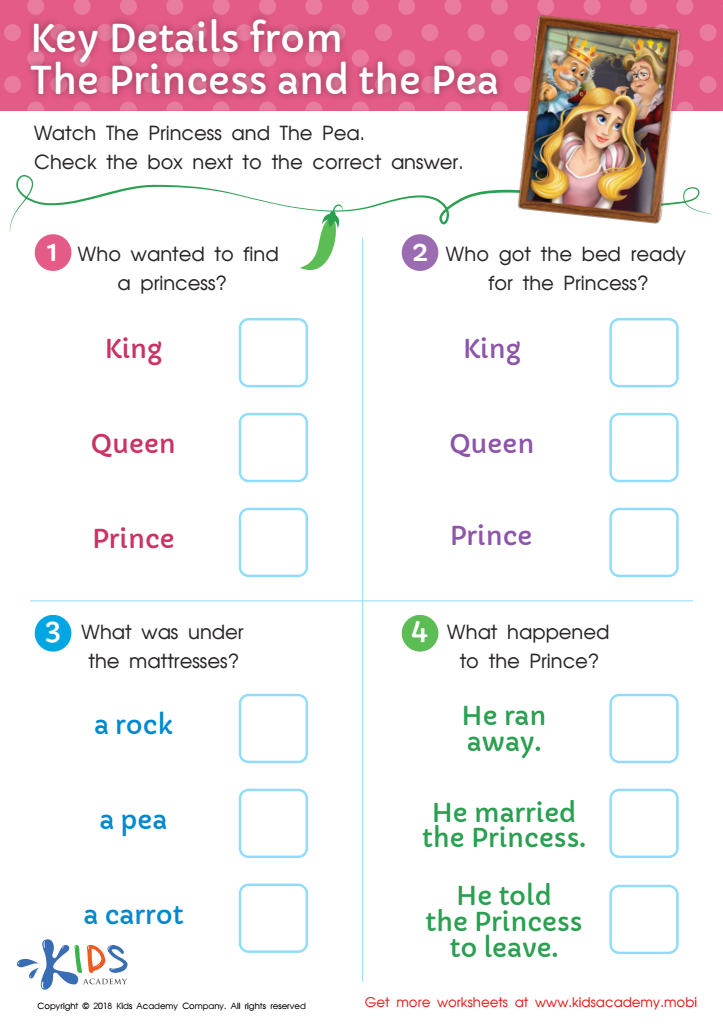
Key Details from the Princess and the Pea Worksheet
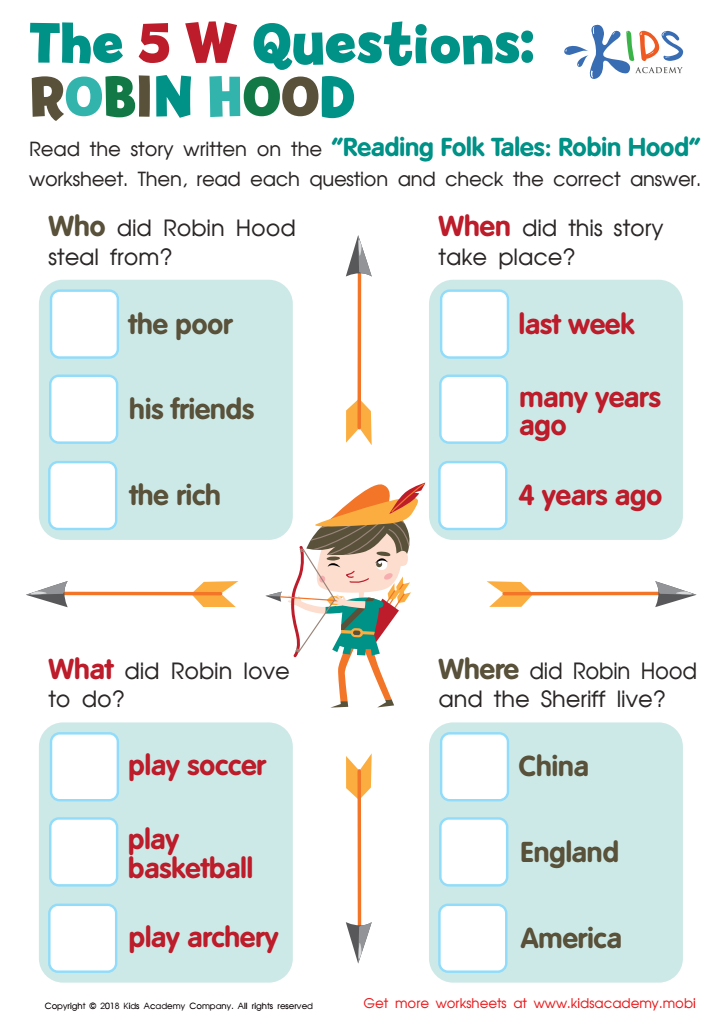
The 5 W Questions: Robin Hood Worksheet







.jpg)
Story analysis in reading fiction is crucial for children aged 7-9, and both parents and teachers should prioritize it for several reasons. At this stage, children develop foundational reading skills and emerge as independent readers. Engaging with fiction enhances their comprehension, allowing them to identify themes, characters, and plots. Analyzing stories encourages critical thinking, enabling children to interpret narratives and information beyond the text.
Additionally, story analysis fosters a love for reading. When children explore different layers of a story, they become more invested in literature and develop a curiosity about diverse genres and perspectives. This broadened interest cultivates empathy, as kids learn to see the world through various characters’ eyes, understanding emotions and social dilemmas.
Moreover, reading fiction supports vocabulary development and language skills. Children encounter new words and phrases within context, enriching their communication abilities. The practice of discussing and dissecting stories also strengthens oral and written expression.
Through this process, both parents and teachers can reinforce essential life skills. Encouraging children to think critically about stories nurtures creativity and problem-solving—attributes vital for personal and academic growth. Ultimately, story analysis paves the way for enriched learning experiences and empowers young readers to become lifelong learners.








