Improving math skills Sight Words Worksheets for Ages 7-9
3 filtered results
-
From - To
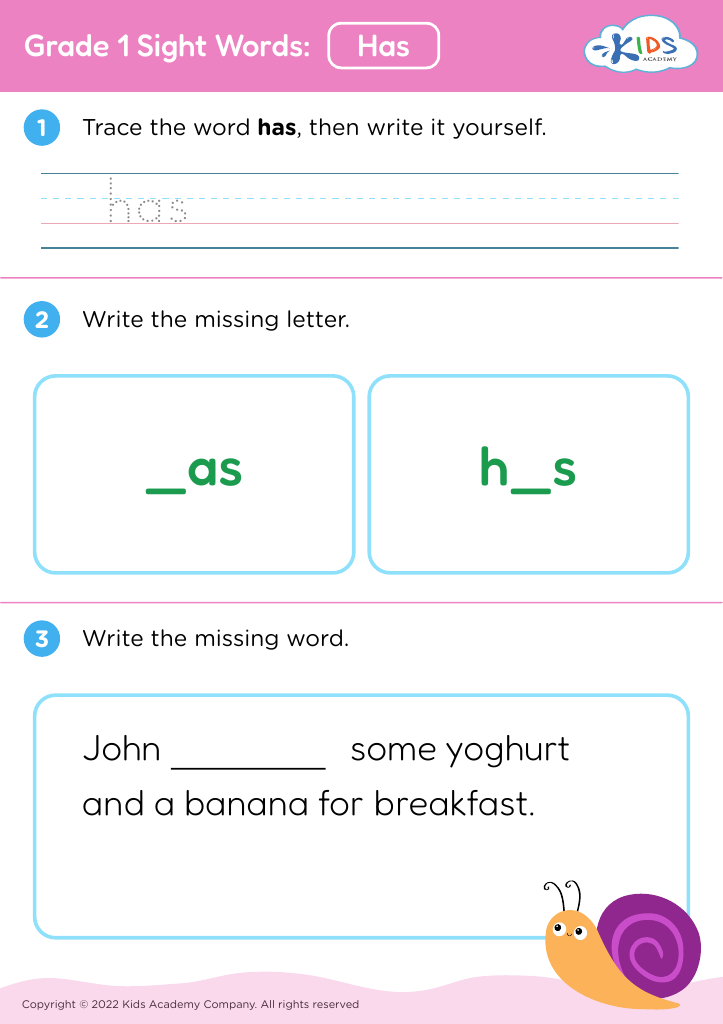
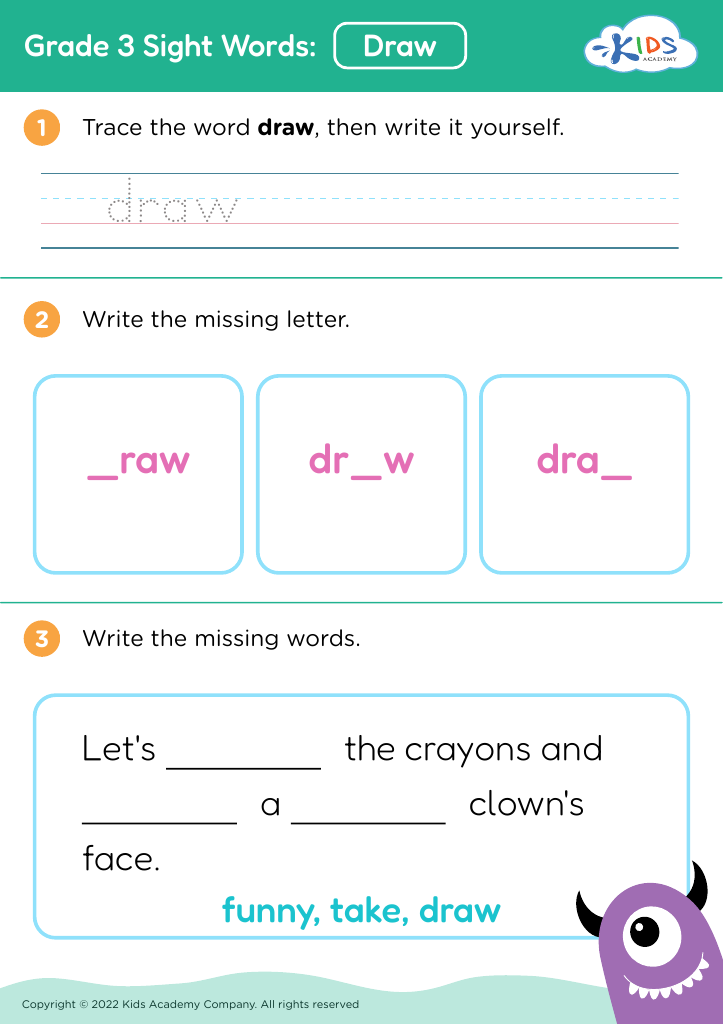
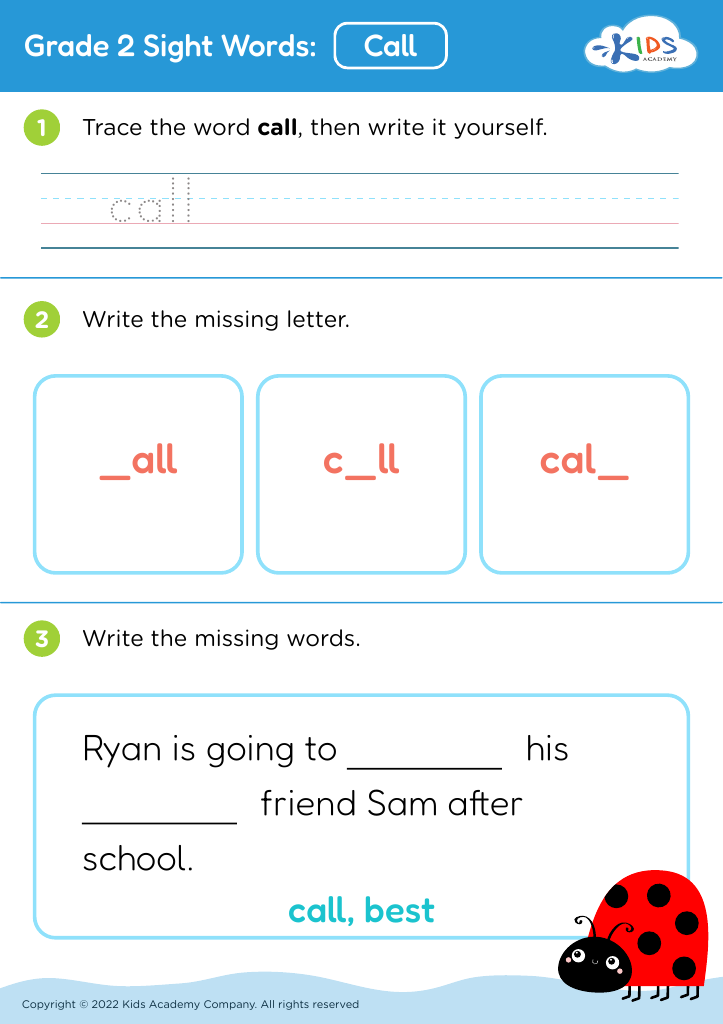
Enhance your child's math abilities with our "Improving Math Skills with Sight Words Worksheets" designed for ages 7-9. These engaging worksheets integrate essential sight words into fun math exercises, making learning both enjoyable and effective. As children practice reading and recognizing key vocabulary, they simultaneously develop their problem-solving skills and mathematical understanding. Our resources foster confidence and proficiency through interactive activities, tailored to keep young learners captivated. Perfect for reinforcement at home or in the classroom, these worksheets ensure your child develops a solid foundation in both literacy and math concepts. Start your child's journey to math mastery today!

















Improving math skills alongside sight words for children aged 7-9 is essential for their overall academic success and confidence. During this developmental stage, children are forming crucial foundational skills that will support their future learning. Math skills are not just about numbers; they enhance problem-solving abilities, logical reasoning, and critical thinking, which are applicable across all subjects.
When children excel in math, they develop a positive attitude towards learning. This is particularly vital, as a strong grasp of math principles can empower them in other areas, including reading and comprehension. Incorporating sight words into their learning complements this by enhancing their literacy skills, allowing them to decode math-related texts better, such as word problems, which often require reading comprehension.
For teachers and parents, focusing on both math skills and sight words fosters a holistic educational approach. It encourages interdisciplinary learning, linking numeracy and literacy. Engaging children with relatable math problems and reinforcing sight word recognition can make learning a fun, interactive experience. Through this approach, children build confidence, embrace challenges, and develop a lifelong love for learning, setting a strong foundation for their future academic endeavors. Thus, prioritizing these skills is crucial for preparing children for complex problem-solving in real-world situations.