Filters

53 filtered results

Clear all filters
Favorites
With answer key
Interactive

53 filtered results

Difficulty Level

Grade


Subject

    Check out this FREE Trial Lesson on Animals for age 7-9!

    Behavioral Adaptations

    Favorites
    With answer key
    Interactive
    • 7-9
    • Animals
    Organisms: Assessment 2 Worksheet
    Organisms: Assessment 2 Worksheet

    Organisms: Assessment 2 Worksheet

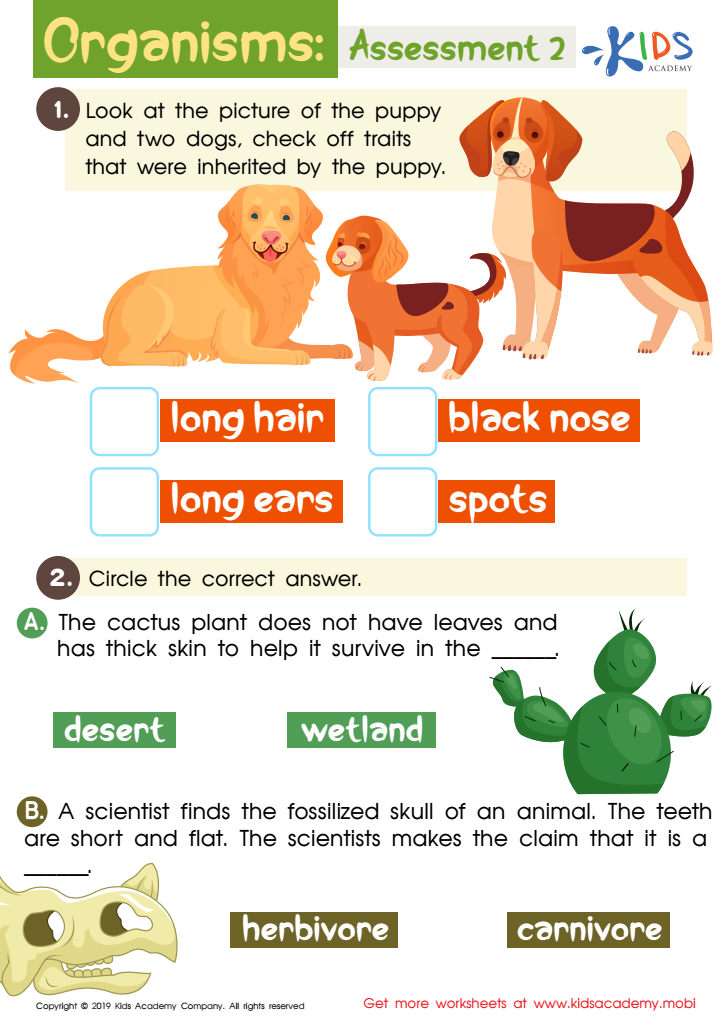
    This free assessment helps you measure your child's science knowledge. They can check off traits a puppy inherited, identify a cactus's habitat, and review a dinosaur's diet. It's an efficient way to assess their skills.
    Organisms: Assessment 2 Worksheet
    Worksheet
    Marine Self-Defence Worksheet
    Marine Self-Defence Worksheet

    Marine Self-Defence Worksheet

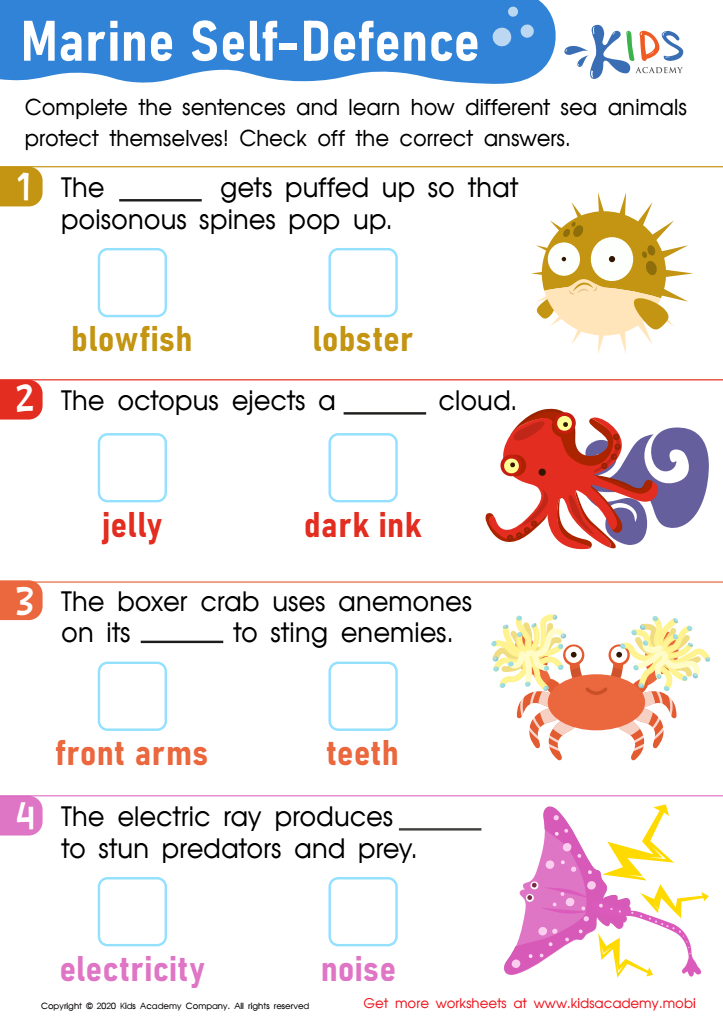
    Kids will love discovering the ingenious ways sea creatures protect themselves from predators such as sharks and whales! Let them explore the strategies with this fun science worksheet, which features vibrant illustrations. Have them fill in the blanks with each creature's defense strategy, such as shells, spikes, ink, or even electricity!
    Marine Self-Defence Worksheet
    Worksheet
    Match Them Up Worksheet
    Match Them Up Worksheet

    Match Them Up Worksheet

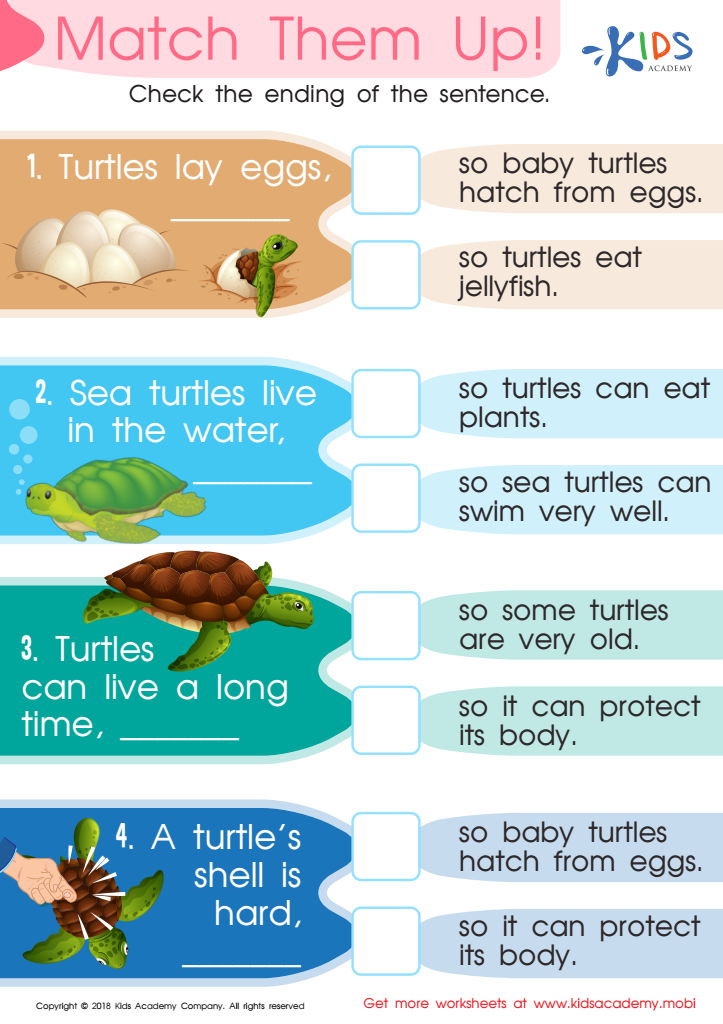
    Reading offers a wealth of knowledge, but young readers may struggle to remember info from informational texts. Help your child practice comprehension with this fun turtle-related worksheet. Just read the sentence starters and select the correct ending from the options given. Check the box to indicate the right statement!
    Match Them Up Worksheet
    Worksheet
    Food Chain Cause Worksheet
    Food Chain Cause Worksheet

    Food Chain Cause Worksheet

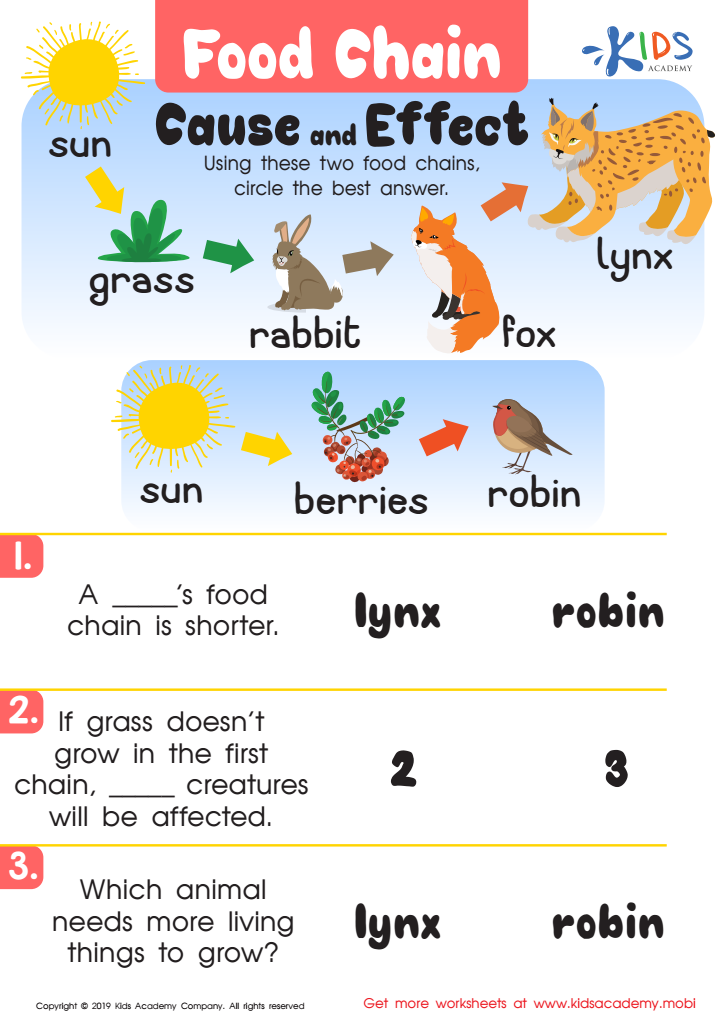
    Help your little learner analyze ecosystems and compare food chains with this Kids Academy worksheet! Kids will compare a carnivore's and herbivore's food chain; which is longer and why? Questions at the bottom of the page will help them compare and circle the best answers. A great way to understand animal food chains!
    Food Chain Cause Worksheet
    Worksheet
    Compare Two Sources Worksheet

    Compare Two Sources Worksheet

    Compare Two Sources Worksheet

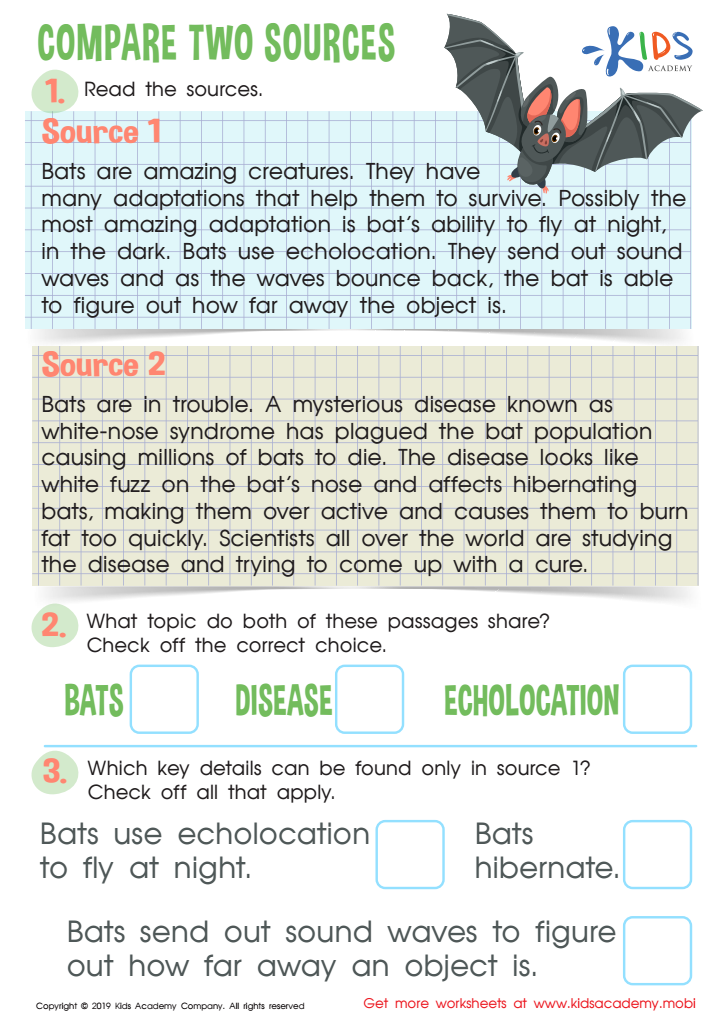
    Reading exposes us to new words, spelling, and info about different topics. Kids can practice their reading skills, and learn about bats, with this worksheet. Read the two sources in the picture, then help your kids answer the questions at the bottom.
    Compare Two Sources Worksheet
    Worksheet


    ... 2 3

    Parents and teachers should care about animals because they play a vital role in a child’s development. Understanding animals helps children connect with nature, promoting empathy and compassion. When kids learn about different species, they develop curiosity and respect for living things, fostering a sense of responsibility toward our planet. By caring for animals, whether through school projects, community programs, or pet care at home, children learn essential life skills.

    Through activities like observing animals, kids gain hands-on experience and enhance their observational skills. Learning about habitats, diets, and behaviors offers lessons in biology and environmental science, creating a foundation for future scientific understanding. Awareness about animal welfare also encourages critical thinking, as children learn to evaluate issues like conservation and habitat destruction.

    Additionally, interactions with animals, like pets or wildlife, can boost a child’s confidence and reduce stress. The joy of caring for animals builds emotional intelligence and social skills, as kids connect with others who share their interests. Hence, emphasizing the care for animals in childhood lays the groundwork for future environmentally-conscious citizens, ultimately ensuring a brighter, more compassionate world.