Learning about ecosystems Animals Worksheets for Ages 7-9
4 filtered results
-
From - To
Dive into the fascinating world of ecosystems with our "Learning about Ecosystems Animals Worksheets" designed specifically for ages 7-9. These engaging worksheets encourage young learners to explore the diverse animals and their habitats while enhancing their understanding of the natural world. Through fun activities and colorful illustrations, children will identify different species, their roles in the ecosystem, and the importance of biodiversity. Our worksheets are crafted to foster curiosity, critical thinking, and enthusiasm for science. Perfect for classroom use or at-home learning, these resources are an excellent way to inspire budding environmentalists. Download today to start the adventure!
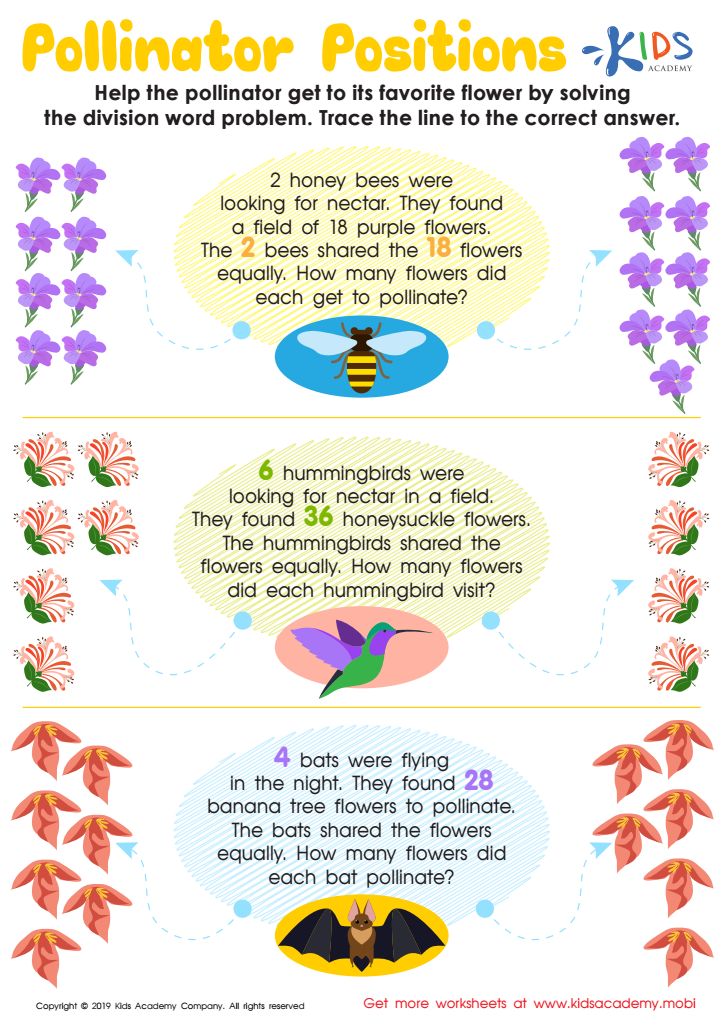
Pollinator Positions Worksheet
 Assign to My Students
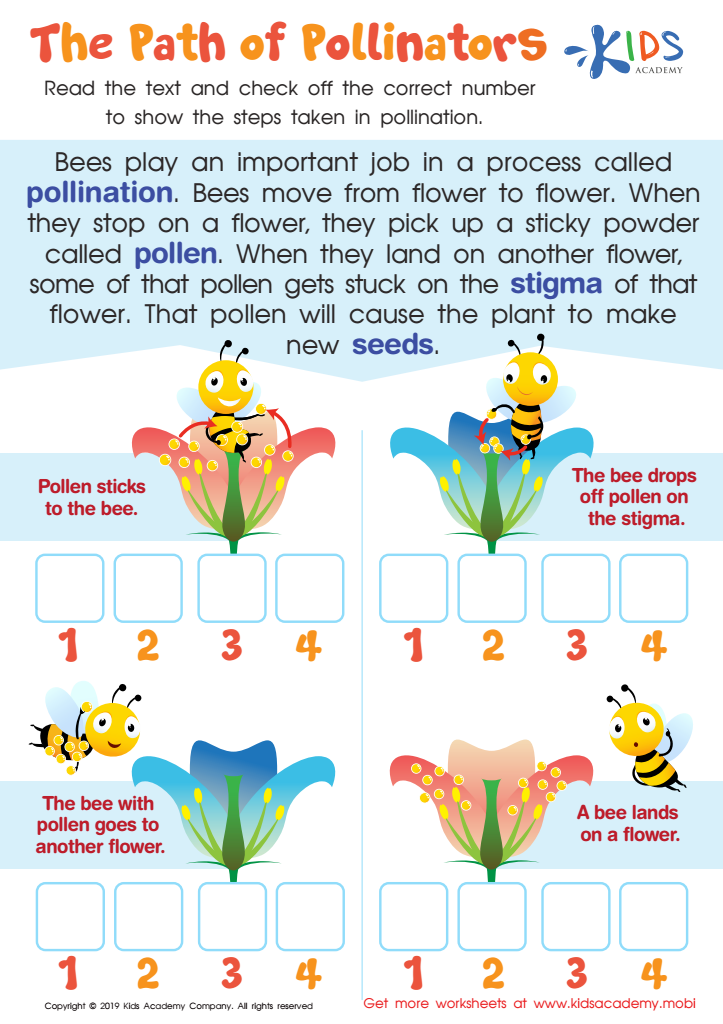
The Path of Pollinators Worksheet
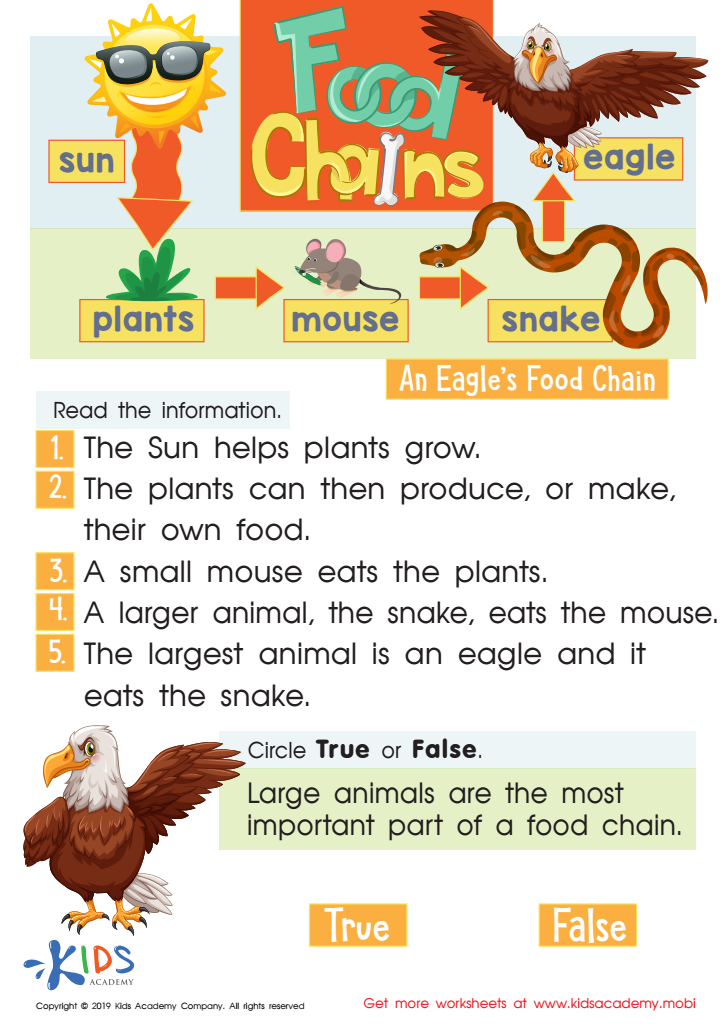
Food Chains Worksheet
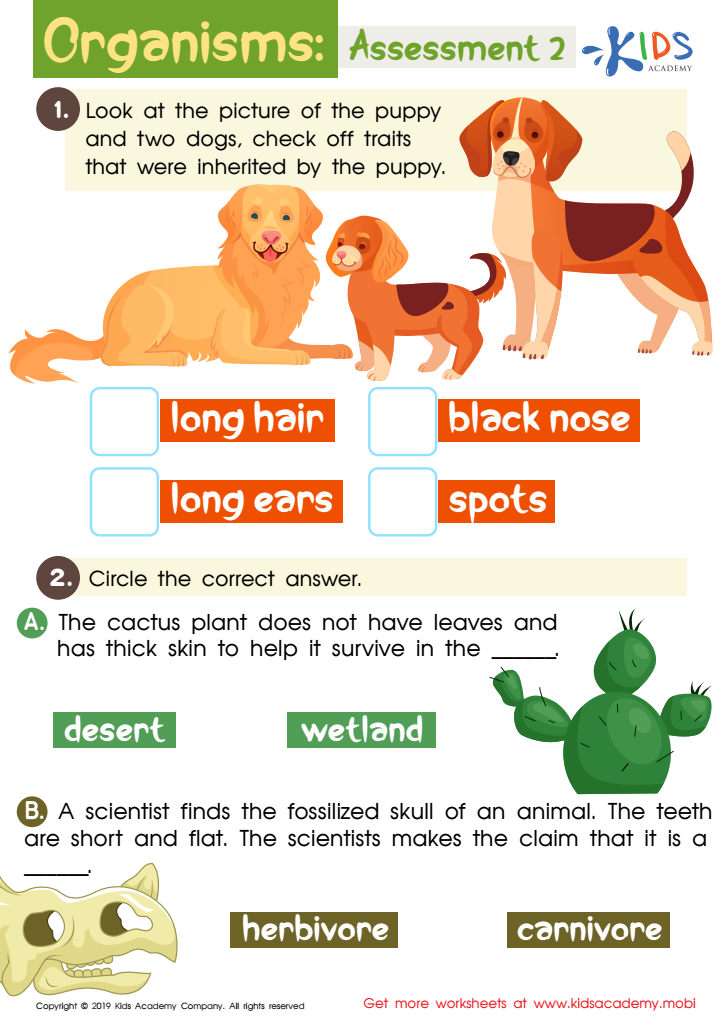
Organisms: Assessment 2 Worksheet








Teaching children ages 7-9 about ecosystems and animals is vital for several reasons. First and foremost, it fosters an early appreciation and respect for nature. Children who understand how ecosystems work and the roles animals play within them are more likely to develop an empathetic and responsible attitude toward the environment. This is crucial for cultivating future generations of eco-conscious individuals.
In addition to nurturing environmental stewardship, learning about ecosystems and animals supports cognitive development. Topics like food chains, habitats, and animal behaviors introduce complex concepts such as interdependence and adaptation, boosting critical thinking and problem-solving skills. These subjects also naturally integrate with foundational science and math principles, providing a practical application for classroom learning. For example, discussing an animal's role in an ecosystem can incorporate counting, categorizing, and even basic data analysis.
Socially and emotionally, this learning avenue allows kids to connect with the world around them. Understanding that animals have needs and roles within their habitats can improve empathy and compassion, traits that enhance peer relationships and community awareness.
Moreover, exploration of ecosystems can be hands-on and engaging, offering numerous channels for activity-based learning such as nature walks, museum trips, and interactive digital platforms. All these factors make learning about ecosystems and animals a multidimensional educational priority.








