Identifying Animals Science Worksheets for Ages 7-9
3 filtered results
-
From - To
Enhance your child’s understanding of the animal kingdom with our engaging "Identifying Animals Science Worksheets" designed specifically for ages 7-9. These worksheets are crafted to stimulate curiosity and develop critical thinking skills while exploring various animal species. Through enjoyable activities, children will learn to recognize and categorize animals by their characteristics and habitats. Each worksheet feature colorful illustrations and fun facts to make learning interactive and memorable. Ideal for home schooling or supplementary classroom resources, our worksheets promote self-paced learning and a passion for science. Dive into the world of animals and enrich your child’s education with our printable resources today!
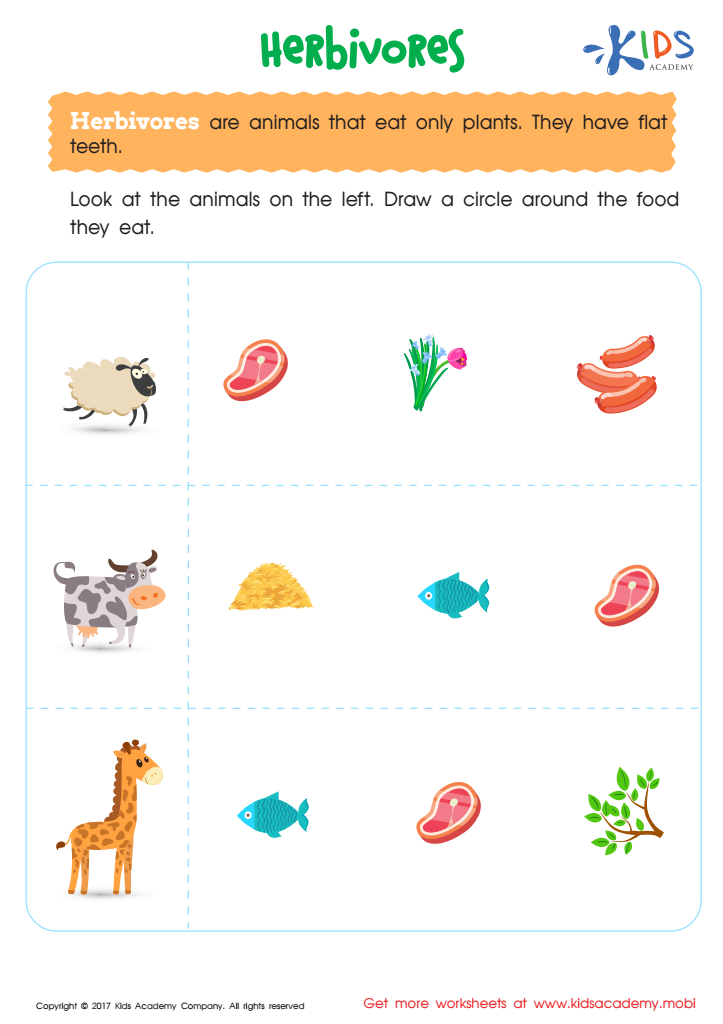
Herbivores Printable
 Assign to My Students
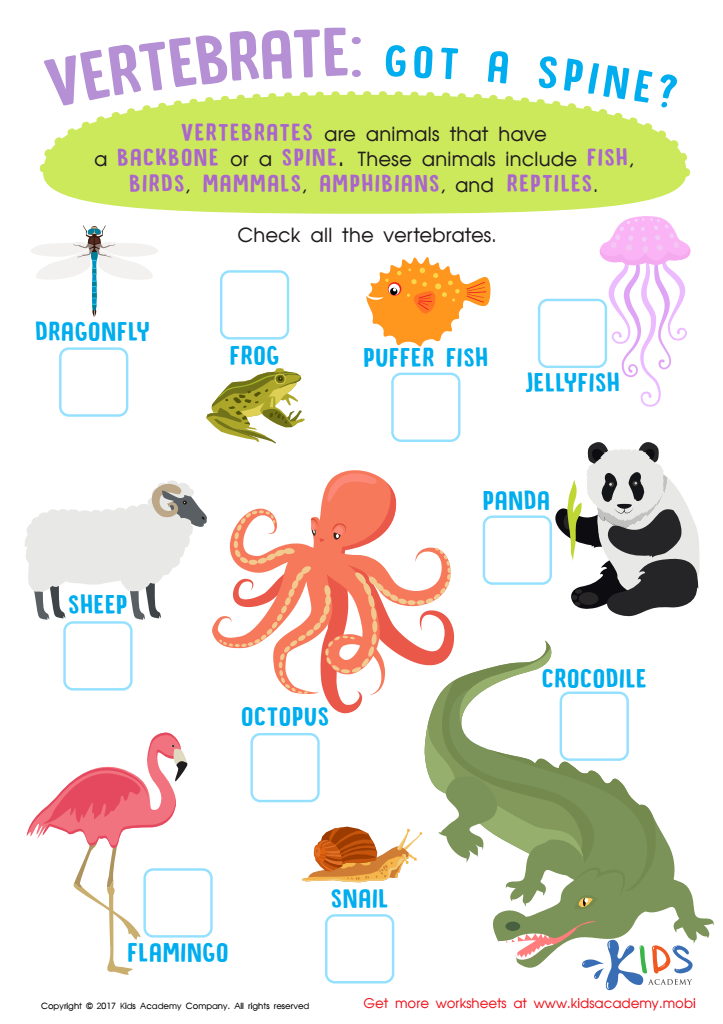
Vertebrates Animals Worksheet for 3rd Grade
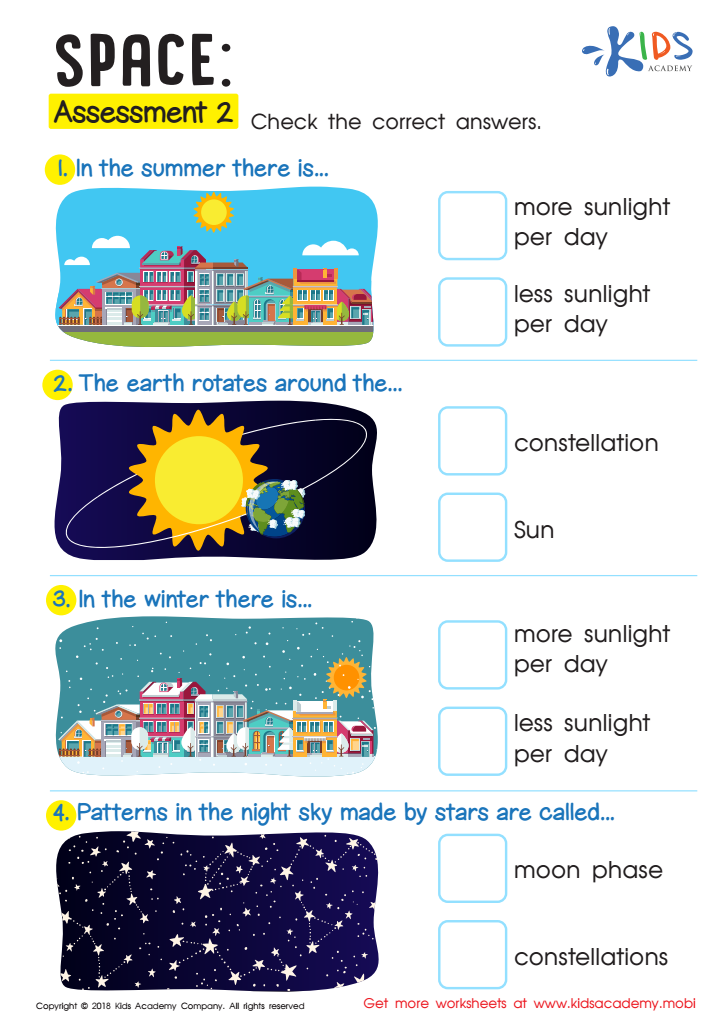
Space: Assessment 2 Worksheet



%20(1).jpg)




Identifying animals is a key aspect of science education for children ages 7-9, and here’s why parents and teachers should care. At this age, children are naturally curious about the world around them and are eager to explore. Engaging in animal identification not only satisfies this curiosity but also fosters critical thinking skills as they learn to observe and classify different species based on characteristics.
Moreover, understanding animal diversity promotes environmental awareness and empathy for living creatures. By teaching children about various habitats, behaviors, and conservation needs, they develop a sense of responsibility toward nature, forming the foundation for future stewardship. This educational engagement also aligns with key learning standards in science education, nurturing their ability to ask questions, investigate, and communicate findings.
Furthermore, lessons in animal identification can enhance creativity—through arts and crafts, storytelling, or research projects, to name a few. When parents and teachers facilitate these learning experiences, they foster a lifelong interest in science, encouraging exploration and inquiry. In a world facing environmental challenges, equipping young learners with the knowledge to appreciate and protect biodiversity is not just beneficial—it is vital for their development and for the future of our planet.







