Understanding light sources Physical Science Worksheets for Ages 7-9
6 filtered results
-
From - To
Discover the wonders of light with our "Understanding Light Sources" Physical Science Worksheets for ages 7-9! Designed to spark curiosity, these engaging worksheets offer young learners an interactive way to explore different types of light sources, including natural and artificial lights. Each activity is crafted to enhance critical thinking and observation skills, while making science fun and accessible. From matching exercises to creative projects, children will develop a foundational understanding of how light impacts our environment. Inspire the next generation of scientists with these educational resources that promote learning through exploration and discovery of the world around them.
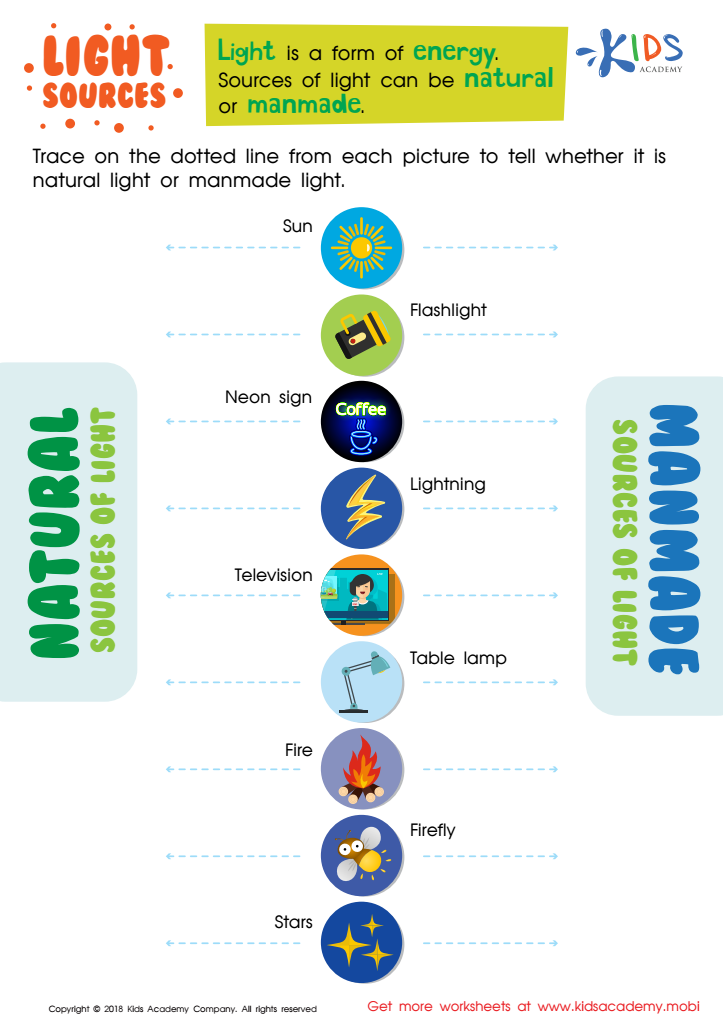
Natural and Manmade Light Sources Worksheet
 Assign to My Students
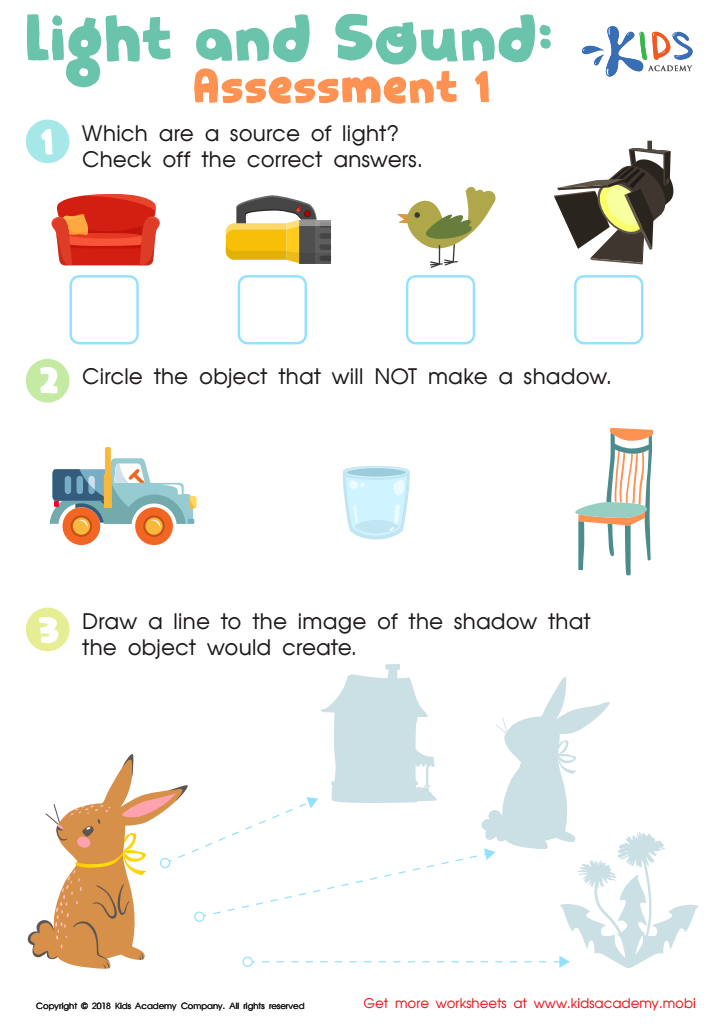
Light and Sound: Assessment 1 Worksheet
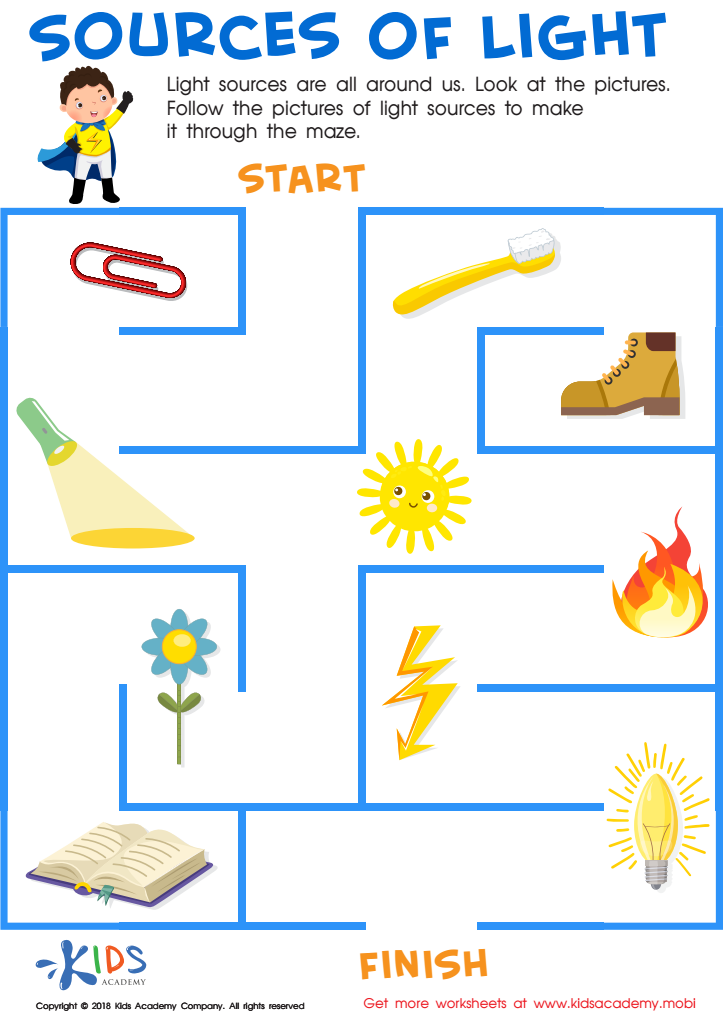
Sources of Light Worksheet
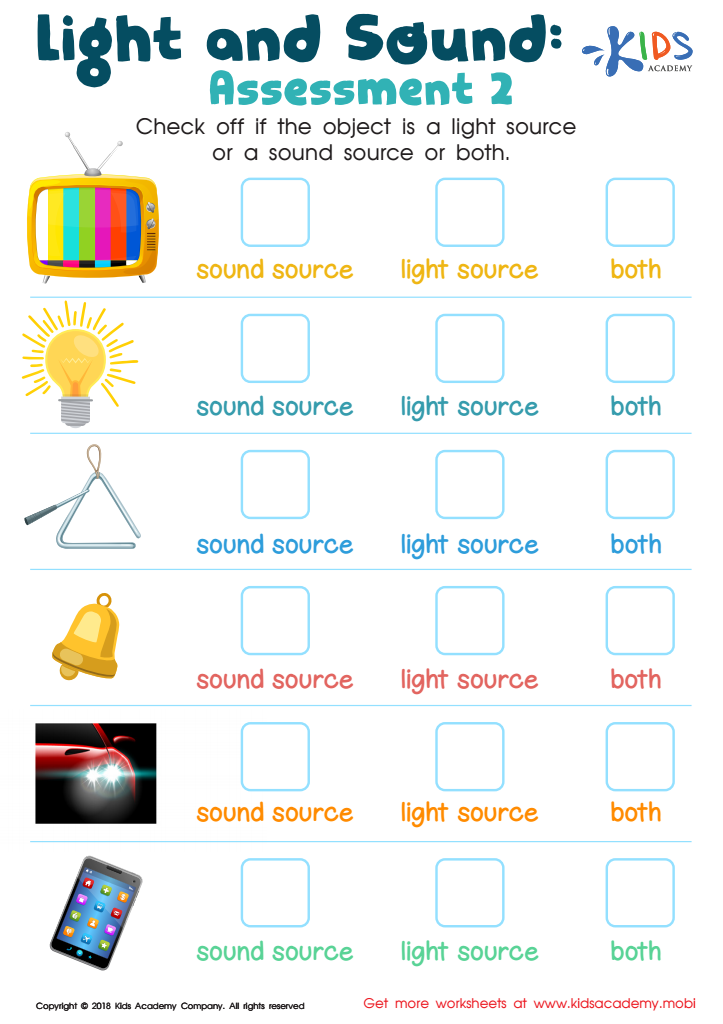
Light and Sound: Assessment 2 Worksheet
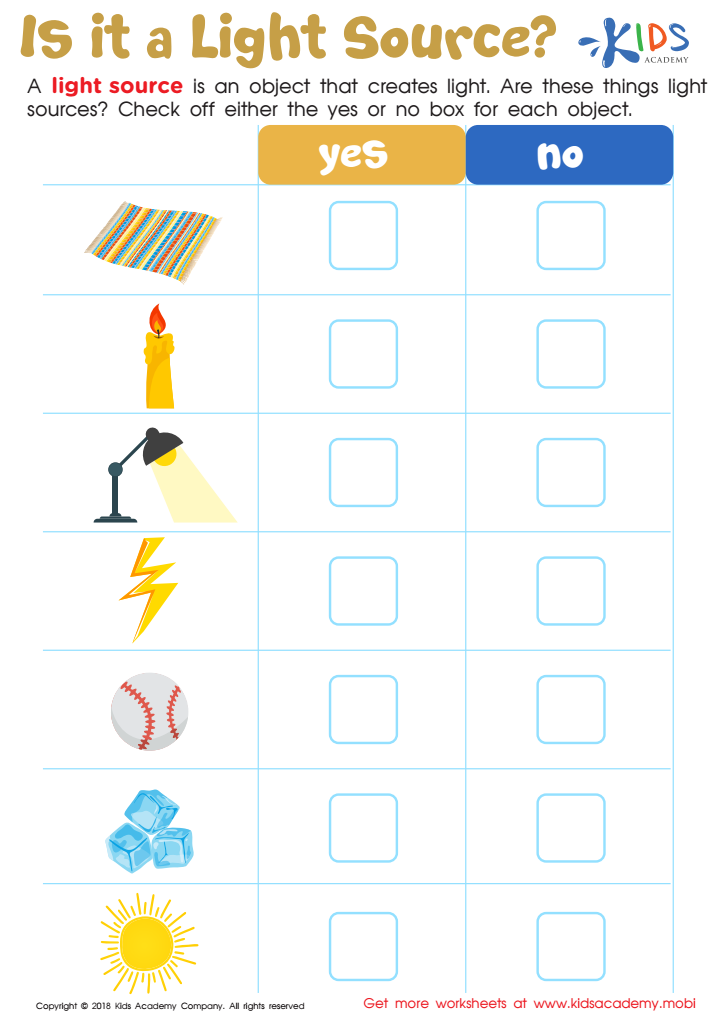
Is It a Light Source? Worksheet
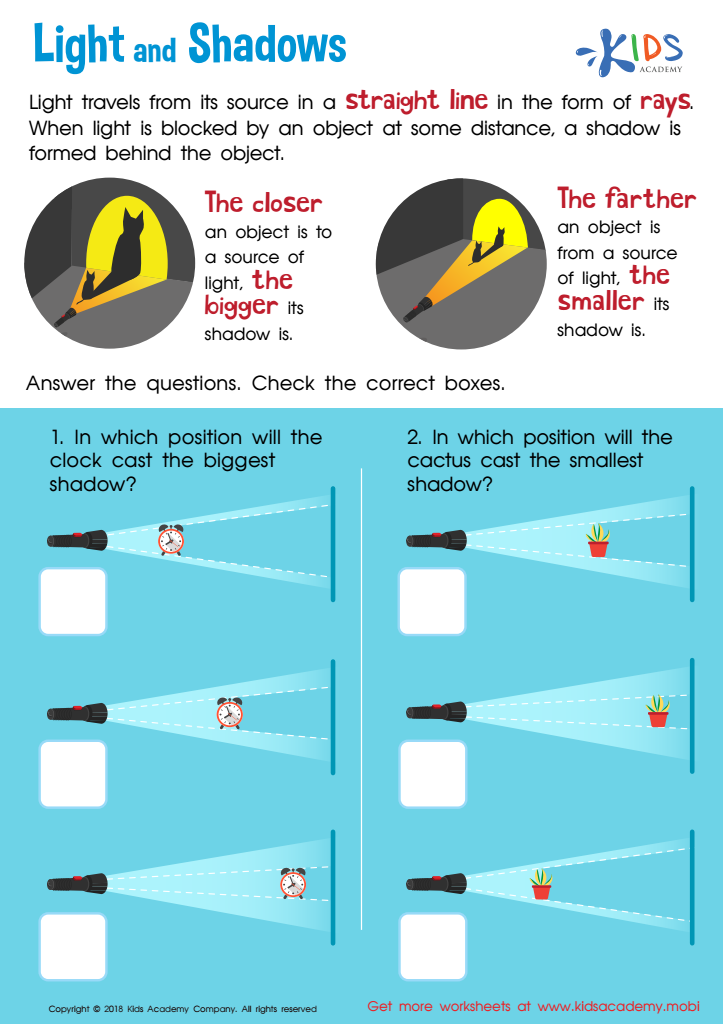
Light and Shadow Worksheet for Grade 3






Understanding light sources is crucial for parents and teachers to foster curiosity and knowledge about the world in children aged 7-9. At this stage, children are naturally inquisitive, making it an ideal time to explore the principles of physical science. Learning about light sources, such as the sun, lamps, and flashlights, helps children grasp fundamental concepts about energy, ecosystems, and even safety.
By understanding different light sources, children can develop critical thinking skills as they begin to identify how these sources impact their daily lives, from enabling plants to grow to providing warmth and guiding their way in the dark. Exploring how light interacts with various objects helps in developing observational skills—recognizing shadows, reflections, and colors enhances their overall understanding of the environment.
Moreover, fostering an interest in science at this age builds a foundation for future learning. Engaging children in hands-on experiments with light, such as creating simple prisms or observing how light travels, encourages creativity and problem-solving skills. Parents and teachers play a vital role in encouraging this engagement; by emphasizing the importance of light sources, they can empower children to explore, ask questions, and develop a lifelong love for science and learning.







