Map reading Geography Worksheets for Ages 7-9
3 filtered results
-
From - To
Explore fun and educational "Map Reading Geography Worksheets for Ages 7-9" designed by experts at Kids Academy! These engaging worksheets help children grasp essential geographic skills by learning to read various types of maps. Featuring interactive activities, puzzles, and vibrant illustrations, these resources make geography exciting and accessible. Young learners will develop their understanding of directions, symbols, and scales, improving their spatial awareness and critical thinking skills. Ideal for classroom use or at-home practice, these worksheets are perfect for young explorers ready to embark on a journey of geographical discovery. Spark a love for maps and adventure today!
 Assign to My Students
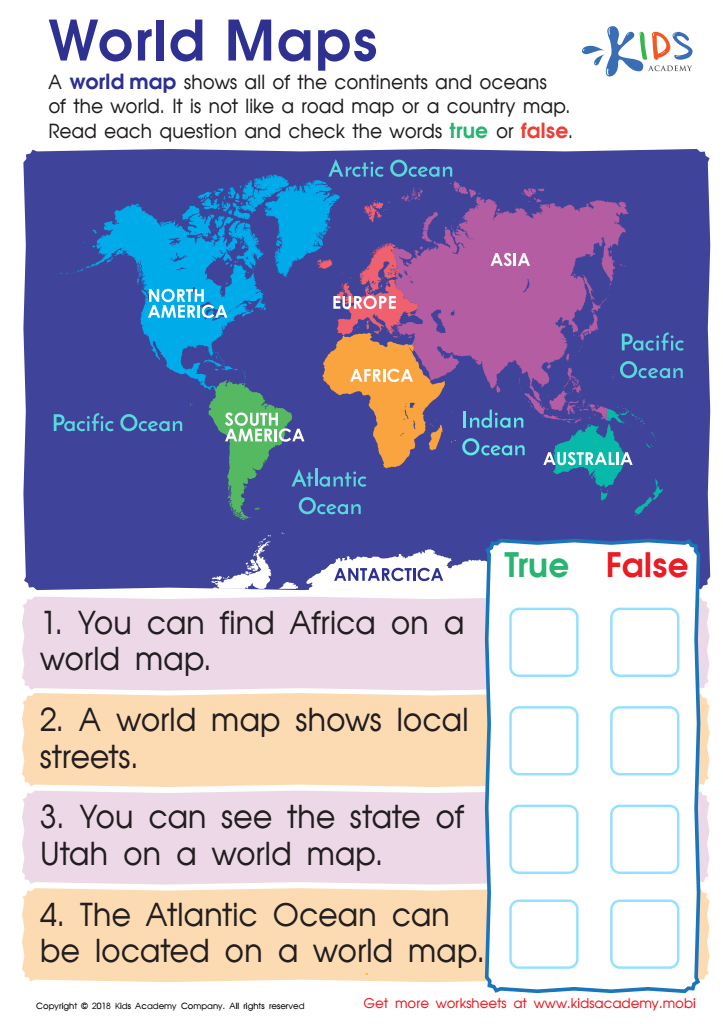
World Maps Worksheet
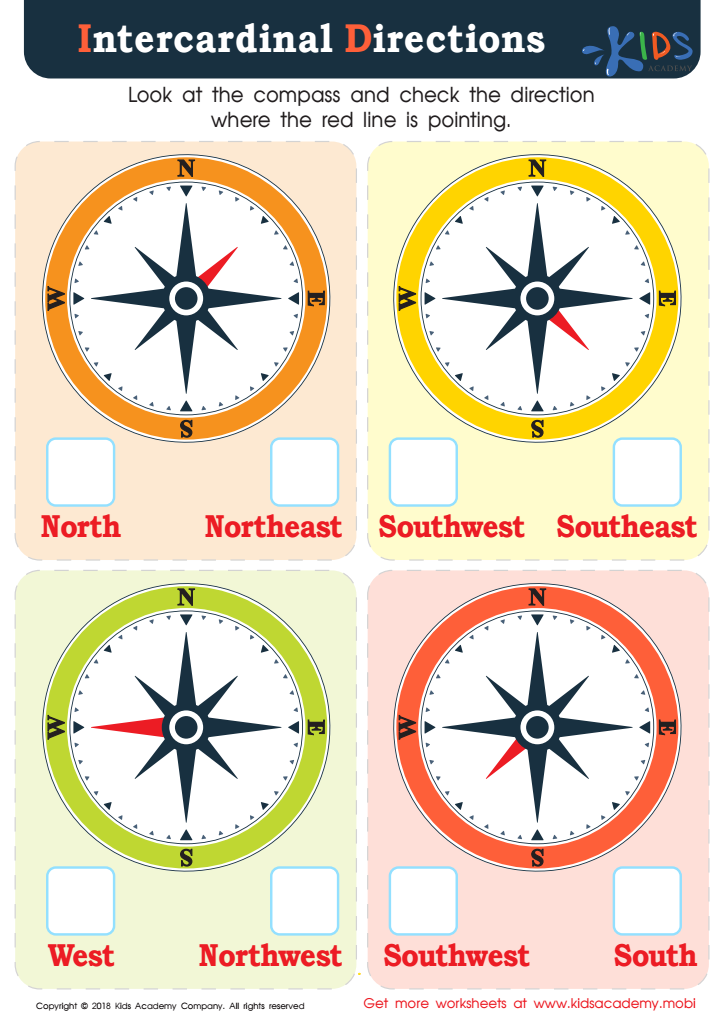
Intercardinal Directions Worksheet







Parents and teachers should care about teaching map reading and geography to children aged 7–9 for several compelling reasons. Firstly, understanding maps and geography enriches a child's spatial awareness, helping them comprehend where they are in relation to the wider world. At this developmental stage, children are curious and highly receptive to new information, making it an ideal time to introduce basic geographic concepts.
Moreover, map reading improves critical thinking and problem-solving skills. As children learn to interpret symbols, scales, and directions, they enhance their ability to process information and make informed decisions. This foundational knowledge supports other academic subjects, such as history and science, where geographic context is often essential for understanding content.
Geography also fosters cultural awareness and empathy. By learning about different places and environments, children gain a broader perspective on how people live around the world. This can teach them respect for diverse cultures and the interconnectedness of global communities.
Additionally, technology exposes us to virtual maps every day, and understanding how to navigate them is an indispensable life skill. Early familiarity makes children more adept at using GPS systems and digital maps, crucial tools in our modern world.
Investing time in teaching geography at a young age equips children with vital skills, fosters curiosity, and builds an informed, open-minded future generation.