Discover our engaging "Map Reading Skills Geography Worksheets" designed specifically for children ages 7-9! These interactive worksheets provide a fun way for young learners to master essential map skills, including understanding symbols, reading directions, and interpreting scale. Each activity encourages critical thinking and develops spatial awareness, making geography exciting and accessible. Ideal for home or classroom use, these worksheets promote independent learning while enhancing geographic literacy. With colorful visuals and age-appropriate challenges, kids will gain confidence as they explore maps. Equip your child with crucial map reading skills and watch their love for geography grow! Browse our collection to get started today!

Check out this FREE Trial Lesson on Geography for age 7-9!

U.S. Regions

Favorites
With answer key
Interactive
  • 7-9
  • Map reading skills
  • Geography
5 U.S. Regions Worksheet

5 U.S. Regions Worksheet

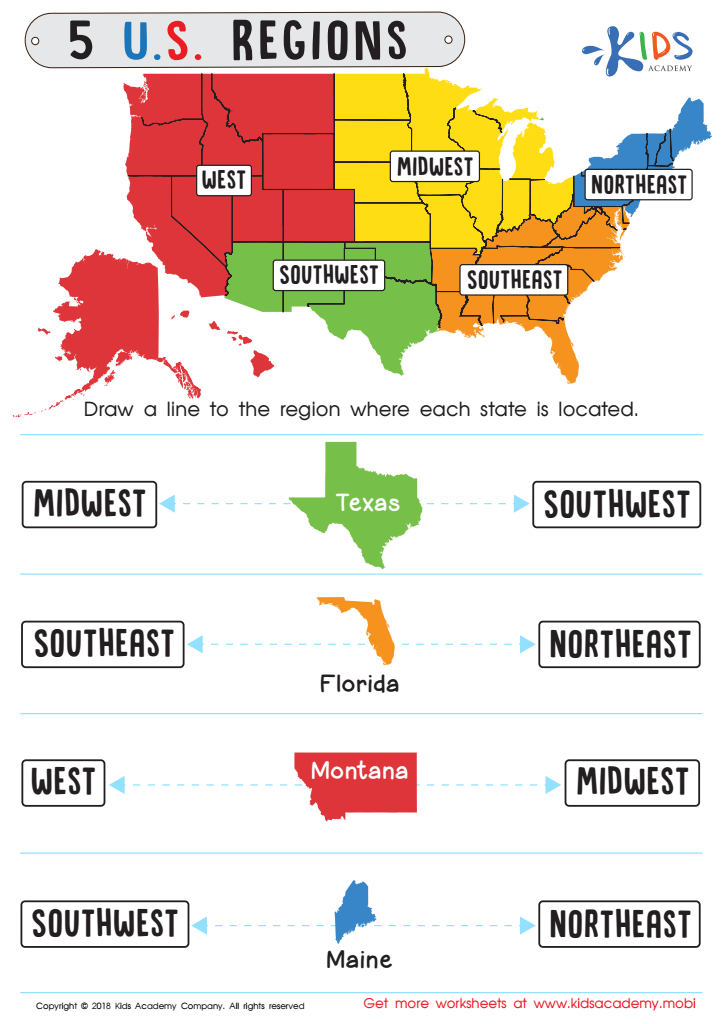
Familiarize students with states & capitals in your country before starting. Look at the map and ask kids to name some states. Then have them draw a line to the region each state is located in. This'll help them recognize the different places and make the exercise easier.
5 U.S. Regions Worksheet
Worksheet
Geographic regions of the United States worksheet

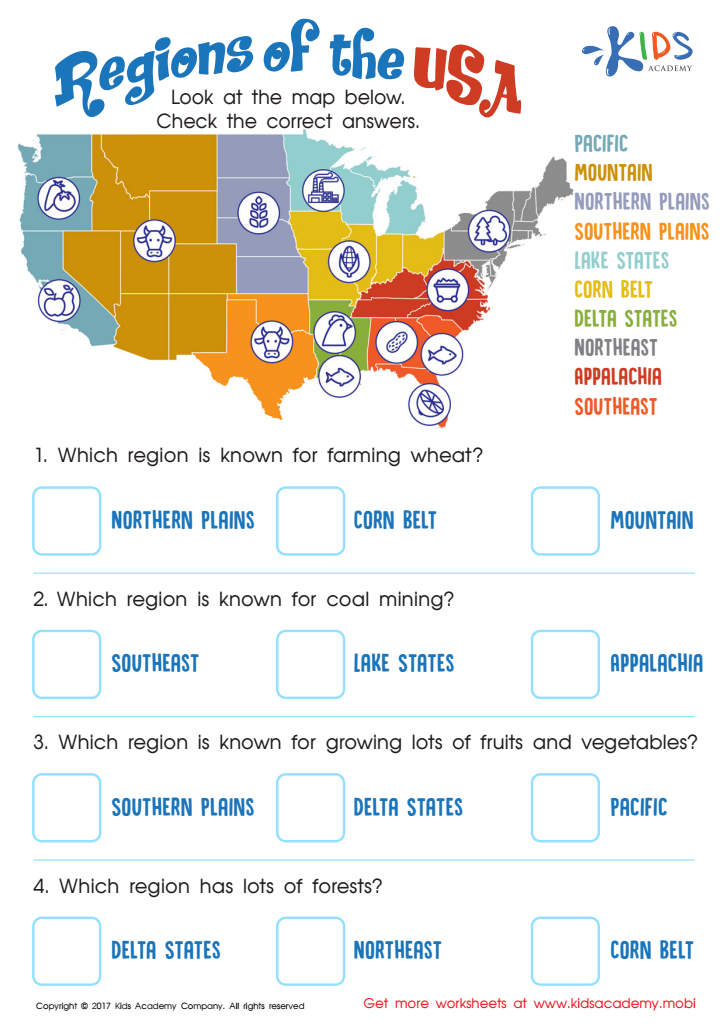
Regions of the USA Worksheet

Help your child explore the US with this regions of the United States worksheet! They'll learn about the diverse cultures, climates and purposes of each region. Make geography and US history fun with this educational exercise!
Regions of the USA Worksheet
Worksheet
Seven continents worksheet

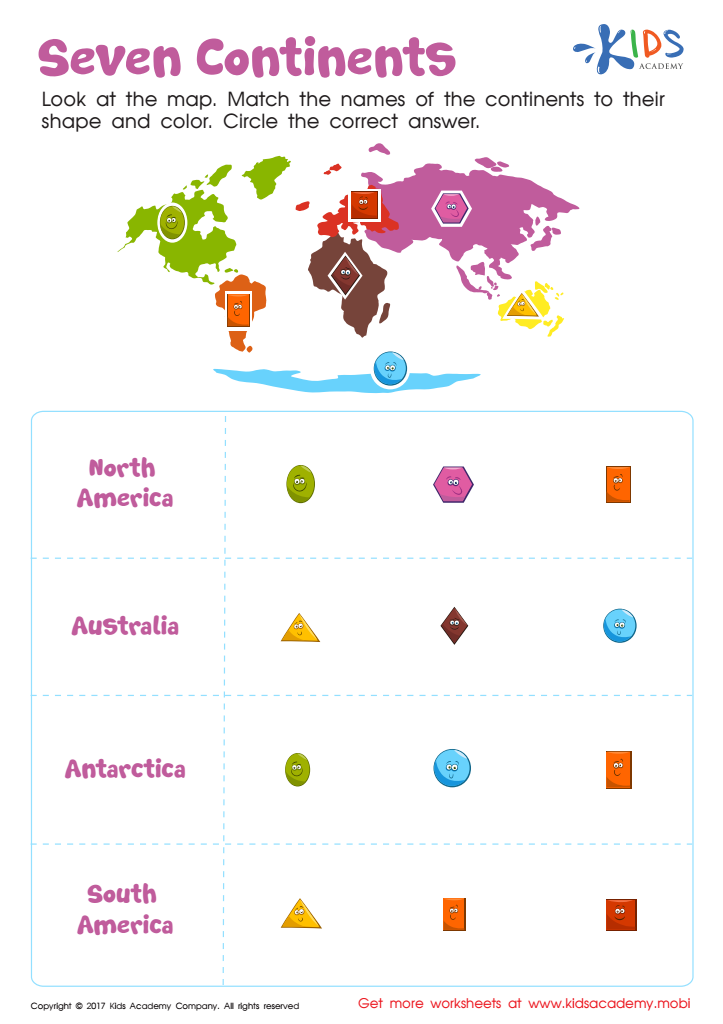
Seven Continents Worksheet

Geography teaches kids about the world! Encourage exploration with a seven continents worksheet - it'll help your child identify each continent using fun shapes.
Seven Continents Worksheet
Worksheet
Continents of the world worksheet

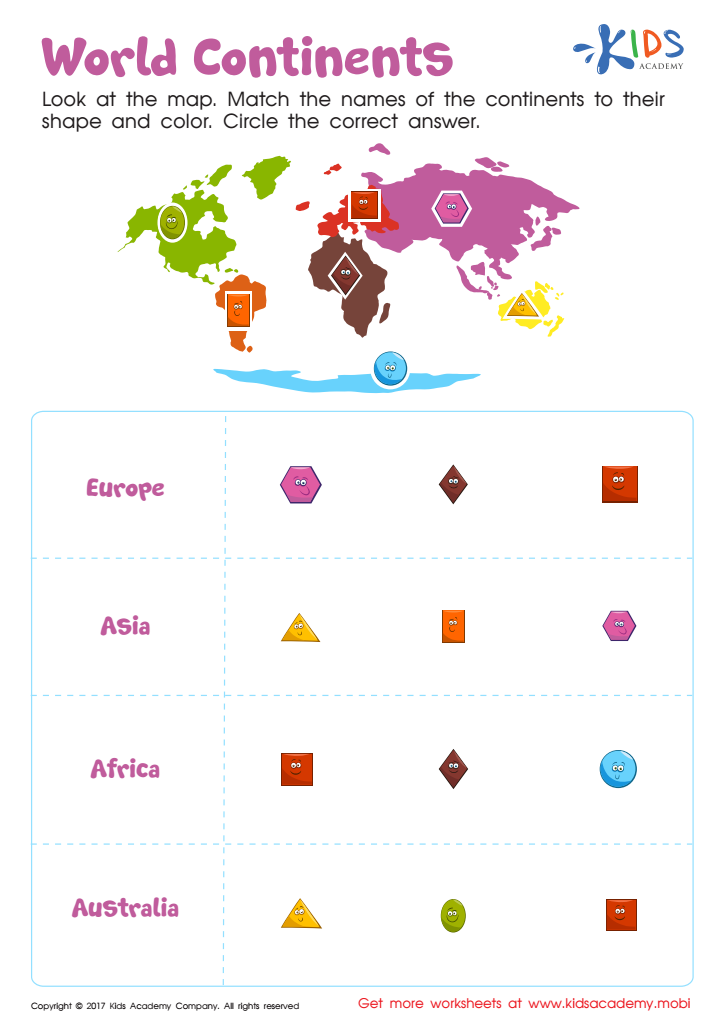
World Continents Worksheet

Help expand your child's knowledge of the world with this fun worksheet! It features goofy shapes to identify each continent, making learning the seven continents fun and memorable.
World Continents Worksheet
Worksheet
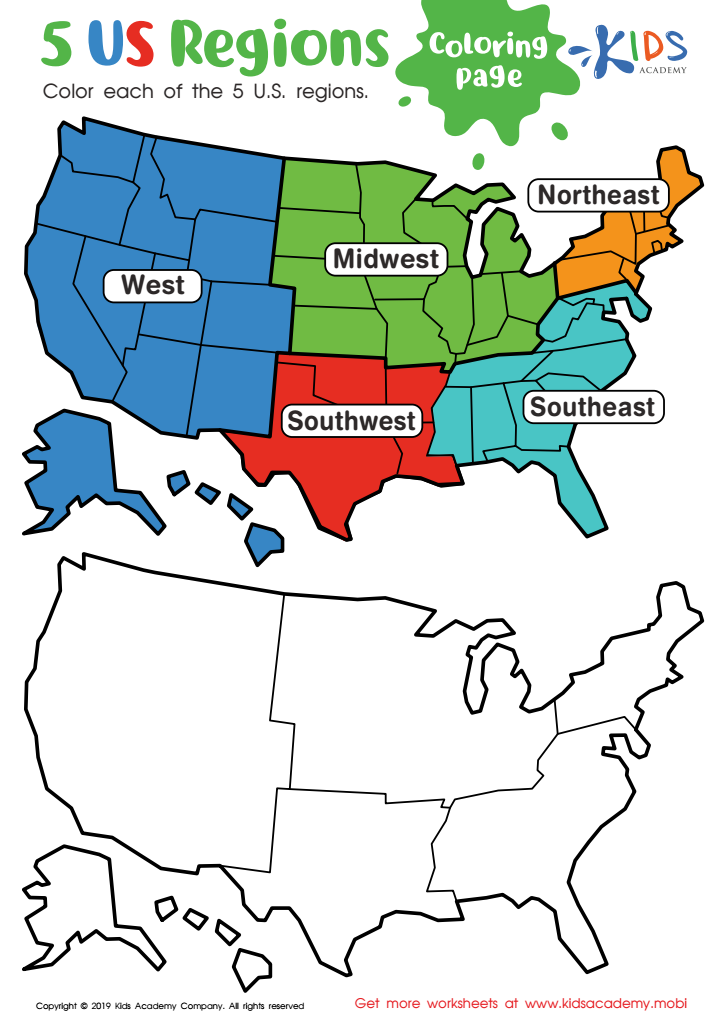
US Regions Coloring Page Worksheet

US Regions Coloring Page Worksheet

Our great nation is split into five distinct regions: Southeast, Southwest, West, Midwest, and Northeast. Each is known for its own special offerings and states. Let your kids have fun learning about the regions with a coloring activity! It's a great way for them to understand where each region stands on the map.
Download (PDF)
Assign to My Students
US Regions Coloring Page Worksheet
Worksheet
Cardinal Directions Printable Worksheet

Cardinal Directions Printable

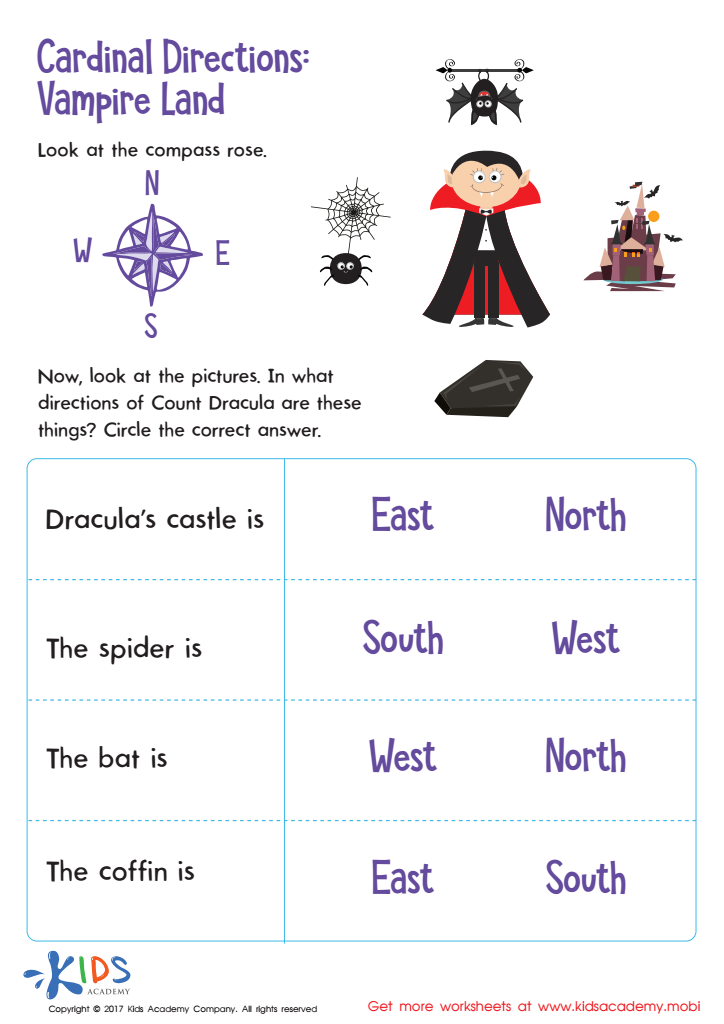
Perfect for fall, let's go to Transylvania with Count Dracula to learn cardinal directions. This printable worksheet introduces the compass rose and offers valuable practice. Kids will love the fun vampire theme! Get them motivated and help them discover the world with this spooky worksheet.
Cardinal Directions Printable
Worksheet
U.S. mountain ranges worksheet

US Mountain Ranges Worksheet

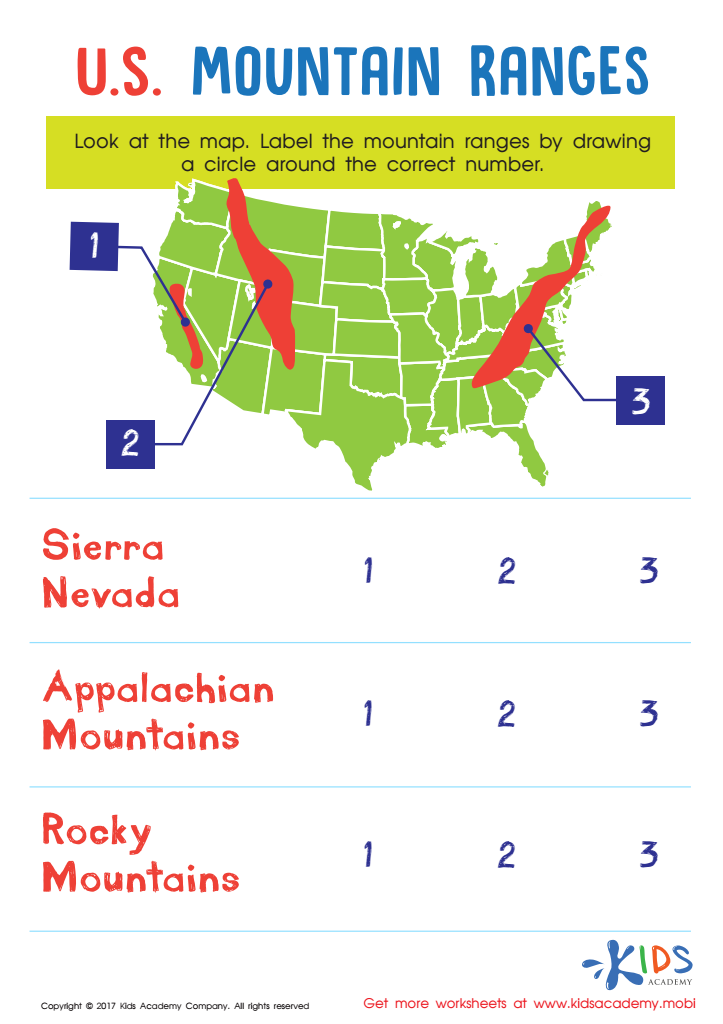
Introduce your little one to the U.S. with this Mountain Ranges worksheet! It'll help them recognize the major ranges and locate them on a map, sharpening their map skills.
US Mountain Ranges Worksheet
Worksheet


Map reading skills are crucial for children aged 7-9, as they foster essential geometric and critical thinking abilities that extend beyond geography. Mastering map reading helps young learners develop spatial awareness, a key skill for understanding their world. They learn to interpret symbols and legends, recognizing the importance of context. This lays the groundwork for problem-solving, navigation, and decision-making skills crucial for daily life.

Moreover, map reading encourages exploration and curiosity about the environment. It helps children develop a sense of place, equipping them with knowledge about their community and the wider world. As they learn to relate maps to real-life scenarios, they gain confidence to engage in geography-related discussions and activities.

Parents and teachers should prioritize these skills to promote independent thinking and encourage children to ask questions about their surroundings. By integrating map reading into learning, educators can create a more engaging curriculum that sparks interest and respect for geography. Ultimately, fostering these skills not only enhances academic success but also prepares children for real-world challenges, promoting teamwork, collaboration, and global awareness as they navigate their interconnected world.