Critical Thinking Governance and Civics Worksheets for Ages 7-9
6 filtered results
-
From - To
Equip your child with essential life skills using our "Critical Thinking Governance and Civics Worksheets for Ages 7-9". These carefully curated activities are designed to spark curiosity, enhance problem-solving abilities, and develop a solid understanding of governance and civics. Through a range of engaging exercises, children will explore fundamental concepts, learn about community roles, and practice decision-making in realistic scenarios. Perfect for classroom use or at-home learning, these worksheets align with educational standards, ensuring children gain valuable insights while enjoying interactive learning. Foster critical thinkers who are informed and active citizens with our comprehensive worksheets.
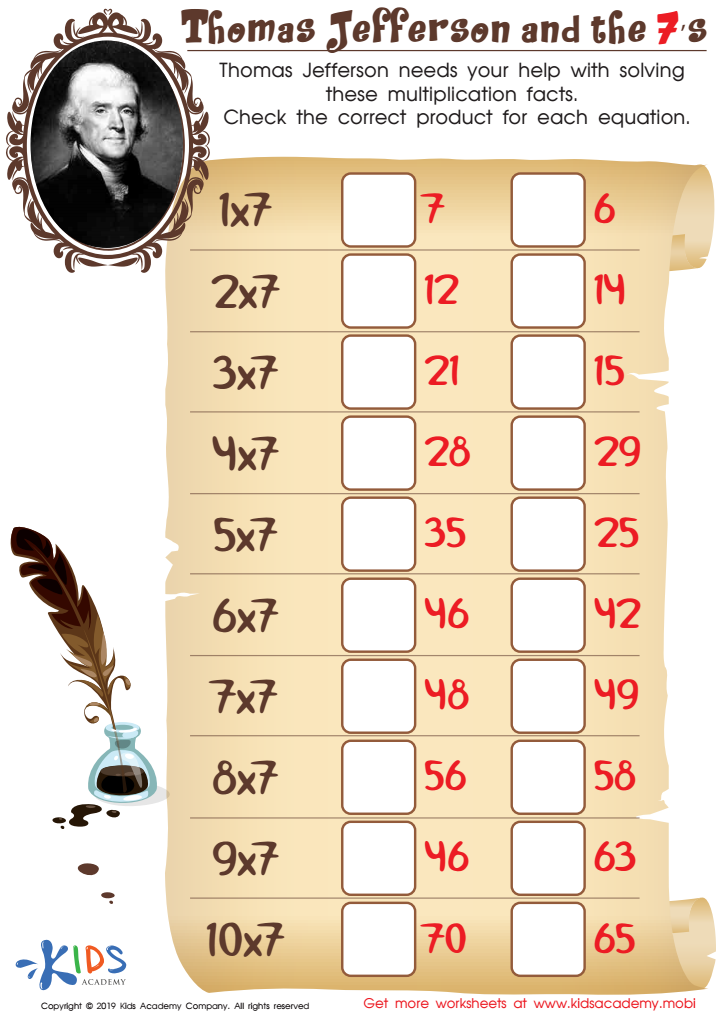
Thomas Jefferson and the 7’s Worksheet
 Assign to My Students
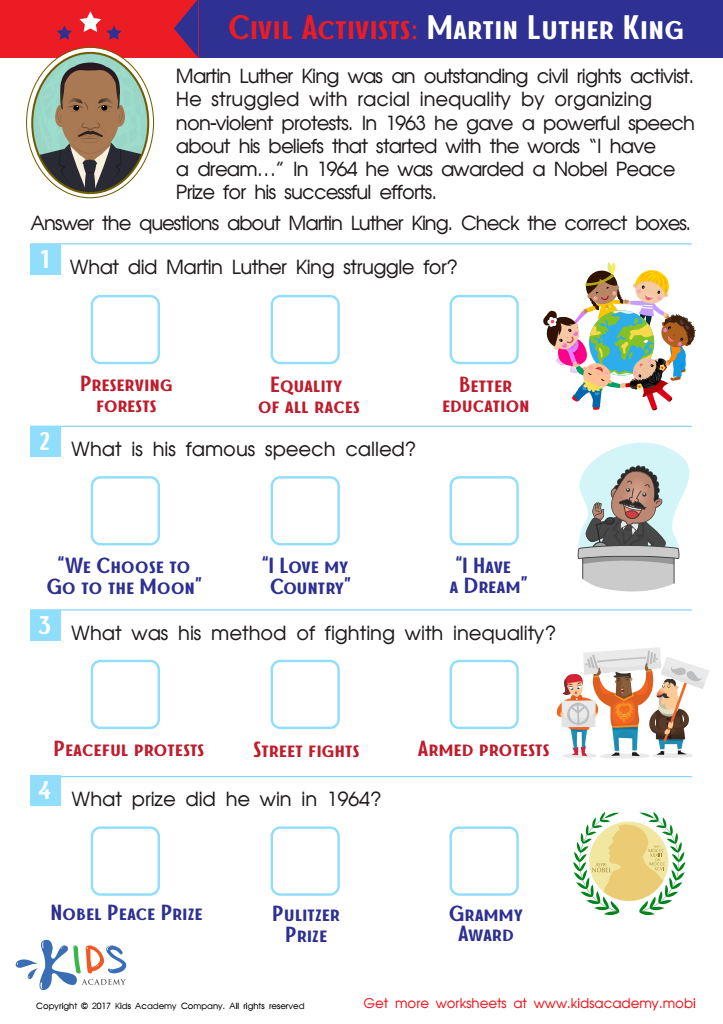
Martin Luther King Worksheet
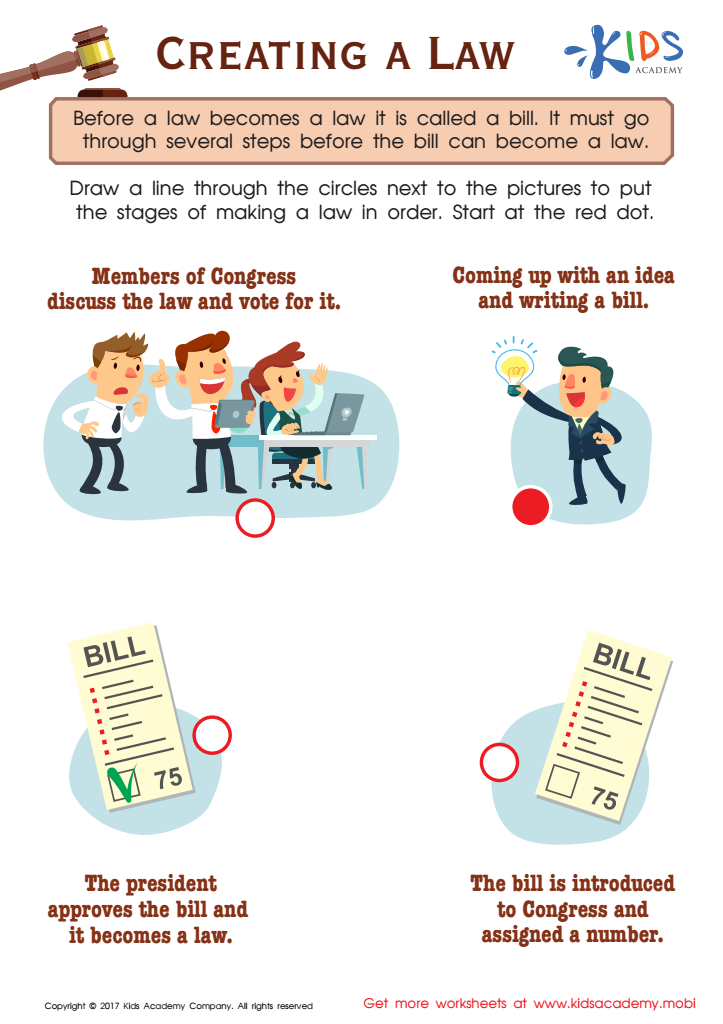
Creating a Law Worksheet
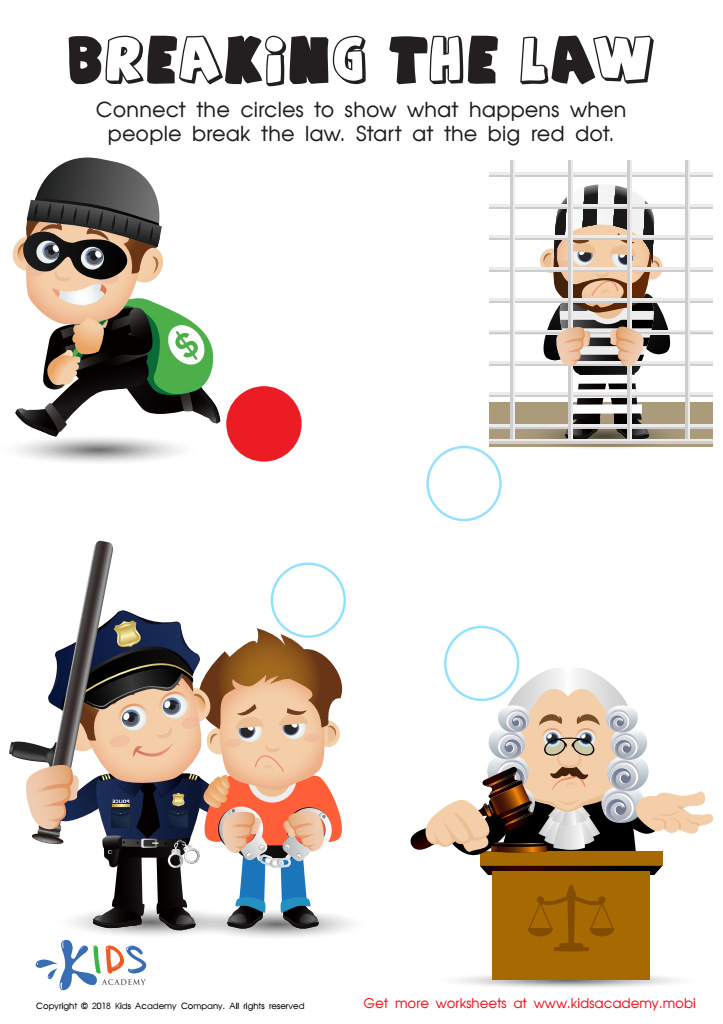
Breaking the Law Worksheet
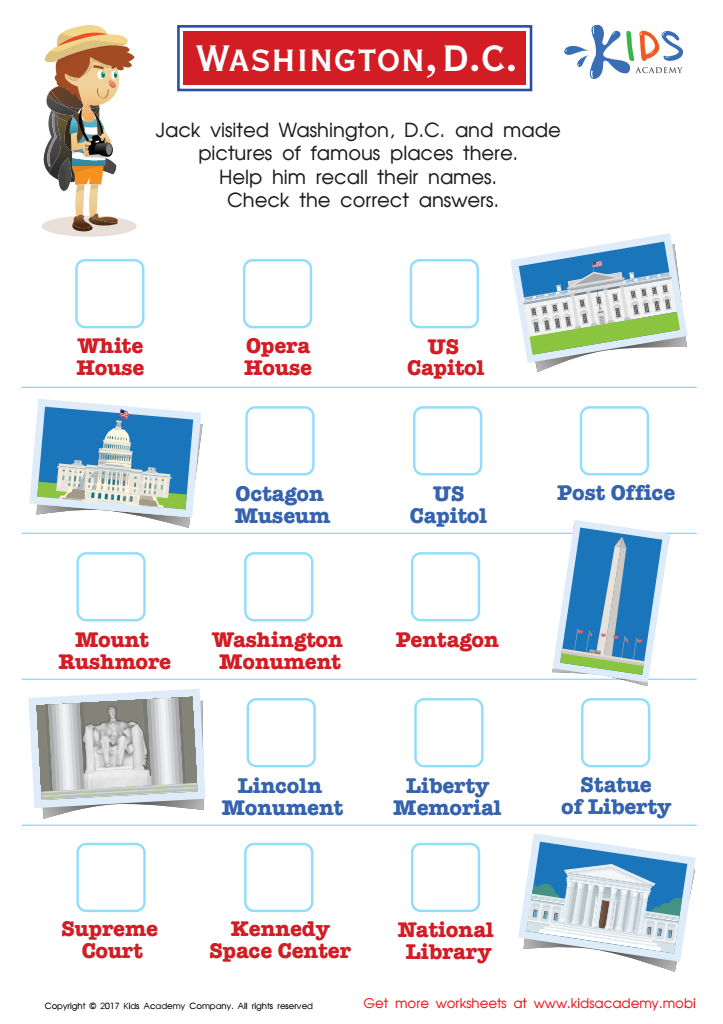
Washington D.C. Printable Worksheet
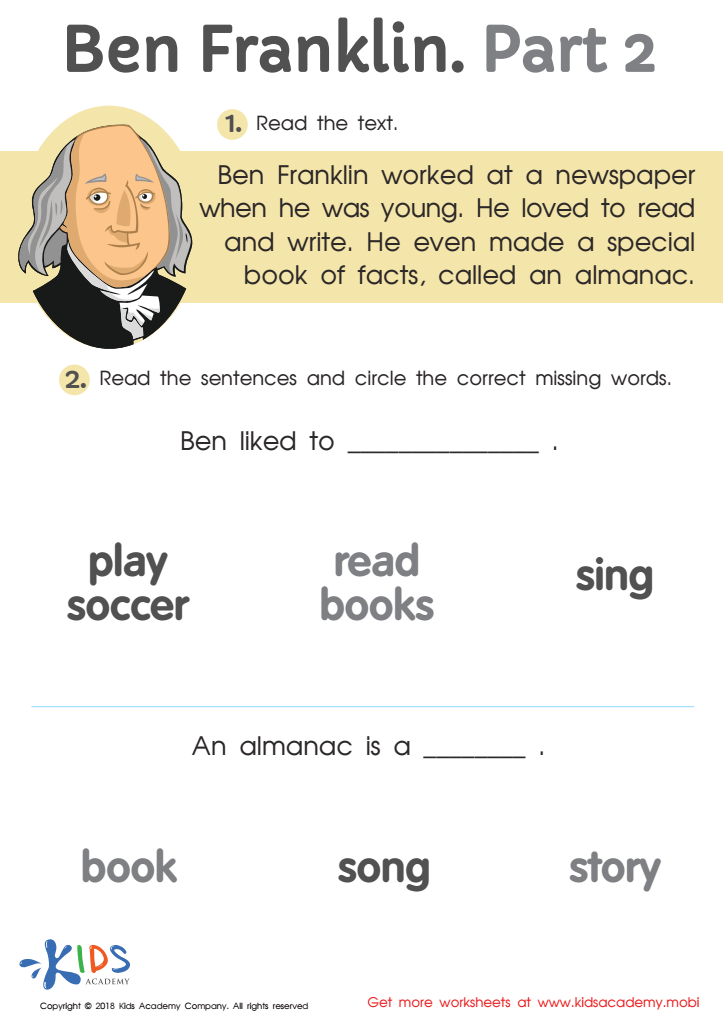
Ben Franklin Part 2 Worksheet


Parents and teachers should care about instilling critical thinking, governance, and civics in children aged 7-9 for several crucial reasons. This formative period constitutes an ideal window for shaping young minds and establishing foundational skills that become lifelong assets.
First, critical thinking fosters independent problem-solving and decision-making abilities. By teaching children to analyze information, evaluate evidence, and consider different perspectives, parents and educators help them become more adept at navigating complex situations. This cultivates intellectual curiosity, enabling kids to approach challenges with confidence and creativity.
Second, understanding basic governance familiarizes children with the structure and function of societal systems. When they learn about roles and responsibilities in community, state, and national governance, they begin to grasp how rules are made and the importance of participation and civic duty.
Lastly, early civics education promotes responsible citizenship. Children who understand civic norms and values develop respect for diversity and the importance of contributing to their community and society. They learn the value of empathy, justice, and common good, essential elements for fostering a compassionate and informed society.
Overall, embedding these principles early supports the growth of thoughtful, informed, and engaged individuals. Parents and educators play a key role in this, setting the stage for a more thoughtful, equitable, and active citizenry.








