Reading comprehension Governance and Civics Worksheets for Ages 7-9
5 filtered results
-
From - To
Discover our engaging "Reading Comprehension Governance and Civics Worksheets" designed specifically for ages 7-9! These worksheets foster essential reading skills while introducing young learners to fundamental concepts of governance and civics. Each activity encourages critical thinking, enhancing comprehension through interactive lessons about laws, community roles, and civic responsibilities. Perfect for educators and parents alike, our resources provide a fun and educational way to build literacy and civic understanding together. With colorful illustrations and child-friendly text, these worksheets create a dynamic learning environment that inspires curiosity and knowledge about the world of governance. Start cultivating responsible citizens today!
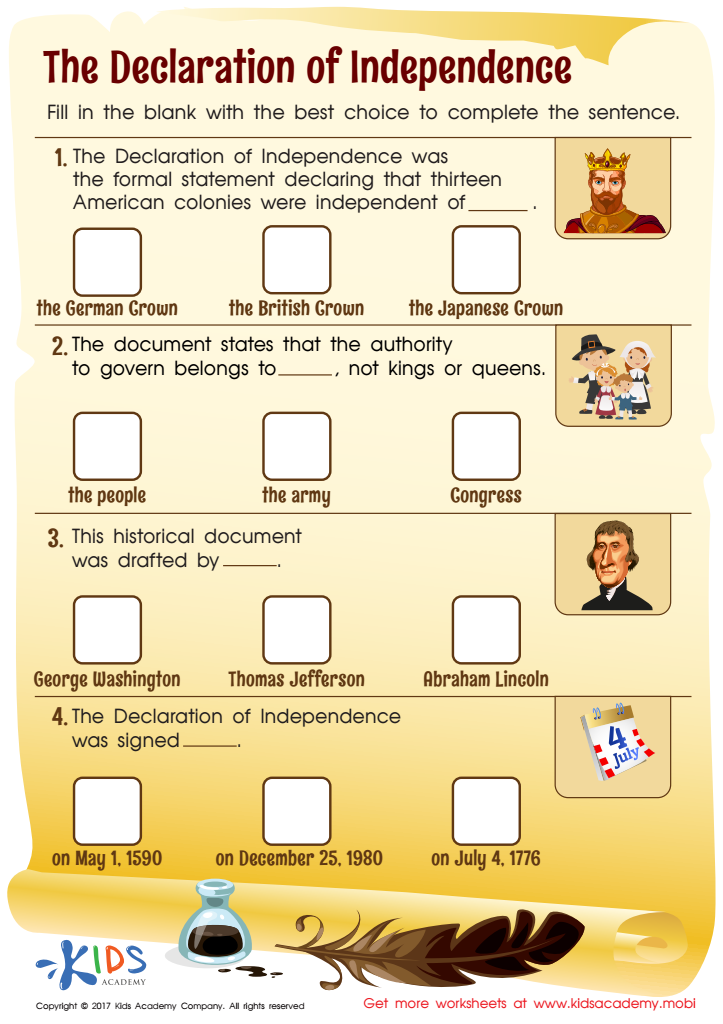
Declaration of Independence Worksheet
 Assign to My Students
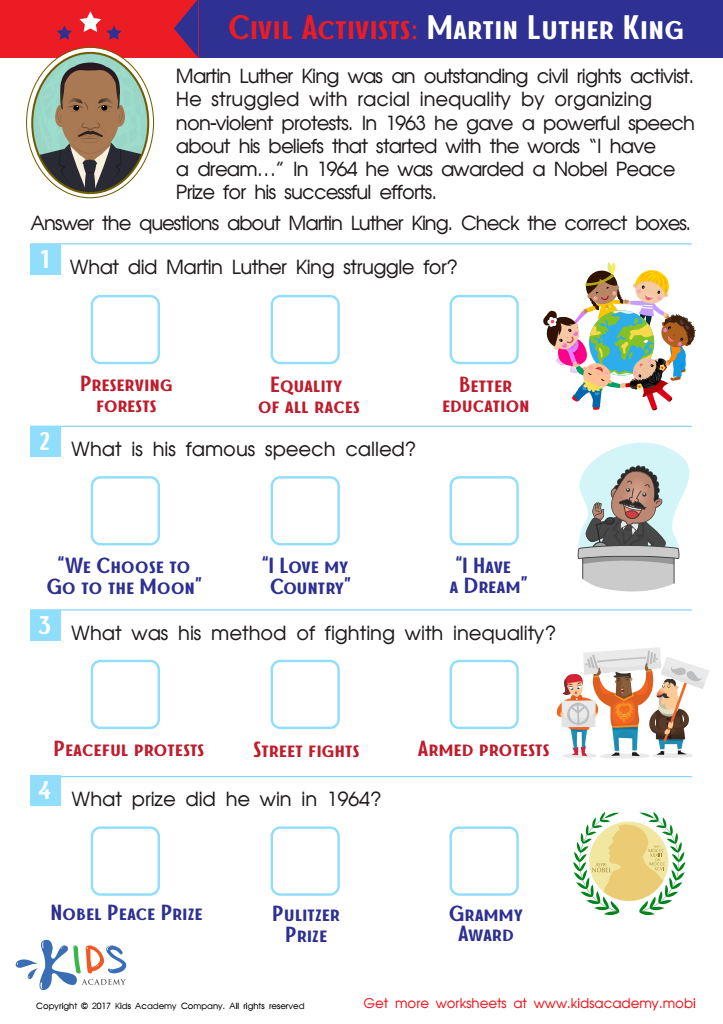
Martin Luther King Worksheet
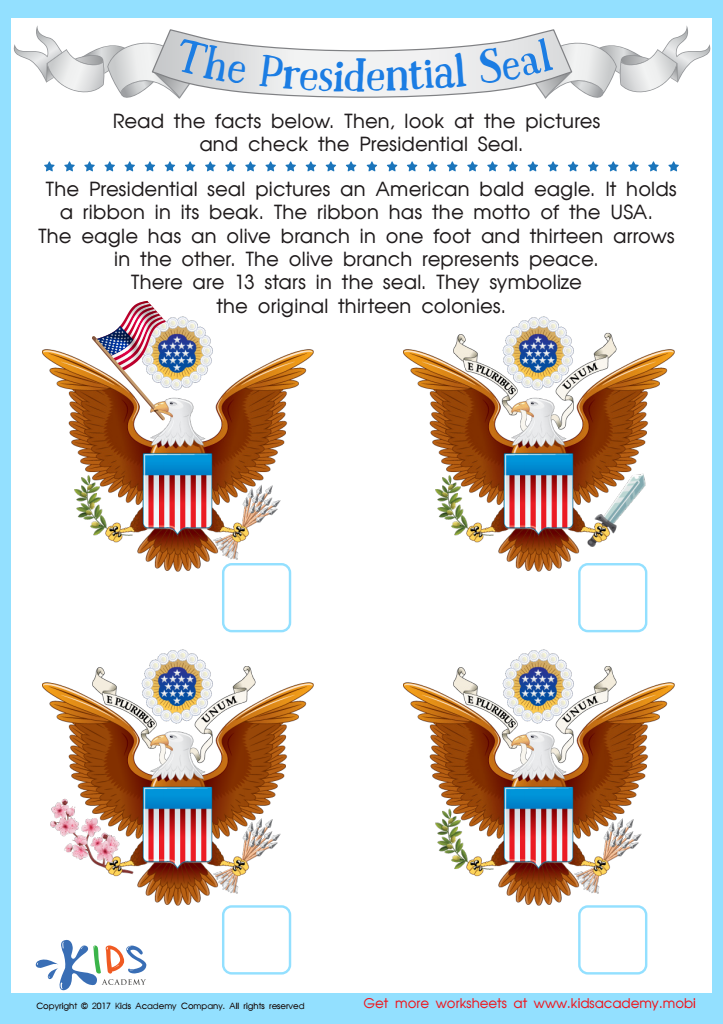
The Presidential Symbol Worksheet
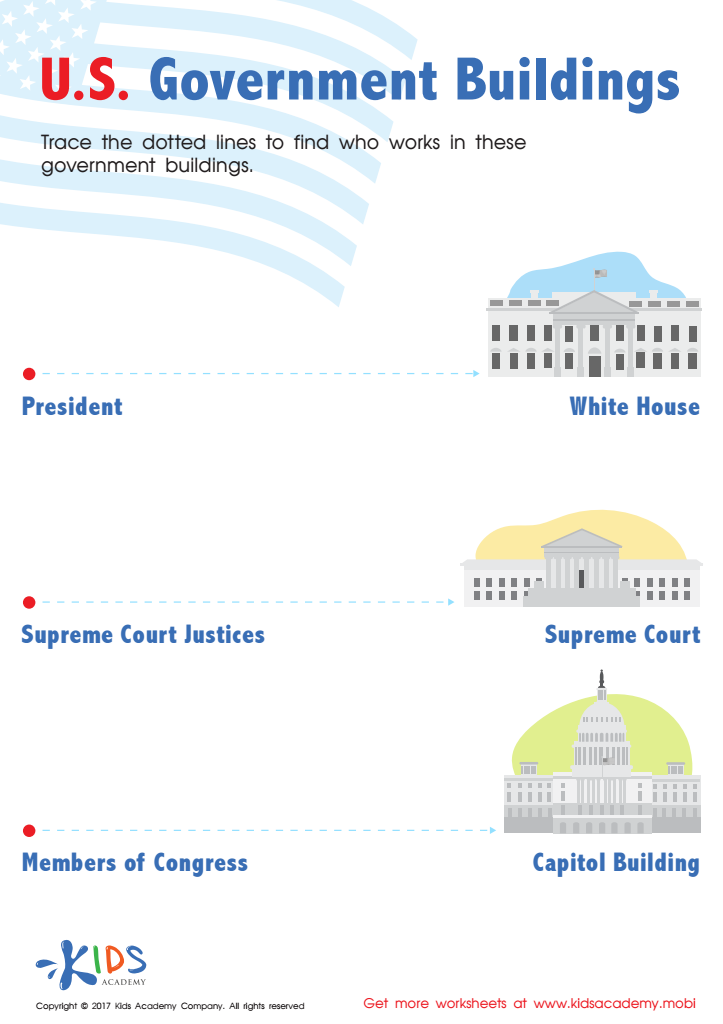
US Government Buildings Printable
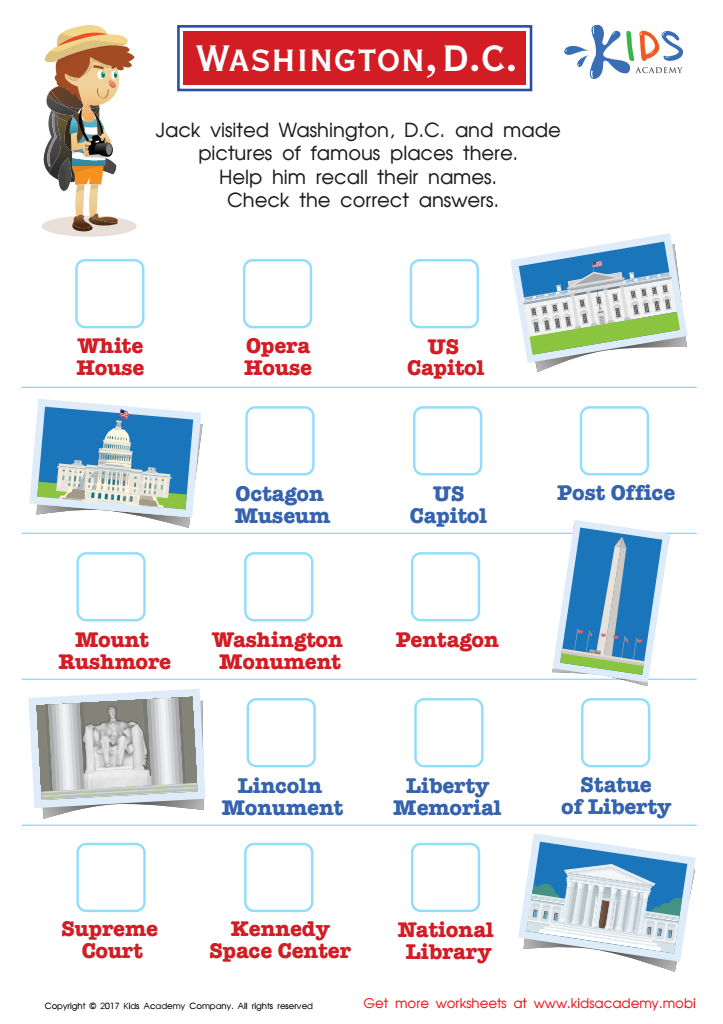
Washington D.C. Printable Worksheet


Reading comprehension, particularly in the context of governance and civics, is crucial for children ages 7-9 as it lays the foundation for their understanding of societal structures and their role within a community. At this developmental stage, children are beginning to form their values, opinions, and awareness of the world around them. By teaching them essential concepts of governance and civics through engaging reading materials, parents and teachers can help young learners develop critical thinking skills that are vital for informed citizenship.
Incorporating civics into reading comprehension not only promotes literacy but also encourages active participation in democracy, empathy, and respect for diverse perspectives. As these young learners encounter topics like community responsibilities, rights, and the importance of rules, they gain the tools necessary to navigate and contribute positively to society. This understanding can empower them to express their thoughts articulately, engage in discussions, and recognize the significance of their voices in the democratic process.
Translating complex civic concepts into comprehensible narratives forms a lasting interest in civic engagement. By fostering early comprehension of such crucial themes, parents and teachers play a significant role in shaping responsible citizens who are equipped to take an active part in their communities.








