Understanding democracy Governance and Civics Worksheets for Ages 7-9
3 filtered results
-
From - To
Unlock the world of democracy with our "Understanding Democracy: Governance and Civics Worksheets" designed for ages 7-9. This engaging collection introduces young learners to the fundamental principles of democratic governance, citizenship, and civic responsibility. Through interactive exercises and age-appropriate activities, children will explore concepts like rights, responsibilities, and the importance of voting. Our thoughtfully crafted worksheets foster critical thinking and promote active participation in their communities. Enhance your child’s understanding of how government functions and the role of citizens in democracy, all while making learning fun and relatable. Empower the next generation of engaged citizens with our instructive resources today!
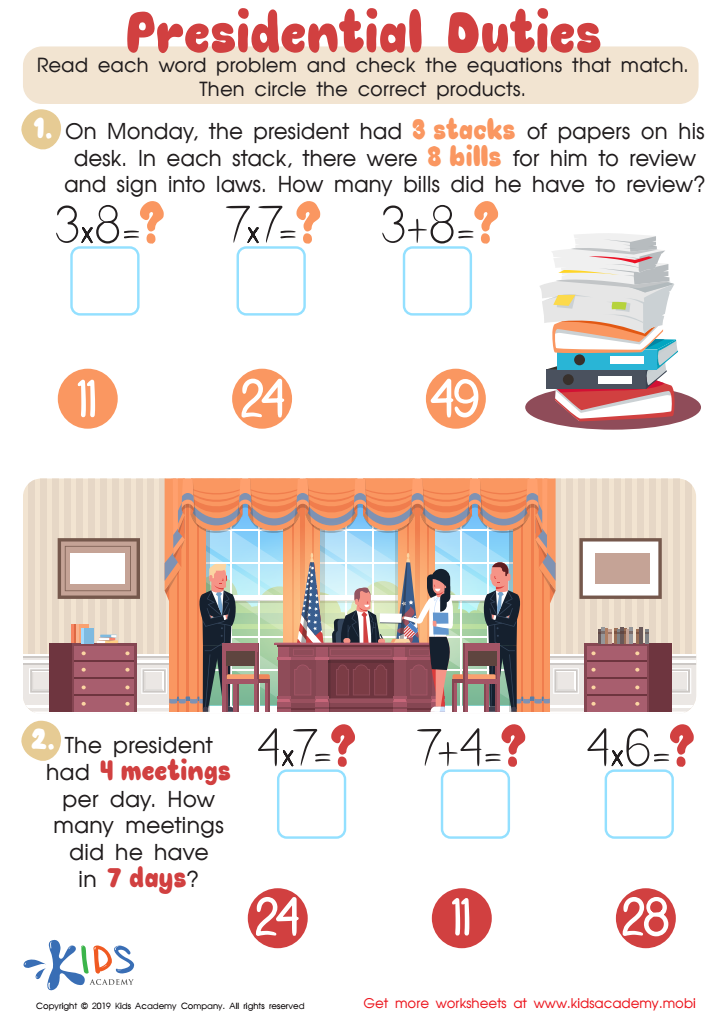
Presidential Duties Worksheet
 Assign to My Students
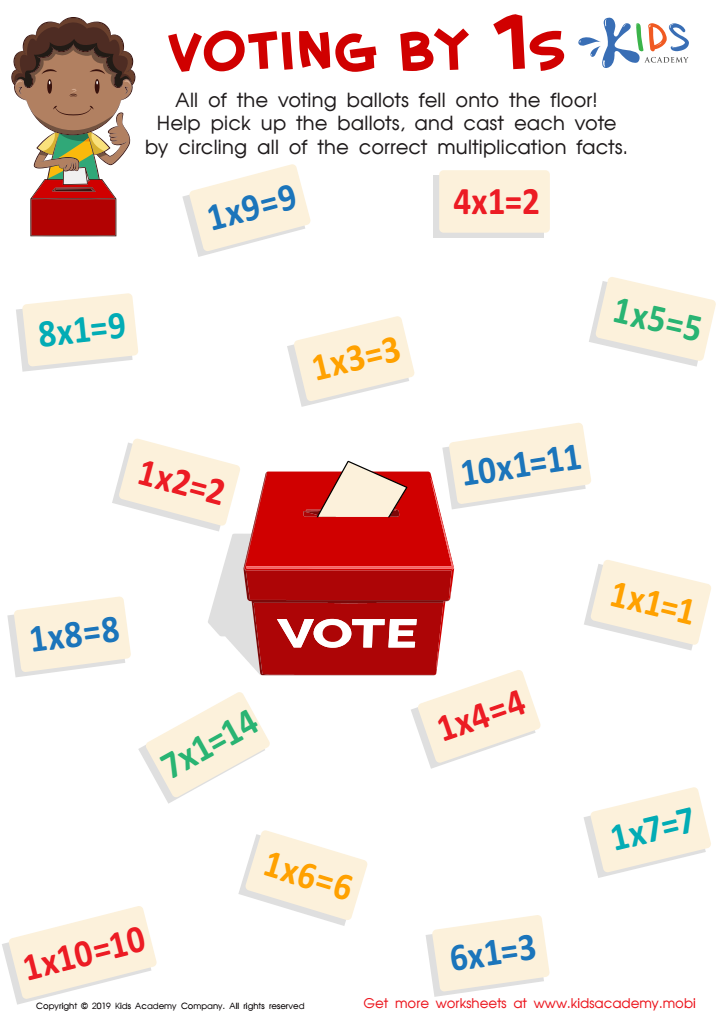
Voting by 1s Worksheet
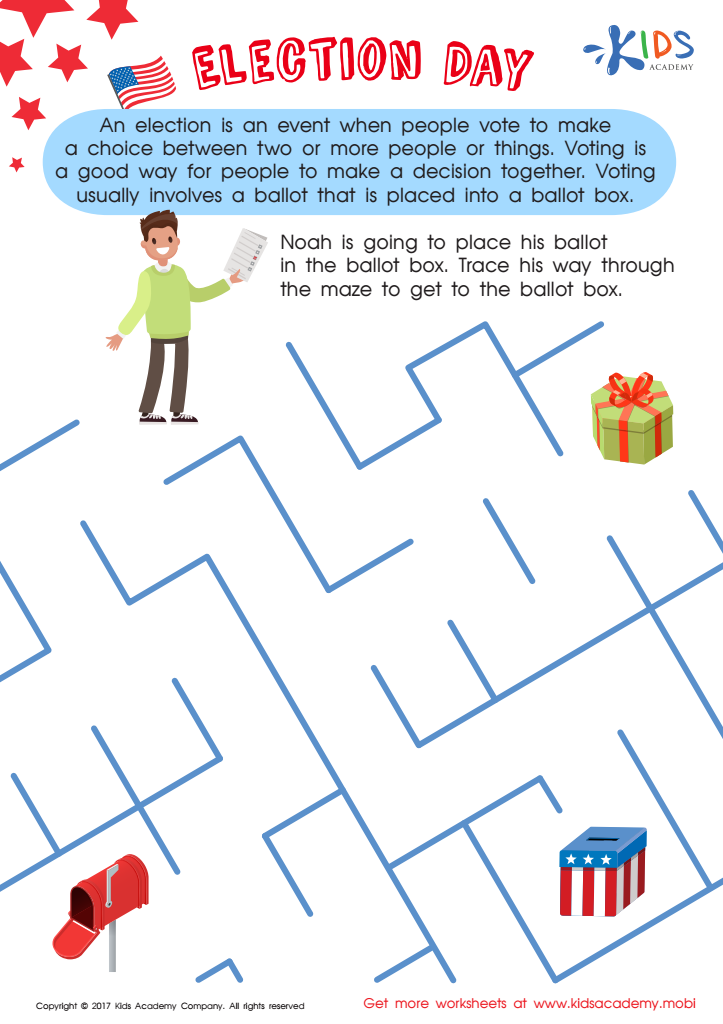
Election Day Worksheet


Understanding democracy, governance, and civics is crucial for children aged 7 to 9, and parents and teachers play a vital role in this education. At this age, children are developing foundational skills for critical thinking, social awareness, and ethical reasoning. Introducing these concepts helps them understand the principles of fairness, justice, and community participation, fostering early civic engagement.
Educating young learners about democracy equips them with the tools to participate in society thoughtfully and responsibly. It nurtures an appreciation of diverse viewpoints and the importance of cooperation in problem-solving, essential skills in a democratic society. Understanding governance gives children insight into how decisions affect their lives and environments, instilling a sense of responsibility toward their communities.
Additionally, civics education helps children recognize their rights and responsibilities, empowering them to voice their opinions and contribute positively to discussions. This foundational knowledge encourages future active citizenship, as engaged individuals are more likely to participate in civic activities as adults, promoting a stronger and more equitable society. Parents and teachers can use accessible resources, age-appropriate discussions, and interactive activities to make these complex topics relatable and engaging for children, ensuring they grow into informed, responsible citizens.








