
Understanding laws Governance and Civics Worksheets for Ages 7-9
3 filtered results
Difficulty Level
Grade
Age
-
From - To
Subject
Activity
Standards
Explore our comprehensive "Understanding Laws: Governance and Civics Worksheets for Ages 7-9." These interactive materials are expertly designed to introduce young learners to the basics of legal systems, the importance of rules, and civic responsibility. Engaging activities and age-appropriate content guide children through real-life scenarios, enhancing their critical thinking and decision-making skills. Encourage your student's curiosity about how communities function and underscore the significance of laws in maintaining order and fairness. Perfect for both classroom settings and homeschool environments, these worksheets make complex concepts accessible and fun for young minds. Start fostering informed, responsible citizens today!
Favorites
With answer key
Interactive
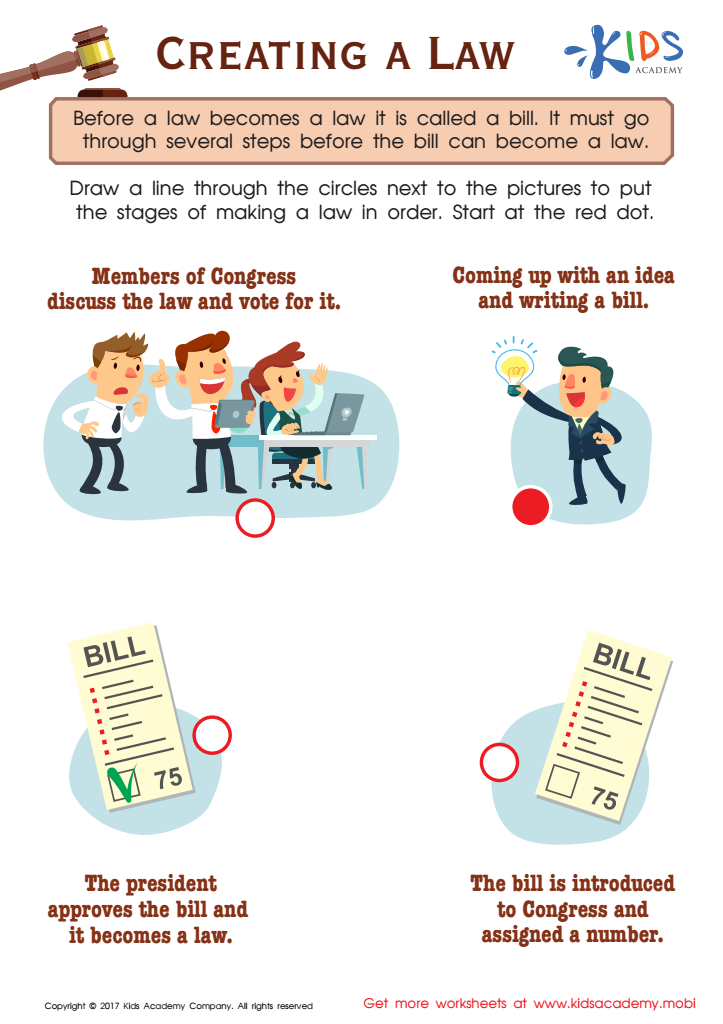
Creating a Law Worksheet
Help your child understand how laws are made with this Creating a Law Worksheet. Perfect for young learners, it covers the lawmaking process with fun pictures and simple language. Get an exciting insight into democracy and teach kids the importance of laws!
 Assign to My Students
Creating a Law Worksheet
Worksheet
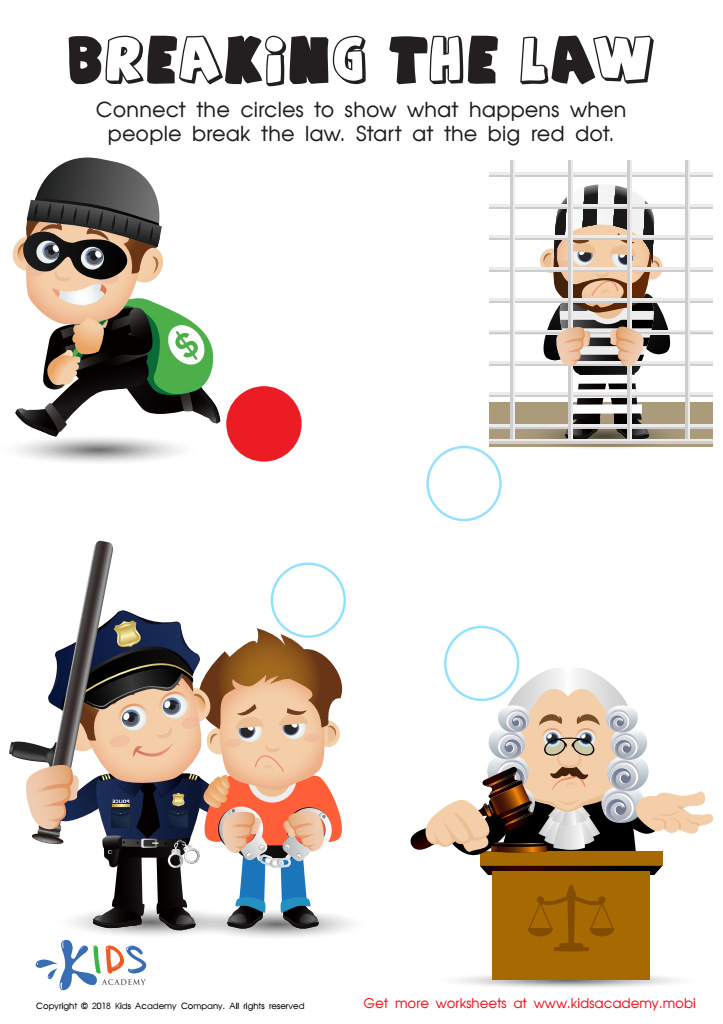
Breaking the Law Worksheet
Explain to your child why people go to jail. Show them this worksheet; it illustrates the stages a criminal goes through from breaking the law to receiving their punishment. Guide them in connecting the circles from the big red dot. Finish with a discussion on why it's important to follow the law.
Breaking the Law Worksheet
Worksheet
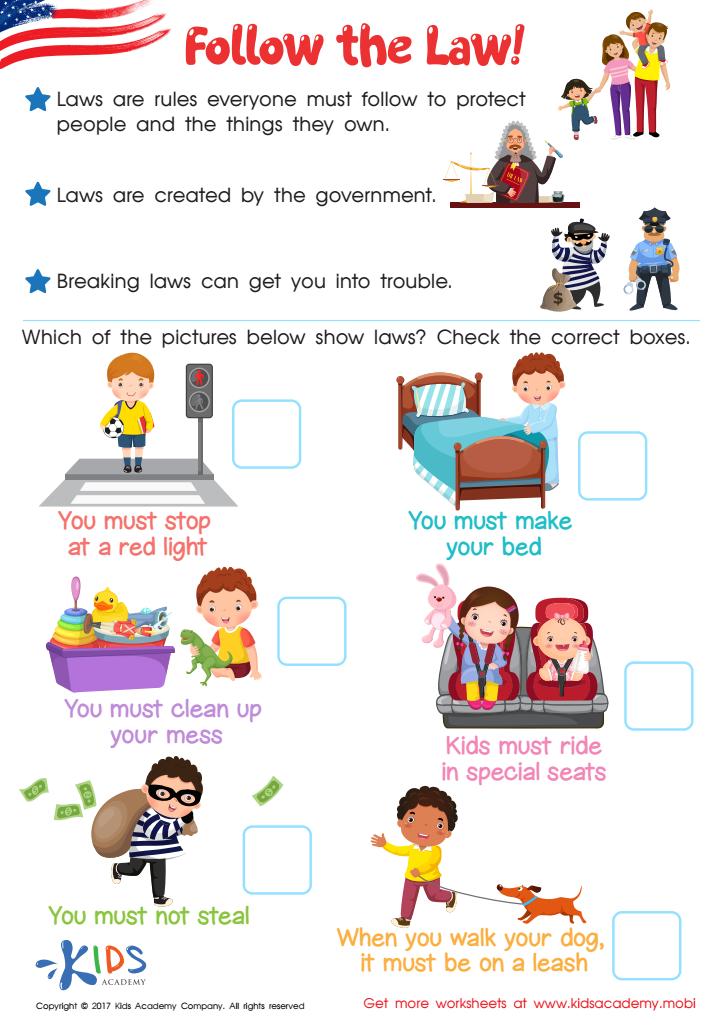
Follow the Law Worksheet
Kids should understand the difference between laws and household rules. Worksheets for 2nd grade review these differences, teaching kids more about life in their community. Breaking the law can lead to harsh consequences, so understanding the rules of home and public spaces is essential.
Follow the Law Worksheet
Worksheet
Join Kids Academy for Free
Who is primarily going to use this learning content?


Understanding laws, governance, and civics at an early age lays a critical foundation for children’s development as informed, responsible, and active citizens. For ages 7-9, parents and teachers play pivotal roles in fostering this knowledge, and there are myriad reasons why they should care deeply about this.
Firstly, igniting curiosity about how societies function helps children grasp the importance of rules, fairness, and justice. Kids need to learn why laws exist and how they maintain order and protect citizens. This early education helps cultivate respect for rules and a sense of personal responsibility.
Secondly, familiarizing young minds with basic civic structures (like local government, community helpers, and voting) empowers them to better understand how decisions are made and why their community functions the way it does. This can enhance their critical thinking and emotional intelligence, as well as prompt them to ask questions and seek understanding – vital skills for lifelong learning.
Moreover, early civics education encourages empathy by highlighting diverse roles within a community and showing how collective efforts contribute to societal well-being. This understanding promotes inclusivity and teamwork, values that are essential both within and beyond the classroom.
Ultimately, instilling a basic understanding of governance and civics at a young age shapes well-rounded individuals who are more likely to contribute positively to their communities and take responsibility for their actions. This not only benefits the individual children but also society as a whole in creating more engaged and conscientious citizens.








