Analytical thinking History Worksheets for Ages 7-9
3 filtered results
-
From - To
Discover our engaging Analytical Thinking History Worksheets for ages 7-9, designed to foster critical thinking and problem-solving skills in young learners. These worksheets encourage students to explore historical events, analyze various perspectives, and make connections between the past and present. Through fun and interactive activities, children will enhance their analytical abilities while developing a deeper appreciation of history. Perfect for classroom use or at-home learning, our resources provide a delightful way to enrich children’s knowledge and thinking skills. Unlock the history enthusiast in your child and watch them thrive with our thoughtfully crafted worksheets! Ideal for interactive learning experiences!
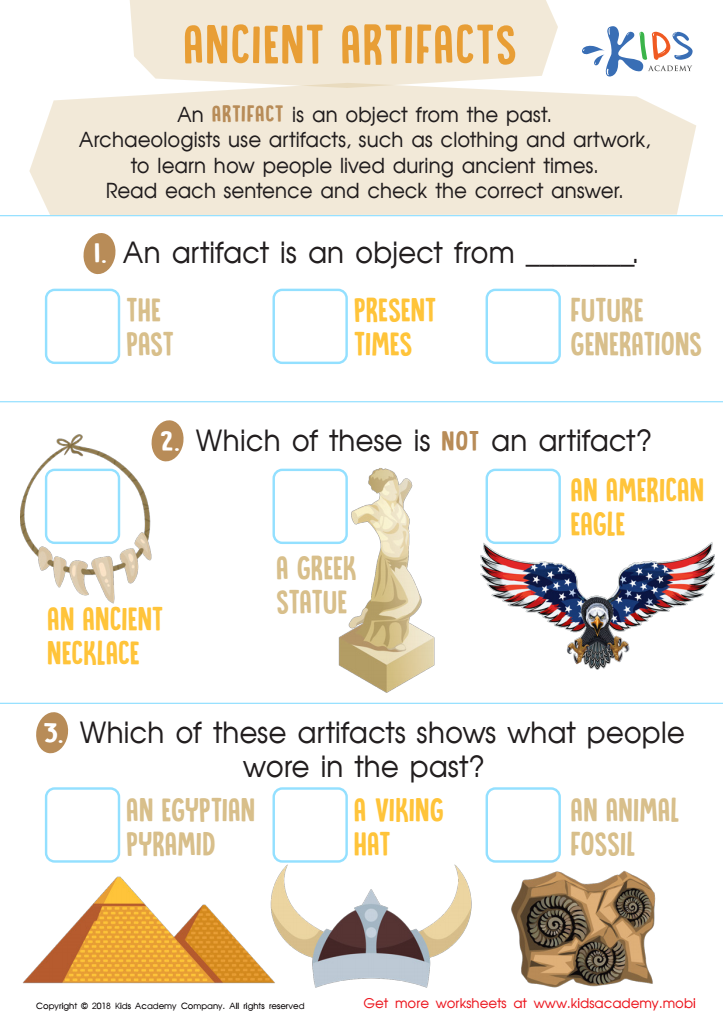
Ancient Artifacts Worksheet
 Assign to My Students
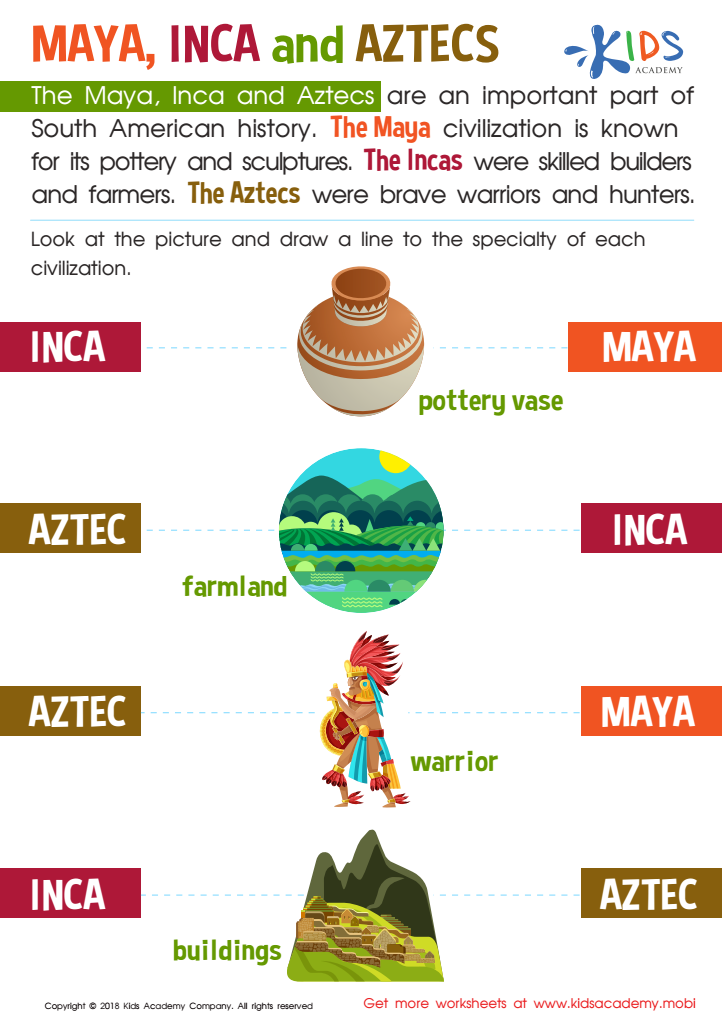
Maya, Inca and Aztecs Worksheet
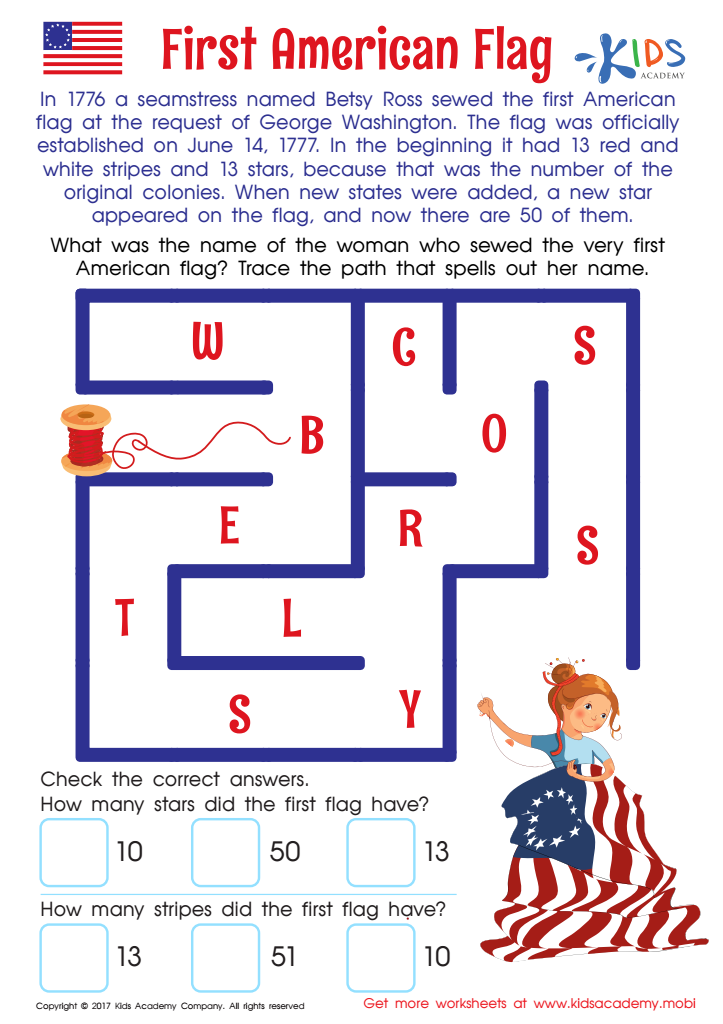
First American Flag Worksheet








Analytical thinking history is crucial for children ages 7-9 as it lays the foundation for critical reasoning and problem-solving skills essential for academic success and everyday life. At this developmental stage, children are naturally curious and beginning to process complex ideas. Introducing them to analytical thinking through historical contexts encourages them to examine events, understand cause-and-effect relationships, and discern differing perspectives.
Parents and teachers should care about this because it cultivates cognitive skills that extend beyond history lessons. By analyzing historical events, children learn to evaluate sources, interpret motivations, and identify biases. Such skills are transferable, helping them in subjects like science, math, and literature, where critical thinking is equally important.
Moreover, engaging with history fosters a sense of identity and cultural understanding, teaching children to appreciate diversity and the importance of historical narratives. It promotes empathy by helping them understand the experiences of others in various contexts.
Incorporating analytical thinking into history not only makes learning more dynamic and enjoyable but also prepares children for future challenges, enabling them to become thoughtful, informed citizens. By embracing this educational approach, educators and parents can inspire lifelong learning and an enduring passion for inquiry.








