Event sequencing History Worksheets for Ages 7-9
3 filtered results
-
From - To
Introduce young learners to the fascinating world of history with our Event Sequencing History Worksheets designed specifically for ages 7-9. These engaging worksheets help children develop critical skills by encouraging them to arrange historical events in chronological order. Through colorful illustrations and age-appropriate activities, students will enhance their comprehension of timelines while building logical reasoning and analytical thinking skills. Ideal for both classroom settings and at-home learning, our worksheets make history interactive and fun. Perfect for reinforcing social studies curriculum, these resources are designed to spark curiosity and cultivate a deeper understanding of the past. Explore, sequence, and make history come alive!
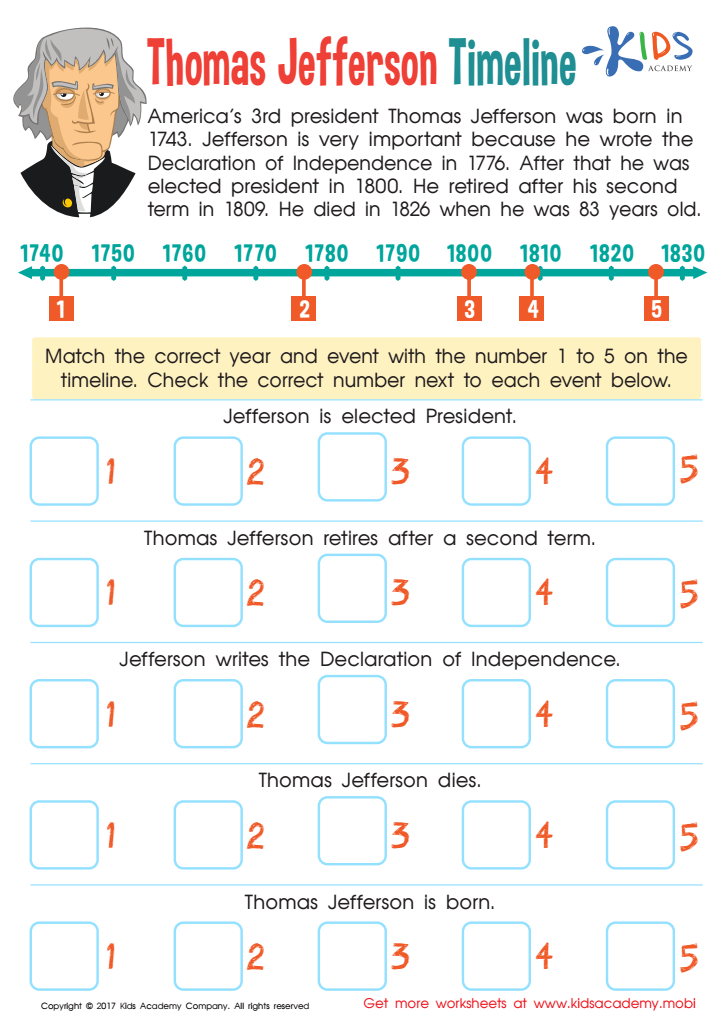
Thomas Jefferson Timeline Worksheet
 Assign to My Students
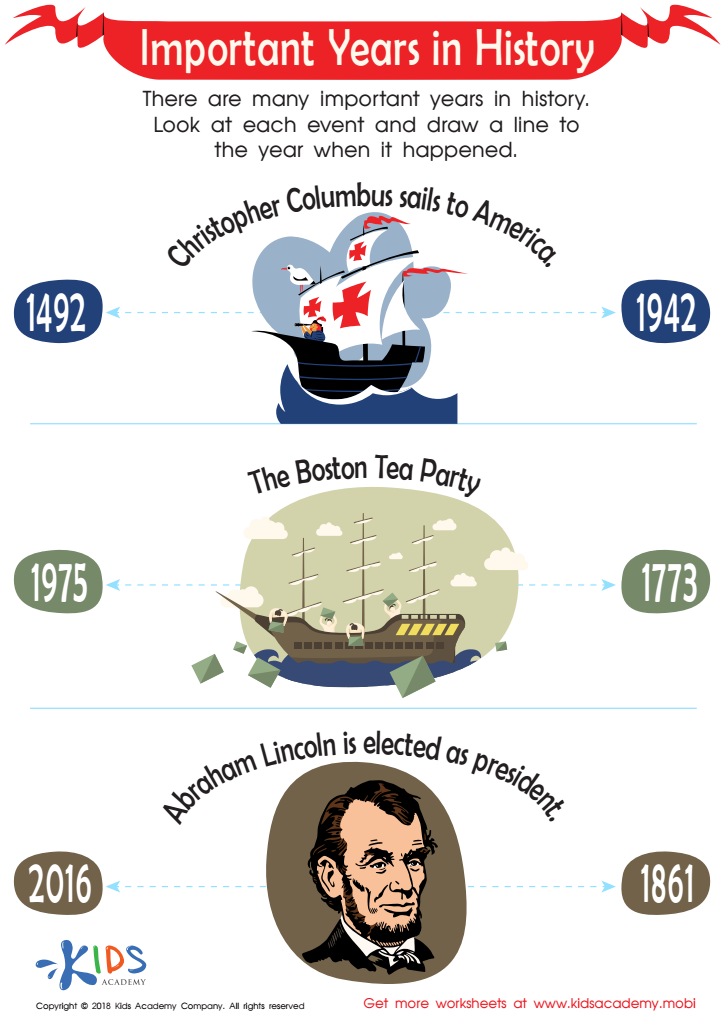
Important Years in History Worksheet
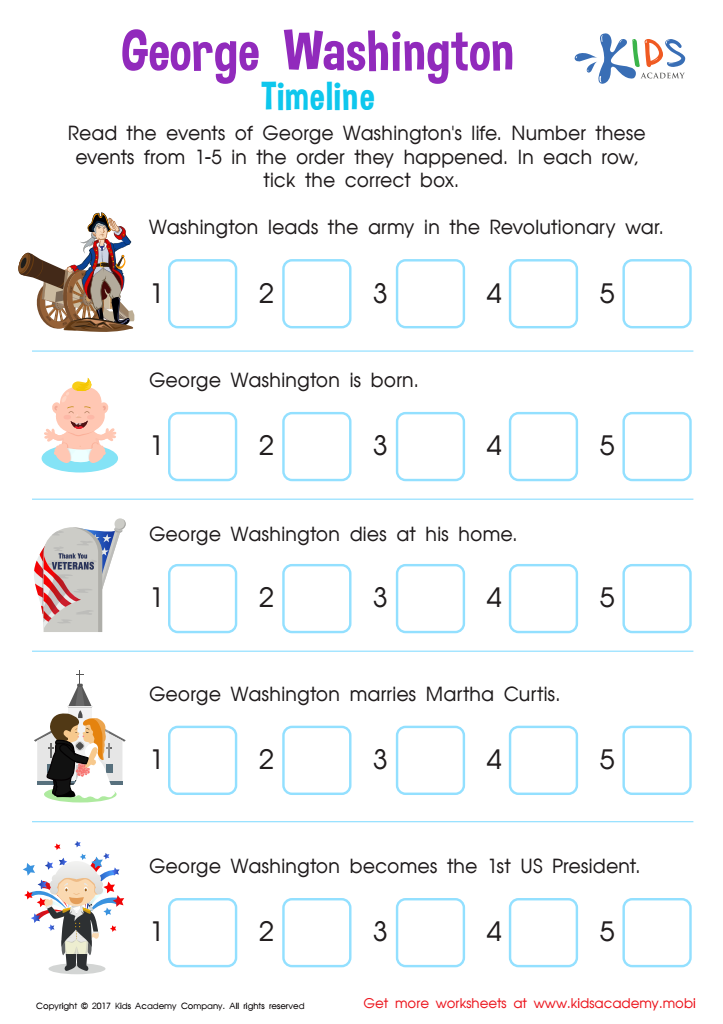
George Washington Timeline Worksheet








Event sequencing is a critical skill for children aged 7-9, as it fosters essential cognitive abilities and enhances literacy. Understanding how to sequence events helps children organize their thoughts, improve comprehension, and articulate their narratives clearly. In this age group, students are beginning to read chapter books and engaging with more complex stories. By grasping the order of events, they can better understand plot development and character motivations, making reading a more enriching experience.
Moreover, event sequencing supports children’s problem-solving skills. When faced with challenges—whether in stories or real-life situations sequential thinking aids them in determining causes and effects, leading to more effective solutions. This skill encourages logical thinking and boosts critical analysis as children learn to predict what might happen next based on prior events.
For parents and teachers, having a focus on event sequencing means actively involving children in discussions about their day, talking through story elements, or using graphic organizers. Reinforcing these principles in various learning environments helps children construct a coherent understanding of narratives and history, empowering them to express themselves thoughtfully and develop organizational skills that are foundational for future academic success. Engaging in event sequencing fosters not just academic skills, but also enhances communication and emotional intelligence.