Understanding timelines History Worksheets for Ages 7-9
5 filtered results
-
From - To
Enhance your child's understanding of history with our engaging "Understanding Timelines History Worksheets" designed specifically for ages 7-9. These worksheets make learning fun while helping young learners grasp the concept of timelines and chronological events. With a variety of activities, students will practice arranging events in order, interpreting historical timelines, and exploring key events in history. Our interactive resources encourage critical thinking and enhance comprehension skills, ensuring a solid foundation in social studies. Perfect for home or classroom use, these worksheets provide a creative approach to history, sparking curiosity and making learning about the past an enjoyable adventure!
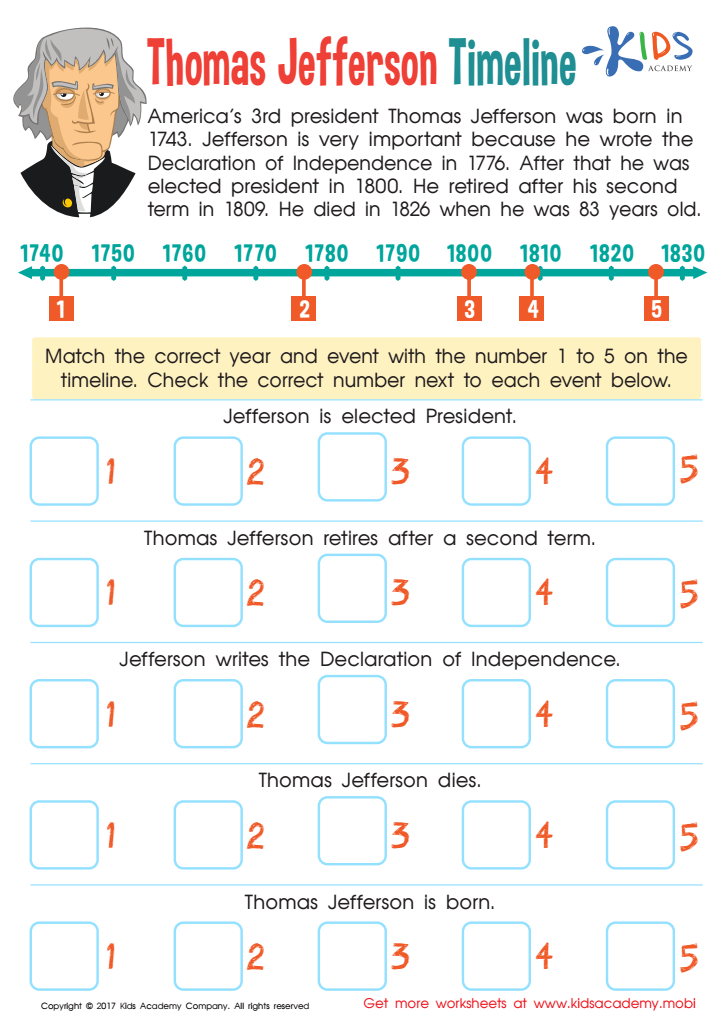
Thomas Jefferson Timeline Worksheet
 Assign to My Students
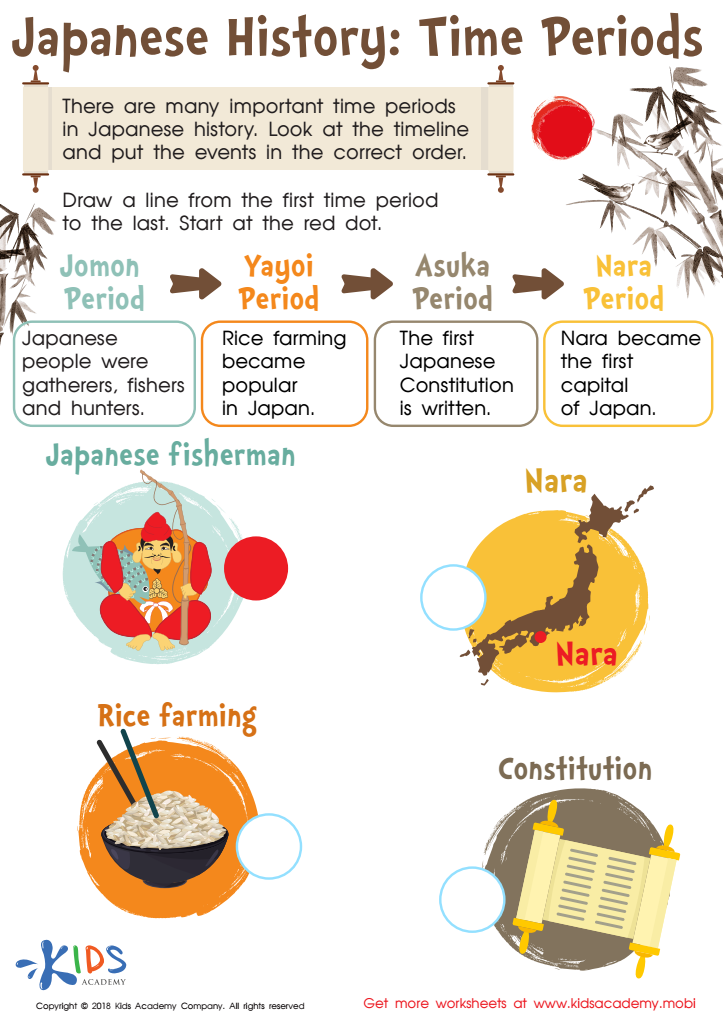
Japanese History: Time Periods Worksheet
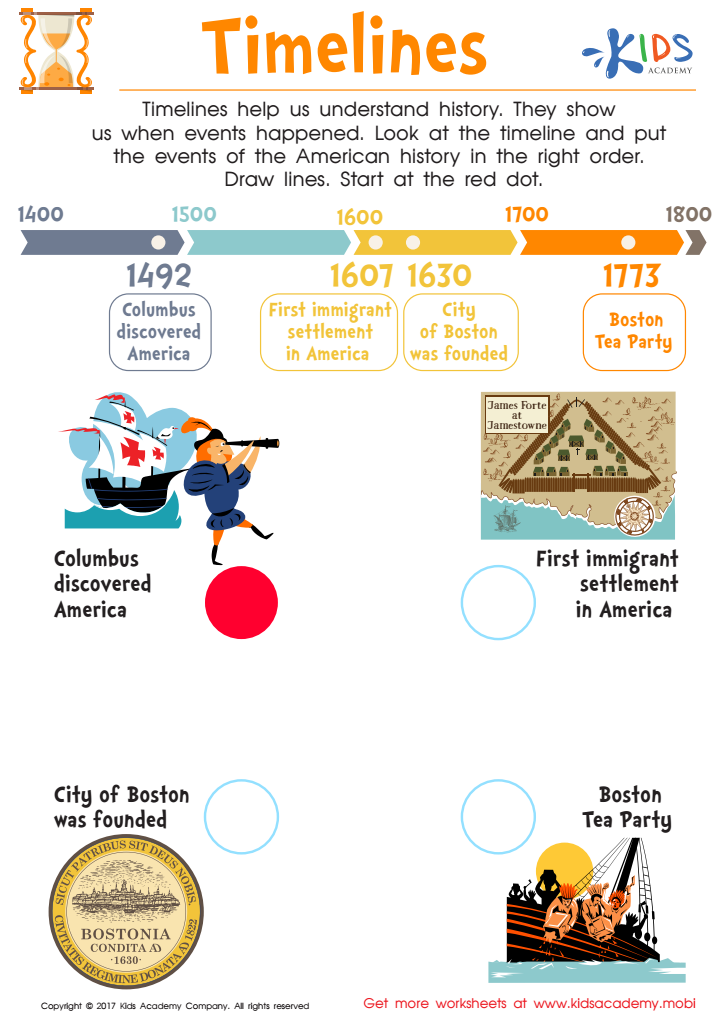
American History Timeline Worksheet
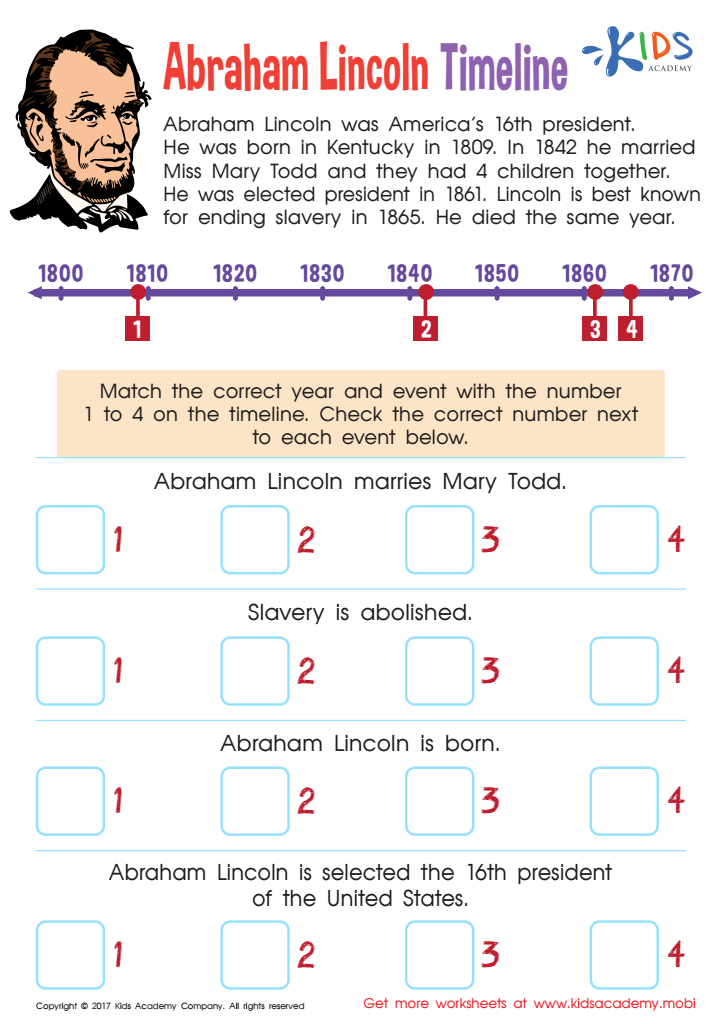
Abraham Lincoln Timeline Worksheet
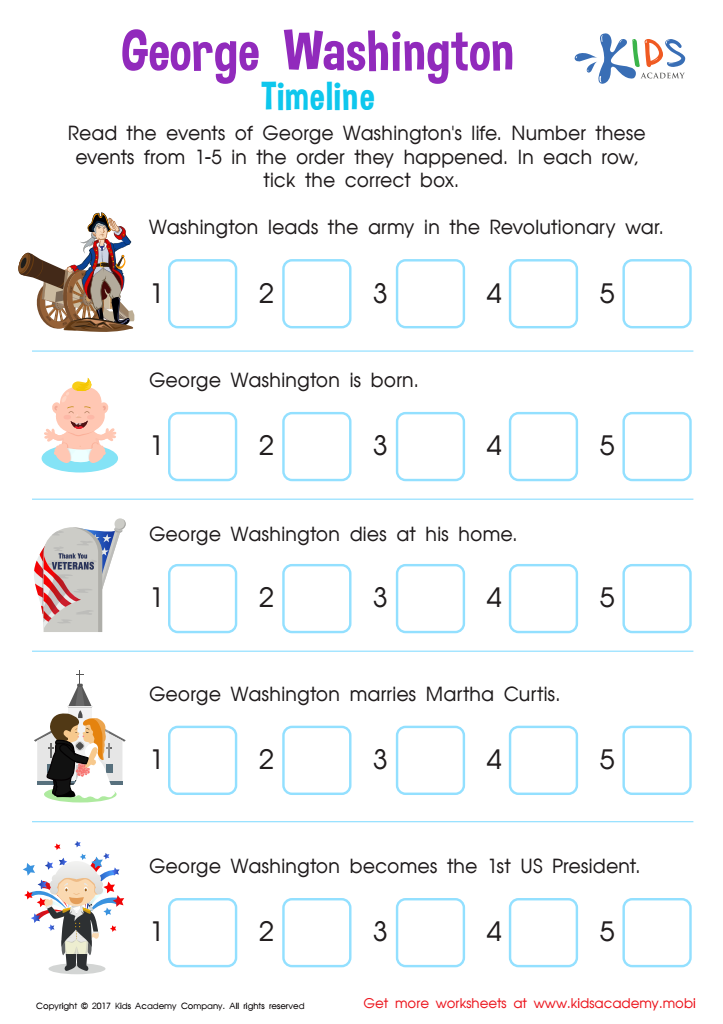
George Washington Timeline Worksheet







Understanding timelines in history is crucial for children aged 7-9 because it lays the foundation for their comprehension of the world. At this age, children are developing critical thinking skills and a sense of chronological order. Timelines help them visualize relationships between events, making history more relatable and less abstract. By grasping the concept of time, children learn how past events influence the present and shape the future, fostering a sense of context and causality.
Parents and teachers should care about this because creating a historical framework can enhance a child's cognitive development and engagement with learning. When children can place significant events in order, they become more curious and motivated to explore history in greater depth. Additionally, understanding timelines can promote discussions about important historical figures and events, encouraging children to think critically about their impacts.
Furthermore, teaching timelines enhances literacy skills, as children learn to read and interpret information from various sources. Engaging with timelines also supports social studies curricula and interdisciplinary learning, helping children draw connections between history, art, and science. Ultimately, a solid understanding of timelines cultivates informed, empathetic individuals who appreciate the complexity of society and their role within it.








