Critical Thinking Social Studies Worksheets for Ages 7-9 - Page 2
25 filtered results
-
From - To
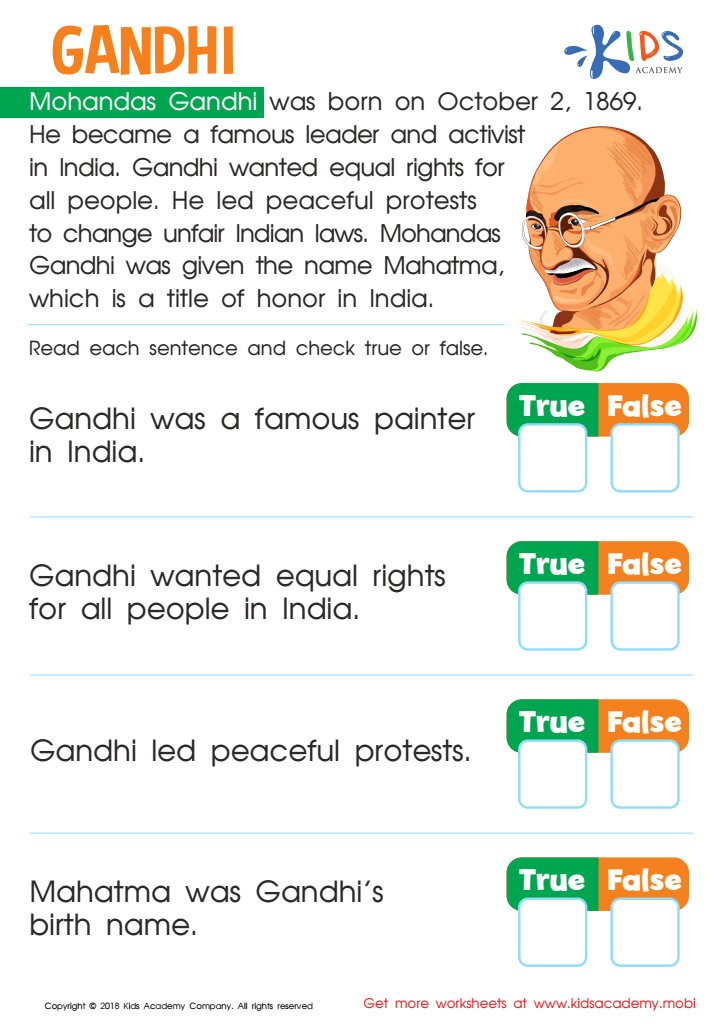
Gandhi Worksheet
 Assign to My Students







Critical thinking in social studies for ages 7-9 is essential because it lays the foundation for informed and engaged citizenship. At this stage, children are beginning to explore their world beyond immediate experiences, and fostering critical thinking helps them analyze information, understand diverse perspectives, and make connections between historical events and current societal issues.
Engaging students in critical thinking encourages curiosity and inquiry, prompting them to ask questions such as "Why did this happen?" and "How does this affect us today?" This skill fosters an appreciation for different cultures and histories, nurturing empathy and open-mindedness.
Moreover, critical thinking promotes literacy skills as students read, discuss, and evaluate sources, equipping them to discern reliable information in an increasingly complex media landscape. This is particularly vital in our rapidly changing world, where misinformation can easily spread.
By encouraging critical thinking in social studies, parents and teachers are helping children develop the skills necessary for problem-solving and decision-making, preparing them not just for future academic success but for lifelong engagement in their communities. In essence, supporting critical thinking today cultivates tomorrow's thoughtful leaders and informed citizens, empowering children to navigate and contribute to a diverse and changing society.