Sentence comprehension Grammar Worksheets for Ages 7-9
6 filtered results
-
From - To
Enhance your child's language skills with our Sentence Comprehension Grammar Worksheets designed for ages 7-9! These engaging worksheets provide a fun and interactive way for young learners to improve their reading comprehension and sentence structure. Packed with diverse activities, they encourage children to analyze sentences, identify grammatical components, and understand meaning in context. These resources foster critical thinking while aligning with educational standards, making them perfect for classroom use or at-home learning. Help your child build a strong foundation in grammar and develop essential writing skills with our thoughtfully crafted worksheets. Start the journey to confident communication today!
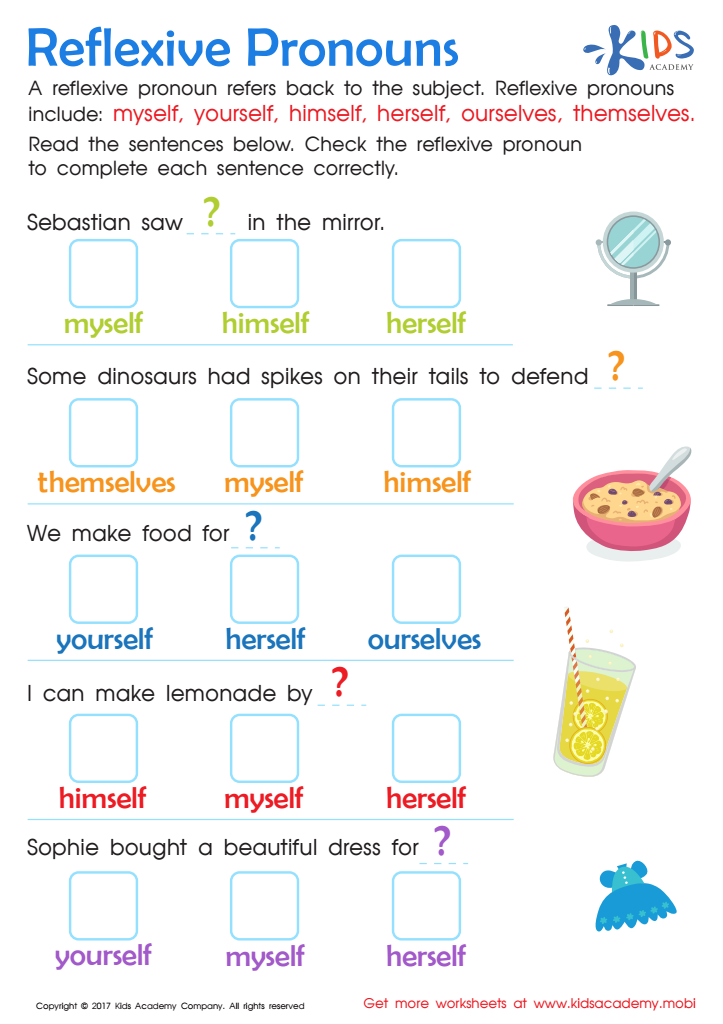
Reflexive Pronouns Worksheet
 Assign to My Students
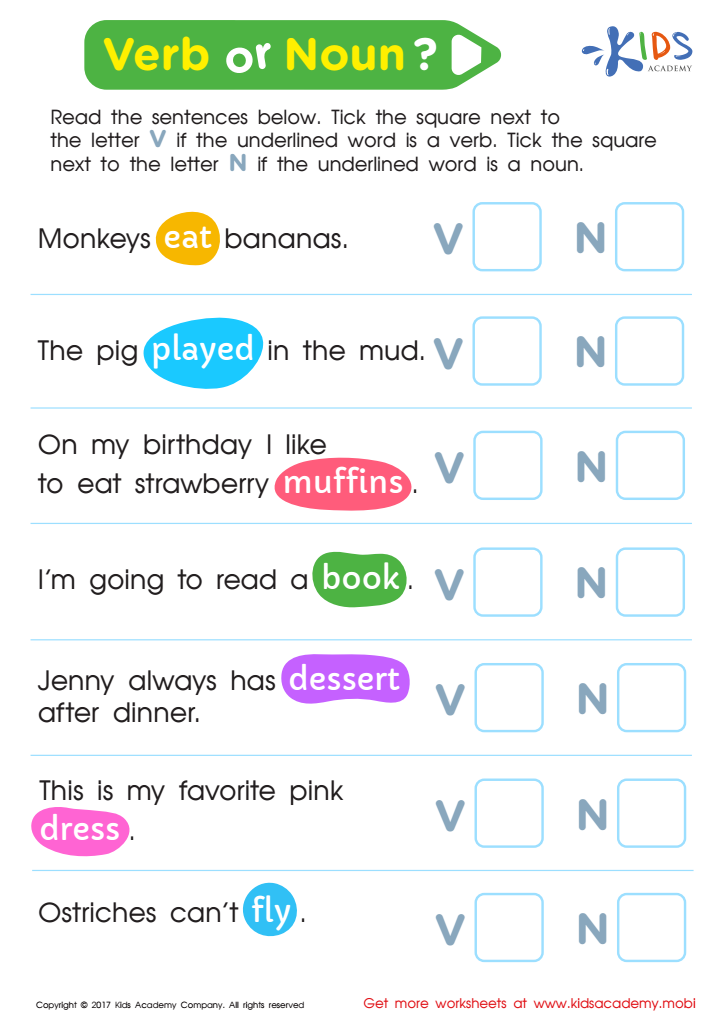
Verb or Noun Worksheet
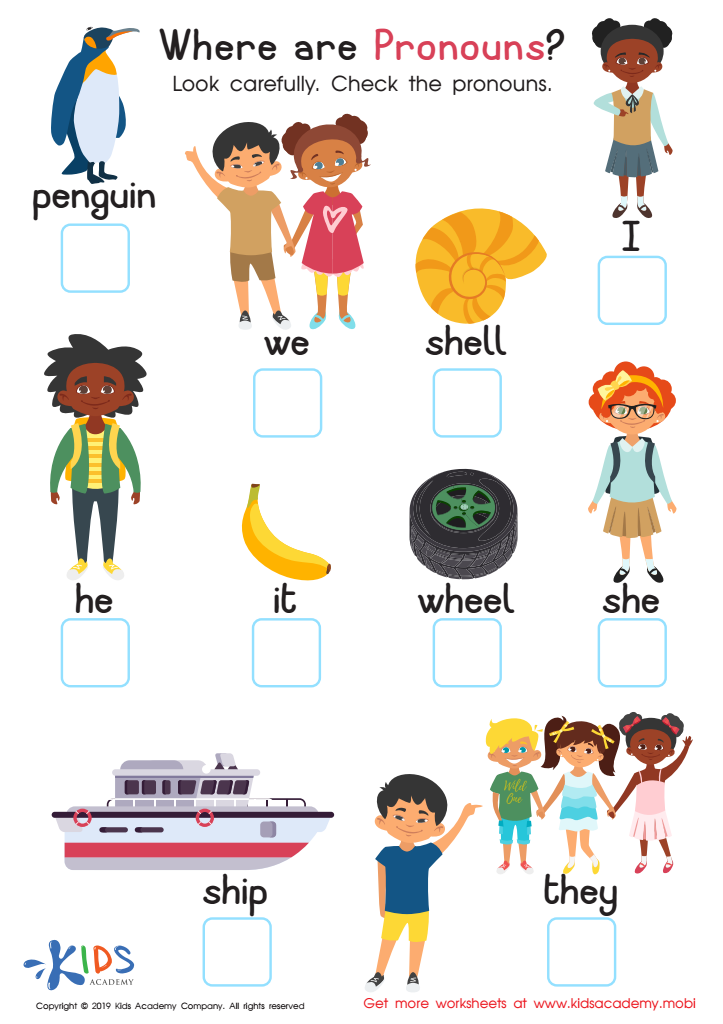
Where Are Pronouns? Worksheet
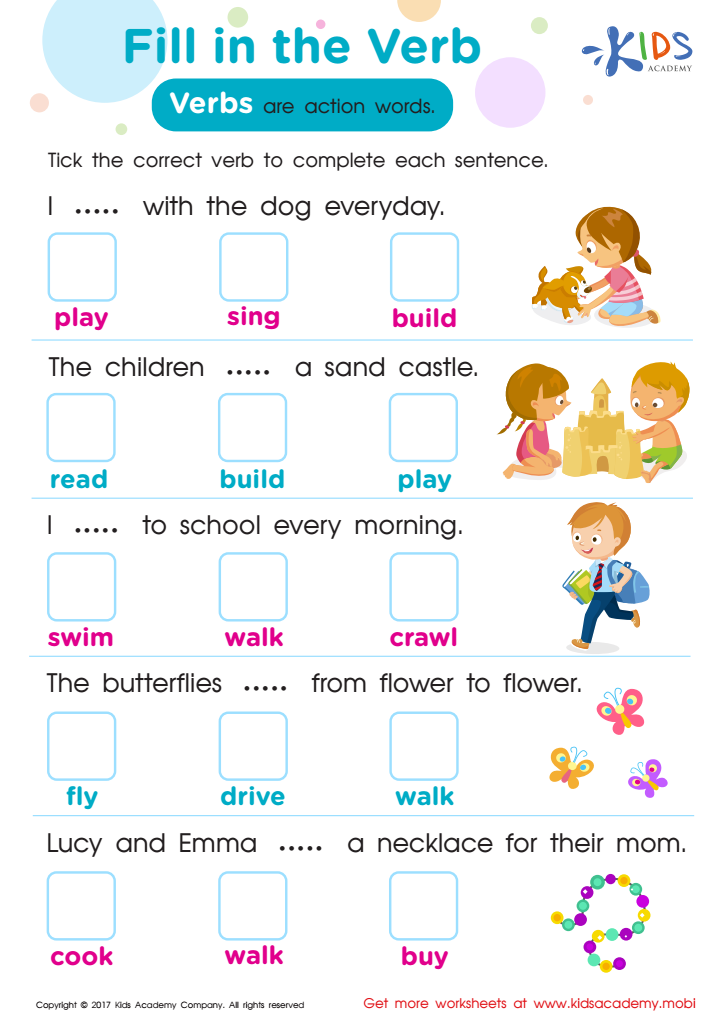
Fill in the Verb Printable
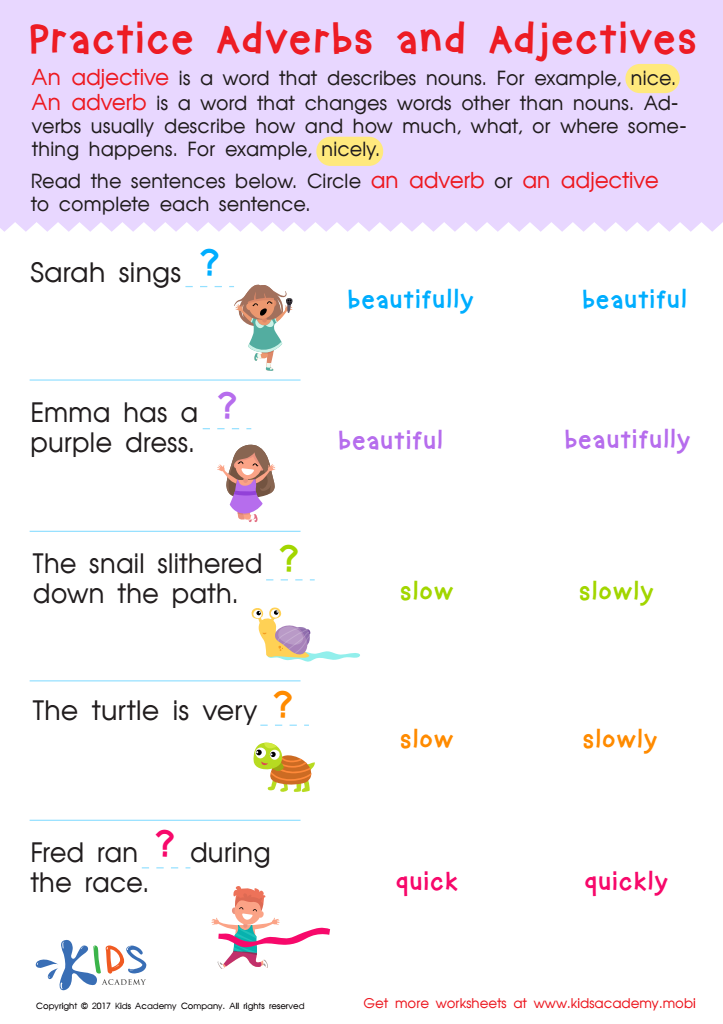
Adverbs and Adjectives Worksheet
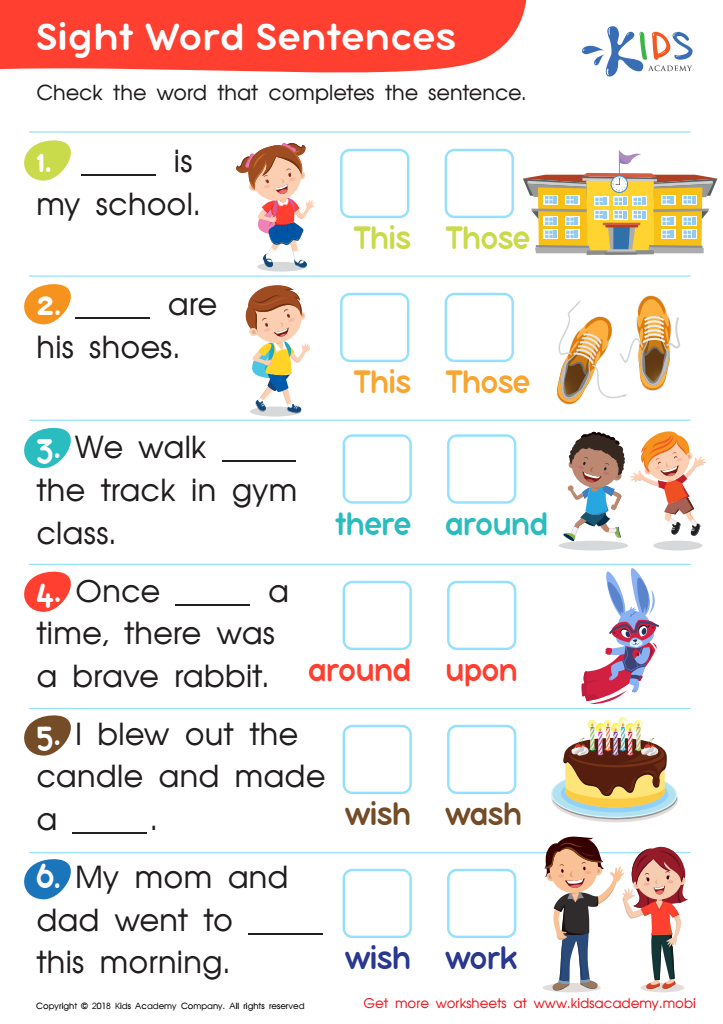
Sight Word Sentences Worksheet








Parents and teachers should prioritize sentence comprehension and grammar for children ages 7 to 9 because these skills are foundational to effective communication and learning. At this age, children are transitioning from learning to read to reading to learn. Mastery of grammar helps them understand complex sentence structures, enabling them to decipher meaning and engage with diverse texts. Grammatical knowledge also enhances their ability to express thoughts clearly and accurately in writing and conversation, fostering better social interactions and academic performance.
Moreover, good grammar cultivates critical thinking skills, allowing children to analyze language in various contexts. This analytical ability not only benefits literacy but also supports problem-solving across subjects, such as math and science, where precise language is crucial.
Additionally, emphasis on grammar and comprehension during these formative years can prevent future learning gaps. Early intervention ensures that children develop the confidence to tackle more sophisticated language elements, preparing them for higher academic challenges. Ultimately, nurturing these skills positively influences their self-esteem and love for learning, laying the groundwork for lifelong success in education and beyond. Parents and teachers, therefore, play a critical role in guiding children to become articulate and comprehensively literate individuals.








