Sentence structuring Writing Worksheets for Ages 7-9
3 filtered results
-
From - To
Unlock the power of expression with our Sentence Structuring Writing Worksheets for Ages 7-9! Specifically designed to enhance young learners' writing skills, these engaging worksheets help children build and organize coherent sentences. Through a variety of fun exercises, students practice essential grammar, punctuation, and vocabulary techniques. Ideal for both classroom and at-home learning, our worksheets encourage creativity and confidence in writing. Set your child on the path to writing excellence with our expertly crafted resources, tailored for young minds. Perfect for boosting literacy skills and fostering a love for language. Explore our collection today!
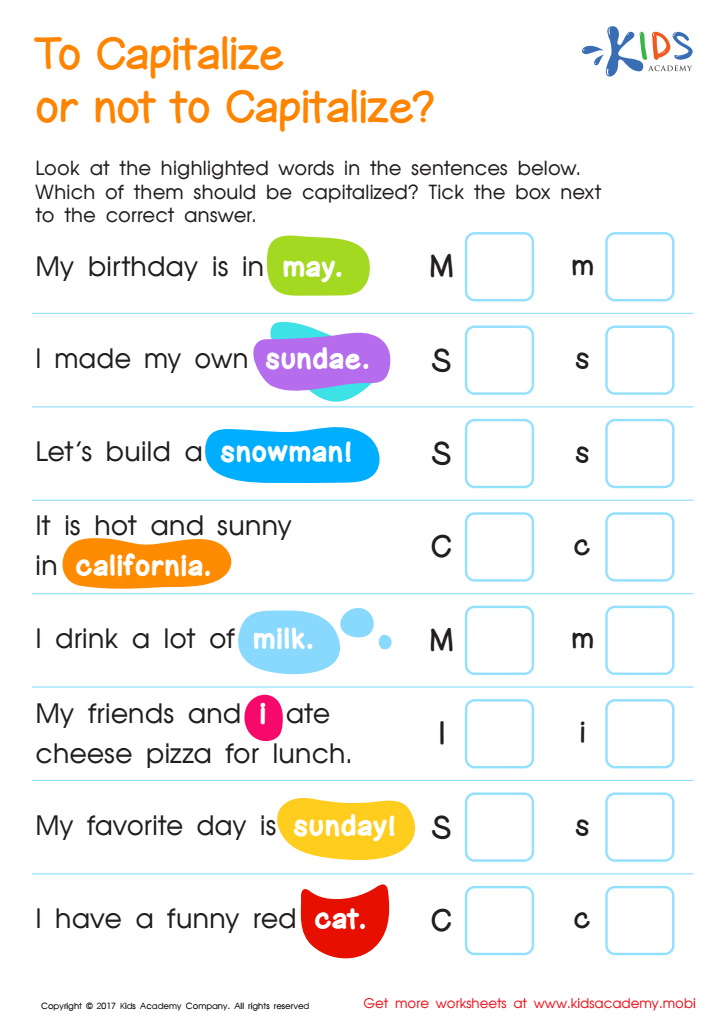
Capitalization: To Capitalize or Not? Printable
 Assign to My Students
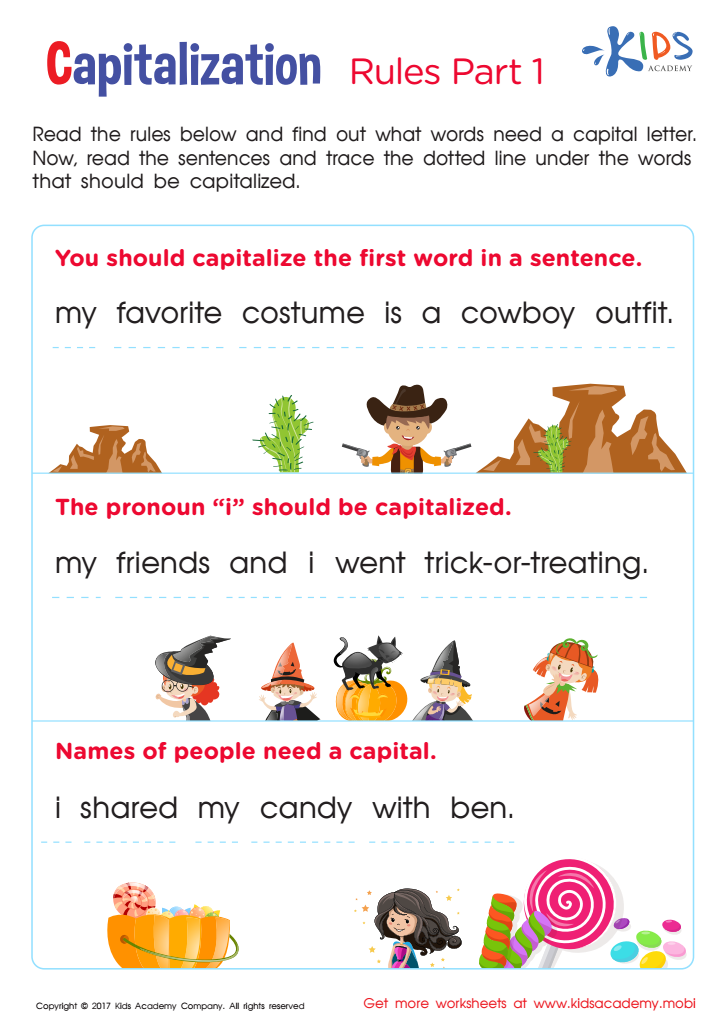
Capitalization Rules: Part 1 Worksheet
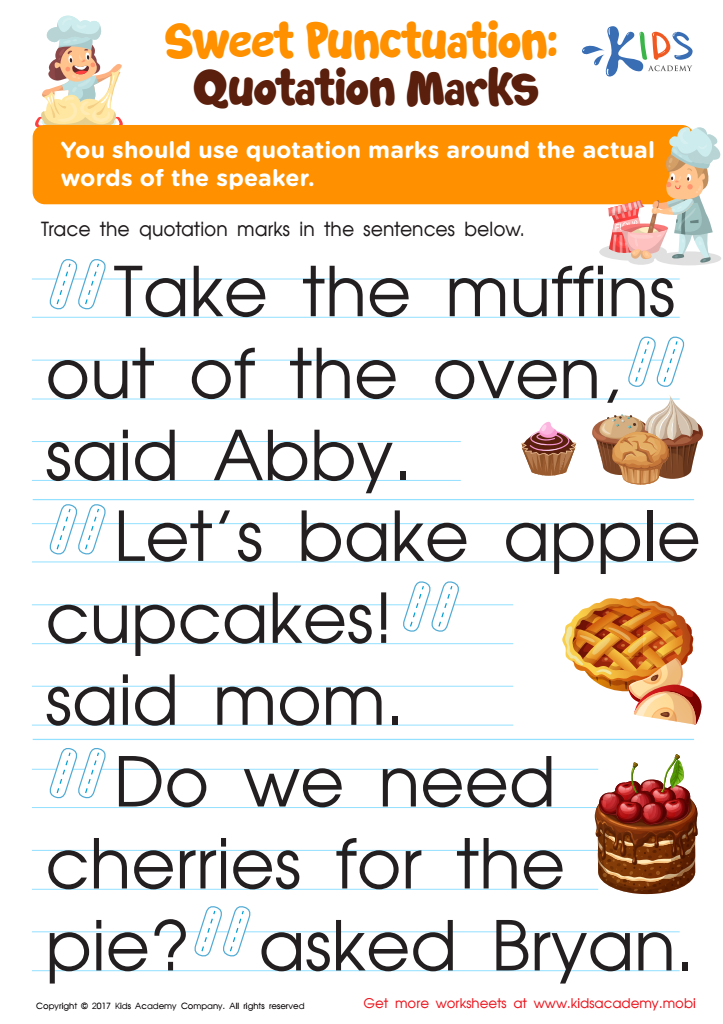
Commas and Quotation Marks Worksheet








Sentence structuring is a critical component of early writing education for children aged 7-9. Proper understanding and usage of sentence structure help young learners effectively convey their thoughts and ideas. At this developmental stage, students are expanding their vocabulary and learning to express themselves more clearly. Proper sentence construction aids in fostering better communication skills, which are essential in both academic and social settings.
Attention to sentence structuring also enhances reading comprehension. Children who understand the elements of a well-formed sentence (subject, predicate, punctuation) can more easily decode and understand written texts. This dual benefit boosts their eventual success across various subjects, not just language arts.
Moreover, learning to structure sentences properly can bolster children's confidence in their writing abilities. This early success forms a foundation for more complex writing tasks they'll encounter in higher grades, no matter the writing style or subject matter. Reinforcement from teachers and parents ensures consistency in practice and improvement. Encouraging children to experiment and practice with varied sentence structures—from simple and compound to complex—can also unleash creativity and make writing more enjoyable for them.
Lastly, effective communication skills are a lifelong asset. Laying the groundwork early on by concentrating on sentence structuring equips children with the ability to articulate their thoughts clearly and persuasively, which is invaluable in virtually every career and personal pursuit.








