Phonics Skills Vowel Blends Worksheets for 7-Year-Olds
5 filtered results
-
From - To
Unlock the potential of your 7-year-old's reading abilities with our Phonics Skills Vowel Blends Worksheets! Designed specifically for young learners, our engaging and colorful worksheets help kids master vowel blends with ease. Through fun activities and exercises, children will improve their reading fluency, comprehension, and pronunciation. Each worksheet focuses on different vowel combinations, making learning both varied and enjoyable. Perfect for classroom use or at-home practice, these worksheets support the development of essential phonics skills that form the foundation for successful reading. Explore our collection and watch your child's confidence and reading skills soar!
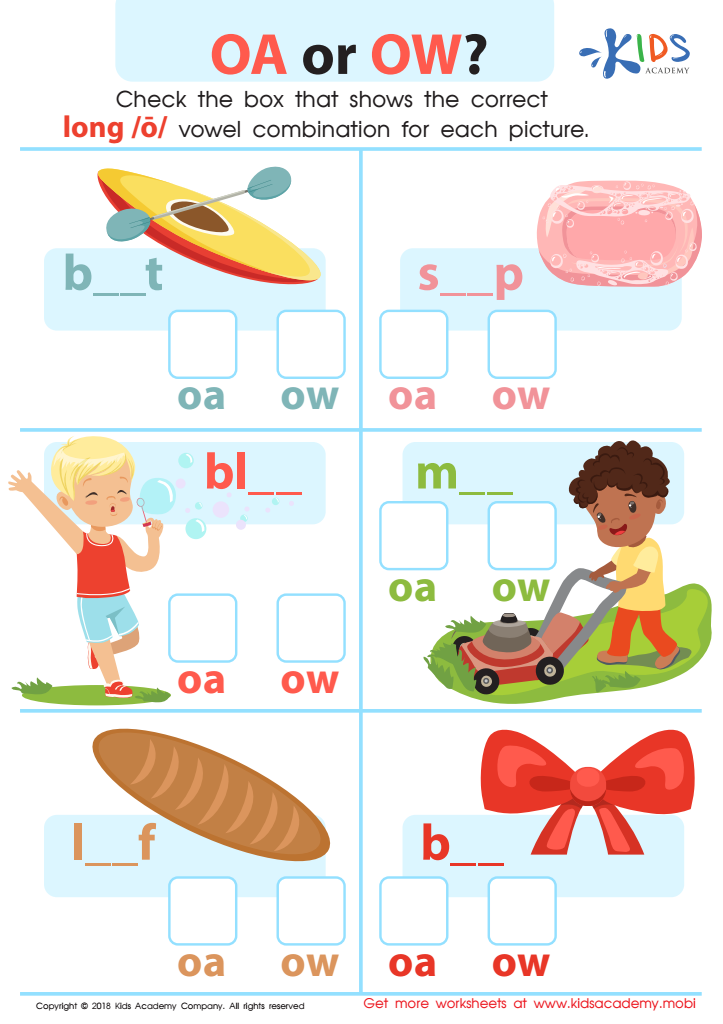
Reading: OA or OW Worksheet
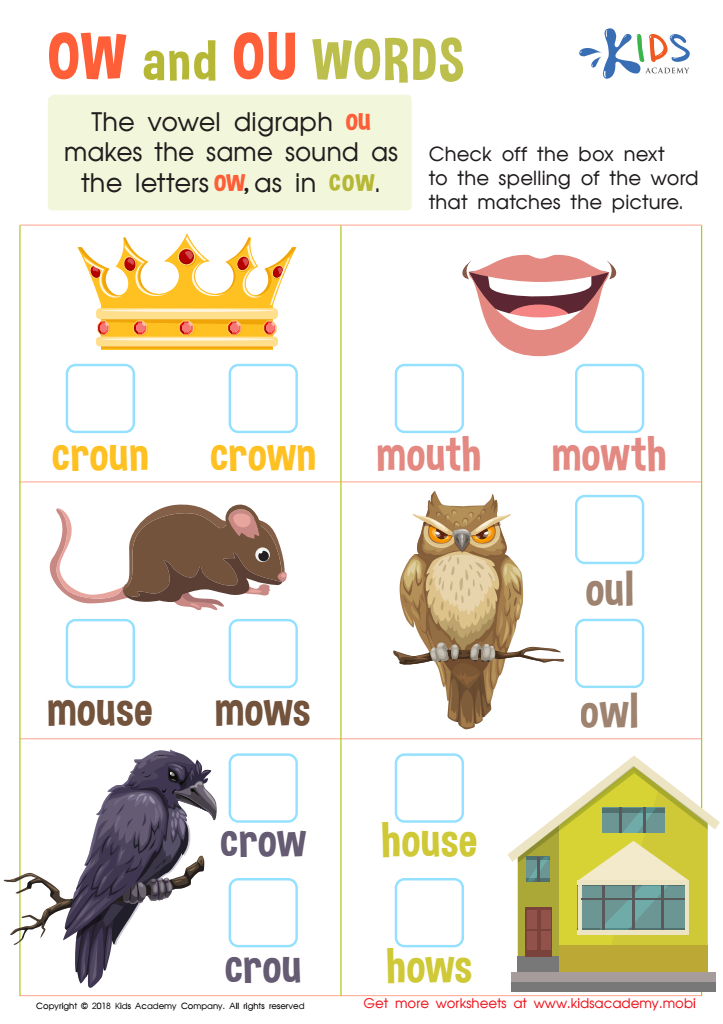
Reading: OW and OU Words Worksheet
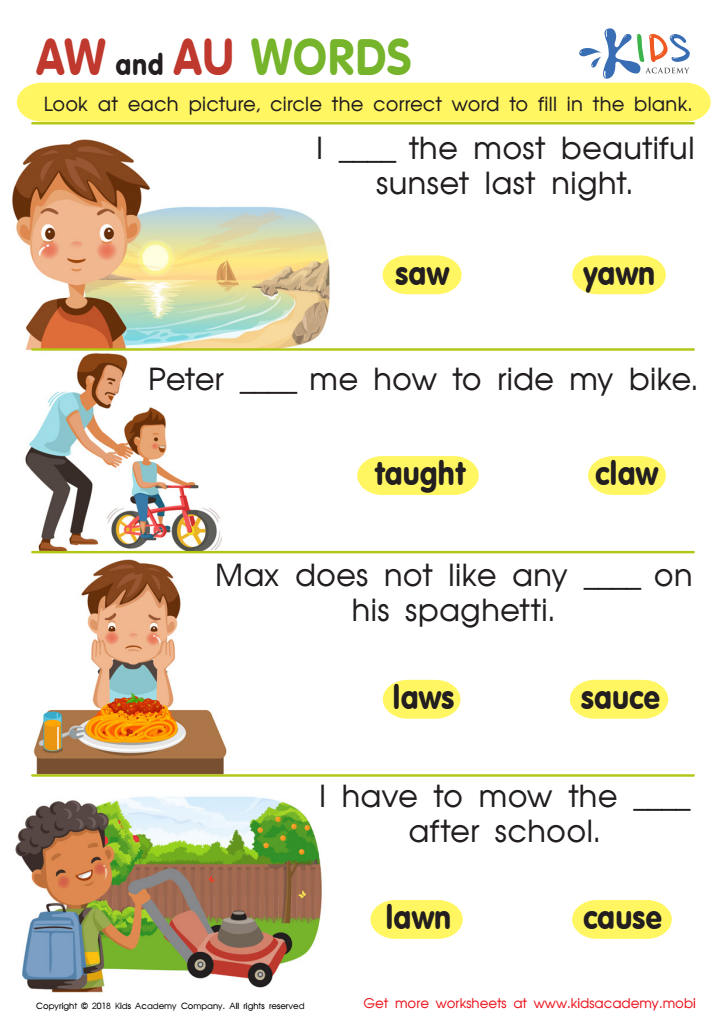
Reading: AW and AU Words Worksheet
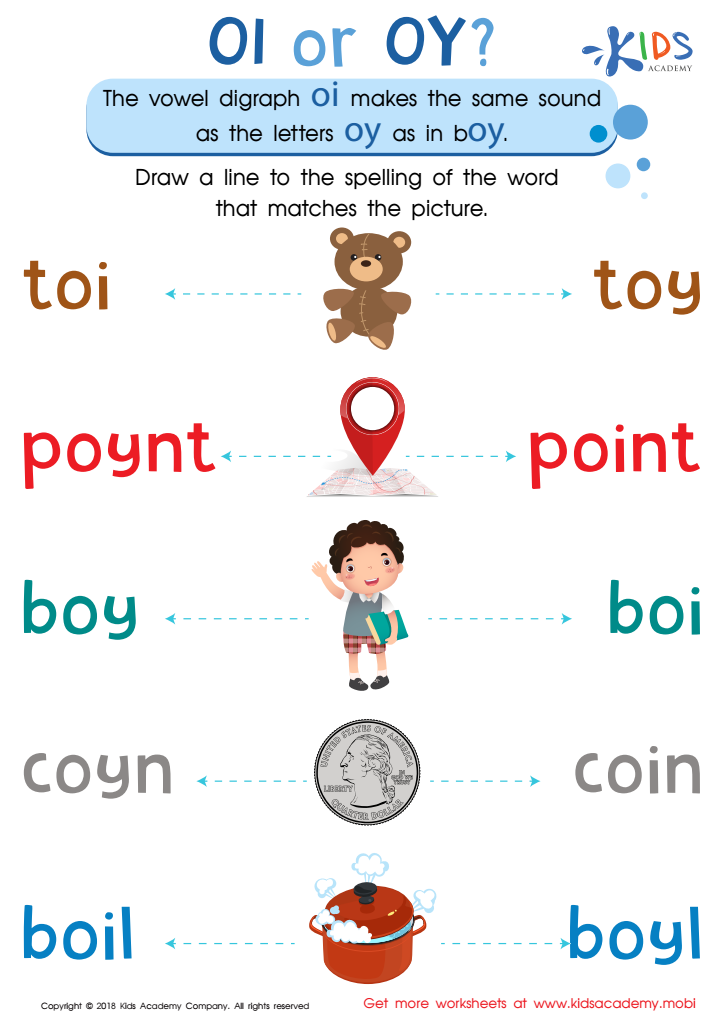
Reading: OI and OY Worksheet

Long and Short E Worksheet
 Assign to My Students





Phonics skills, particularly vowel blends, play a crucial role in the literacy development of 7-year-olds. Vowel blends, or diphthongs, involve combinations of vowel sounds within syllables, such as 'ai' in "rain" or 'ou' in "house". Mastering these combinations boosts reading fluency and comprehension.
Firstly, understanding vowel blends enhances decoding skills. Children begin to recognize patterns in words, making it easier to sound out unfamiliar words. This is critical as English has many irregular spellings and pronunciations, and knowledge of vowel blends provides a toolkit for tackling those challenges confidently.
Additionally, phonics skills directly impact spelling proficiency. When young learners are familiar with vowel blends, they can spell more accurately, reinforcing their writing abilities and enabling clearer communication.
Early phonics education also fosters a love for reading. When children can read more effortlessly, they are likely to find books enjoyable, motivating them to practice and explore literature independently. This habit strengthens cognitive development, vocabulary, and general knowledge.
Teachers and parents who emphasize phonics skills, including vowel blends, contribute to a child's academic achievement and lifelong love for learning. Such foundational skills are indispensable for future educational success and an integral component of early childhood literacy.