Cognitive Development Chess Worksheets for 7-Year-Olds
5 filtered results
-
From - To
Discover our engaging Cognitive Development Chess Worksheets for 7-year-olds, designed to enhance critical thinking, problem-solving, and strategic planning skills. These worksheets combine fun chess activities with essential cognitive challenges, encouraging young learners to think ahead and develop essential life skills. Ideal for both classroom and home use, our exercises promote focus, concentration, and patience while making learning enjoyable. Each worksheet features colorful illustrations and age-appropriate tasks that unlock creativity and boost confidence. Help your child master the fundamentals of chess while supporting their cognitive growth. Download now and watch your young strategist thrive on and off the chessboard!
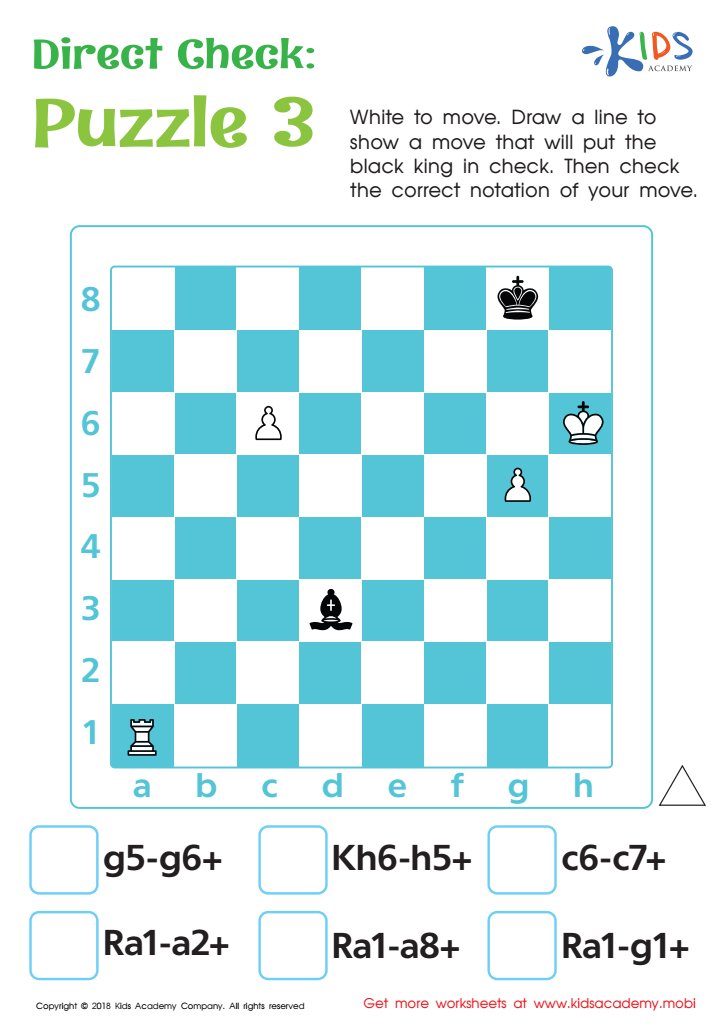
Direct Check: Puzzle 3 Worksheet
 Assign to My Students
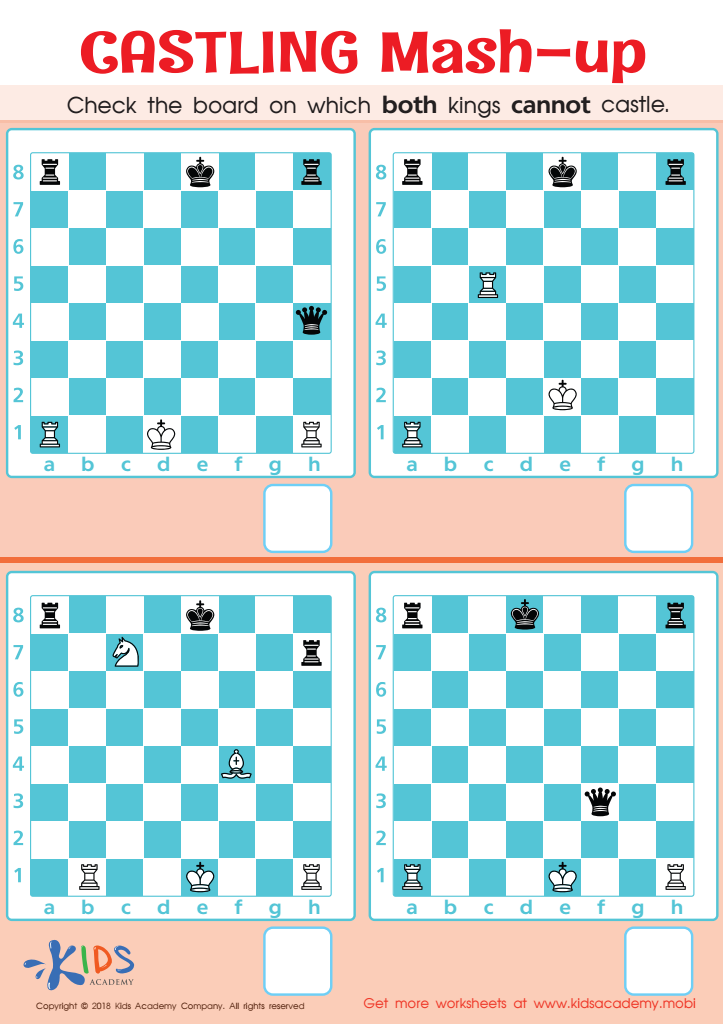
Castling Mash–up Worksheet
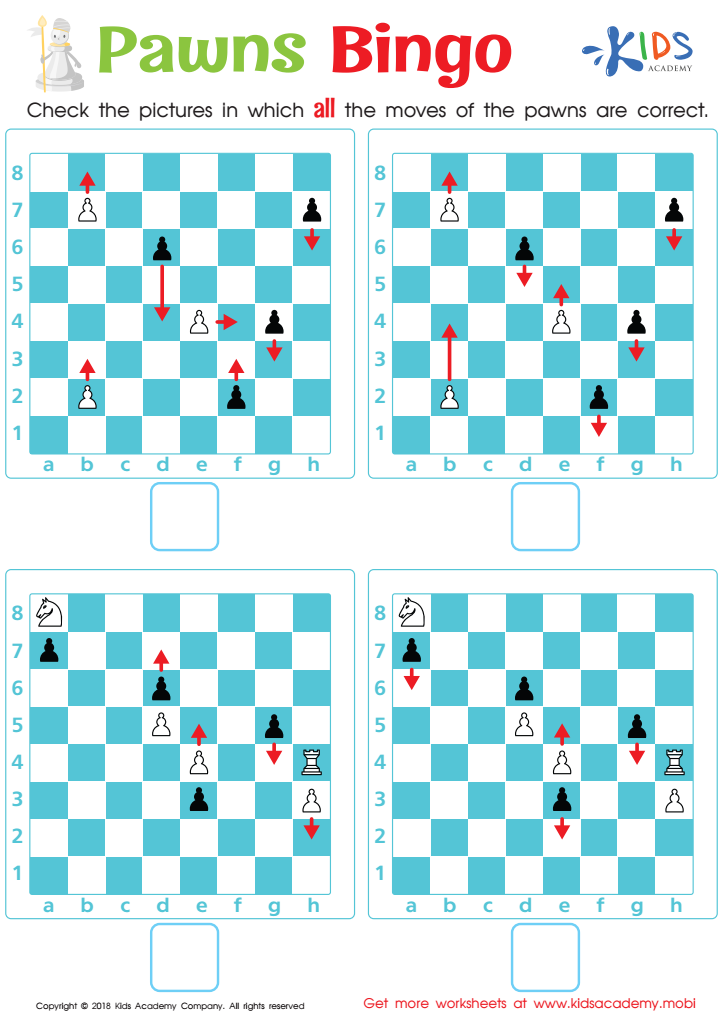
Pawns Bingo Worksheet
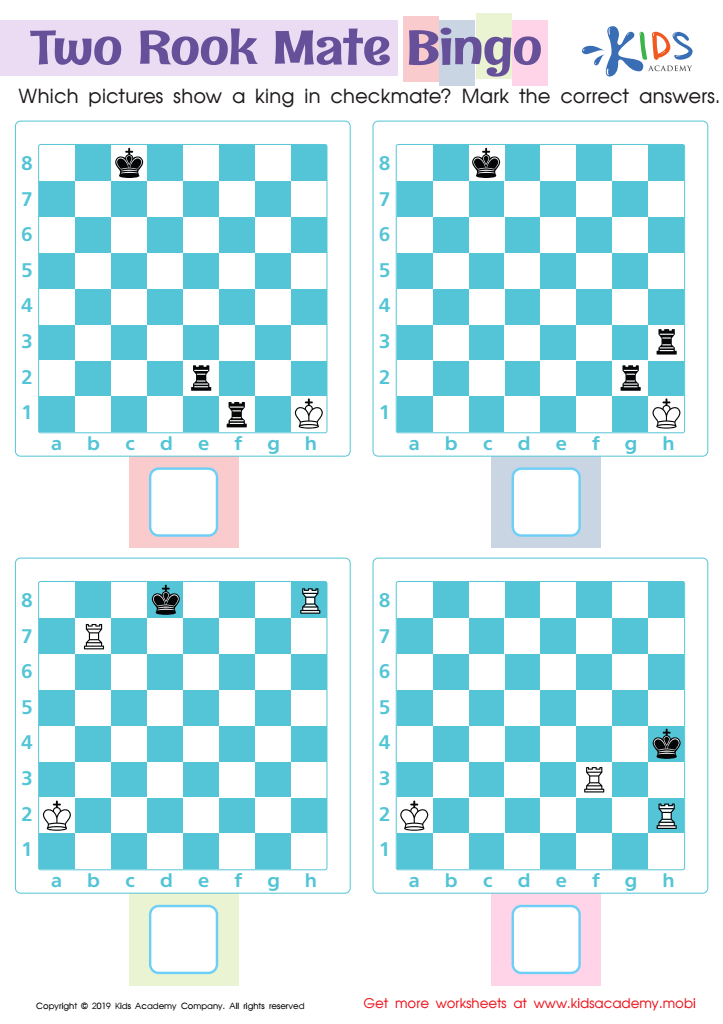
Two Rook Bingo Worksheet
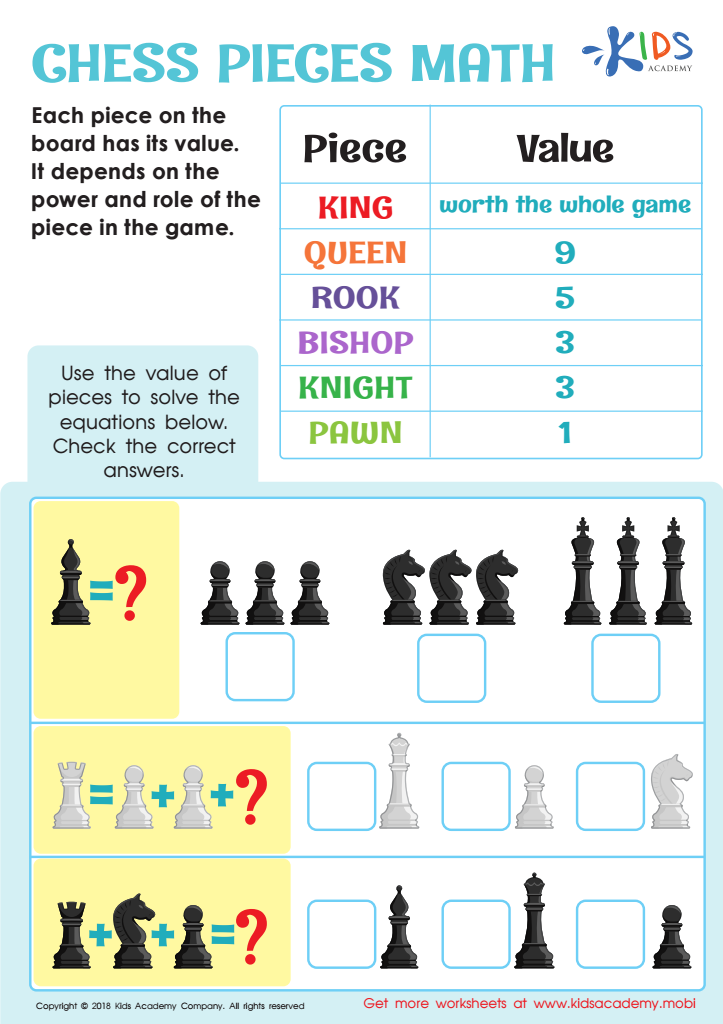
Chess Pieces Math Worksheet





Cognitive Development Chess for 7-year-olds is an invaluable tool for parents and teachers seeking to nurture critical thinking skills in young learners. At this age, children are highly impressionable, and engaging them in chess can foster essential cognitive abilities such as problem-solving, planning, and strategic thinking.
Playing chess requires players to anticipate potential moves, consider various outcomes, and devise strategies, all of which stimulate cognitive growth. Children learn to think ahead, plan their actions, and evaluate multiple possibilities, skills that will benefit them not just in games but in academic settings and daily life.
Moreover, chess promotes patience and resilience. It teaches young players to deal with loss gracefully and to approach challenges with perseverance. With each game, they develop better focus, improving their attention span, which is crucial for learning.
Inserting chess into the curriculum or encouraging its play at home can create a fun yet educational environment that reflects real-life complexities. By investing in activities that advance cognitive development, parents and teachers equip children with vital skills to thrive as independent, critical thinkers, enhancing their overall educational experience and setting a strong foundation for lifelong learning.