Analog Clock Understanding Worksheets for 7-Year-Olds
3 filtered results
-
From - To
Enhance your child's time-telling abilities with our engaging Analog Clock Understanding Worksheets for 7-Year-Olds. Designed by educators, these worksheets make learning to read an analog clock fun and interactive. Through a series of colorful exercises, children will master the concepts of hours, minutes, and time management. Each worksheet is crafted to build critical thinking and reinforce math skills, ensuring your child gains confidence in reading clocks. Perfect for at-home learning or supplementing classroom education, our worksheets provide an enjoyable way for young learners to grasp essential time-telling techniques. Join Kids Academy today and watch your child’s skills grow!
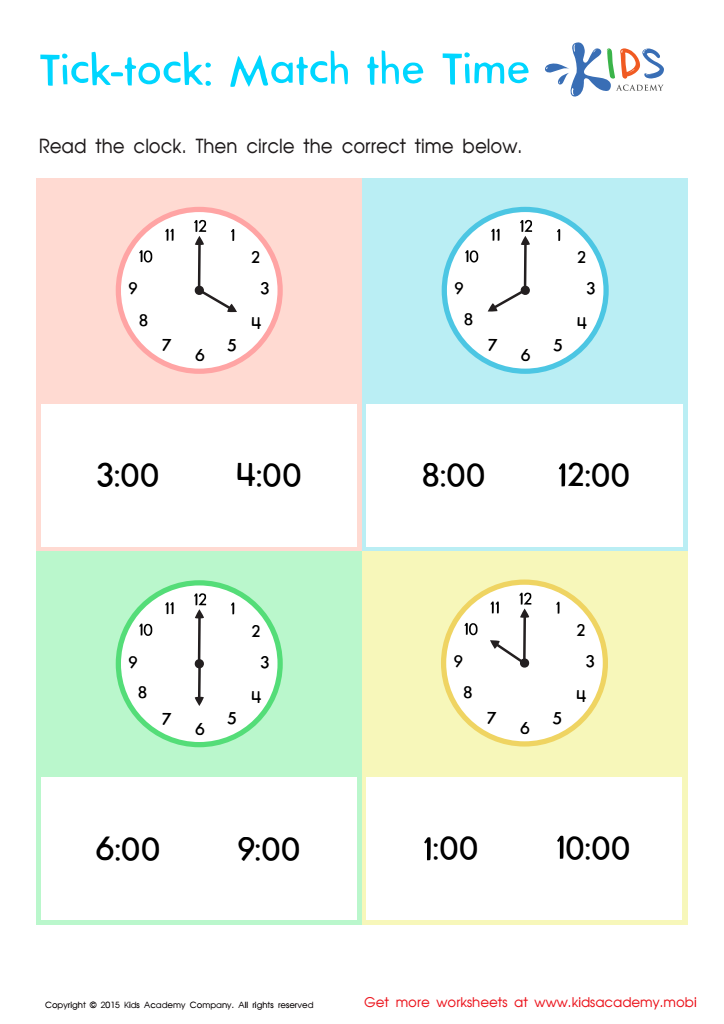
Telling The Time Worksheet: Part 4
 Assign to My Students
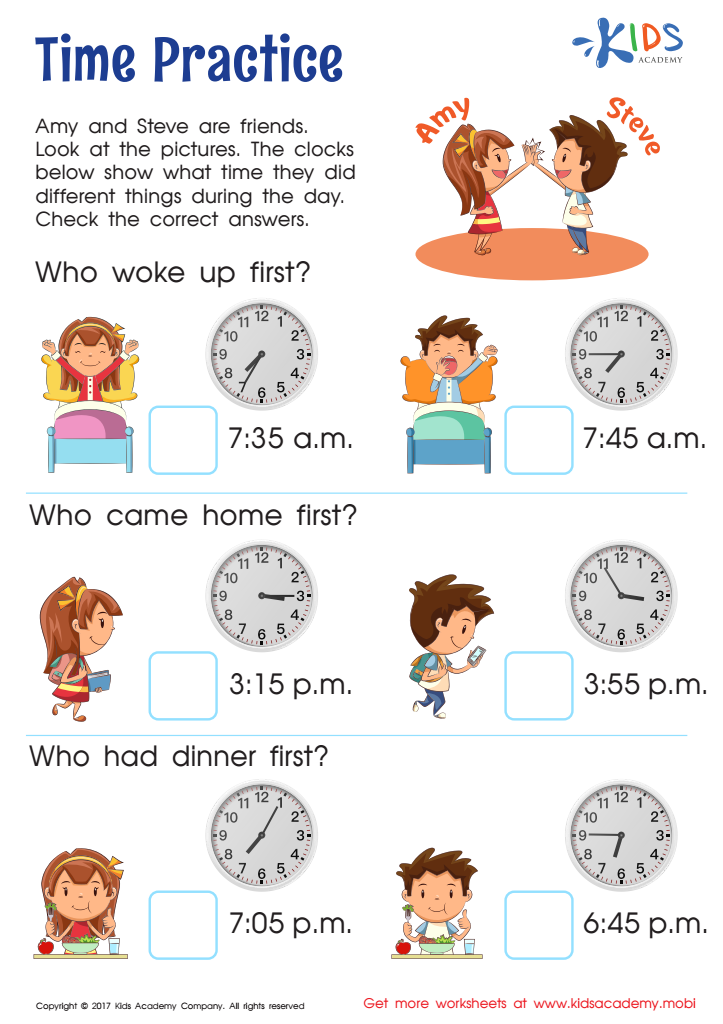
Time Practice Worksheet
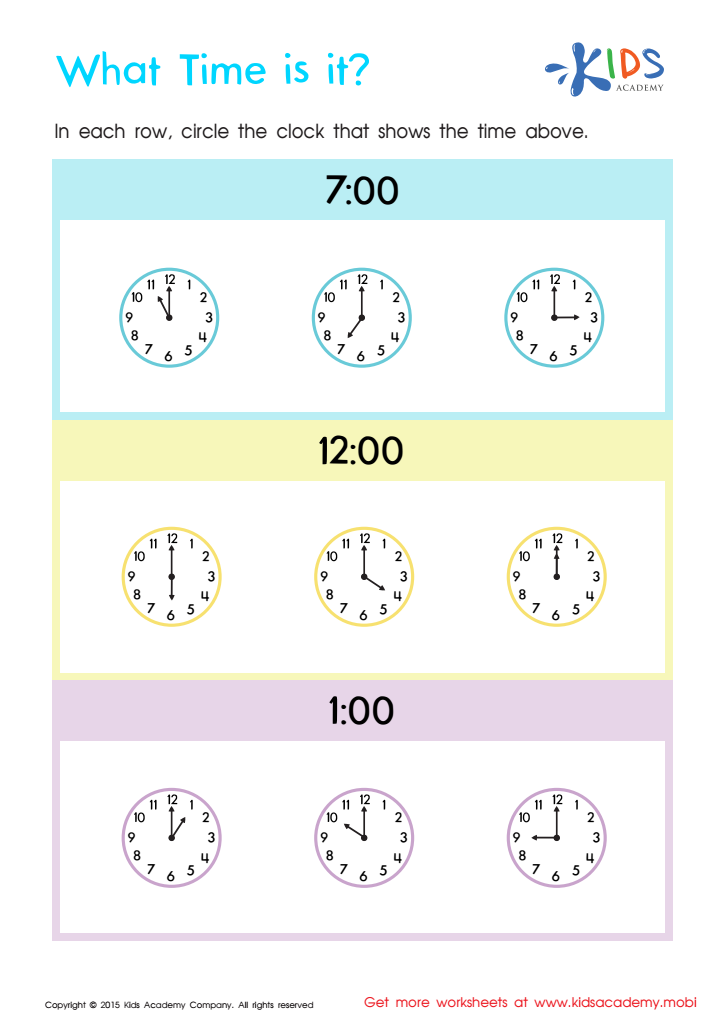
Telling The Time Worksheet: Part 3







Understanding how to read an analog clock is a significant skill for 7-year-olds that parents and teachers should prioritize for several important reasons. Firstly, reading an analog clock helps children grasp the concept of time in a more tangible way. Unlike digital clocks, analog clocks visually represent the passage of minutes and hours, aiding children in understanding the relationship between smaller units of time and larger intervals. This is fundamental in developing their ability to estimate time and manage their daily schedules effectively.
Furthermore, mastering an analog clock enhances crucial mathematical skills. It involves elementary arithmetic like addition, subtraction, and understanding fractions, as children need to realize what each tick mark means and how numbers are divided over a circle. Such activities bolster their numerical literacy and problem-solving abilities, laying a strong foundation for more complex math concepts they'll encounter later.
Additionally, analog clock reading encourages logical thinking and attention to detail. It requires kids to interpret various positions of the hour and minute hands simultaneously, improving their concentration and cognitive skills. Lastly, since analog clocks are still prevalent in both private and public spaces, being adept at reading them ensures that children can engage confidently and independently in diverse environments outside of digital contexts. Overall, this fosters a well-rounded, versatile approach to learning and day-to-day living.








