Basic Addition Skills Worksheets for 7-Year-Olds - Page 2
32 filtered results
-
From - To
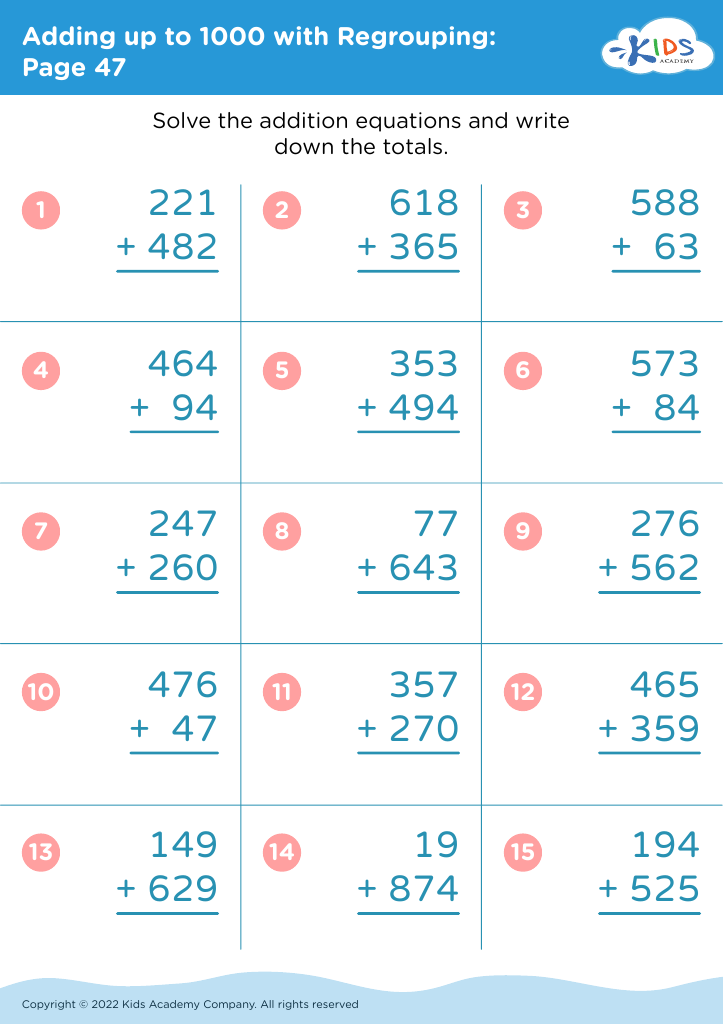
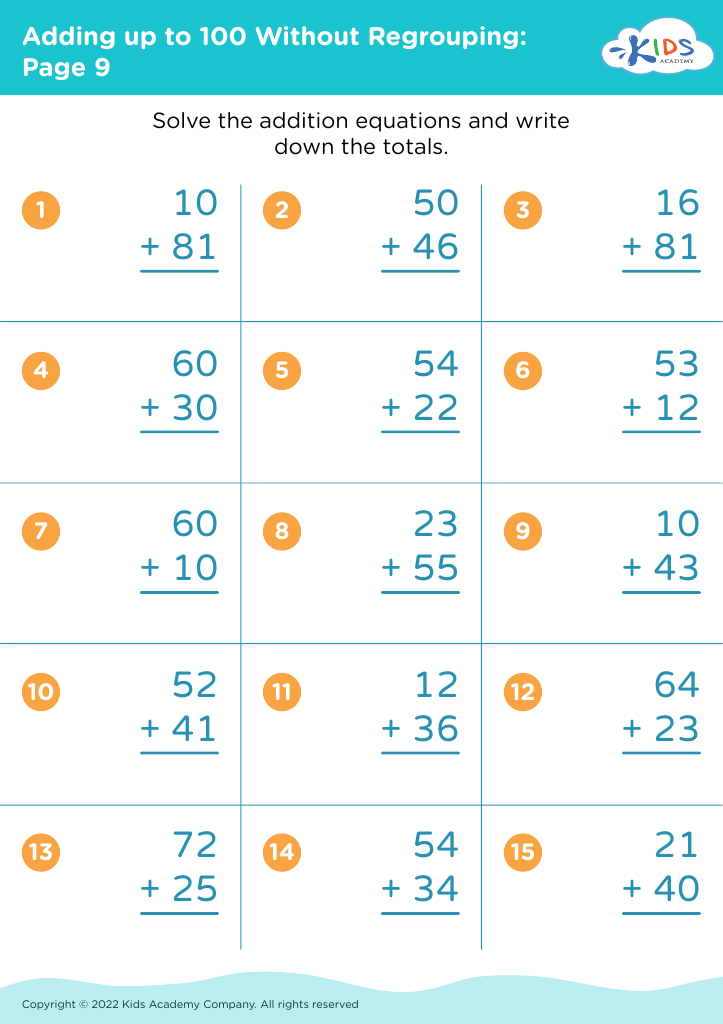
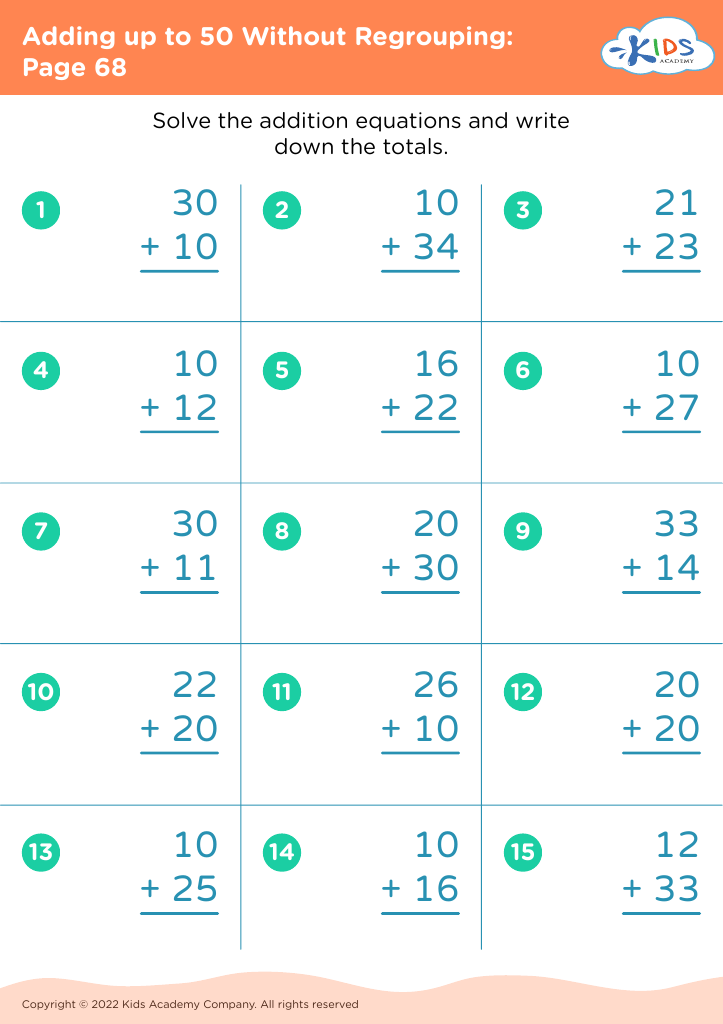
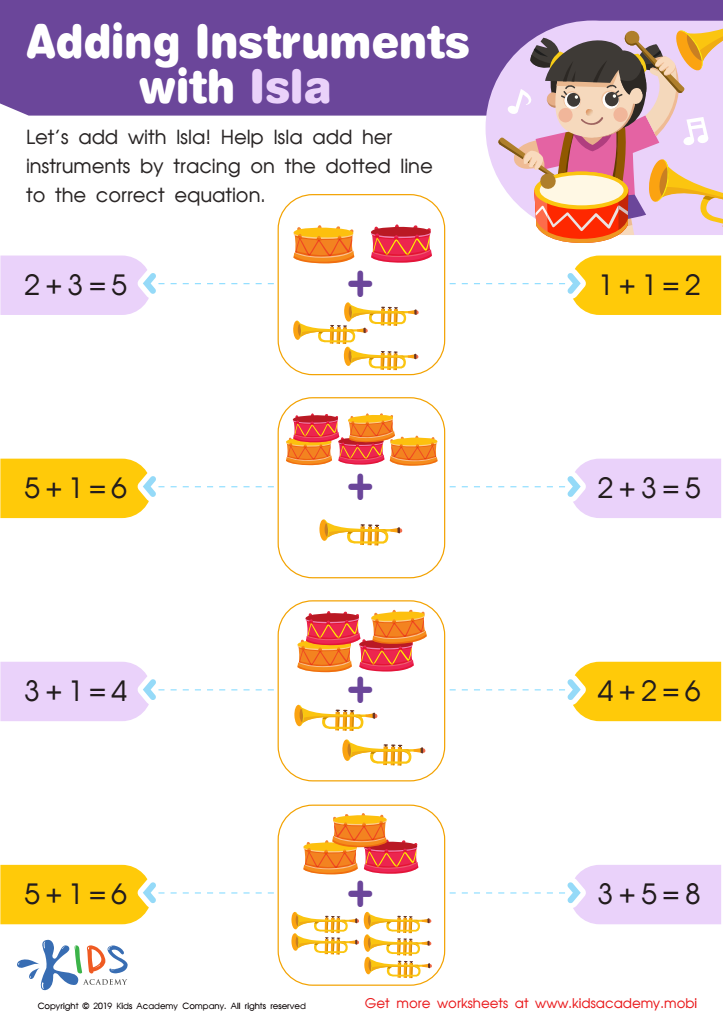
Adding Instruments with Isla Worksheet
 Assign to My Students







Basic addition skills are fundamental to a child's overall academic success and development. For 7-year-olds, mastering these skills lays the groundwork for more complex mathematical concepts. Understanding addition is crucial not just for math, but also for problem-solving and critical thinking in everyday life.
Parents and teachers should care about fostering these skills because they directly impact a child's confidence and motivation. Struggling with basic math can lead to frustration, negatively influencing a child’s attitude towards learning. Moreover, strong addition skills support literacy development, as they often appear in word problems and real-life scenarios, enhancing a child’s ability to interpret questions and develop reasoning skills.
Additionally, the growing reliance on technology means that solid foundational math skills are more important than ever. Children with strong basic math capabilities will find it easier to navigate future educational challenges, including advanced math and science coursework.
By prioritizing basic addition skills, parents and teachers can ensure children develop a strong mathematical foundation, paving the way for lifelong learning, critical thinking, and effective problem-solving abilities. Ultimately, investing time and resources into these foundational skills benefits not just individual students, but society as a whole.








