Identifying shapes Worksheets for 7-Year-Olds
33 filtered results
-
From - To
Discover our engaging "Identifying Shapes Worksheets for 7-Year-Olds," designed to enhance your child's geometric recognition skills. These colorful and interactive worksheets feature a variety of shapes, including circles, squares, triangles, and more, allowing kids to practice identification, matching, and sorting activities. With clear instructions and appealing visuals, young learners will enjoy developing their understanding of shapes in everyday contexts. Perfect for both classroom and home use, these worksheets support curriculum goals while fostering critical thinking and creativity. Help your child master shape recognition today and watch their confidence soar! Explore our collection of fun and educational resources now!
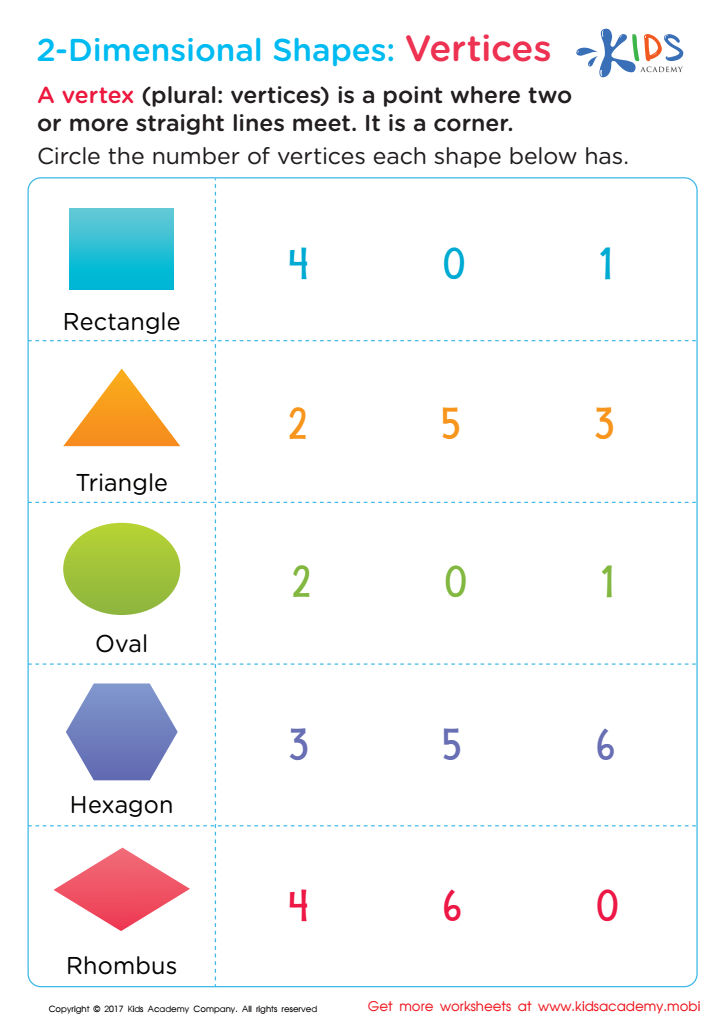
Two–Dimensional Shapes: Vertices Printable
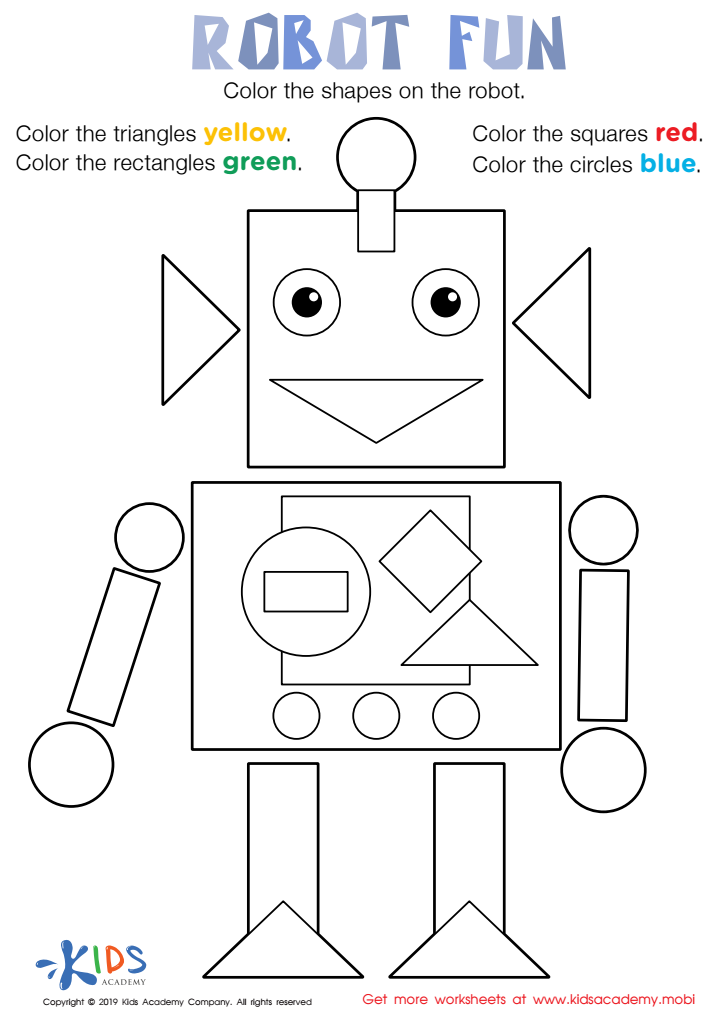
Robot Fun Worksheet
 Assign to My Students
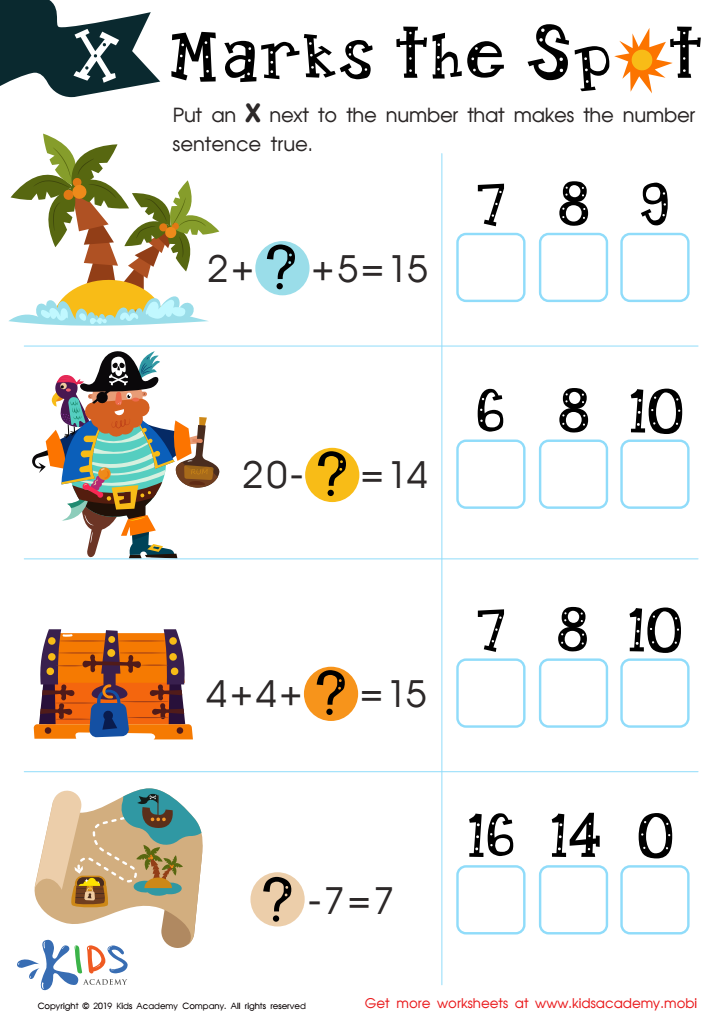
X Marks the Spot Worksheet
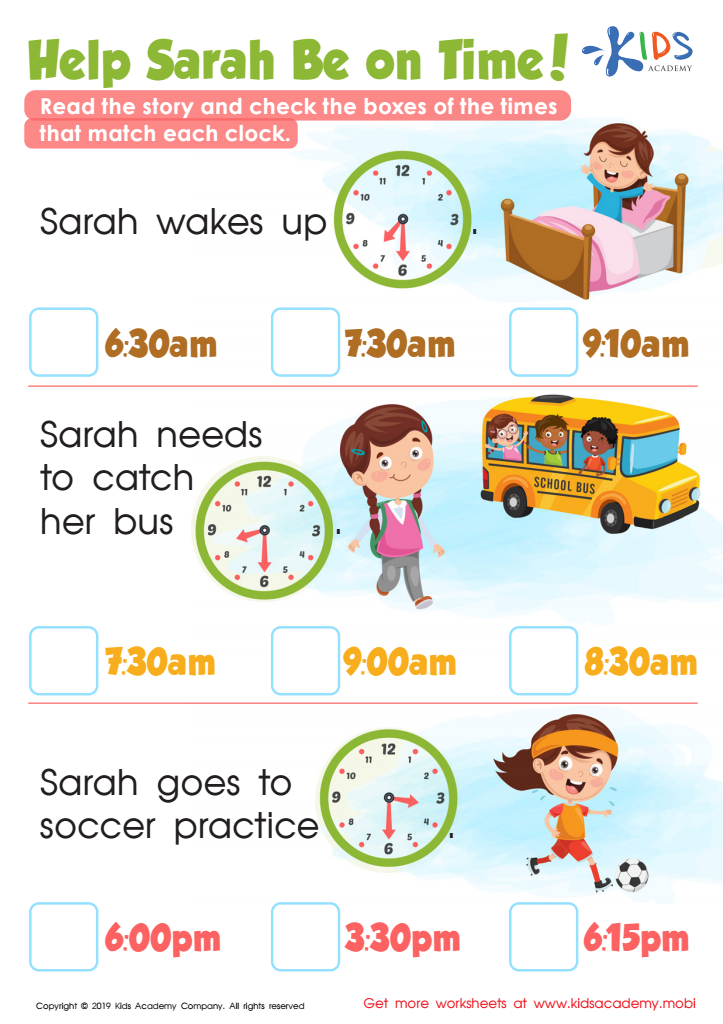
Help Sarah Be on Time! Worksheet








Identifying shapes is crucial for 7-year-olds as it lays the foundation for essential cognitive and spatial skills. At this age, children are naturally curious and eager to learn about the world around them. Understanding shapes enhances their ability to see, analyze, and interact with their environment. It promotes critical thinking and problem-solving skills as they begin to categorize and compare different shapes and their properties.
Moreover, shape recognition plays a significant role in developing mathematical skills. Geometry, a critical branch of mathematics, relies heavily on understanding shapes, their attributes, and how they relate to each other. By mastering shape identification, children can confidently progress in their math education, leading to greater success later on.
Additionally, recognizing shapes is fundamental to reading and writing. Letters and numbers often derive from basic shapes, and familiarity with shapes can help enhance fine motor skills as children engage in drawing and writing activities.
Parents and teachers should also appreciate that identifying shapes fosters creativity. Through art and design, children can explore shapes in various forms, nurturing their imaginative and innovative capacities. Ultimately, focusing on shape recognition not only supports academic growth but also contributes to a child's overall development, preparing them for future learning experiences.








