Improve spelling skills Worksheets for 7-Year-Olds
3 filtered results
-
From - To
Discover engaging spelling worksheets designed specifically for 7-year-olds to enhance their spelling skills in a fun and interactive way. Our carefully curated activities cover essential vocabulary words, phonics patterns, and spelling rules tailored to young learners. Each worksheet promotes creativity while reinforcing critical thinking and word recognition abilities. Perfect for both classroom and at-home practice, these worksheets will boost your child's confidence in spelling through entertaining exercises and games. Dive into our collection now to support your child's literacy development as they master spelling in a joyful and effective learning environment! Visit us for quality educational resources that inspire young minds.
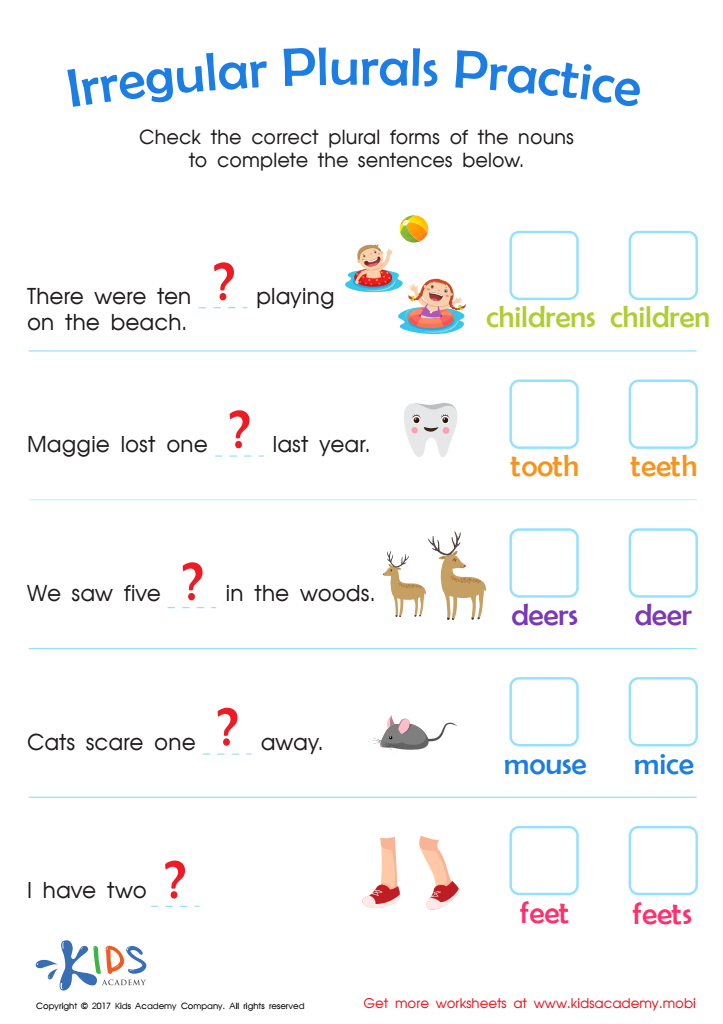
Irregular Plural Nouns Worksheet
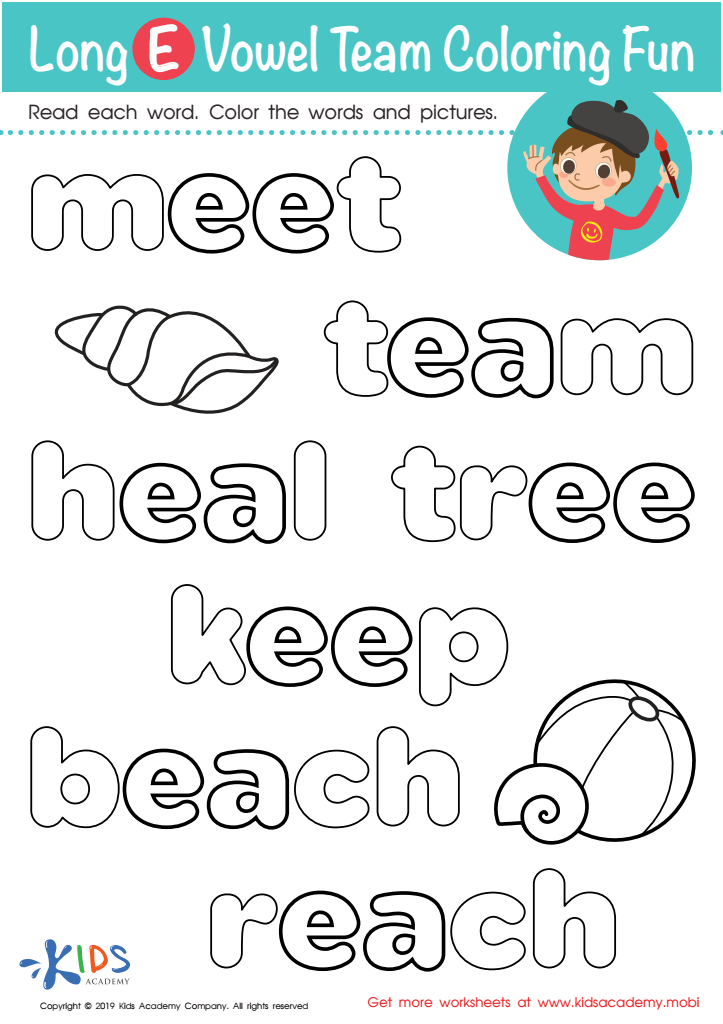
Long E Vowel Team Coloring Worksheet
 Assign to My Students





.jpg)

Improving spelling skills in 7-year-olds is crucial for several reasons. Firstly, strong spelling abilities significantly enhance a child's reading and writing skills, which are foundational for academic success. As children learn to decode words accurately, their reading comprehension improves, allowing them to engage more meaningfully with texts. This, in turn, fosters a love for reading, which is essential for lifelong learning.
Secondly, good spelling promotes effective communication. At this age, children begin to express their thoughts and ideas in writing, and correct spelling ensures their messages are clear and understood by others. Spelling also cultivates confidence in young learners; being able to spell words correctly empowers them to participate in class discussions and share their written work without hesitation.
Moreover, mastering spelling can boost cognitive development. It requires children to make connections between sounds and letters, enhancing their memory and linguistic skills. This is particularly important in the digital age, where effective communication is paramount.
Ultimately, for parents and teachers, fostering spelling proficiency in young children lays the groundwork for academic achievement, personal expression, and social interaction, all vital components of a child's growth and development. Engaging in fun spelling activities can offer both enjoyment and educational benefits.








