Practicing writing skills Worksheets for 7-Year-Olds
3 filtered results
-
From - To
Enhance your child's writing abilities with our meticulously designed worksheets tailored for 7-year-olds. At Kids Academy, we understand the importance of developing strong writing skills from an early age. Our printable resources focus on improving grammar, vocabulary, spelling, sentence structure, and creative expression. These exercises not only engage young learners but also make learning enjoyable. With colorful illustrations and a variety of tasks, our worksheets cater to all learning styles. Help your child blossom into a confident writer. Explore our collection today and give your 7-year-old the essential tools to succeed in writing and communication.
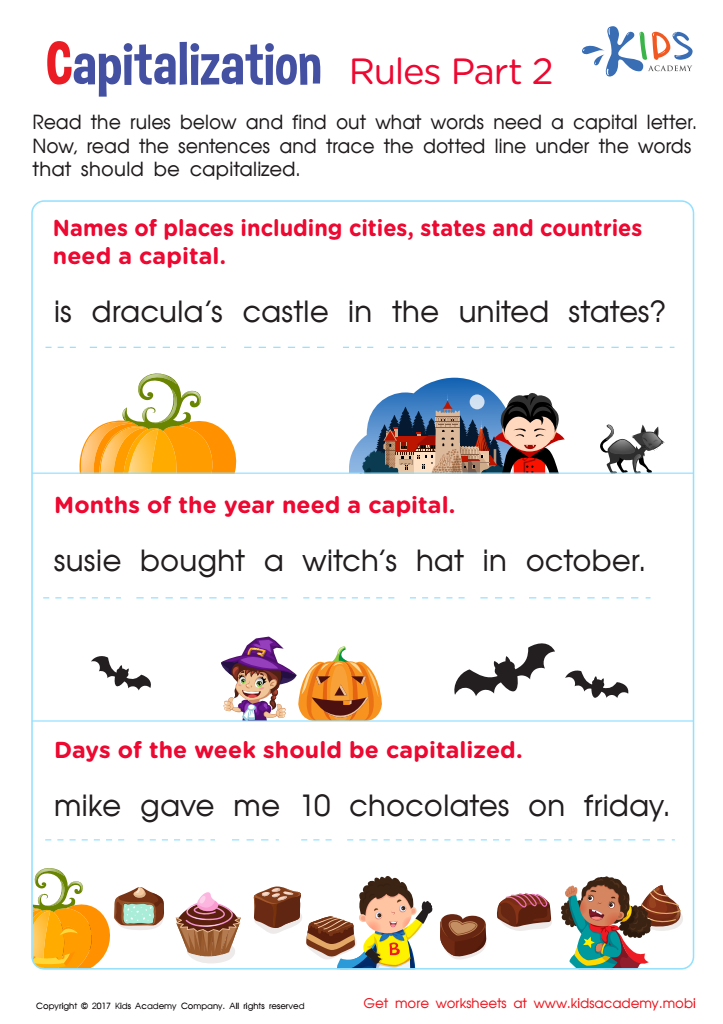
Capitalization Rules: Part 2 Worksheet
 Assign to My Students
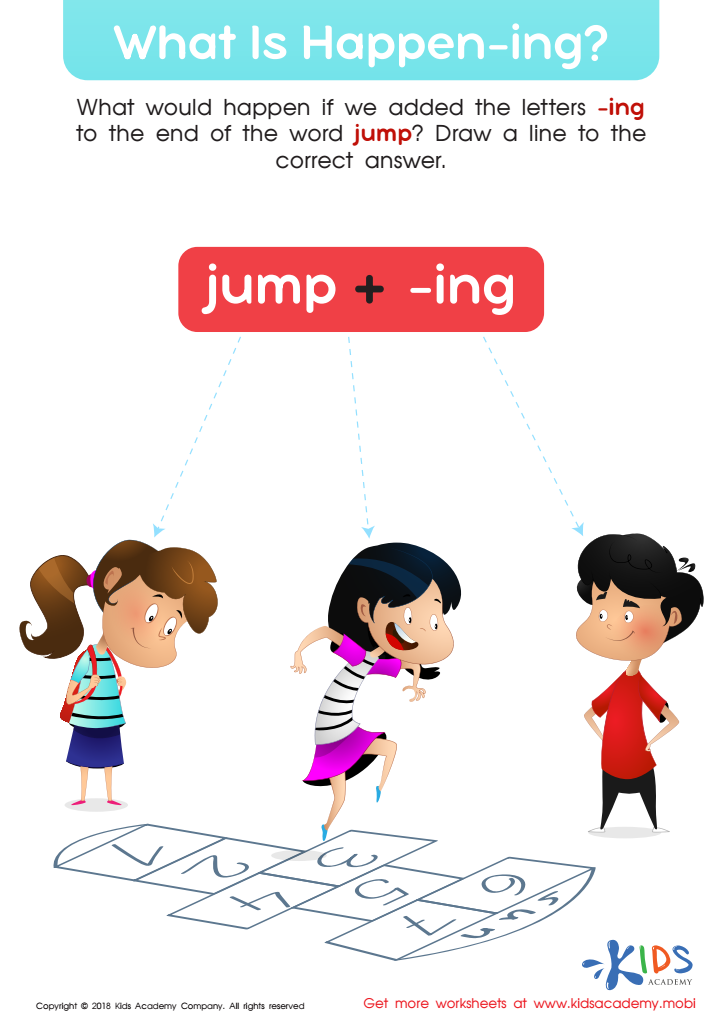
What Is Happen-Ing? Worksheet








Practicing writing skills at the age of seven is crucial for children’s holistic developmental growth, forming a foundation for academic success and effective communication. At this age, kids are just transitioning from basic literacy into more complex reading and writing tasks. Encouraging good writing habits early helps children to develop fine motor skills, hand-eye coordination, and cognitive precision by mastering how to hold pencils, form letters, and construct sentences.
Writing is more than just a mechanical skill; it enhances cognitive development. It requires kids to organize their thoughts, enhance their vocabulary, and practice grammar, which mutually reinforces reading comprehension and critical thinking abilities. Communicative clarity cultivated through writing also translates into improved oral communication and social interaction, aiding children in expressing themselves more confidently.
Moreover, writing has emotional and psychological benefits; it can become an outlet for emotions and creativity, fostering self-awareness and resilience. Engaging in frequent writing activities encourages patience, persistence, and an appreciation for storytelling.
Parents and teachers have a key role in creating stimulating environments filled with encouragement, guidance, and varied writing opportunities like journaling, letter writing, or storytelling. This investment pays off significantly in a child's academic journey and overall personal and social development. By valuing and nurturing writing skills, adults help children build a critical toolset for life.








