Understand number relationships Worksheets for 7-Year-Olds
3 filtered results
-
From - To
Explore our engaging "Understand Number Relationships Worksheets" designed for 7-year-olds, available on Kids Academy! These worksheets help young learners develop essential math skills by fostering a clear comprehension of number relationships, such as greater than, less than, and equality. With vibrant illustrations and interactive exercises, kids will enjoy practicing comparisons and recognizing patterns. Ideal for reinforcing classroom learning or supplementary home practice, our worksheets cater to different learning styles and abilities. Boost your child’s confidence in math through fun, hands-on activities that promote critical thinking and problem-solving skills. Discover the joy of learning with our thoughtfully crafted resources today!
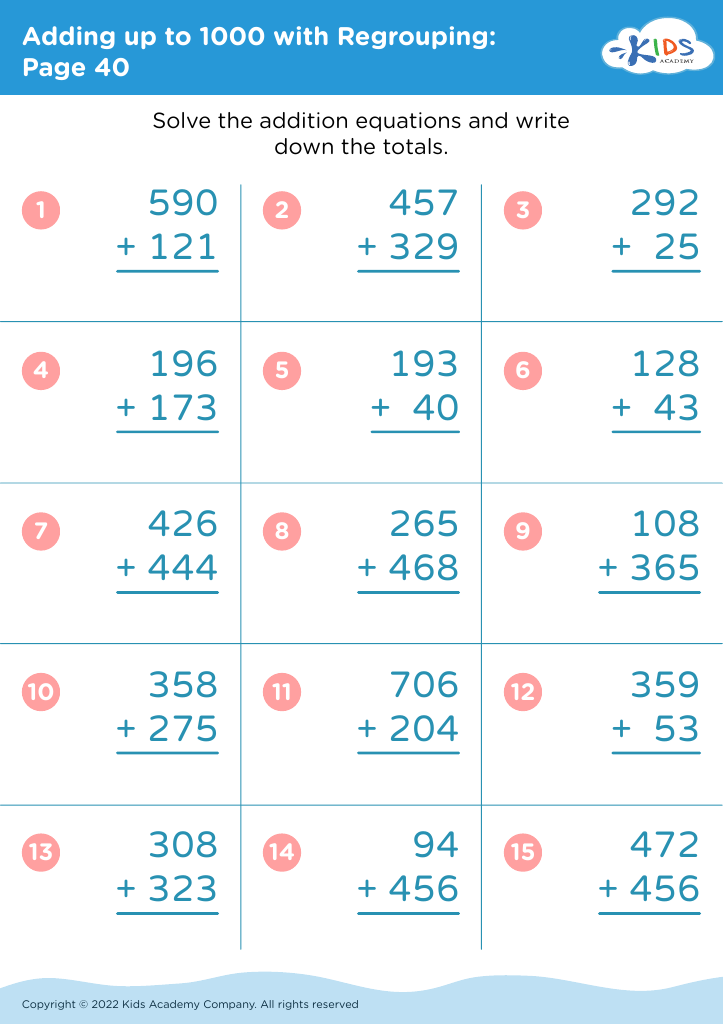
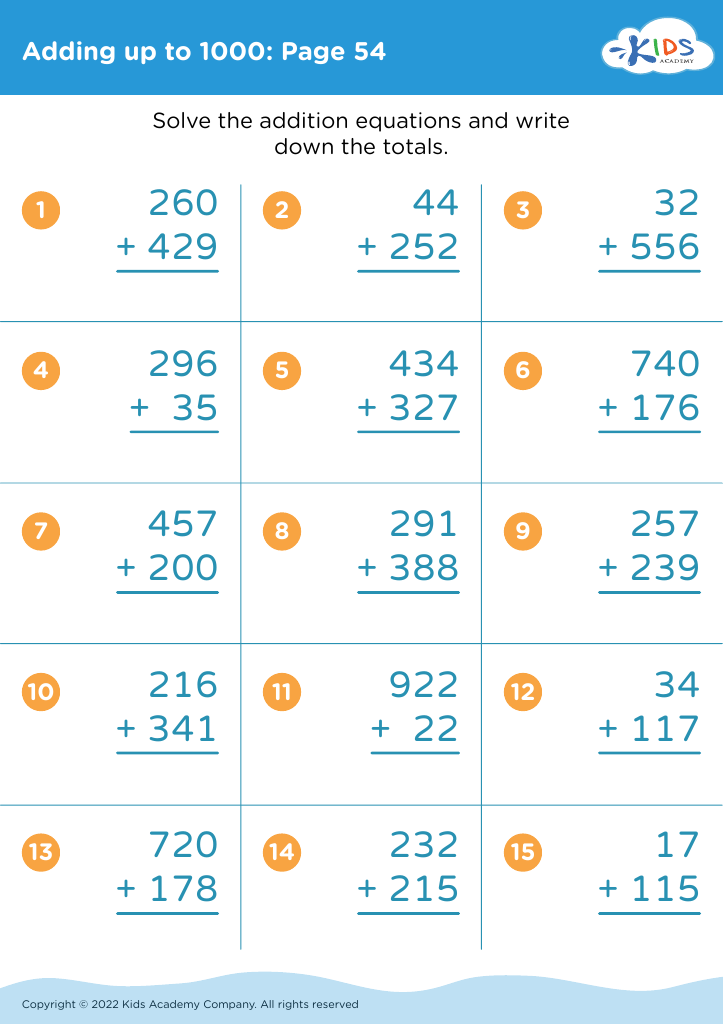
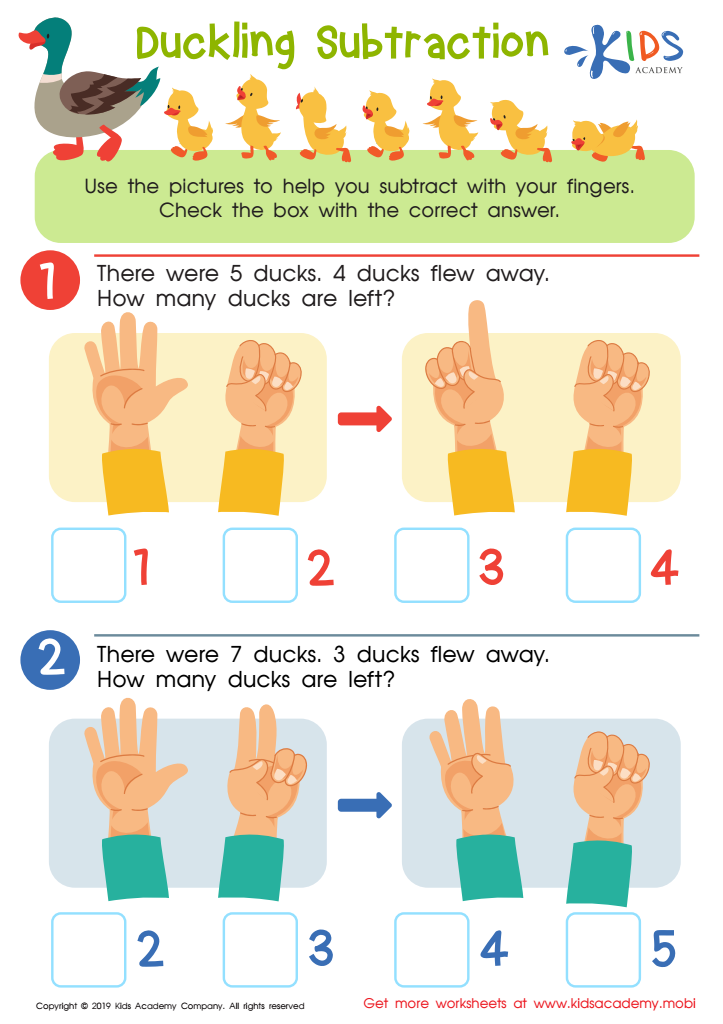
Duckling Subtraction Worksheet
 Assign to My Students


.jpg)



Understanding number relationships is crucial for 7-year-olds as it builds a solid foundation for their mathematical knowledge. At this age, children start to grasp concepts such as addition, subtraction, multiplication, and division. Comprehending how numbers relate to each other—like recognizing that adding two small numbers can equal a larger number—helps children make connections between different math operations. This understanding not only enhances their problem-solving skills but also boosts their confidence in tackling more complex mathematical concepts later on.
Moreover, number relationships foster critical thinking and analytical skills. When children learn to identify patterns, categorize numbers, and engage in mental math, they develop the ability to approach problems logically. This foundational skill set is essential not just for math but also for daily decision-making in real life.
Additionally, parents and teachers play a vital role in nurturing this understanding through engaging activities that incorporate fun and practical experiences with numbers, such as games or everyday scenarios. When adults show enthusiasm for these concepts, children are more likely to develop a positive attitude towards math, paving the way for lifelong learning and success in this essential subject area. Thus, focusing on number relationships can significantly enhance children's educational development and overall confidence.








