
Understanding patterns Worksheets for 7-Year-Olds
39 filtered results
Difficulty Level
Grade
Age
-
From - To
Subject
Activity
Standards
Unlock your child's potential with our "Understanding Patterns Worksheets" designed specifically for 7-year-olds. These engaging worksheets help young learners recognize and create patterns, boosting their critical thinking and problem-solving skills. With a variety of colorful activities, children will explore sequences involving shapes, numbers, and colors, making learning both fun and educational. Perfect for enhancing classroom learning or for home educational support, our worksheets provide clear instructions and enjoyable challenges that cater to different learning styles. Encourage your child's love for math and logical reasoning by accessing our collection today—help them build a strong foundation in understanding patterns!
Favorites
With answer key
Interactive
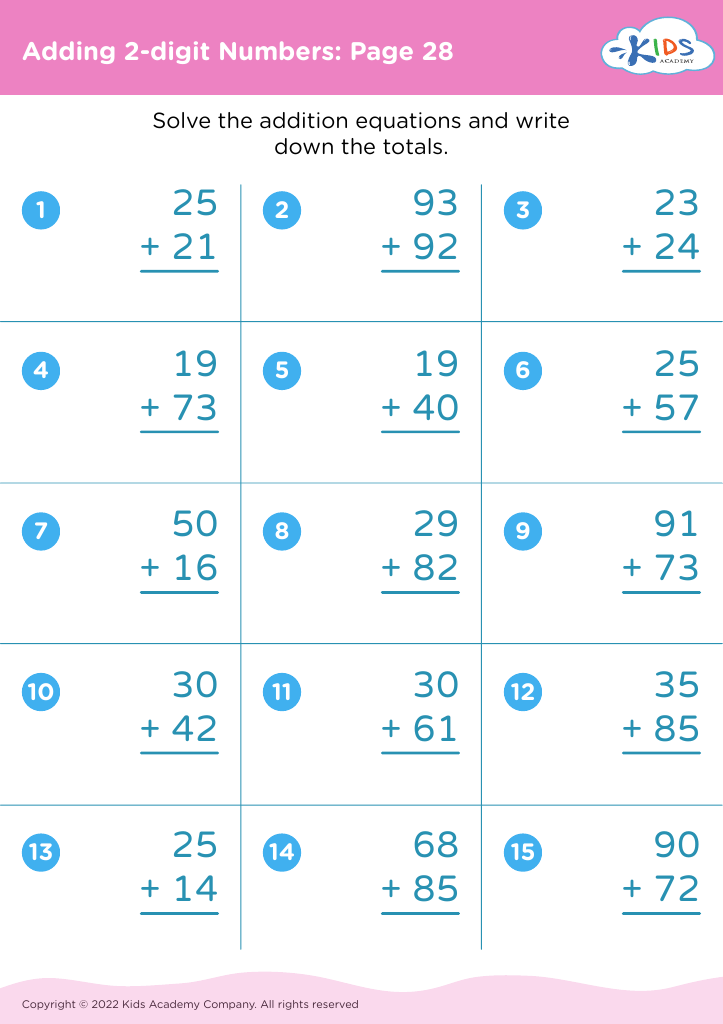
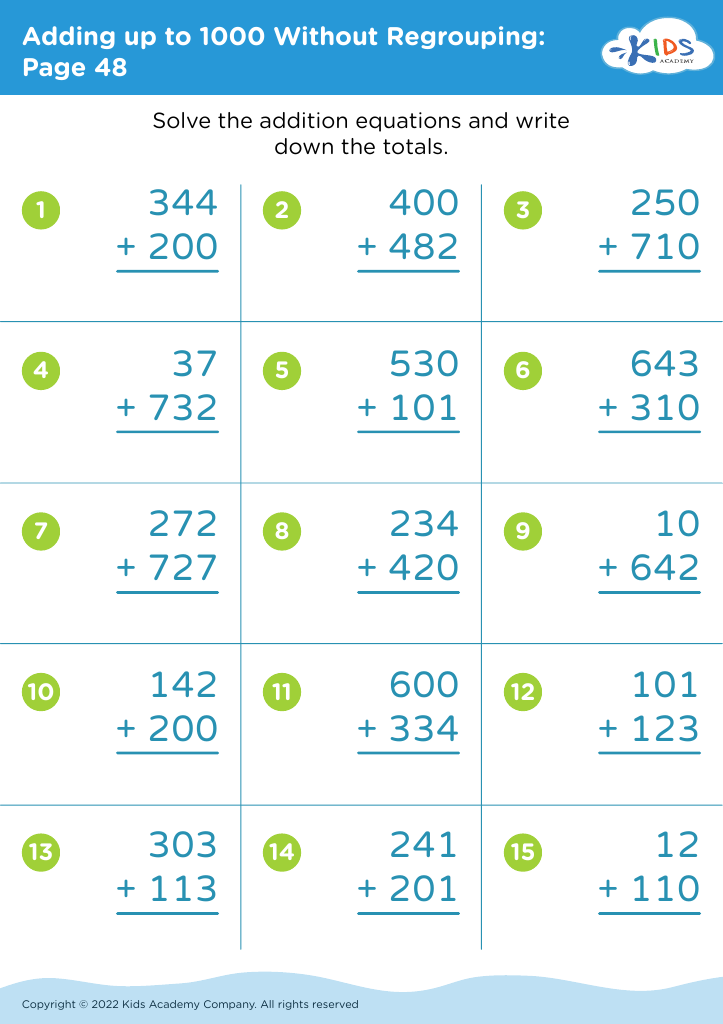
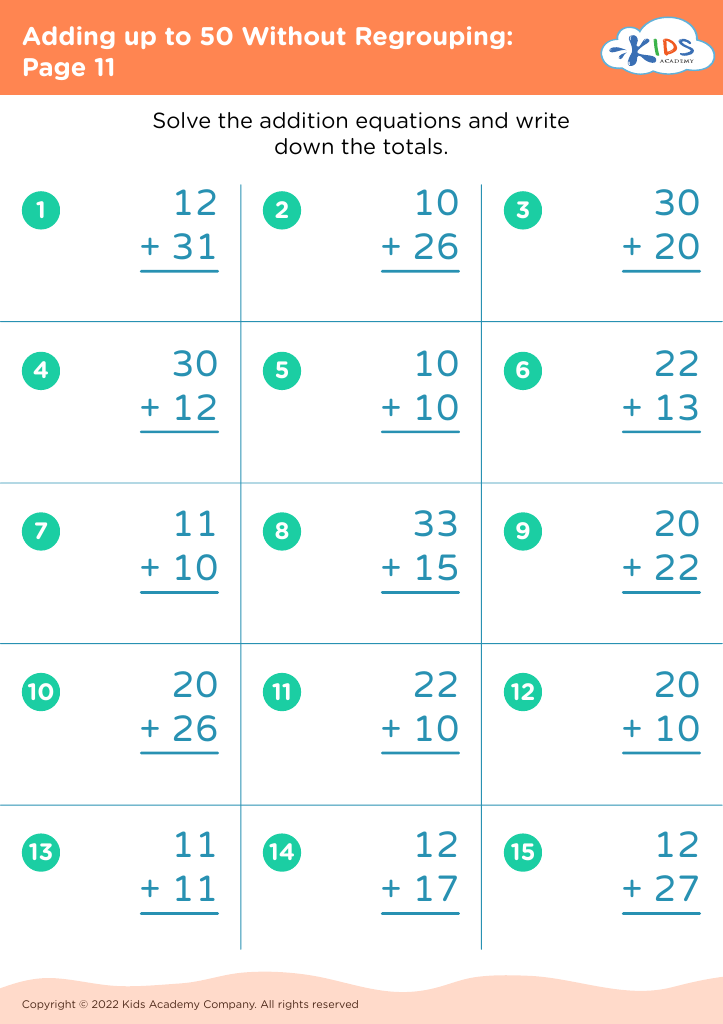
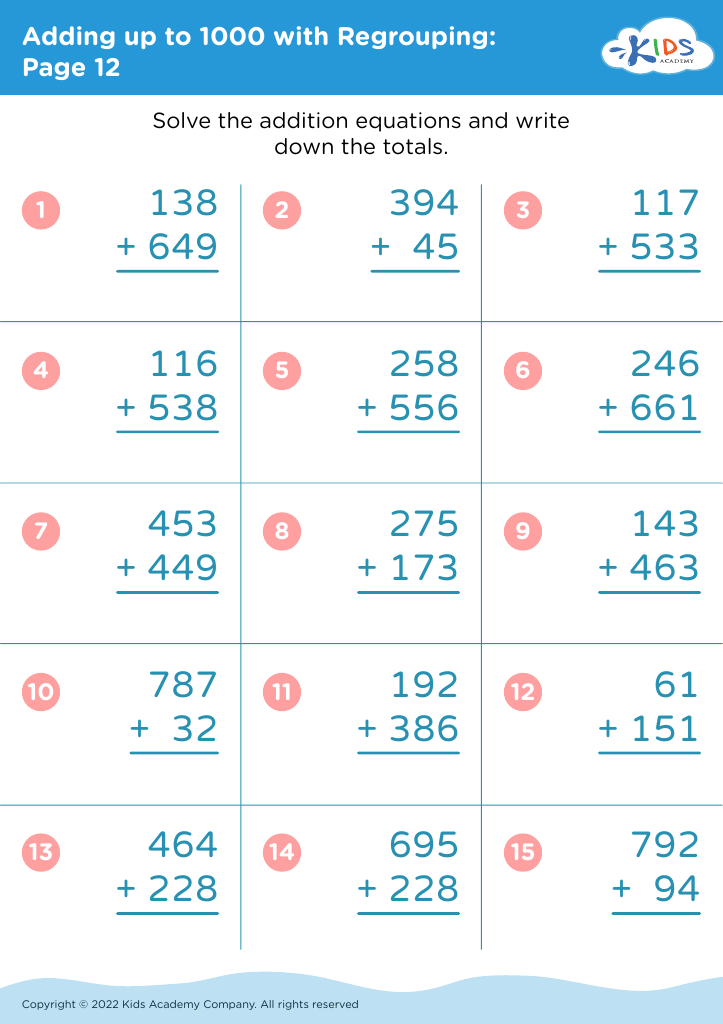
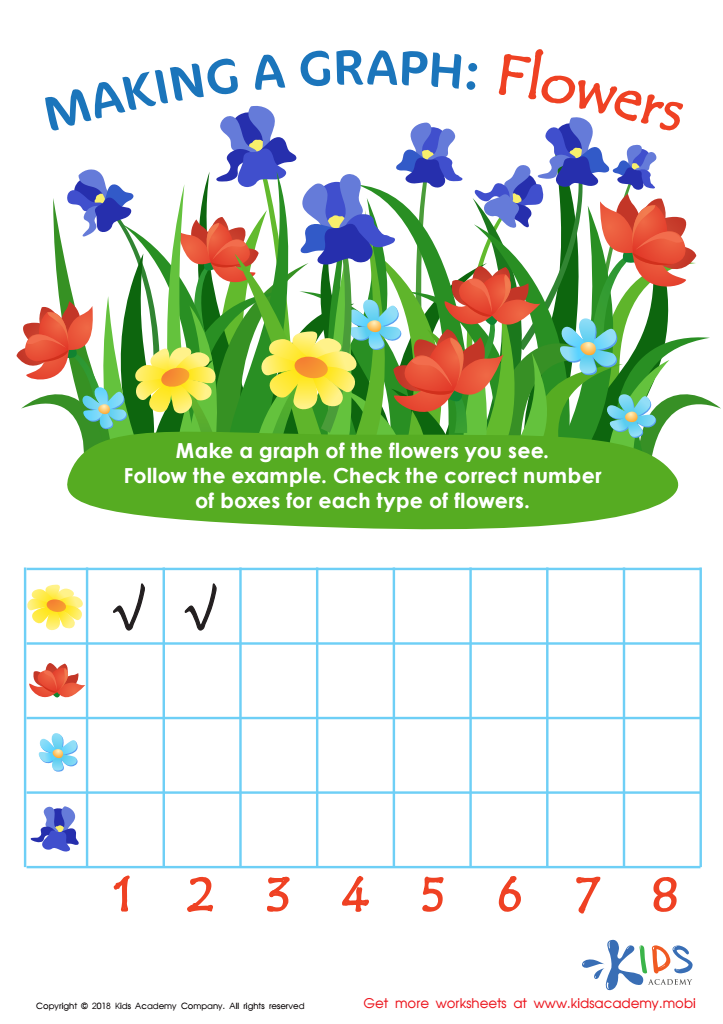
Making a Graph: Flowers Worksheet
Kids will love this engaging PDF graph. They'll count flowers and use checkmarks to represent the number on the graph, tangibly seeing the differences in an organized way they contributed to. All while developing their number representation and concrete number sense skills without even realizing it!
 Assign to My Students
Making a Graph: Flowers Worksheet
Worksheet
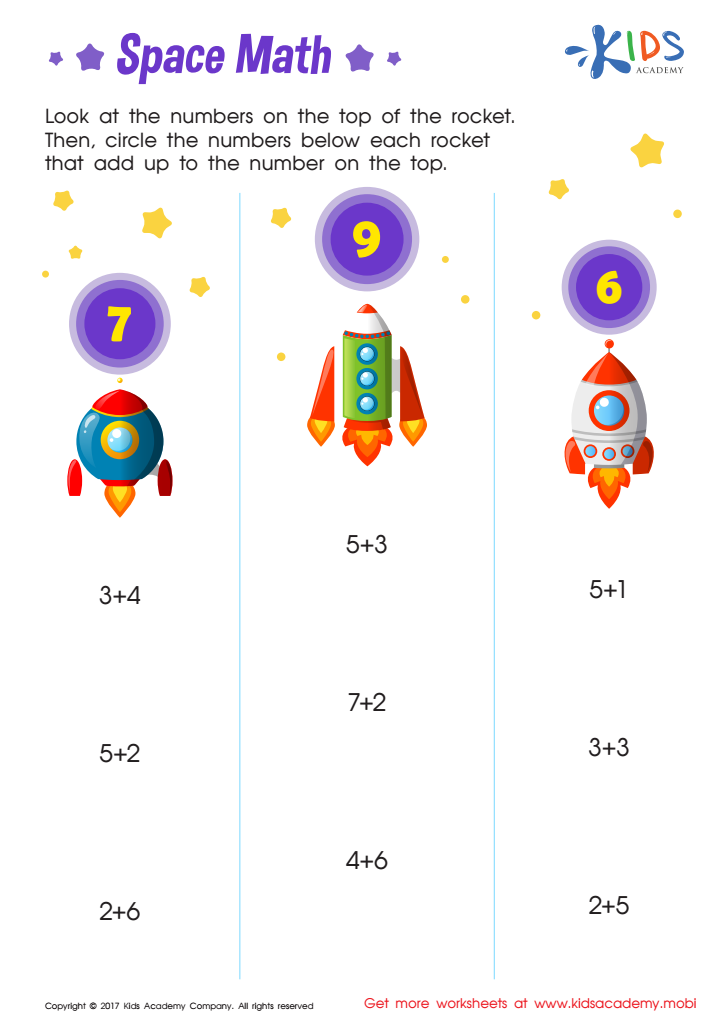
Addition: Space Math Worksheet
Fun and engaging space-themed practice with vivid pictures and matching numbers will make learning more meaningful. Take their math skills out of this galaxy today with Kids Academy!
Addition: Space Math Worksheet
Worksheet
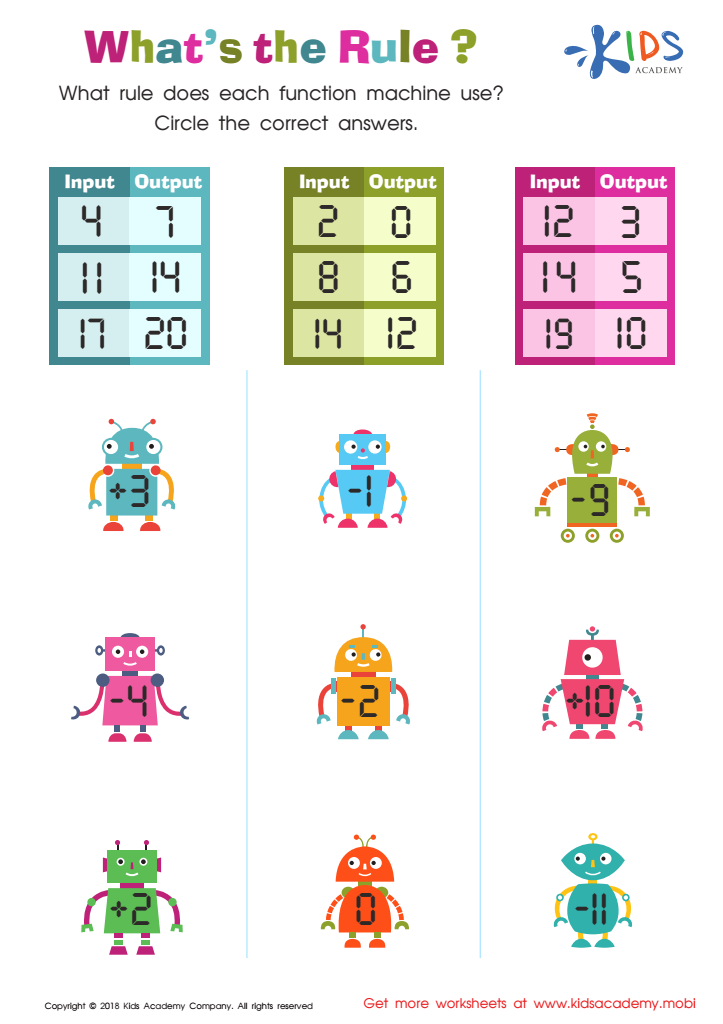
What's the Rule Worksheet
Robots are here to help your child find the relationship between each set of numbers! Adorably illustrated worksheets use vivid pictures that each contain a rule. Look at each function machine and find the pattern or relationship between the input and output. Then, complete the sheet by circling the correct answer!
What's the Rule Worksheet
Worksheet
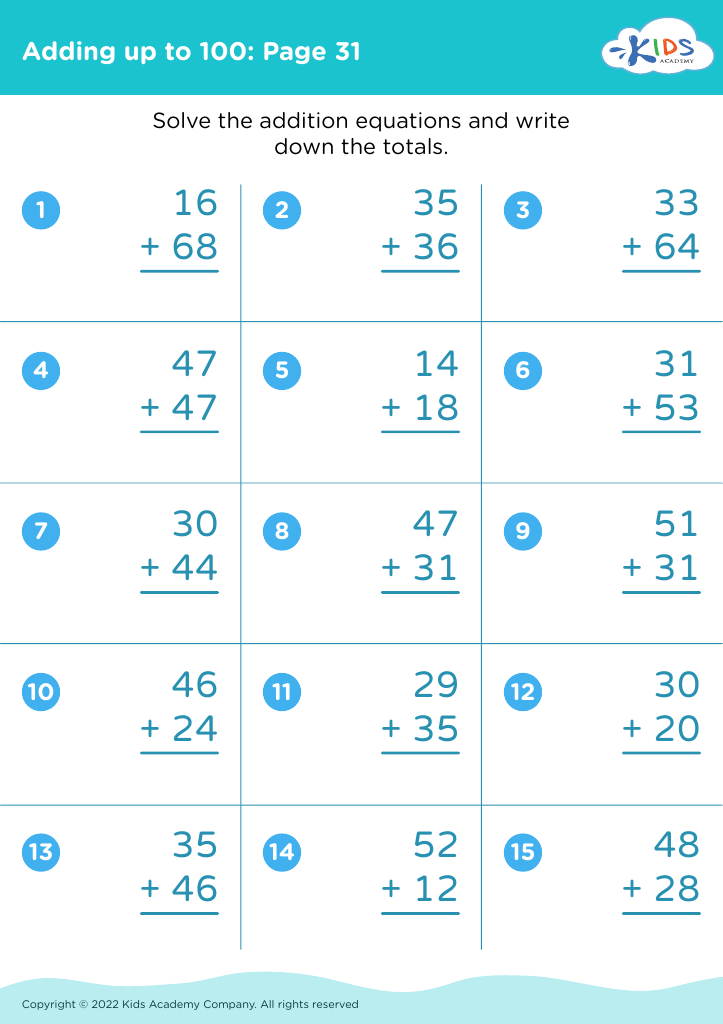
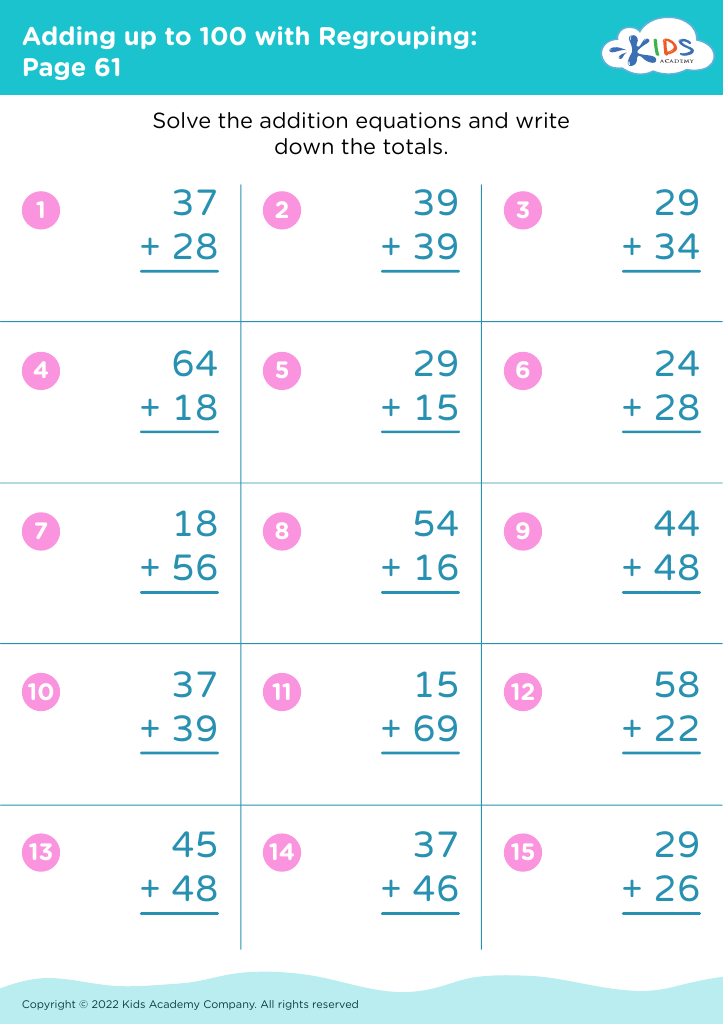
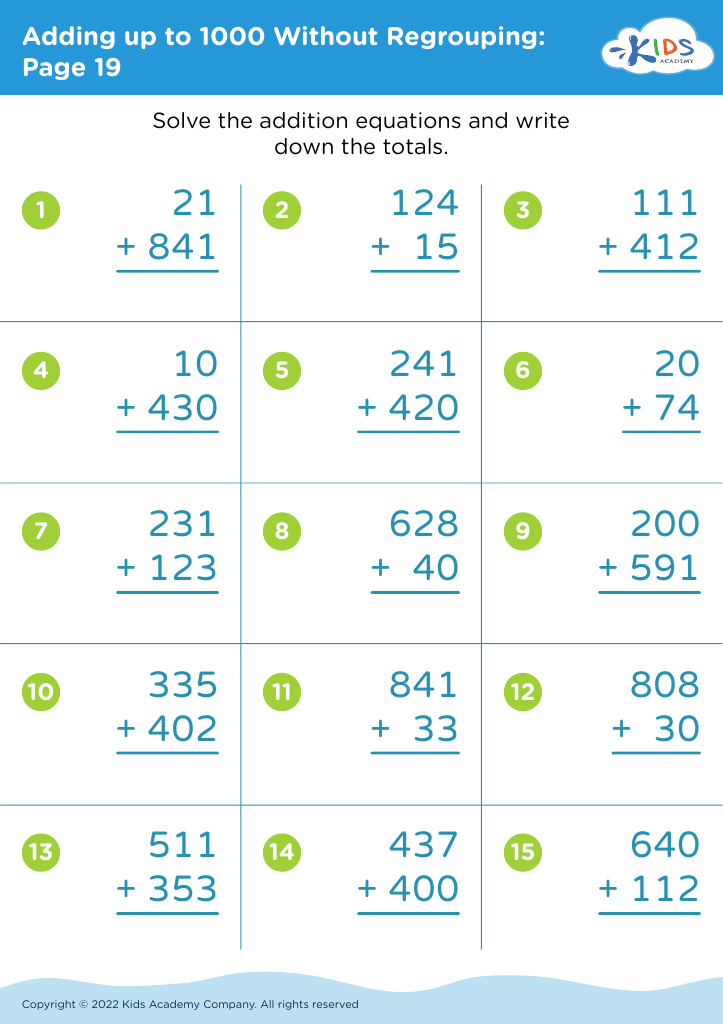
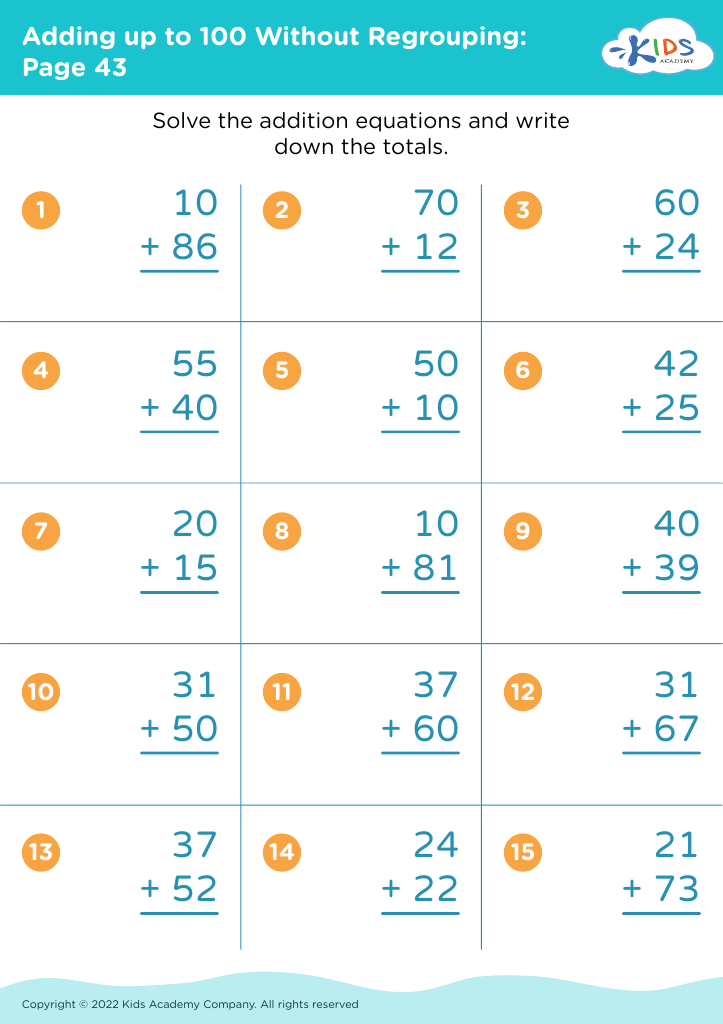
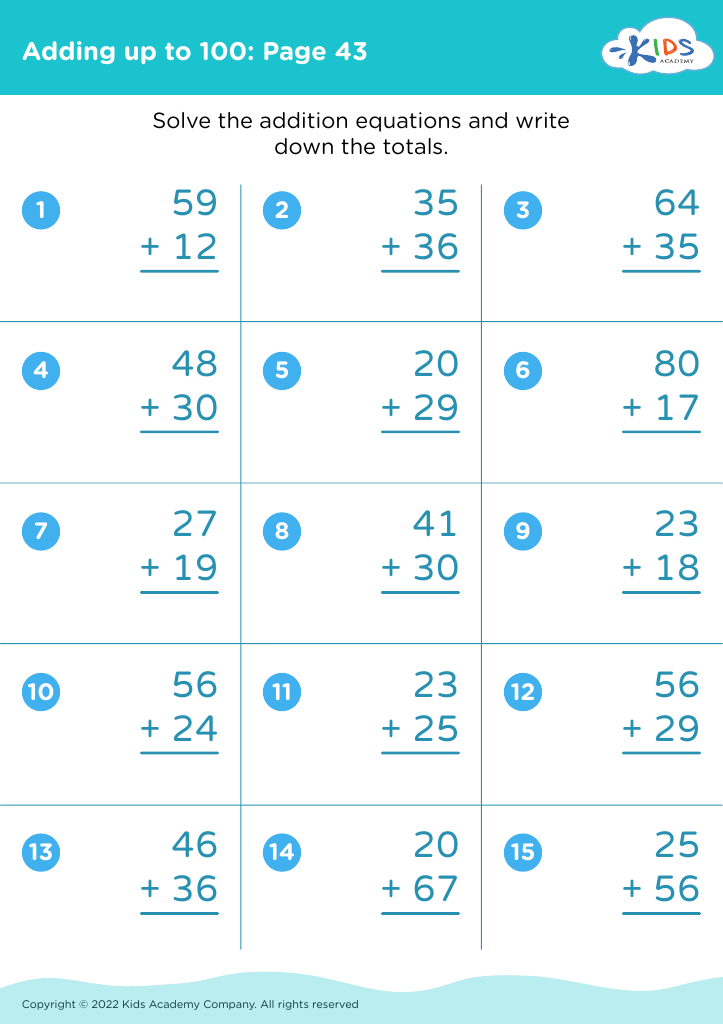
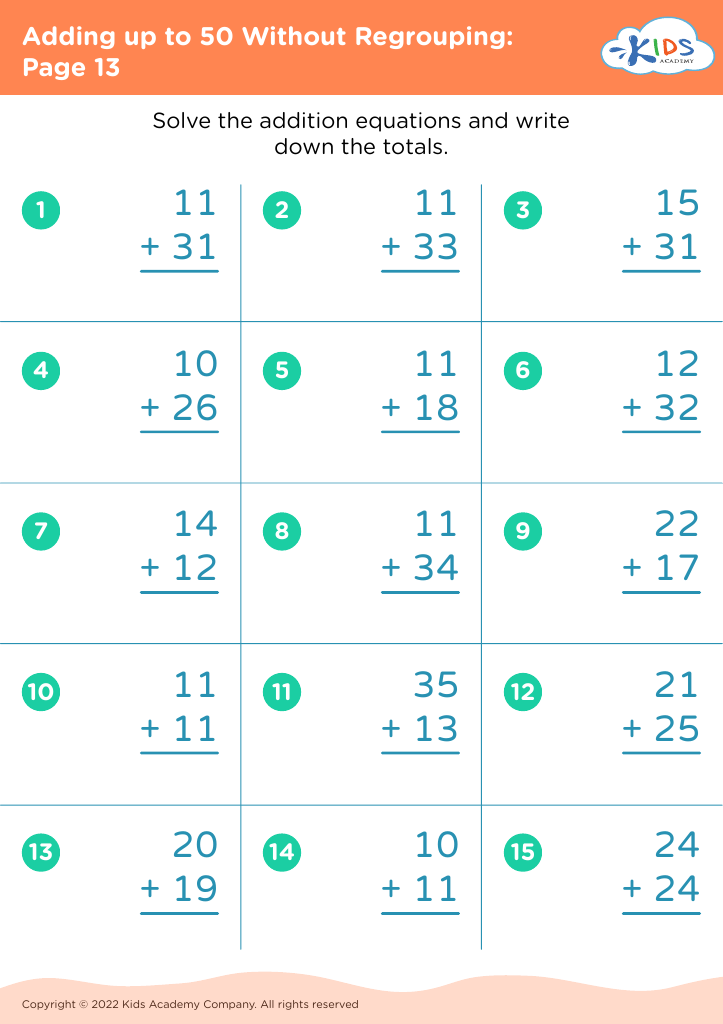
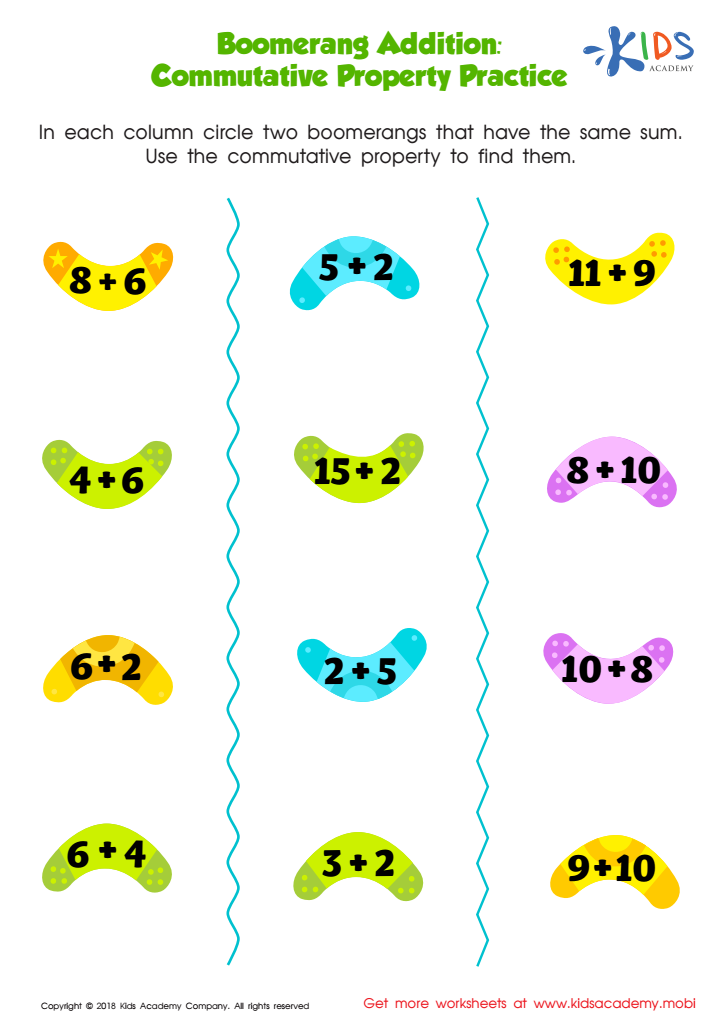
Boomerang Addition Worksheet
Kids know that when a boomerang is thrown, it reverses its path back. The same goes for addition: numbers can be rearranged and the sum will remain the same. Use this worksheet to find matching pairs of colorful boomerangs and equations. Look through each column and use the commutative property to find the pairs with the same sum.
Boomerang Addition Worksheet
Worksheet
Join Kids Academy for Free
Who is primarily going to use this learning content?








Understanding patterns is crucial for 7-year-olds as it lays the foundation for their mathematical development and critical thinking skills. At this age, children are naturally curious and beginning to grasp the world around them through repetition and relationships. Recognizing patterns helps them make connections between concepts, improving their ability to solve problems.
For parents and teachers, fostering pattern recognition is essential because it not only enhances numeracy skills but also supports literacy by helping children identify sequences in language and story development. Patterning activities, such as music, art, and even daily routines, make learning engaging and relevant, stimulating cognitive development.
In addition, pattern recognition is linked to higher-level math functions. Early exposure aids in future topics like algebra, geometry, and data analysis. By understanding and manipulating patterns, children develop reasoning abilities and the confidence to tackle complex challenges.
Encouraging exploration of patterns aids in social-emotional skills as well, as children learn to work with peers, share ideas, and think critically. Therefore, parents and teachers should prioritize understanding patterns in their education approach, as building these skills can profoundly impact a child's overall learning trajectory.








