Understanding plurals Worksheets for 7-Year-Olds
4 filtered results
-
From - To
Explore our engaging "Understanding Plurals Worksheets" designed specifically for 7-year-olds! These interactive printable worksheets provide a fun and effective way for children to grasp the concept of plurals, enhancing their reading and writing skills. Through a variety of exercises, students will learn how to transform singular nouns into plural forms, ensuring they understand subject-verb agreement. Our worksheets feature colorful illustrations and clear instructions, making learning enjoyable and accessible. Perfect for classroom or at-home practice, these resources help foster essential language skills in young learners. Dive in and help your child master plurals today with our exciting worksheets!
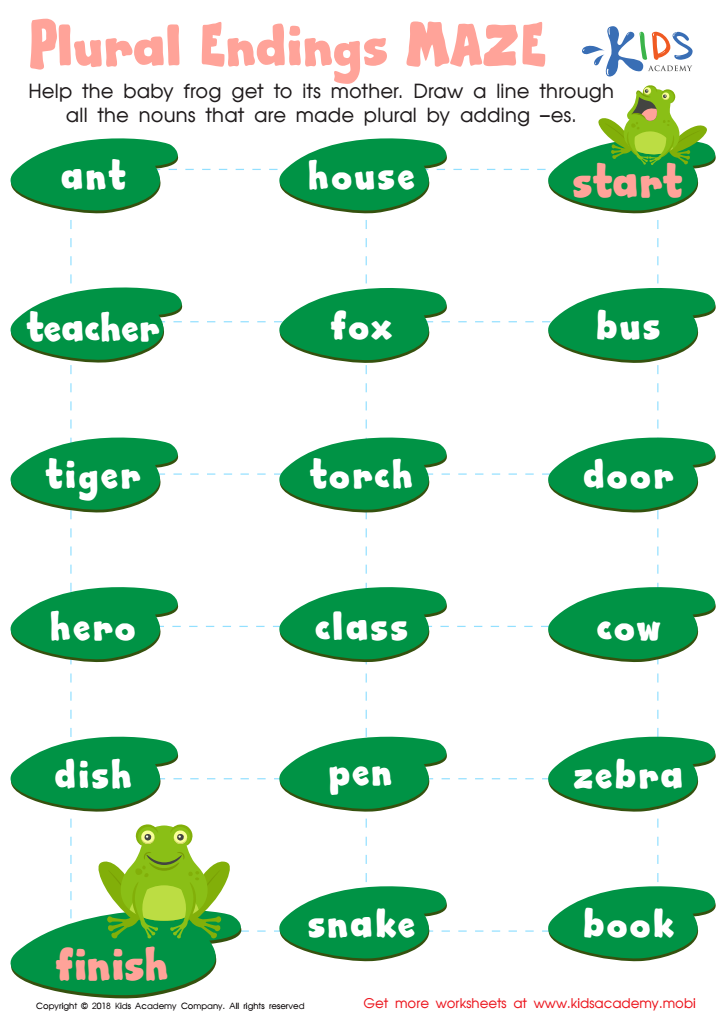
Plural Endings Maze Worksheet
 Assign to My Students
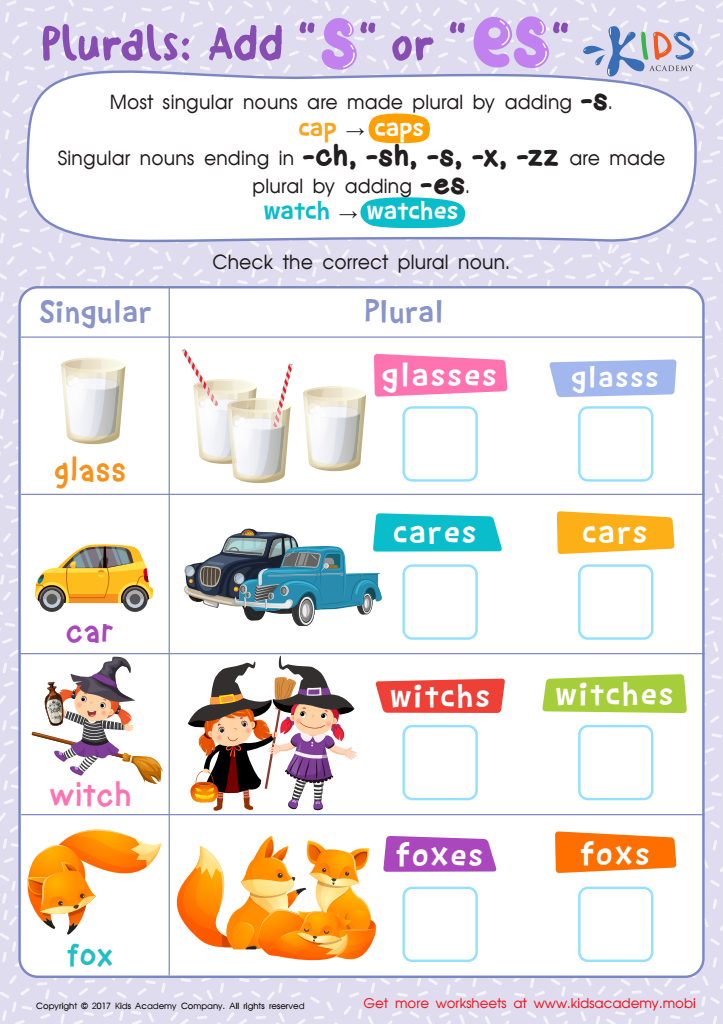
Plurals: "–es" or "–es"? Worksheet
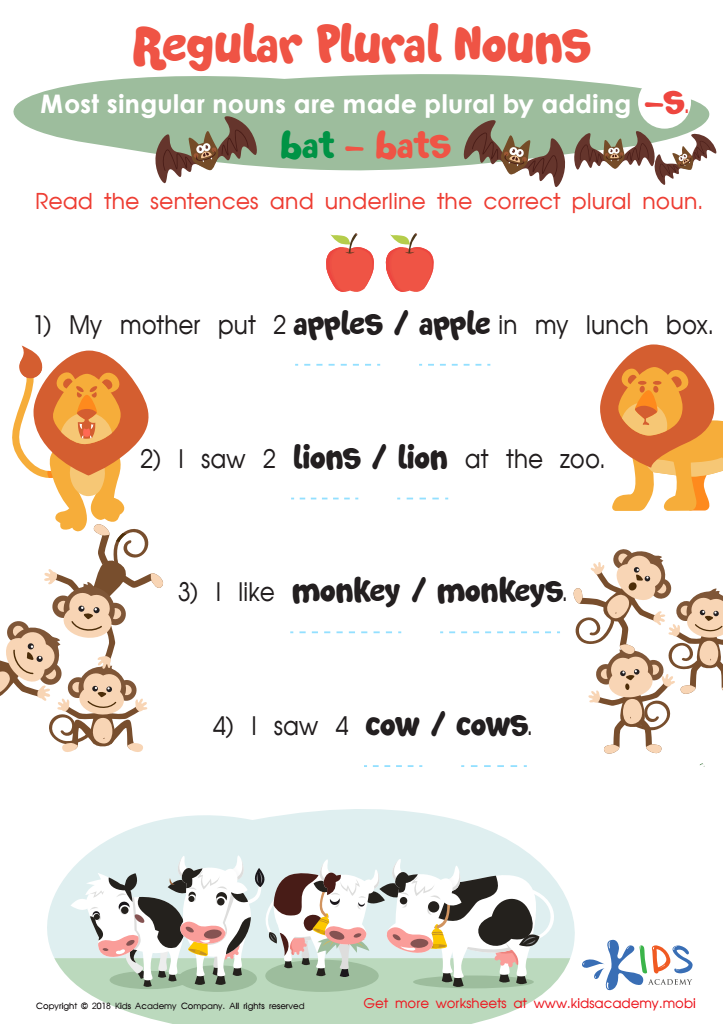
Regular Plural Nouns Worksheet








Understanding plurals is essential for 7-year-olds as it forms a foundational skill in language development and communication. At this age, children typically expand their vocabulary and begin to engage in more complex sentence structures. Recognizing and using plurals correctly enhances their ability to convey clear and accurate messages.
Parents and teachers should care about this aspect of language learning because it directly influences literacy skills. Mastery of plurals supports reading comprehension; as children decode texts, they encounter numerous plural words. Understanding plurals helps them grasp the content better, contributing to their overall academic success.
Additionally, grasping plurals aids in children’s social interactions. Effective communication is key to building friendships and collaborating during group activities. Using plurals correctly can also boost a child’s confidence, allowing them to express themselves more fluently.
Moreover, in an increasingly diverse world, learning plurals serves as an introduction to grammatical rules in various languages, laying the groundwork for future multilingualism. Ultimately, focusing on plurals enriches a child's word bank, enhances their storytelling skills, and prepares them for future learning challenges. Thus, investing time in this area is crucial for both parents and teachers.








