Understanding pollination Worksheets for 7-Year-Olds
4 filtered results
-
From - To
Explore our engaging "Understanding Pollination Worksheets" designed specifically for 7-year-olds! These worksheets introduce young learners to the essential process of pollination, illustrating its importance in nature and food production. With colorful visuals and age-appropriate activities, kids will discover how pollinators like bees and butterflies contribute to the ecosystem. Our interactive exercises encourage creative thinking and reinforce key concepts, making learning about science fun and enjoyable. Perfect for classroom use or at-home activities, these worksheets also promote observation skills and critical thinking. Download them now and help your child appreciate the fascinating world of plants and pollination!
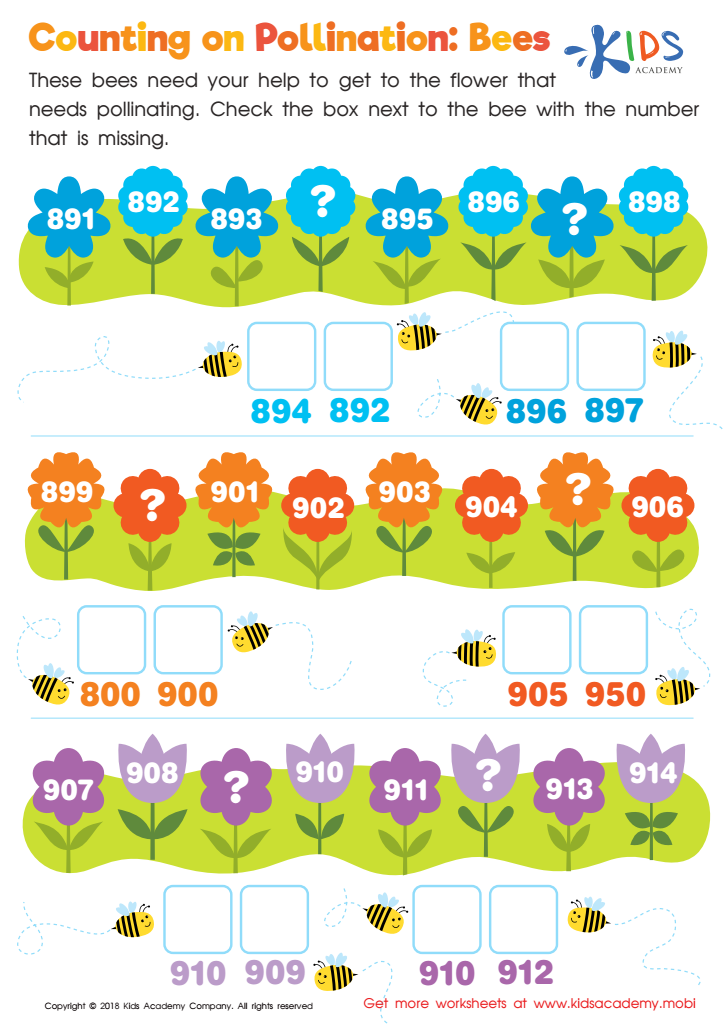
Counting on Pollination: Bees Worksheet
 Assign to My Students
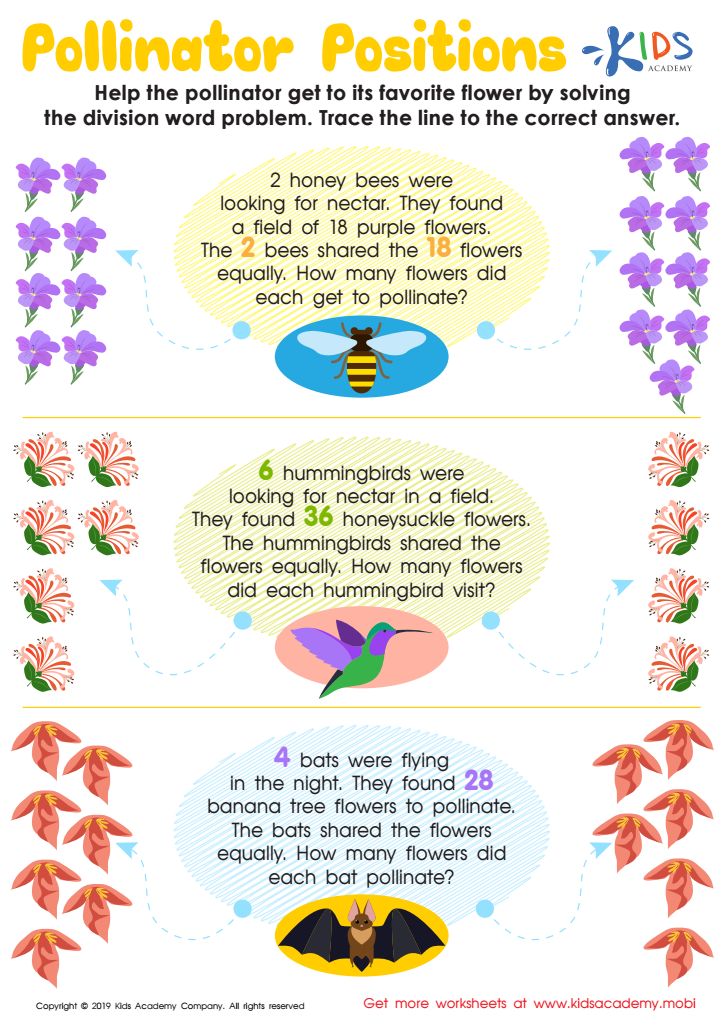
Pollinator Positions Worksheet
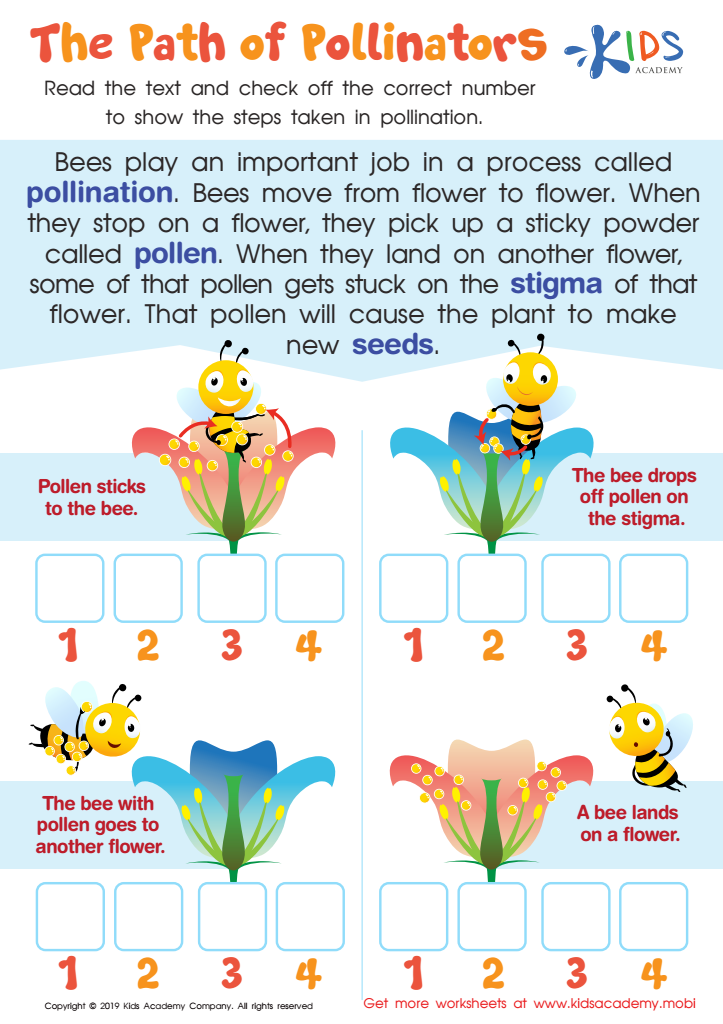
The Path of Pollinators Worksheet
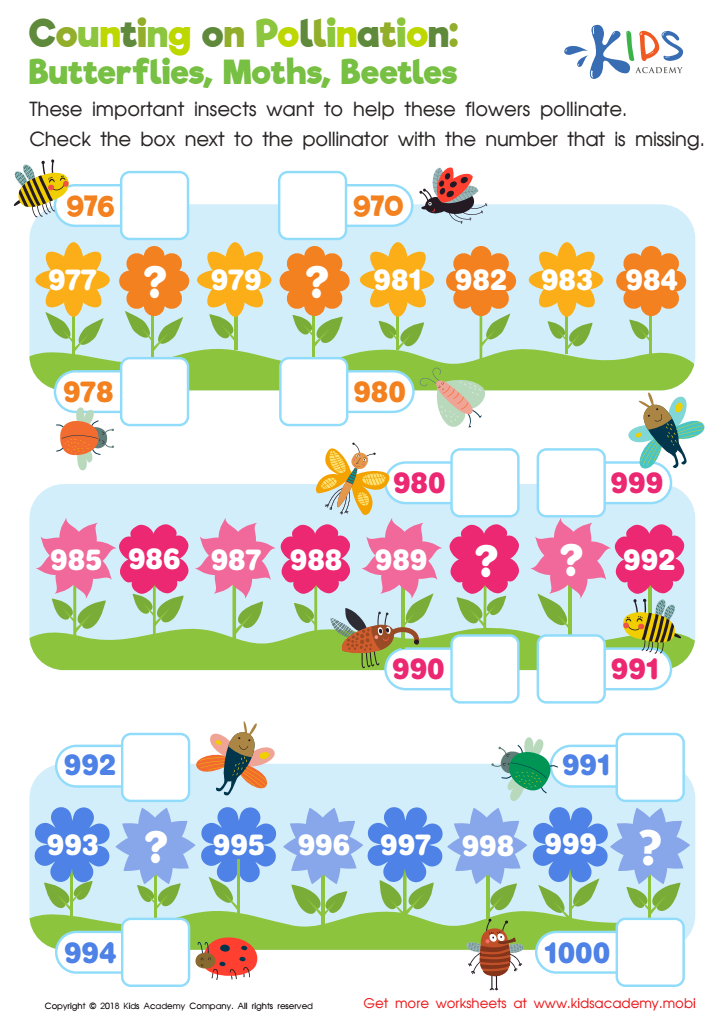
Counting on Pollination: Butterflies, Moths, Beetles Worksheet







Understanding pollination is crucial for 7-year-olds because it helps foster a connection between children and nature. At this age, children are naturally curious about the world around them. By teaching them about pollination, we can ignite their interest in plants, animals, and ecosystems. Pollination is a vital process that sustains food sources, as many fruits, vegetables, and nuts depend on it for reproduction.
Parents and teachers should care about this topic because it promotes environmental awareness and responsibility. Educating children about how pollination works encourages them to appreciate biodiversity and understand the role of insects, birds, and wind in our food systems. With the rise of environmental issues, equipping children with knowledge about pollination helps them become future advocates for conservation.
Additionally, incorporating subjects like science and nature into early education can enhance critical thinking and observation skills, laying the groundwork for more advanced learning. Encouraging kids to engage with nature and explore how it functions can spark creativity and inquiry. Ultimately, teaching 7-year-olds about pollination is not just about broadening their knowledge; it is about nurturing responsible, informed individuals who will be stewards of the planet in the future.








