Counting skills Adding up to 50 Worksheets for 7-Year-Olds - Page 2
34 filtered results
-
From - To
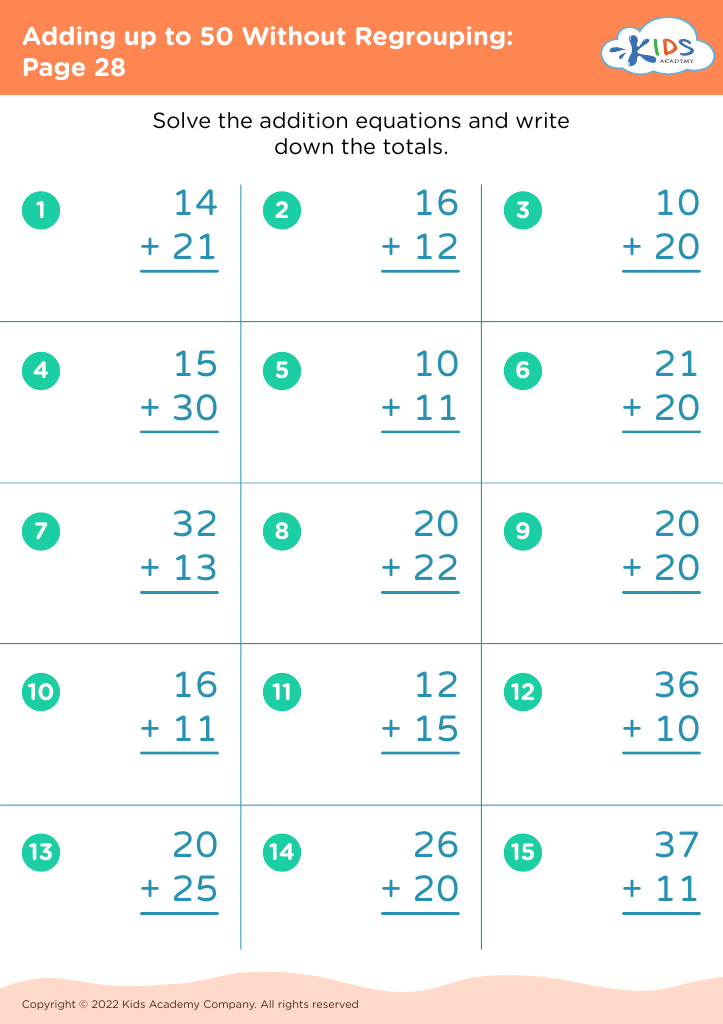
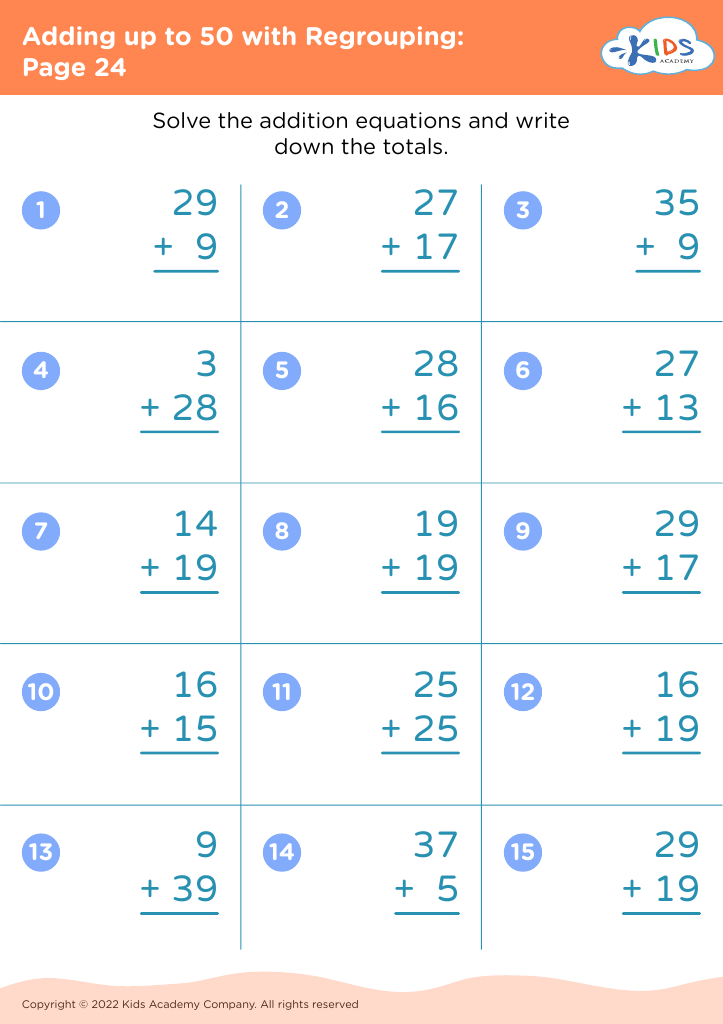
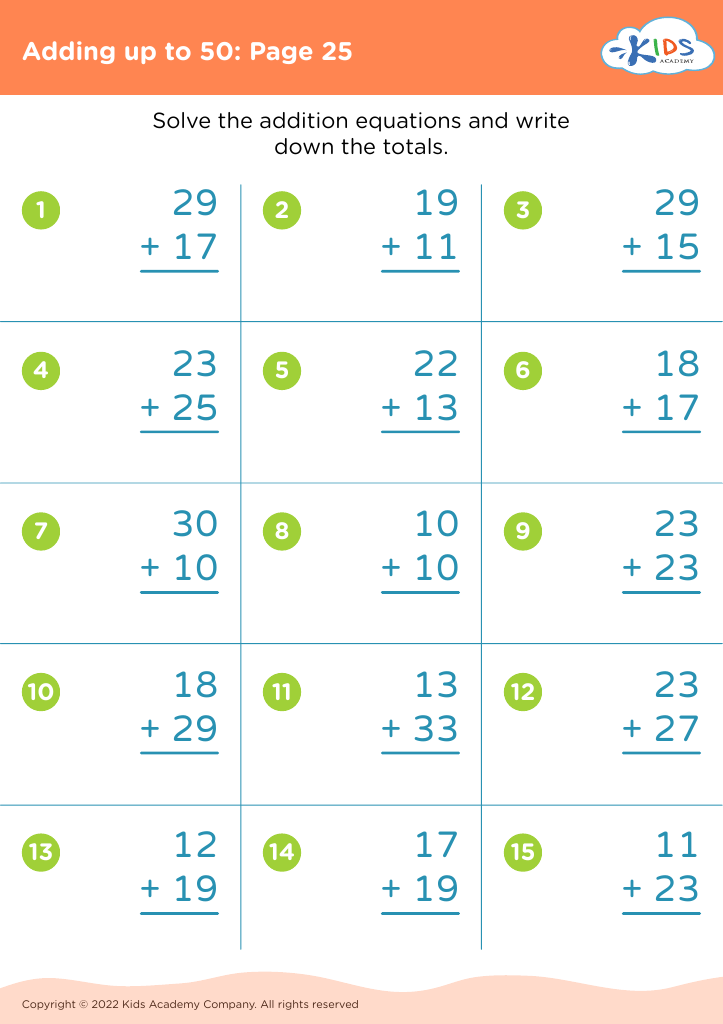
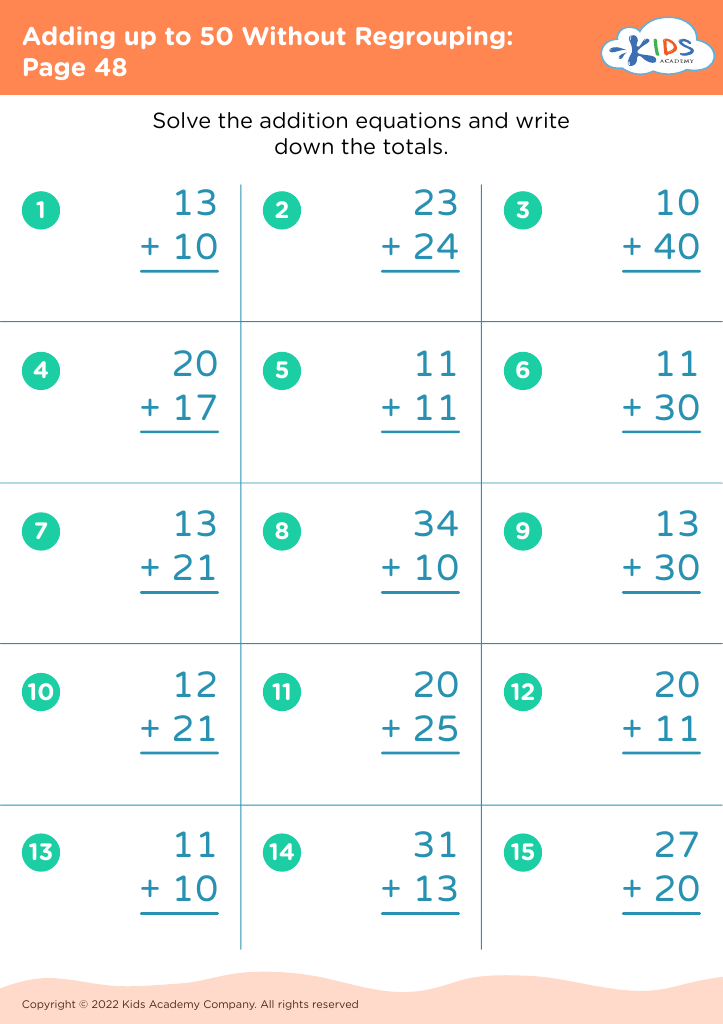
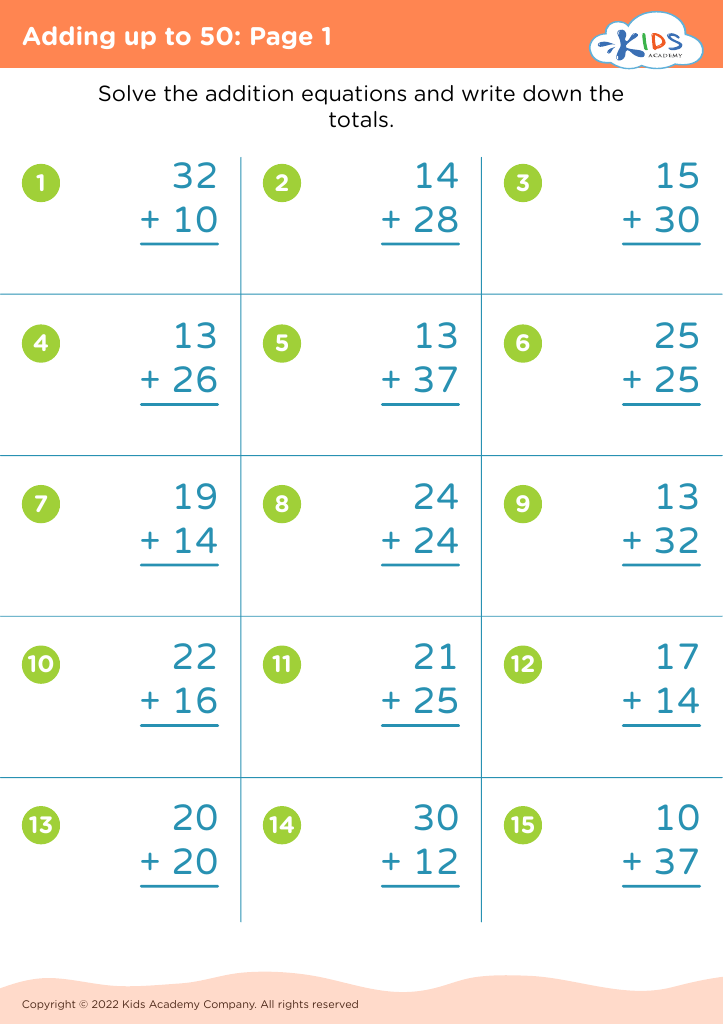
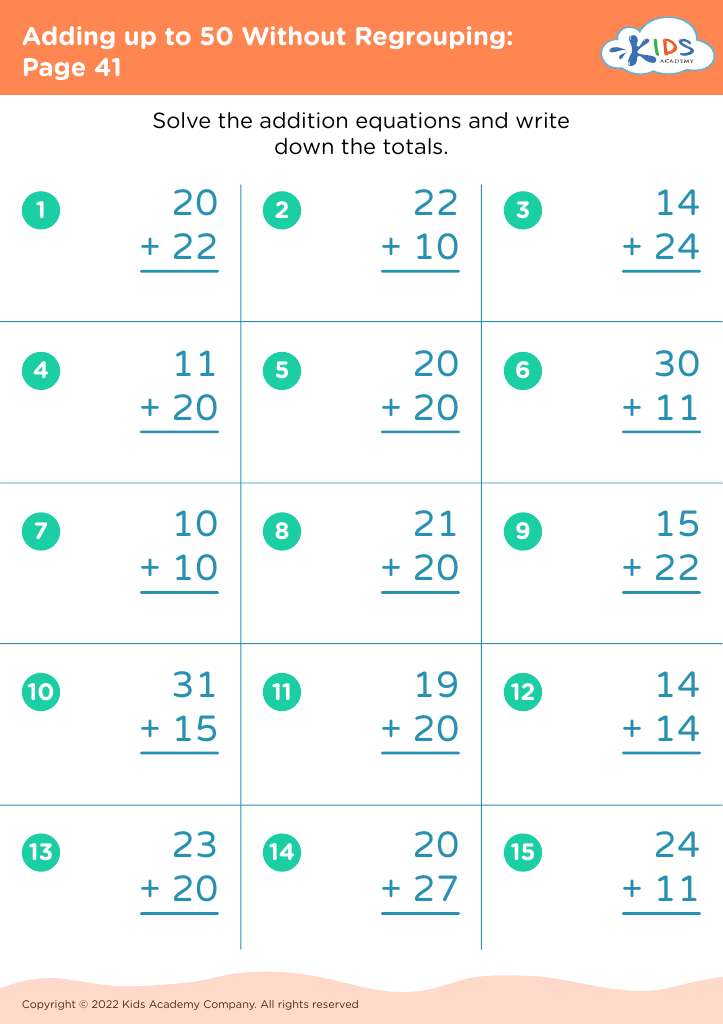
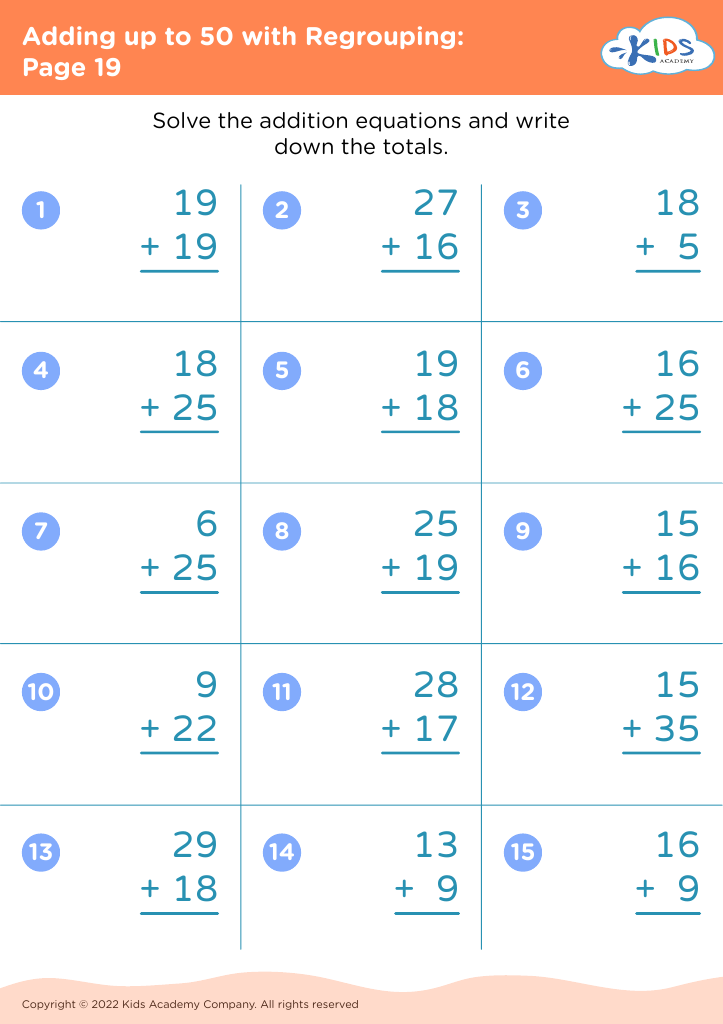
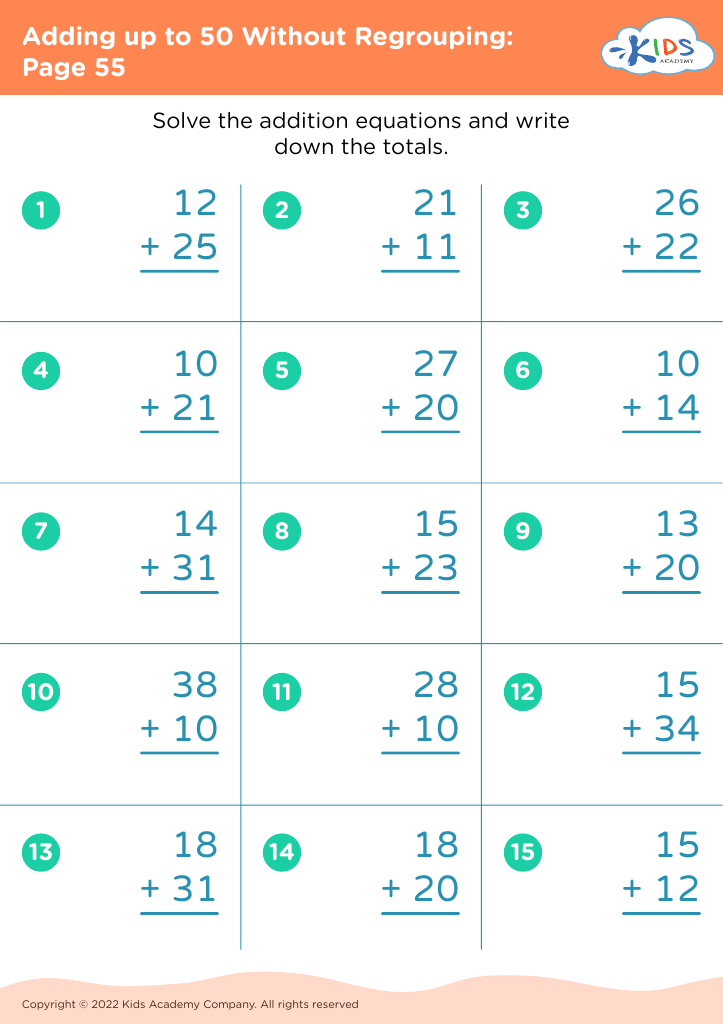
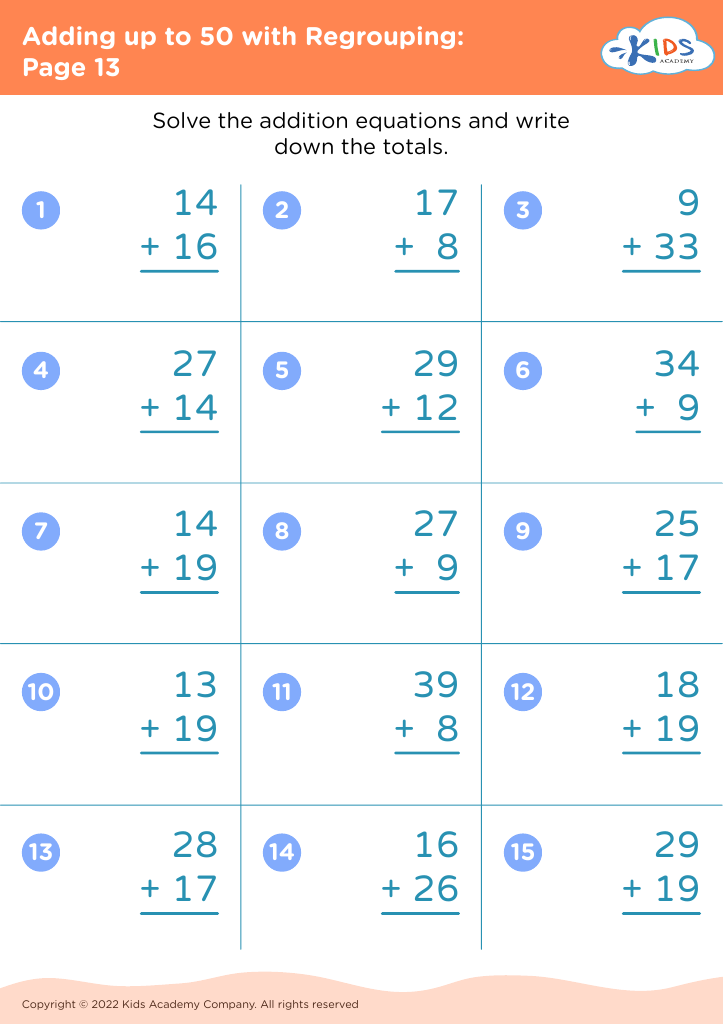
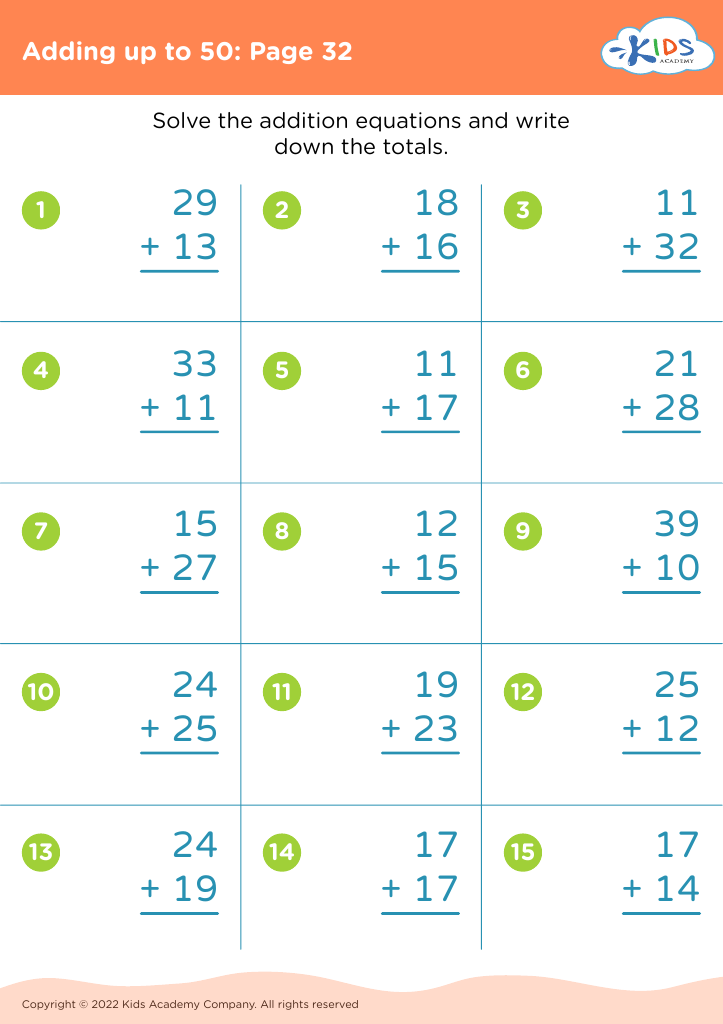




Counting skills and the ability to add up to 50 are crucial for 7-year-olds as they establish a foundational understanding of numbers and arithmetic that supports future mathematical learning. At this age, children are in the sensitive period for skill acquisition where their brains are exceptionally plastic and primed for absorbing new information. Mastery of counting and basic addition equips them with the confidence and competence needed to tackle more complex mathematical operations in later grades.
Furthermore, proficiency in these skills contributes to overall cognitive development. Counting and simple addition improve memory, as youngsters must recall number sequences and facts. These challenges also enhance problem-solving abilities and logical thinking, laying the groundwork for critical thinking skills. From a practical standpoint, the ability to add numbers up to 50 is applicable in daily life, whether calculating ages, managing small sums of money, or understanding time better which empowers children to become more independent and self-assured.
Moreover, early success in mathematics can foster a positive attitude toward the subject, making children more likely to enjoy and engage wonderfully with math as they grow. Teachers and parents who emphasize and support these skills are contributing significantly to their child’s academic journey and broader intellectual growth.








