Subtraction skills Addition and Subtraction Word Problems Worksheets for 7-Year-Olds
6 filtered results
-
From - To
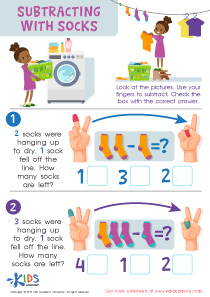
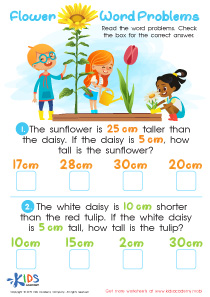
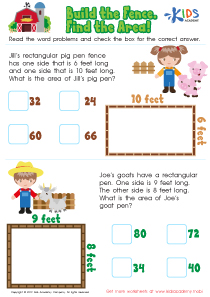
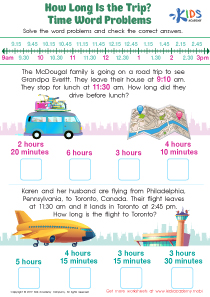
Unlock your child's potential with our "Subtraction Skills: Addition and Subtraction Word Problems Worksheets" tailored for 7-year-olds! Designed to make learning fun, these worksheets help kids develop strong subtraction skills through engaging word problems. Each activity encourages critical thinking and problem-solving abilities, building a solid foundation in basic math. Our vibrant and well-structured sheets ensure an enjoyable learning experience, making math both approachable and exciting. Perfect for classroom use or at-home practice, these worksheets are your ultimate resource for boosting your child's confidence and proficiency in subtraction and addition word problems.
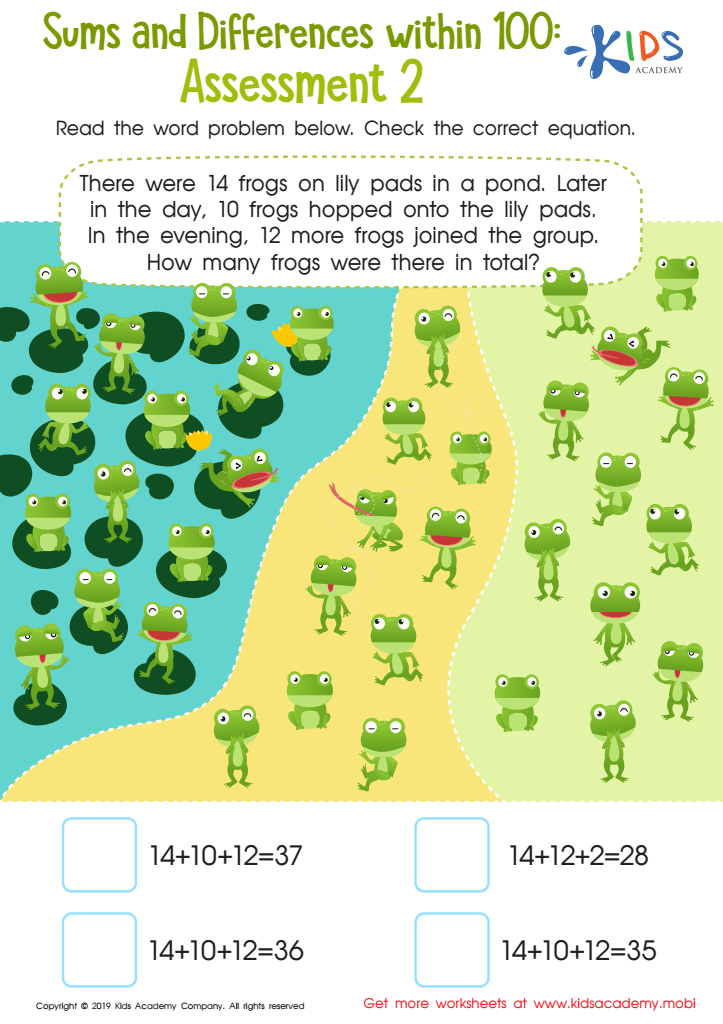
Sums and Differences Within 1 - Assessment 2 Worksheet
 Assign to My Students
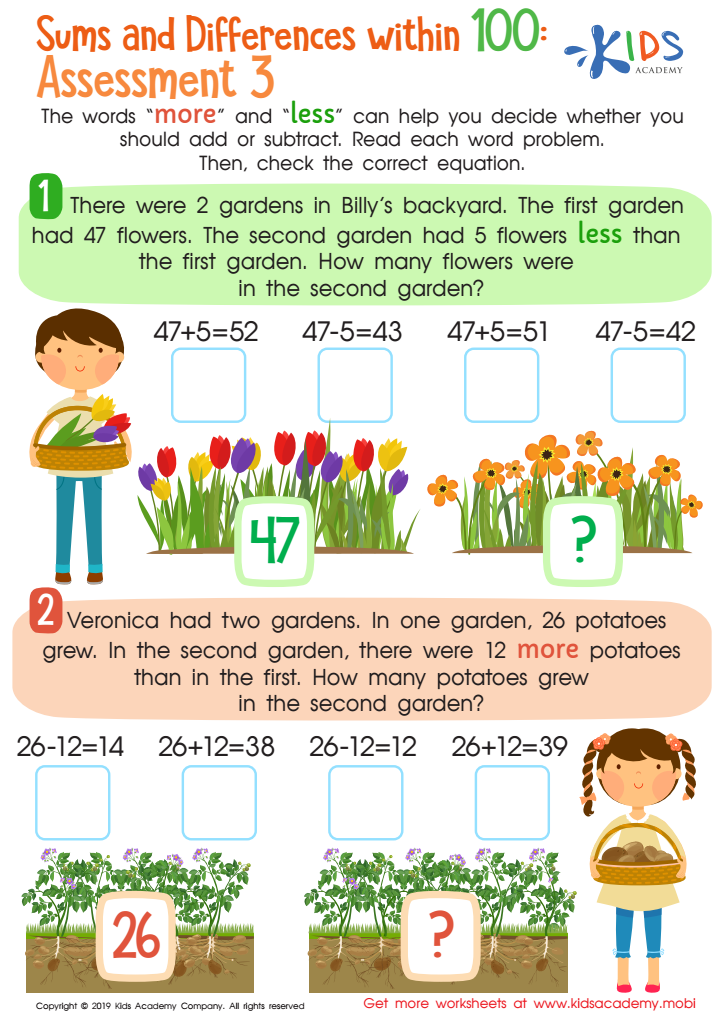
Sums and Differences Within 1 - Assessment 3 Worksheet
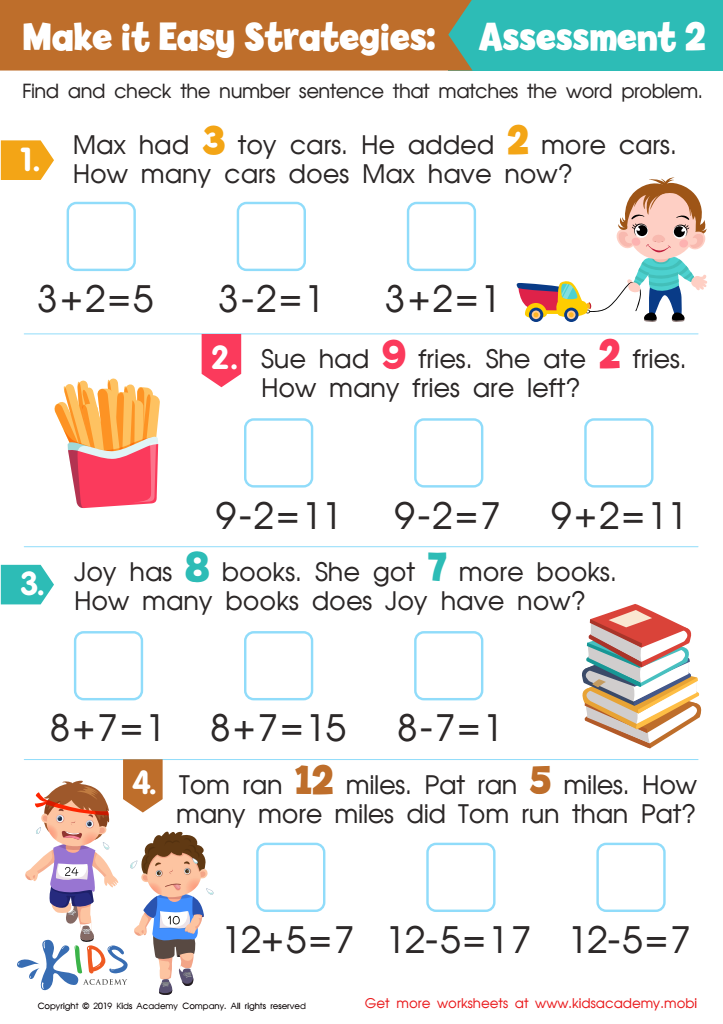
Make it Easy Strategies: Assessment 2 Worksheet
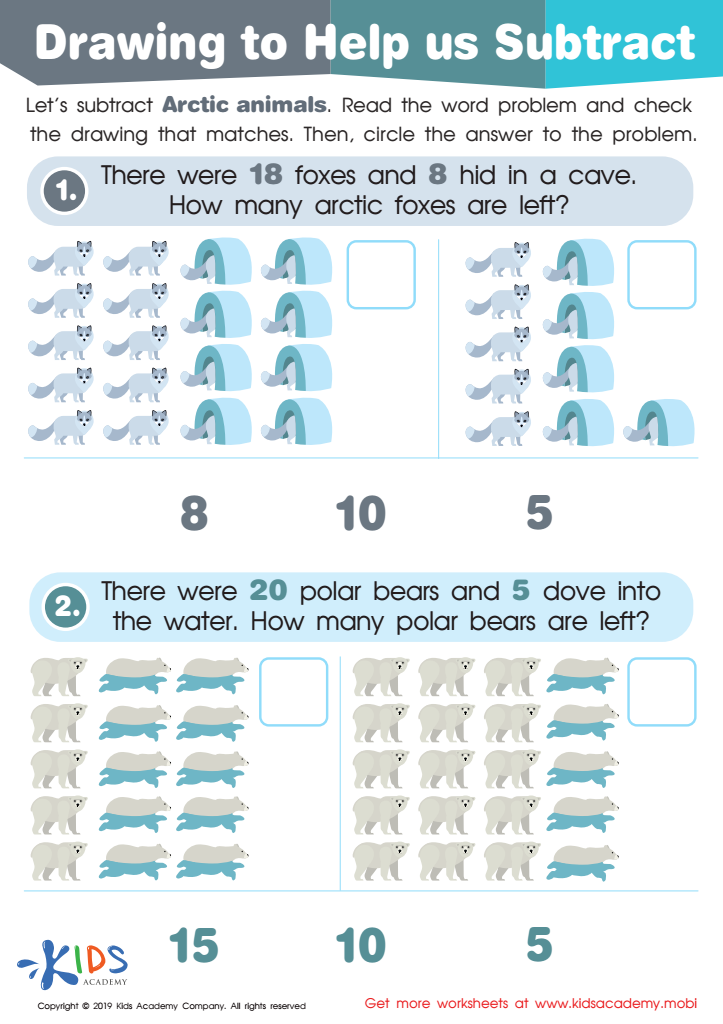
Drawing to Help Us Subtract Worksheet
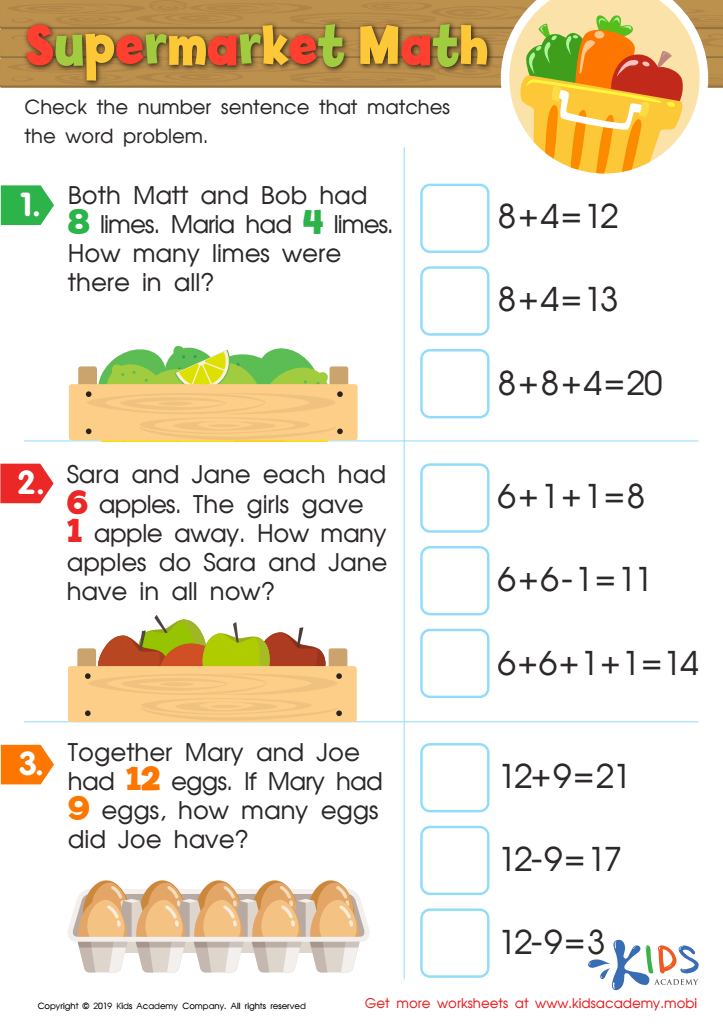
Supermarket Math Worksheet
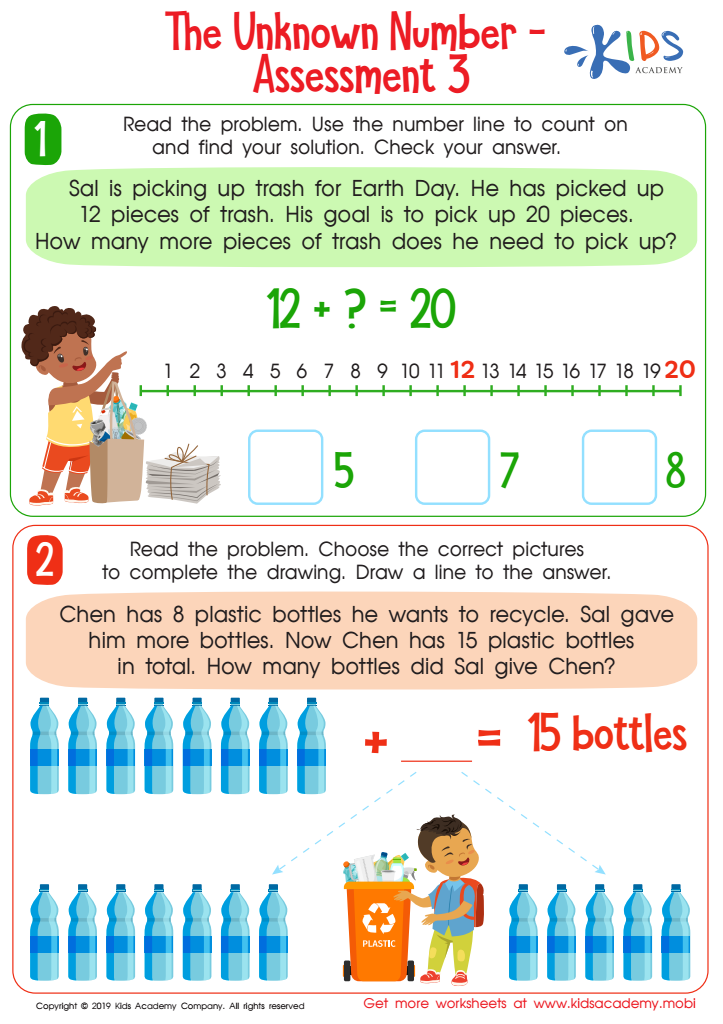
The Unknown Number - Assessment 3 Worksheet








Subtraction and addition skills are foundational to a child’s mathematical development and play a vital role in their overall cognitive growth. At the age of seven, children are at a critical stage where they transition from concrete thinking to more abstract concepts. Mastery of basic arithmetic, such as addition and subtraction, serves as a building block for more advanced mathematical principles and problem-solving skills they will encounter in the future.
Parents and teachers should prioritize these skills because they are integrated into daily life and thereby foster logical thinking and reasoning abilities. For instance, children use subtraction and addition when counting objects, understanding money, or measuring ingredients for a recipe. Word problems, in particular, help in contextualizing these operations, making math relatable and less intimidating. They also enhance reading comprehension and critical thinking as children learn to interpret the language and intent of a problem before hopping into computation.
Supporting a solid grasp of subtraction and addition through engaging word problems encourages independent thinking and boosts academic confidence. Involving children in such learning can stimulate an enthusiasm for math, which forms the foundation for subsequent school subjects, thereby setting the stage for lifelong learning and success.