Discover our "Understand Fractions: Addition & Subtraction Worksheets" tailored for 7-year-olds! These engaging worksheets offer young learners a fun, interactive way to master the essentials of fraction operations. With colorful illustrations and age-appropriate exercises, students will explore addition and subtraction concepts using fractions, enhancing their math skills and building confidence. The worksheets are designed to promote critical thinking and problem-solving through a variety of tasks, ensuring a well-rounded understanding of fractions. Perfect for teachers and parents alike, these resources make learning fractions enjoyable and effective. Start your child’s journey toward math mastery today! Access printable worksheets now!
Check out this FREE Trial Lesson on Addition & Subtraction for age 7!

P

Favorites
With answer key
Interactive
  • 7
  • Understand fractions
  • Addition & Subtraction
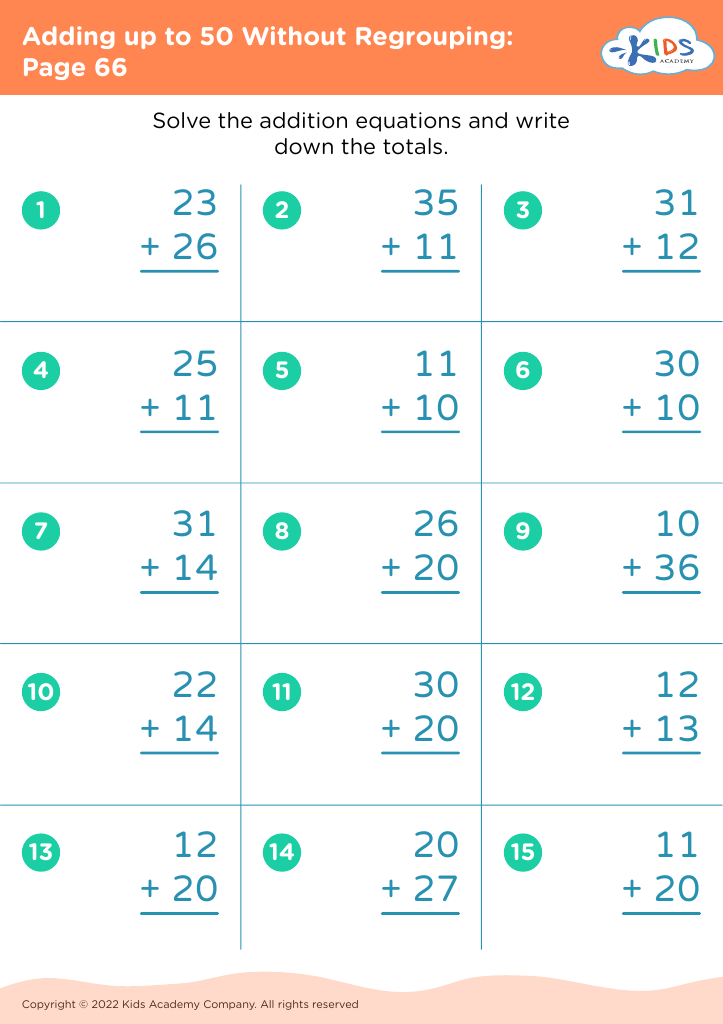
Adding up to 50 Without Regrouping: Page 66
Worksheet
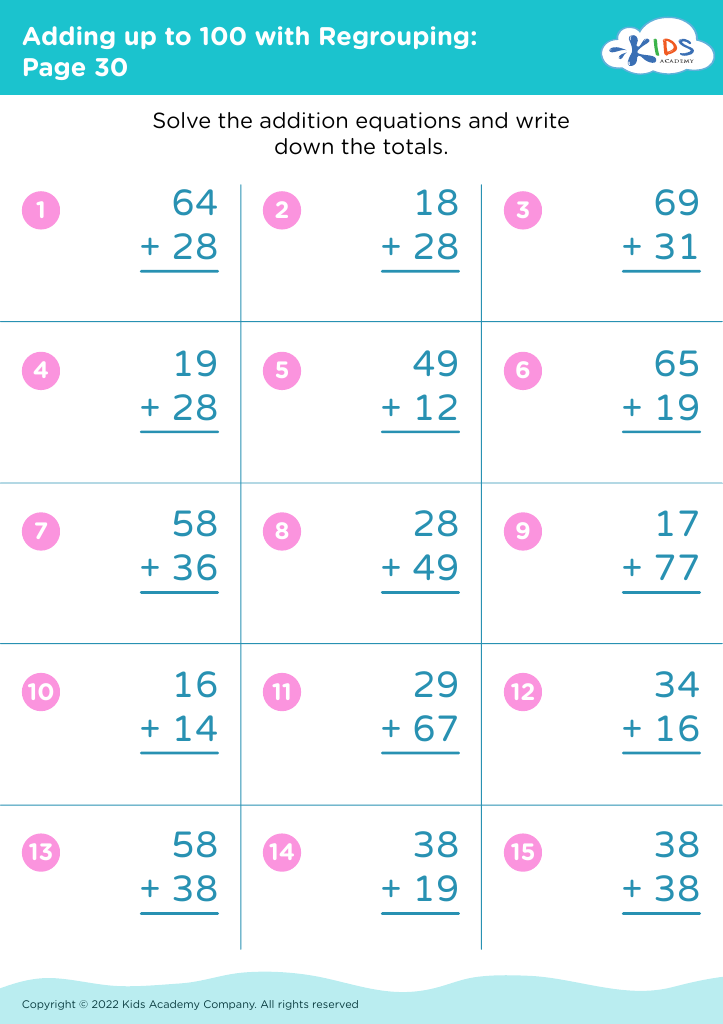
Adding up to 100 with Regrouping: Page 30
Worksheet
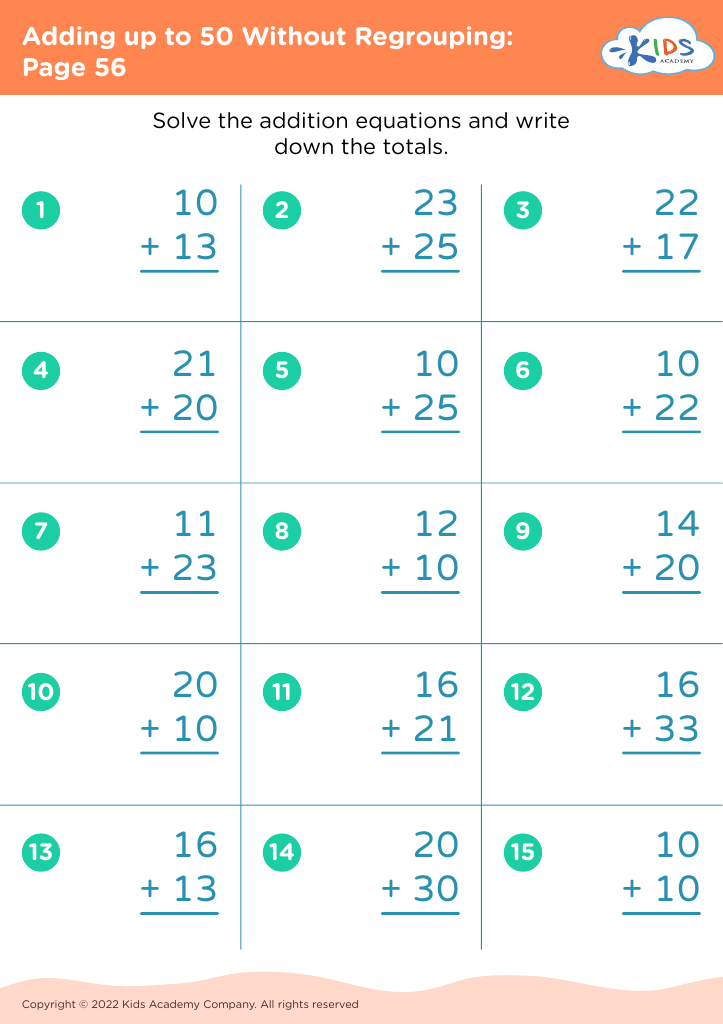
Adding up to 50 Without Regrouping: Page 56
Worksheet
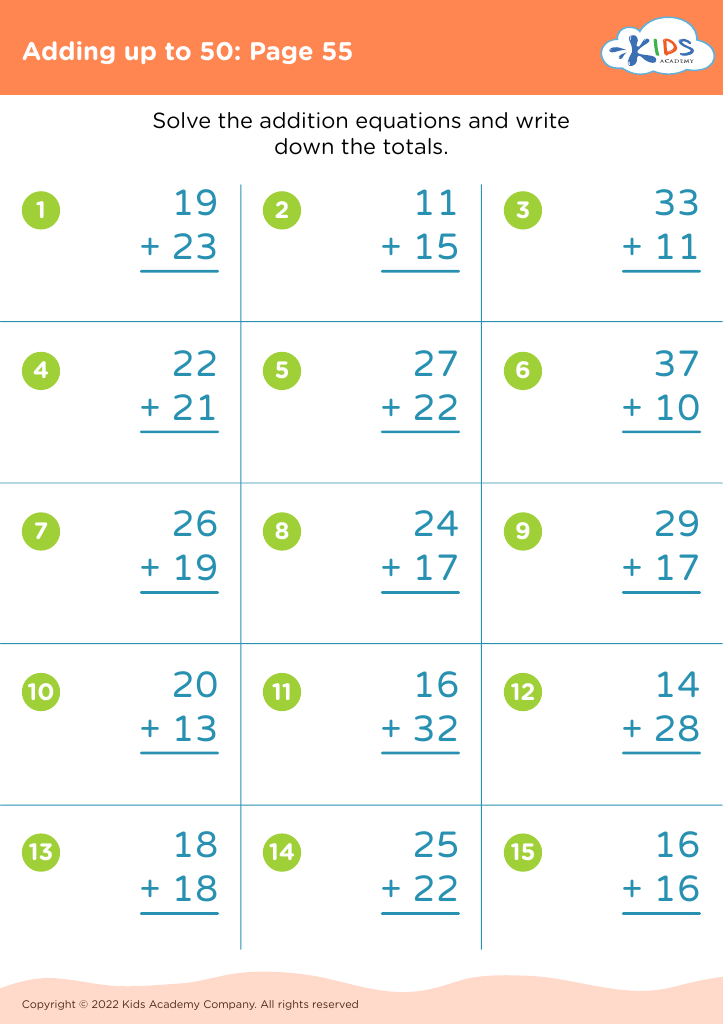
Adding up to 50: Page 55

Adding up to 50: Page 55

Adding up to 50: Page 55
Worksheet
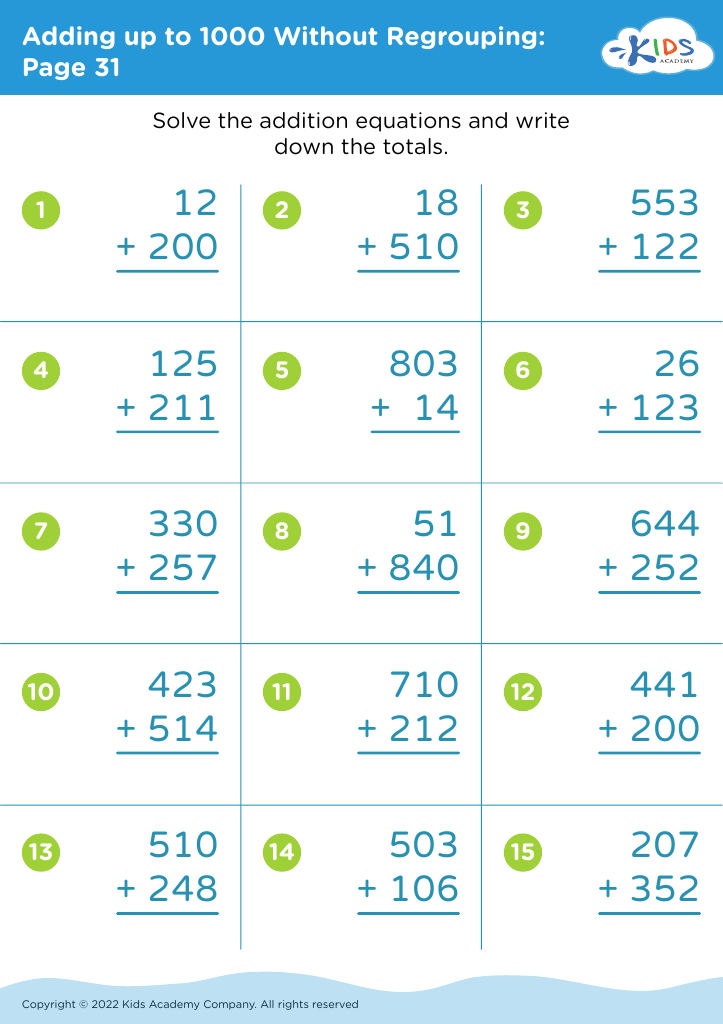
Adding up to 1000 Without Regrouping: Page 31
Worksheet
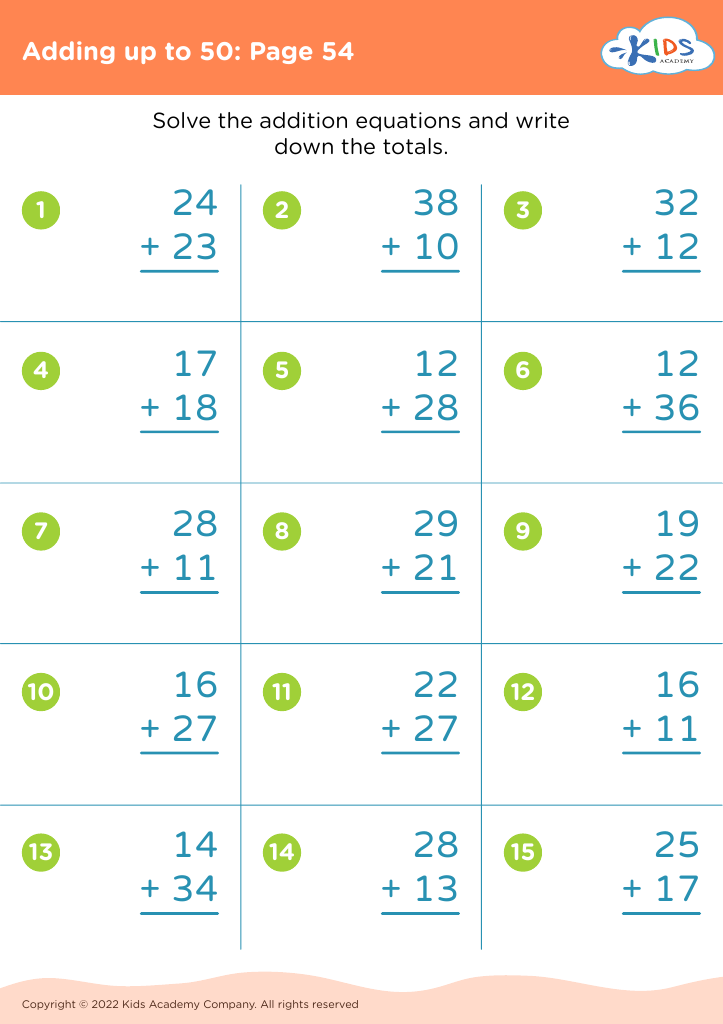
Adding up to 50: Page 54

Adding up to 50: Page 54

Adding up to 50: Page 54
Worksheet
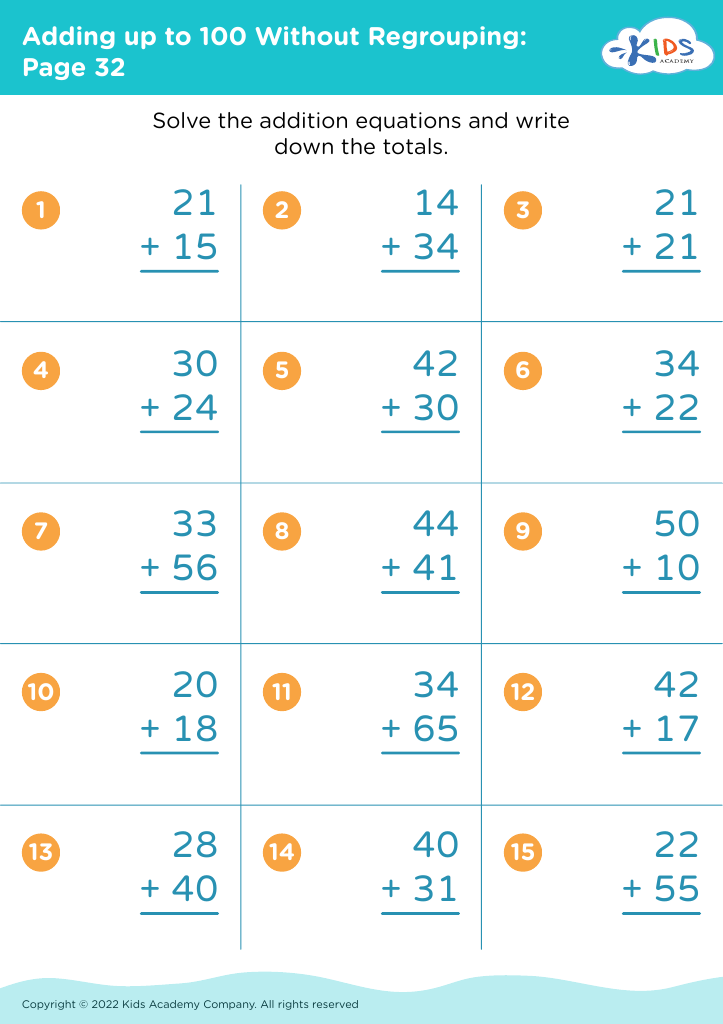
Adding up to 100 Without Regrouping: Page 32
Worksheet
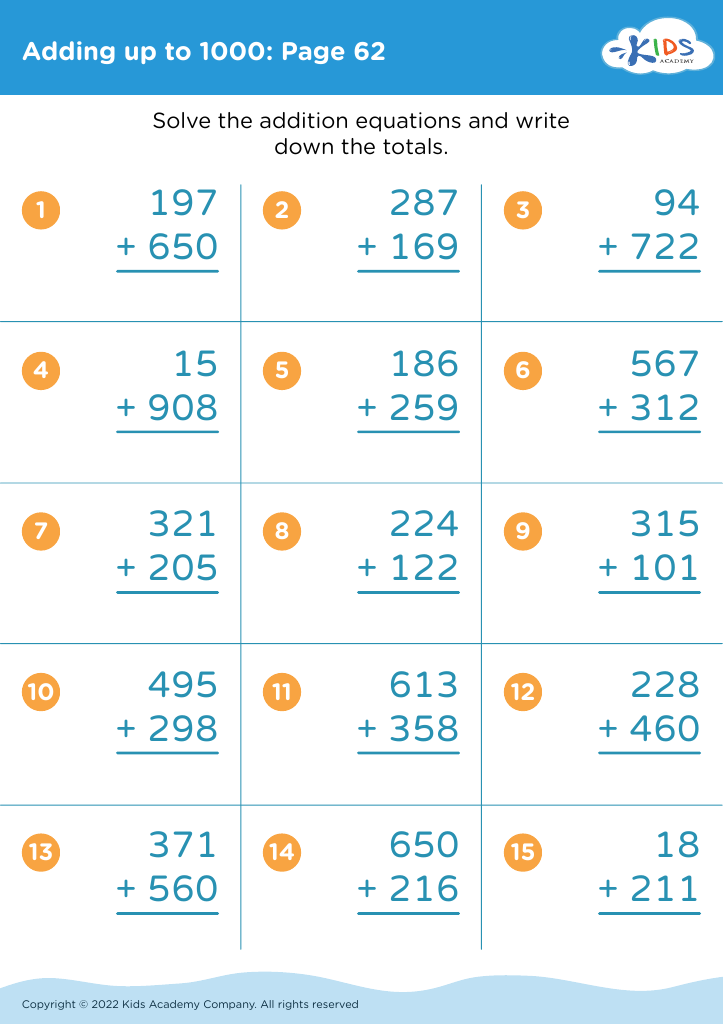
Adding up to 1000: Page 62

Adding up to 1000: Page 62

Adding up to 1000: Page 62
Worksheet
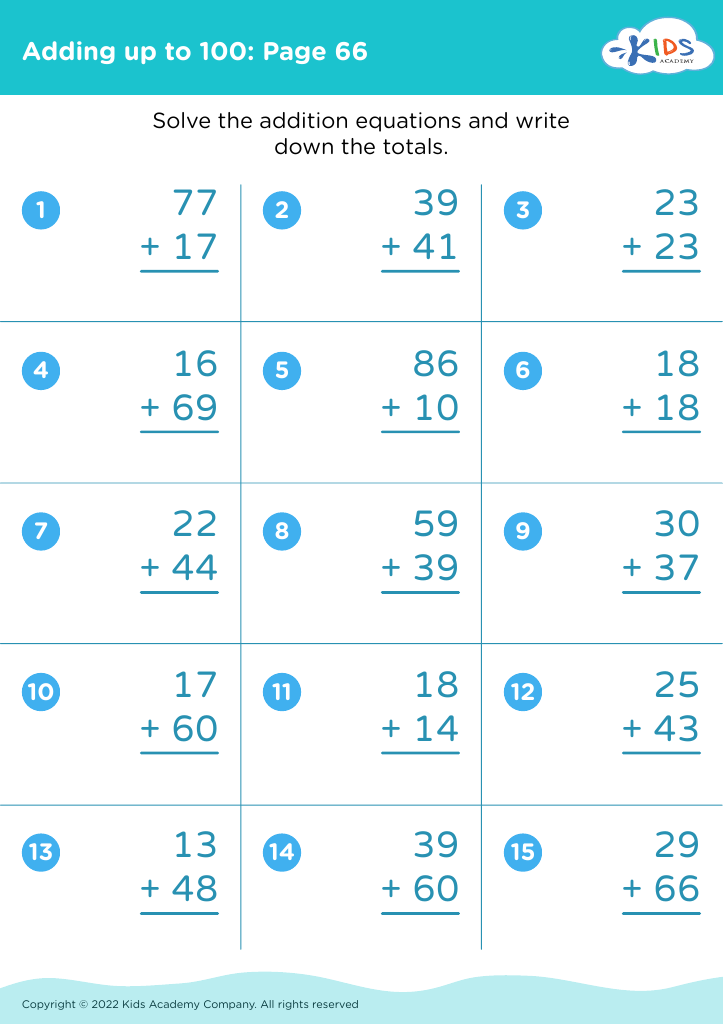
Adding up to 100: Page 66

Adding up to 100: Page 66

Adding up to 100: Page 66
Worksheet
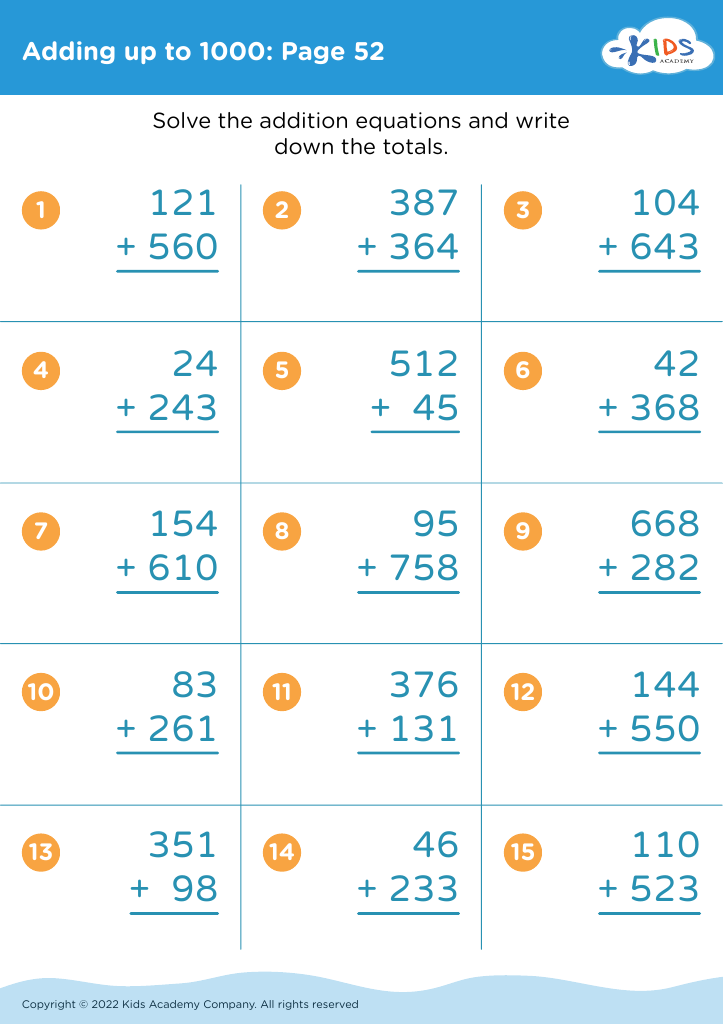
Adding up to 1000: Page 52

Adding up to 1000: Page 52

Adding up to 1000: Page 52
Worksheet
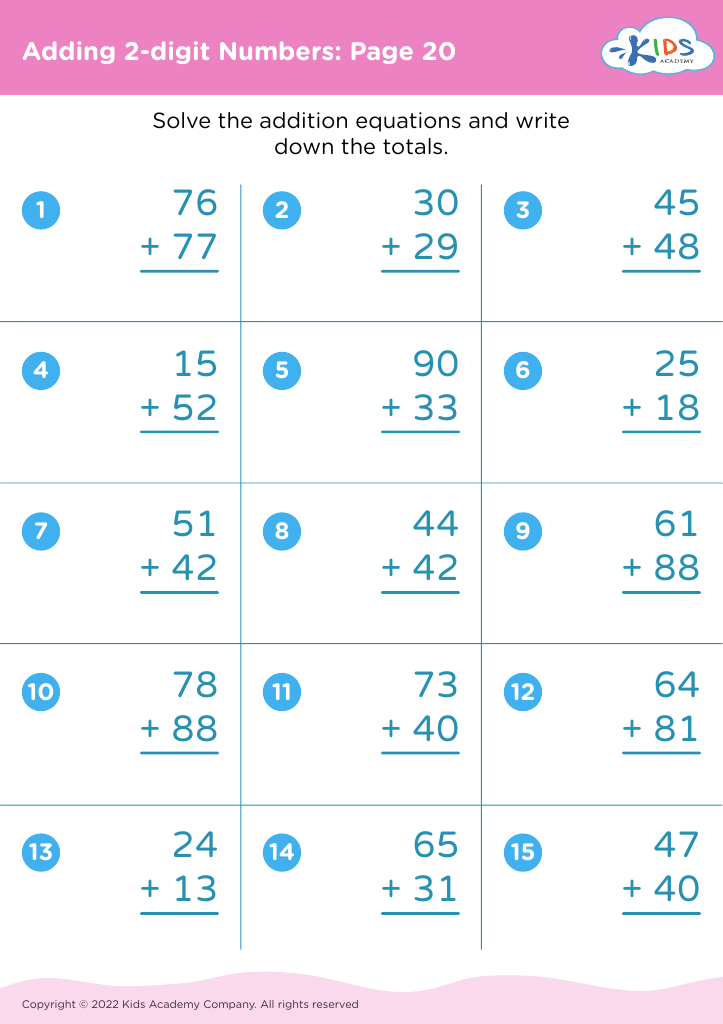
Adding 2-digit Numbers: Page 20

Adding 2-digit Numbers: Page 20

Adding 2-digit Numbers: Page 20
Worksheet
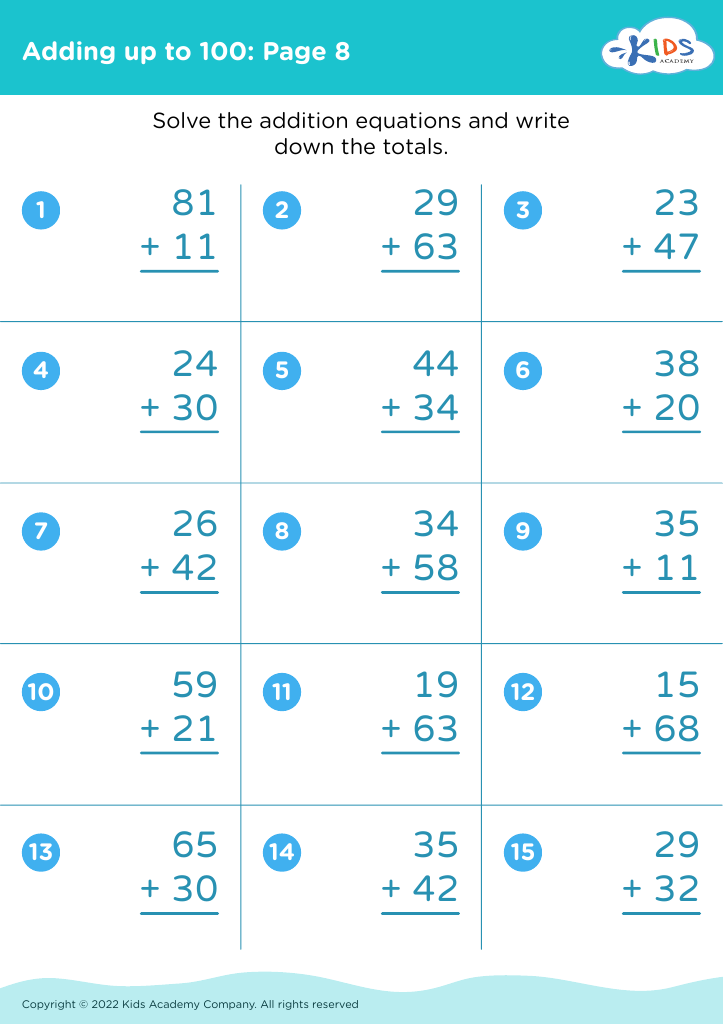
Adding up to 100: Page 8

Adding up to 100: Page 8

Adding up to 100: Page 8
Worksheet
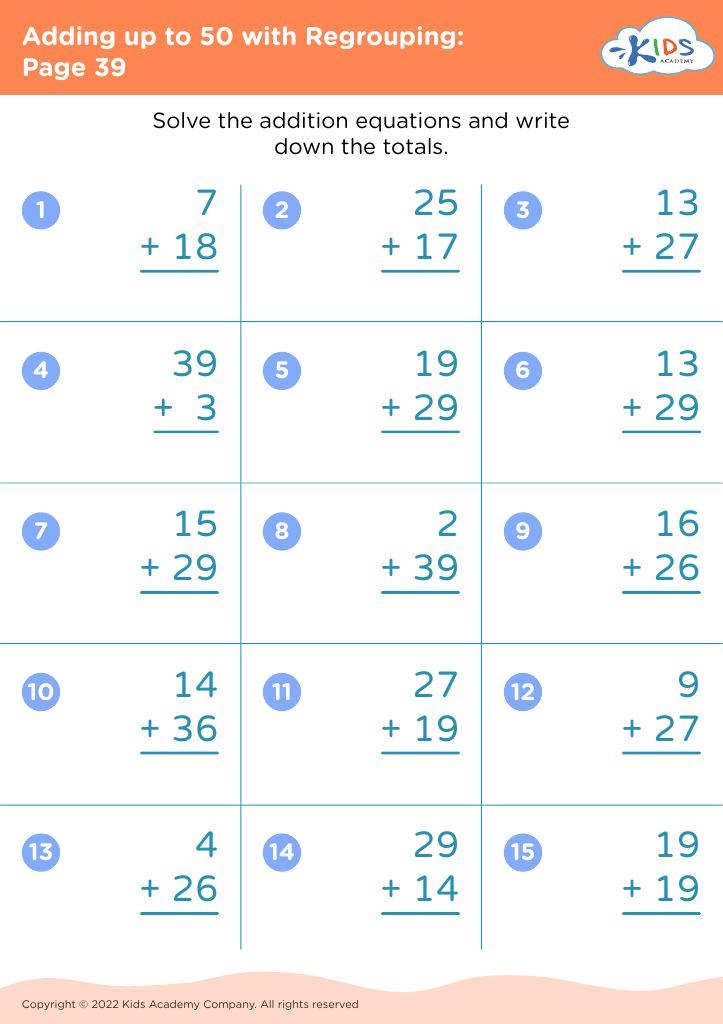
Adding up to 50 with Regrouping: Page 39
Worksheet
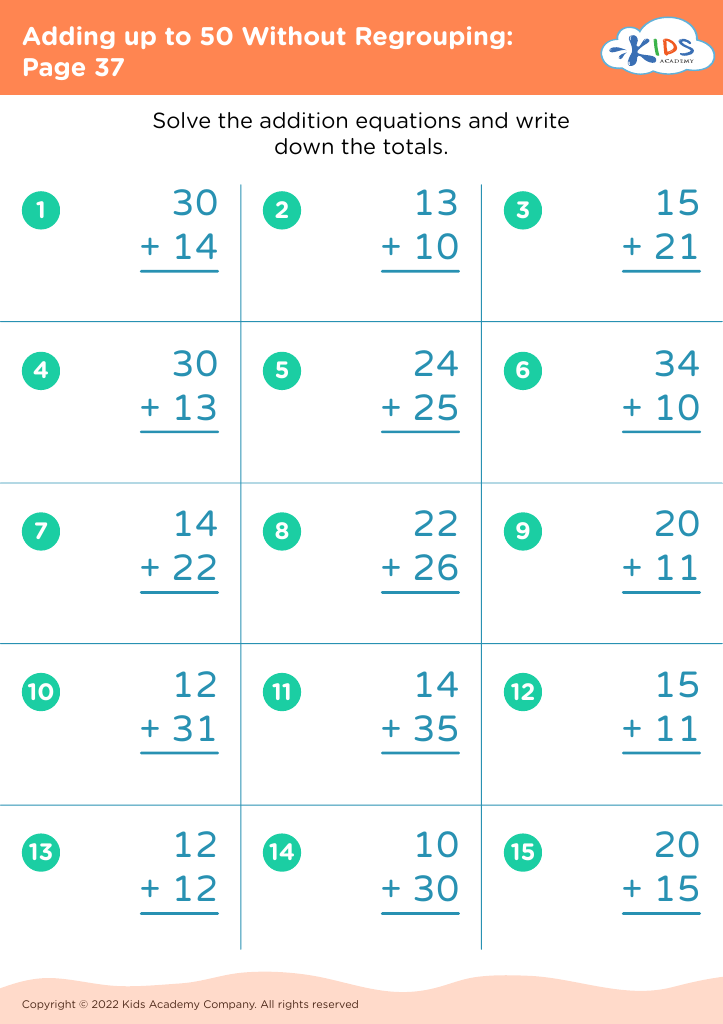
Adding up to 50 Without Regrouping: Page 37
Worksheet
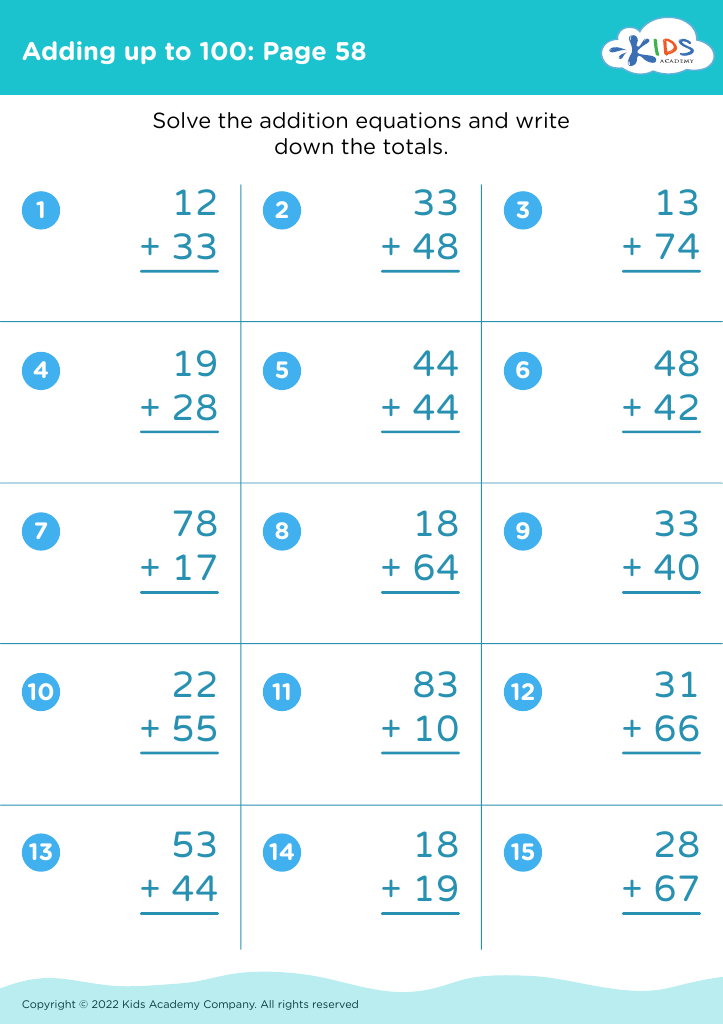
Adding up to 100: Page 58

Adding up to 100: Page 58

Adding up to 100: Page 58
Worksheet
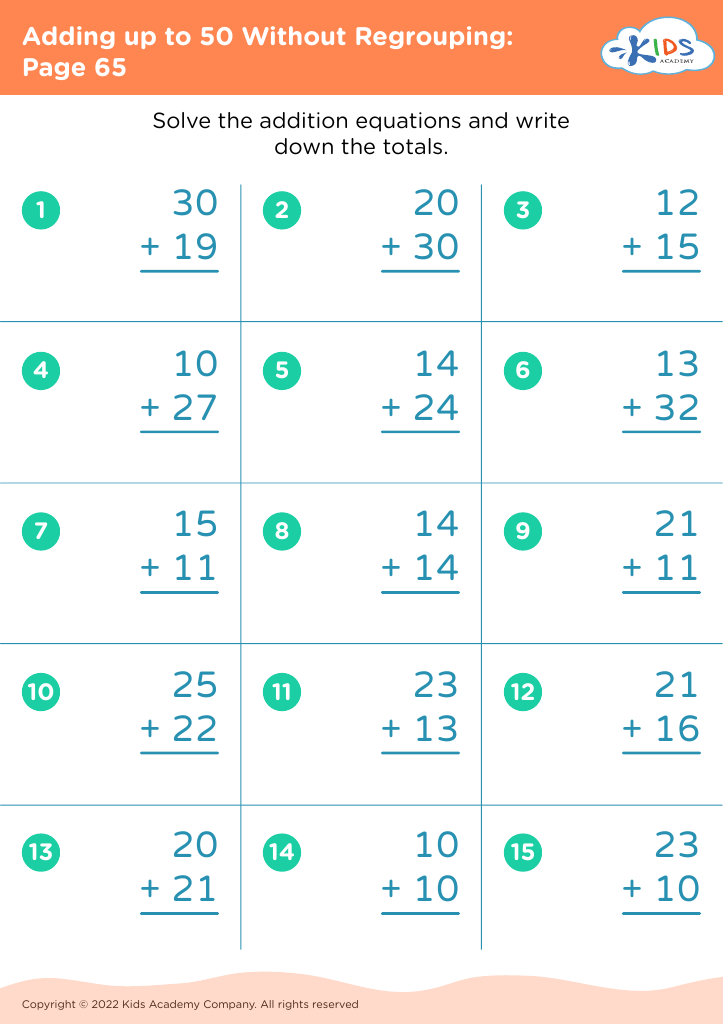
Adding up to 50 Without Regrouping: Page 65
Worksheet
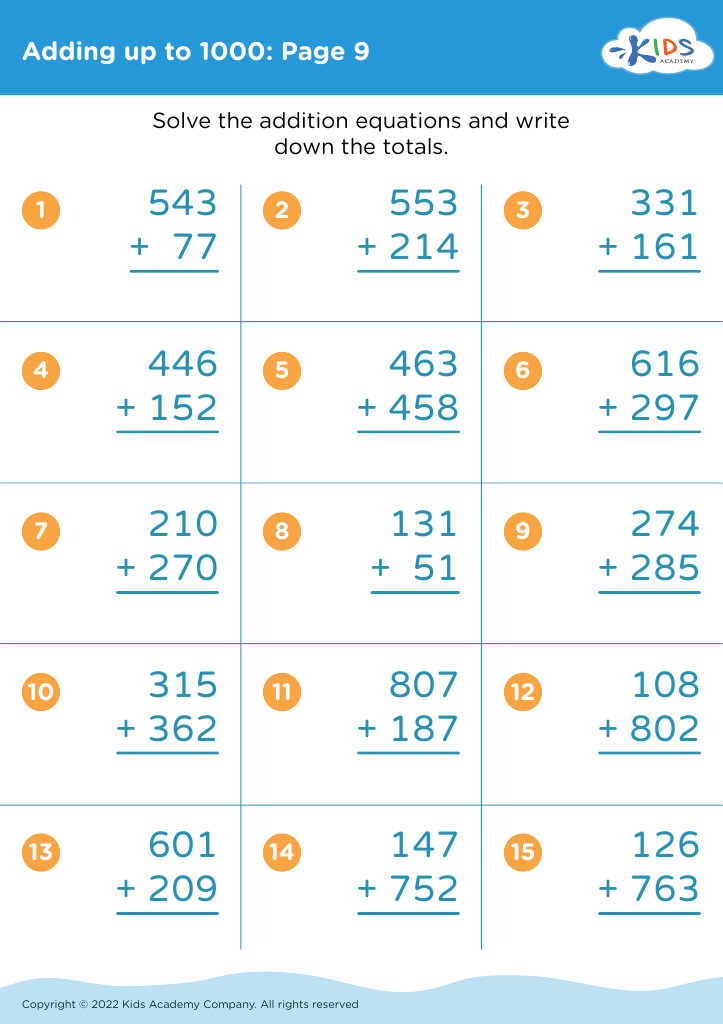
Adding up to 1000: Page 9

Adding up to 1000: Page 9

Adding up to 1000: Page 9
Worksheet
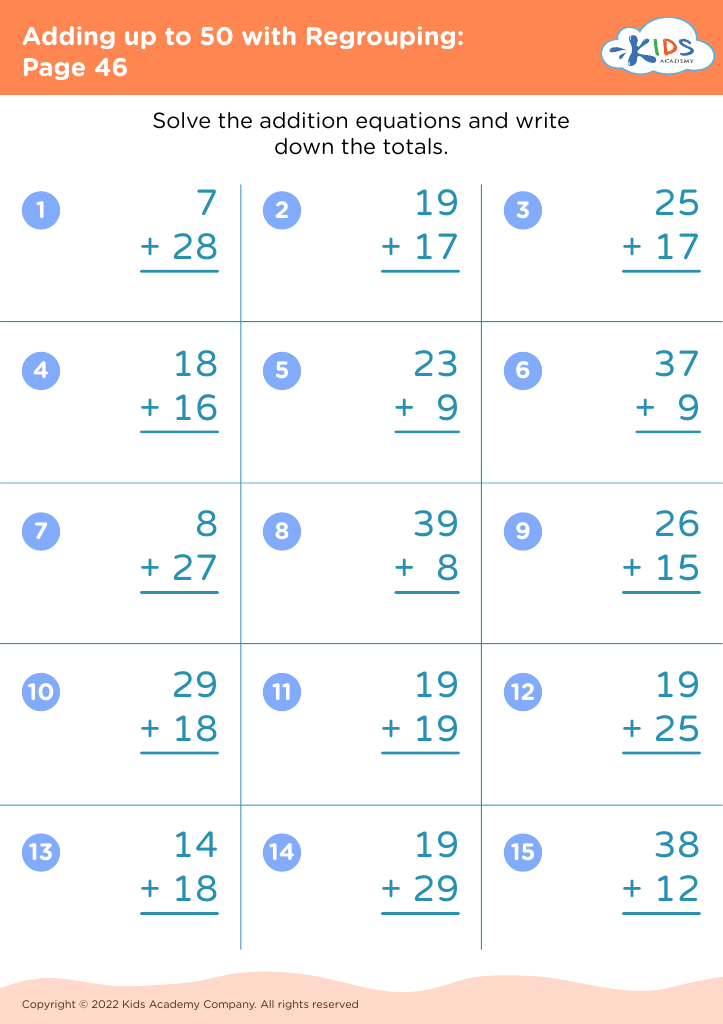
Adding up to 50 with Regrouping: Page 46
Worksheet
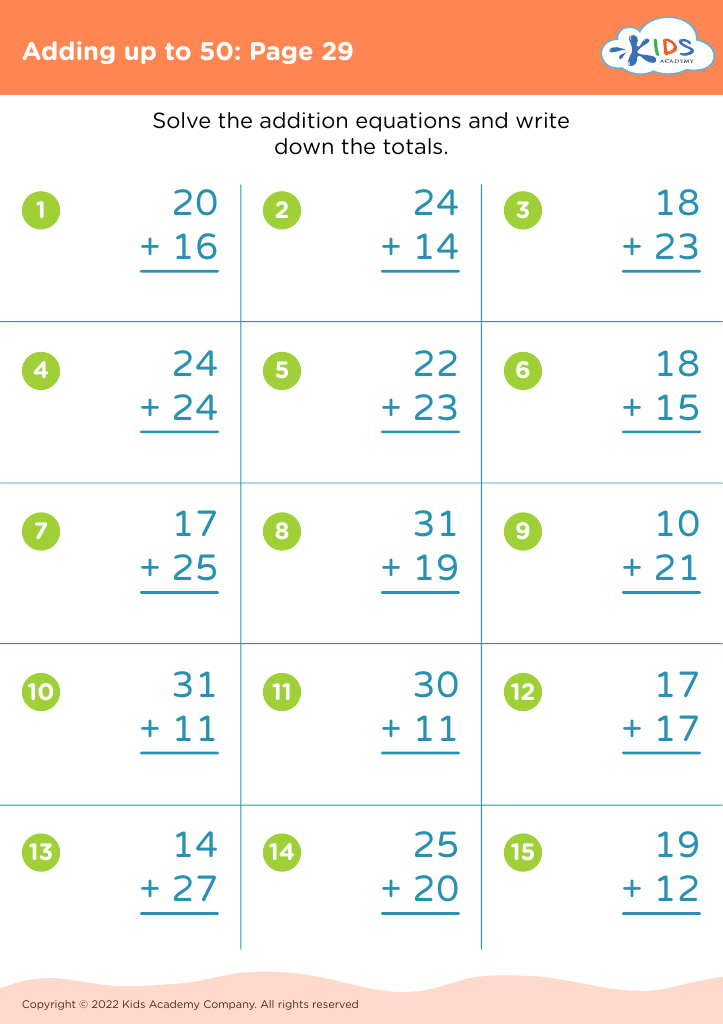
Adding up to 50: Page 29

Adding up to 50: Page 29

Adding up to 50: Page 29
Worksheet


Understanding fractions, particularly addition and subtraction, is crucial for 7-year-olds as it lays the foundation for more advanced mathematical concepts later on. At this age, children are transitioning from basic arithmetic to more complex operations, and fractions are one way to deepen their understanding of numbers.

Teaching fractions helps students grasp important concepts of part-whole relationships, proportions, and relationships between numbers. For instance, when children learn to add or subtract fractions, they enhance their problem-solving skills and gain a better understanding of division and multiplication. This knowledge is applicable not just in math class, but in daily life—whether measuring ingredients in cooking, understanding time, or managing money.

Furthermore, mastering fractions supports critical thinking and encourages students to analyze and interpret everyday situations, fostering resilience and perseverance in facing challenges. As parents and teachers actively engage in this learning, they can instill a love for math and encourage a positive attitude toward future mathematical endeavors. By supporting children in understanding fractions, adults equip them with vital skills necessary for academic success and lifelong learning in our increasingly quantitative world.