Welcome to our "Simplifying Fractions Addition Worksheets" tailored for 7-year-olds! These engaging worksheets will help young learners understand the concept of adding fractions in a fun and accessible way. By using colorful visuals and relatable examples, each worksheet guides children through the process of finding common denominators and simplifying their answers. Designed to strengthen foundational math skills, these resources are perfect for parents and educators aiming to boost confidence in budding mathematicians. Empower your child to conquer fractions with ease while enjoying the learning journey. Explore our printable worksheets today and make math an exciting adventure!
Check out this FREE Trial Lesson on Addition for age 7!

Sorting Objects into 3 Categories

Favorites
With answer key
Interactive
  • 7
  • Simplifying Fractions
  • Addition
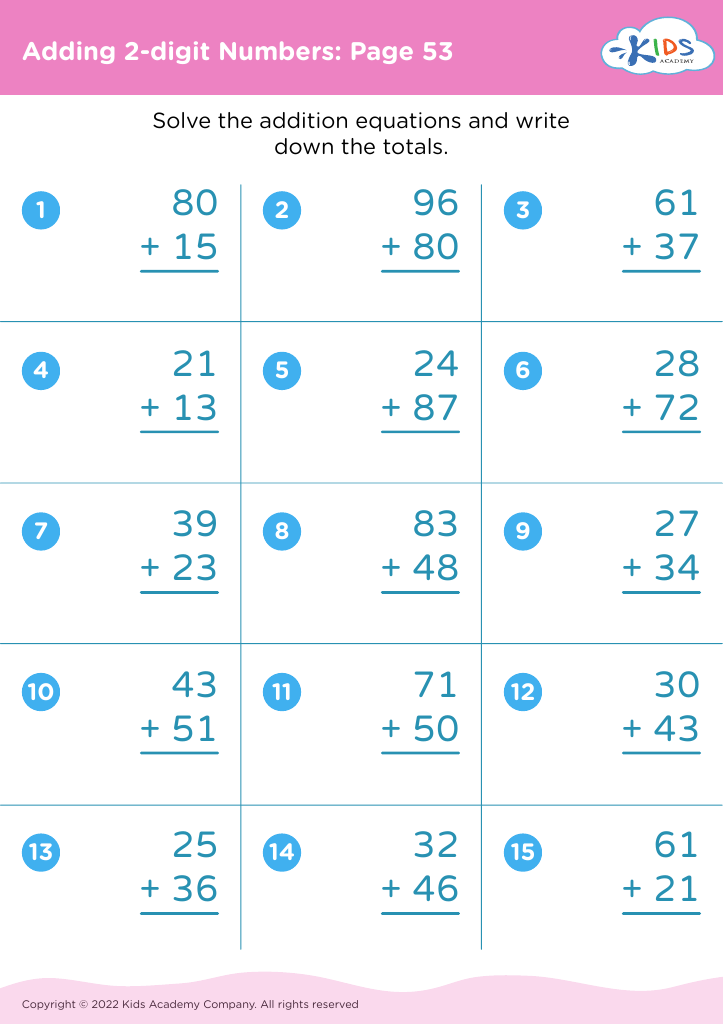
Adding 2-digit Numbers: Page 53

Adding 2-digit Numbers: Page 53

Adding 2-digit Numbers: Page 53
Worksheet
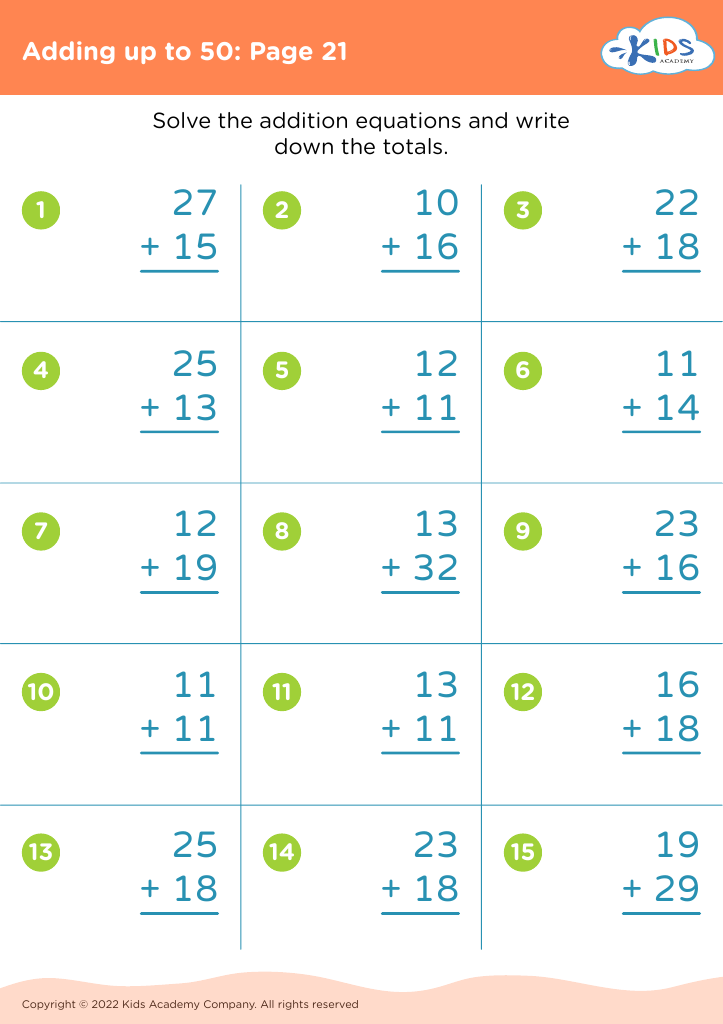
Adding up to 50: Page 21

Adding up to 50: Page 21

Adding up to 50: Page 21
Worksheet
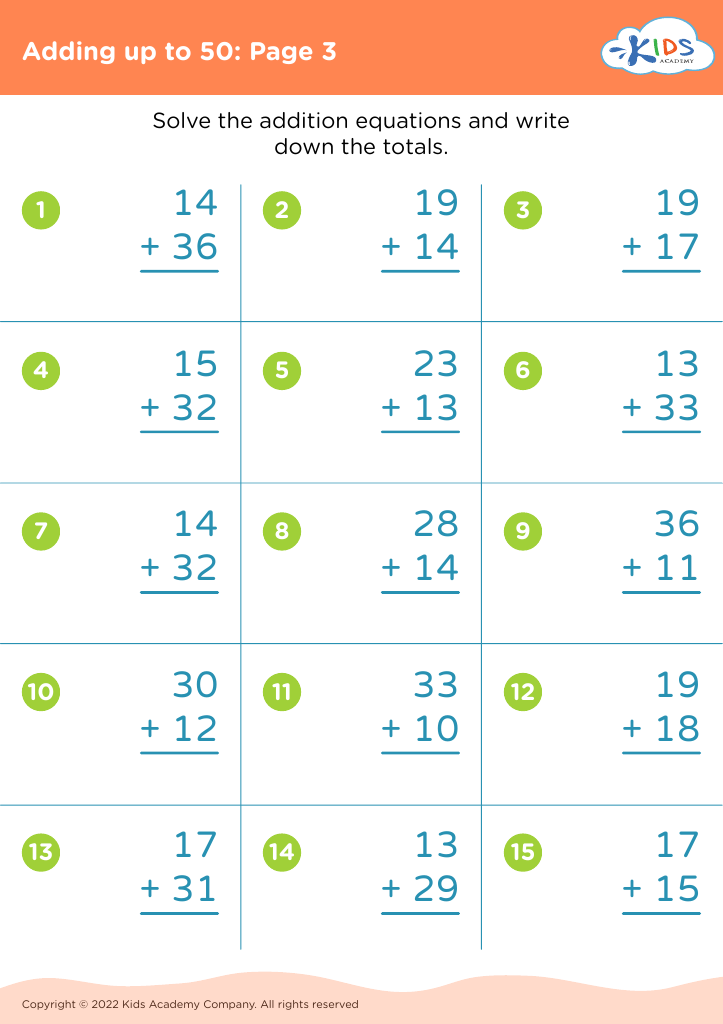
Adding up to 50: Page 3

Adding up to 50: Page 3

Adding up to 50: Page 3
Worksheet
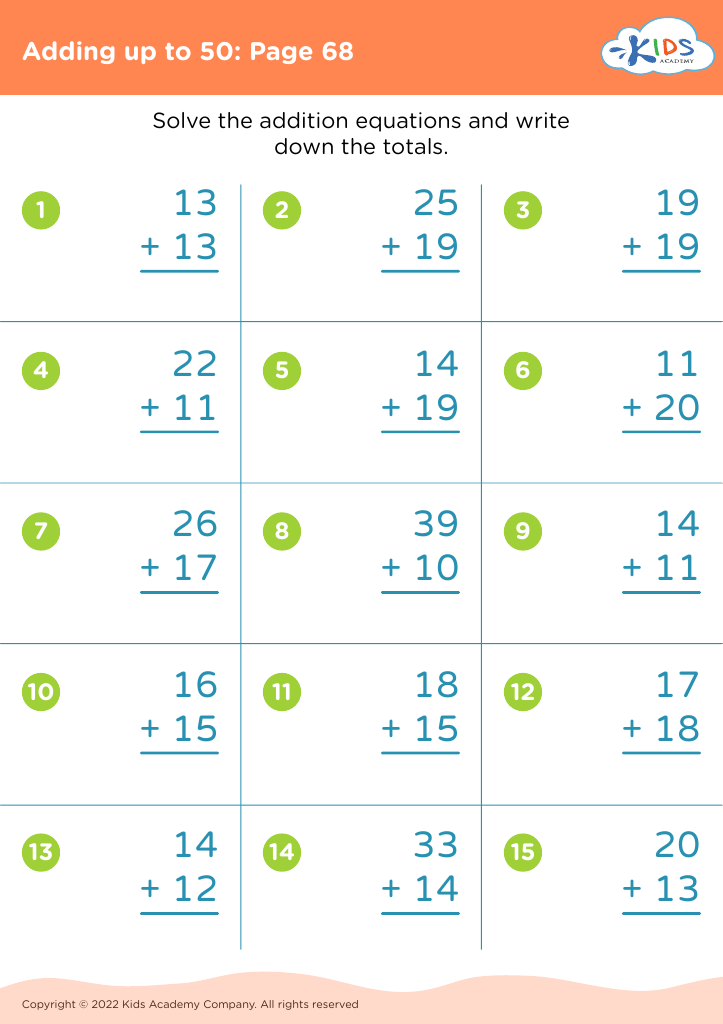
Adding up to 50: Page 68

Adding up to 50: Page 68

Adding up to 50: Page 68
Worksheet
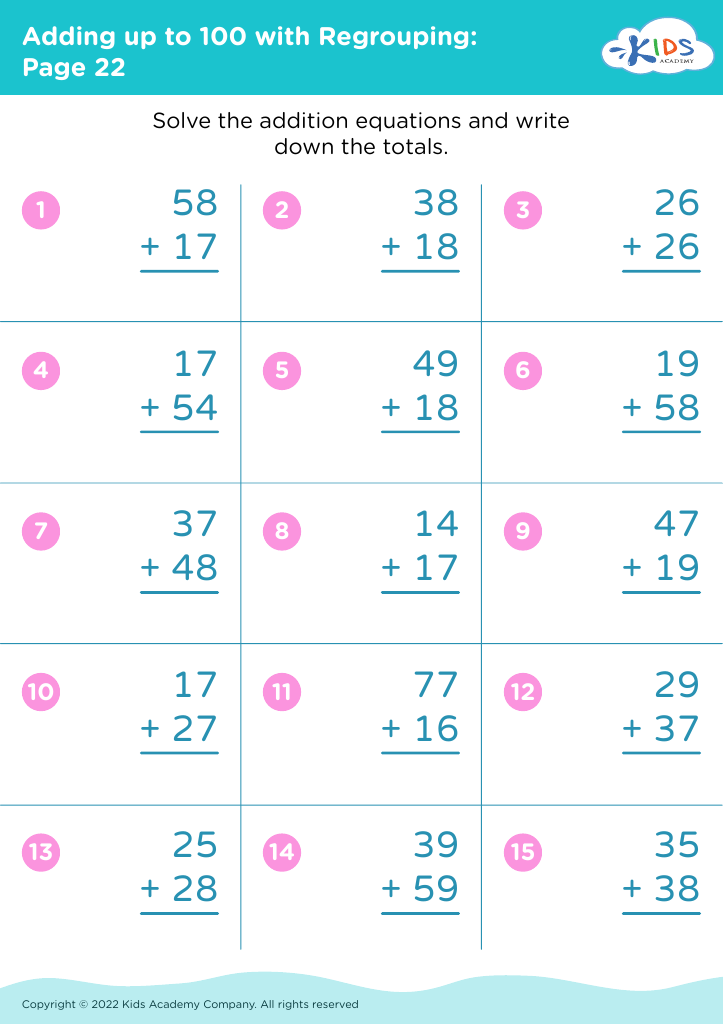
Adding up to 100 with Regrouping: Page 22
Worksheet
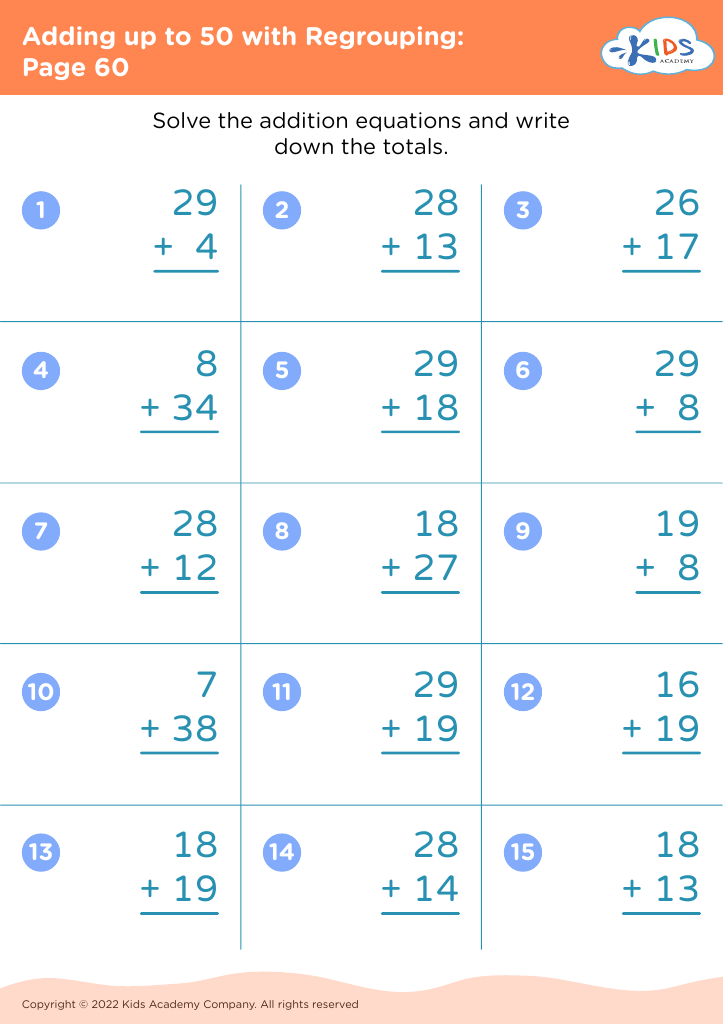
Adding up to 50 with Regrouping: Page 60
Worksheet
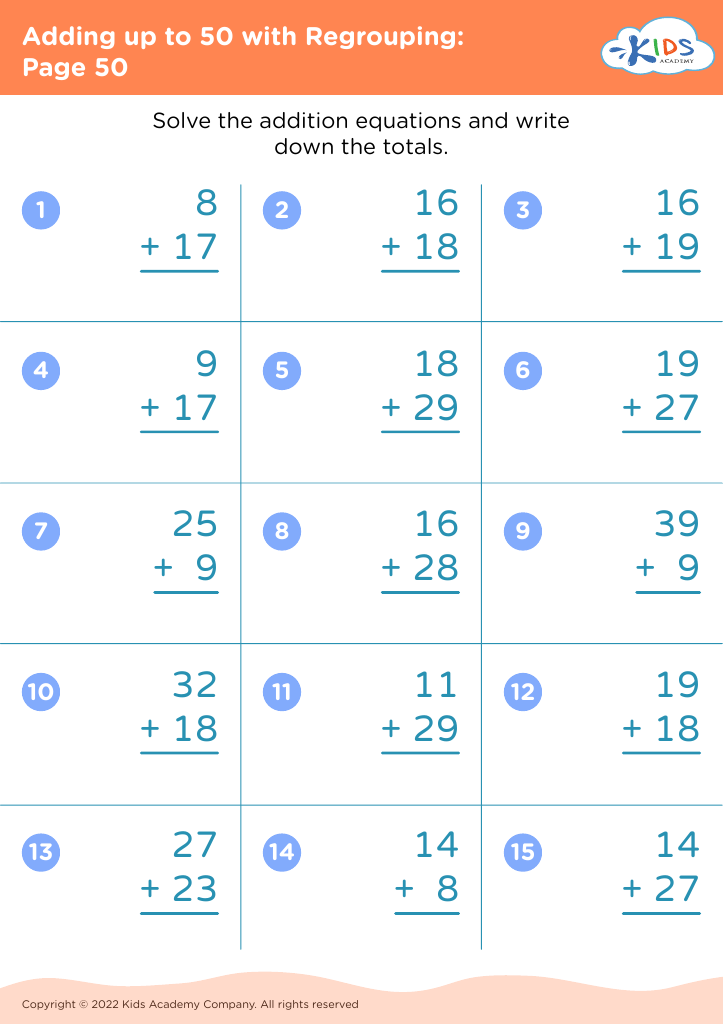
Adding up to 50 with Regrouping: Page 50
Worksheet
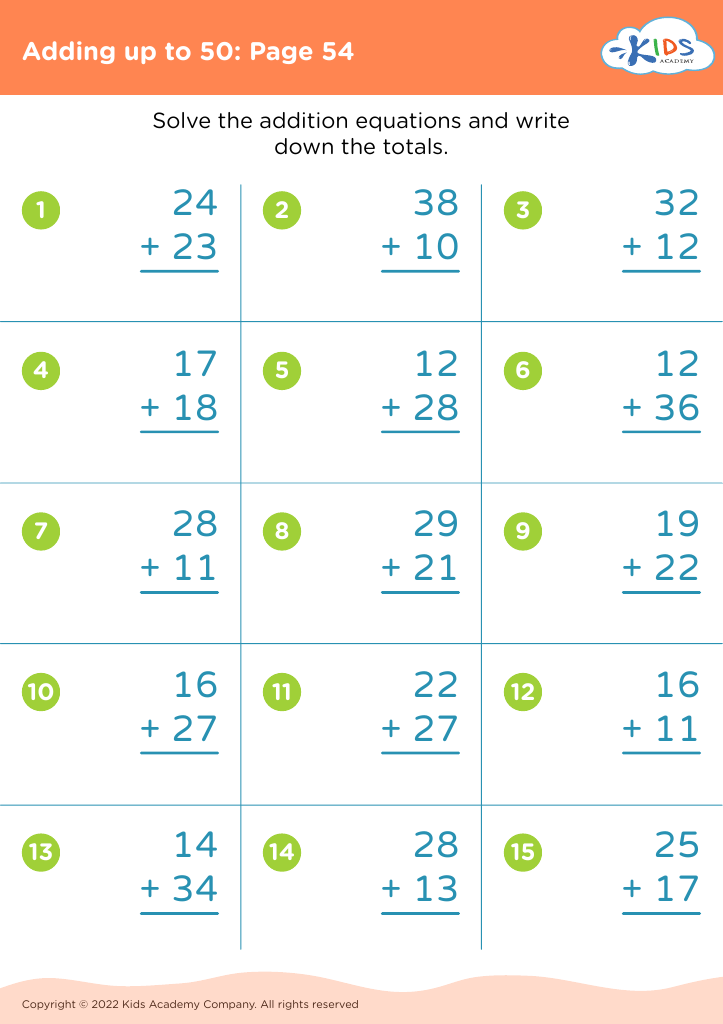
Adding up to 50: Page 54

Adding up to 50: Page 54

Adding up to 50: Page 54
Worksheet
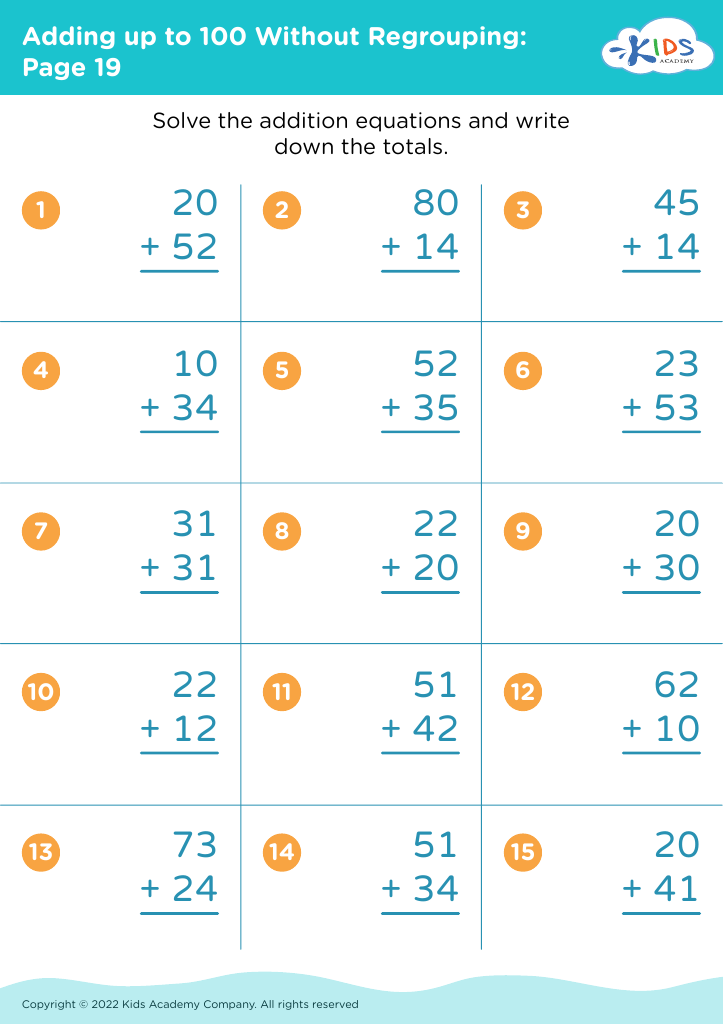
Adding up to 100 Without Regrouping: Page 19
Worksheet
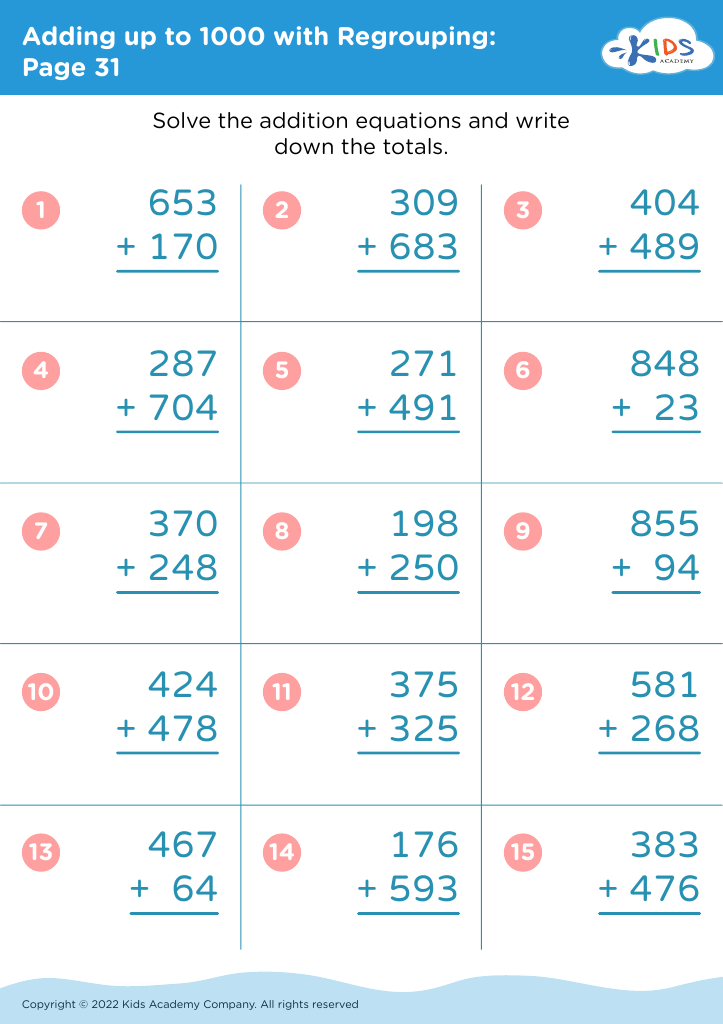
Adding up to 1000 with Regrouping: Page 31
Worksheet
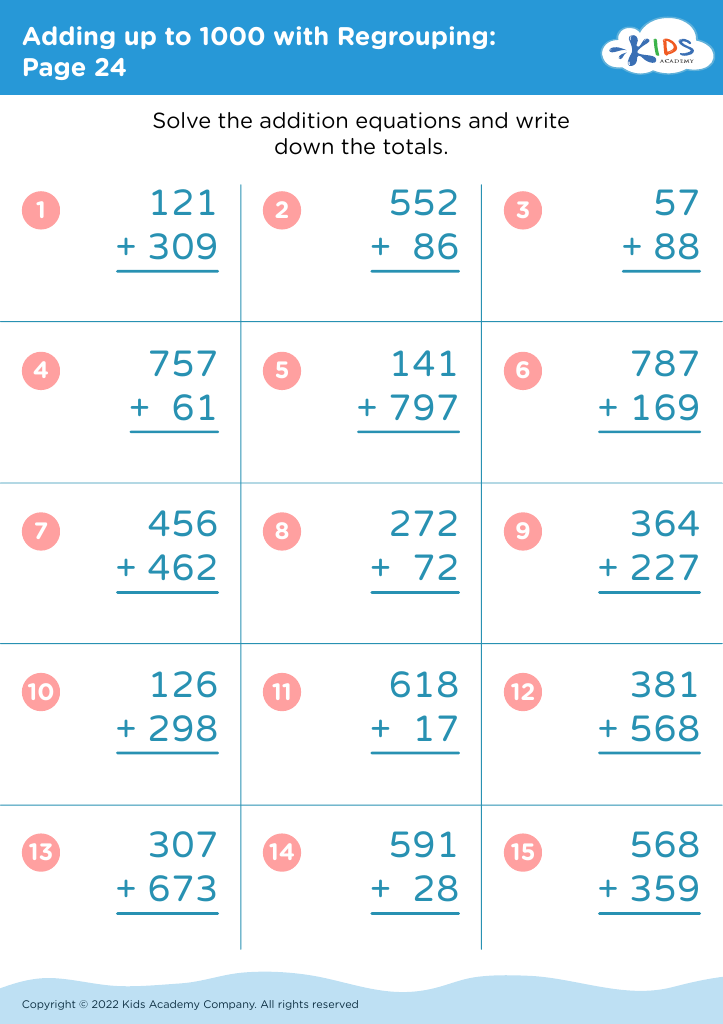
Adding up to 1000 with Regrouping: Page 24
Worksheet
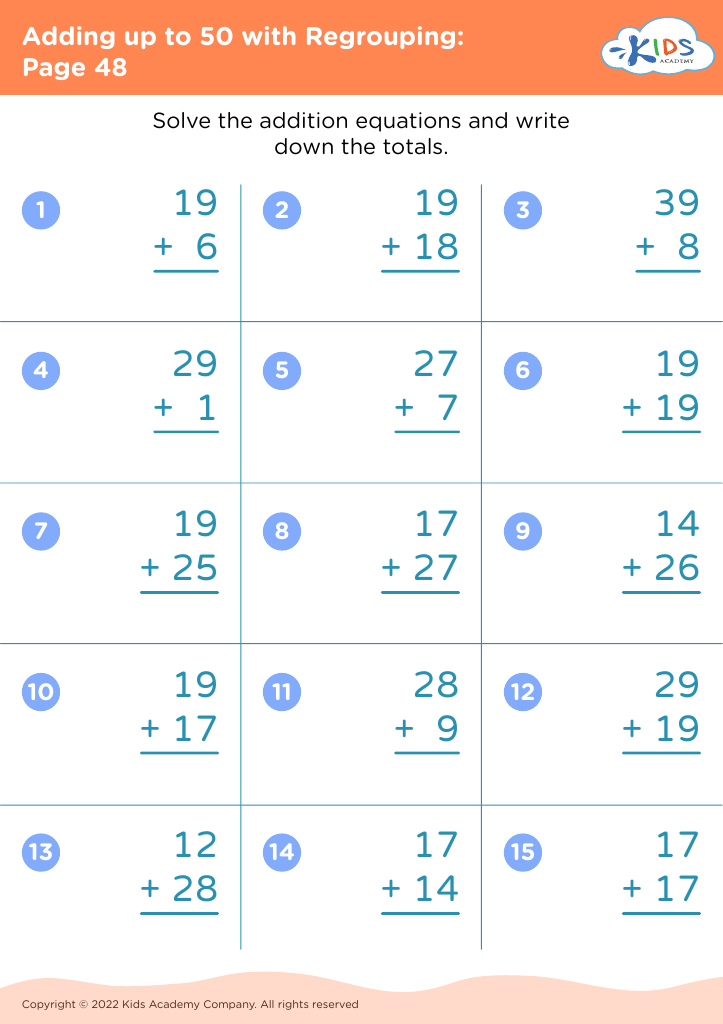
Adding up to 50 with Regrouping: Page 48
Worksheet
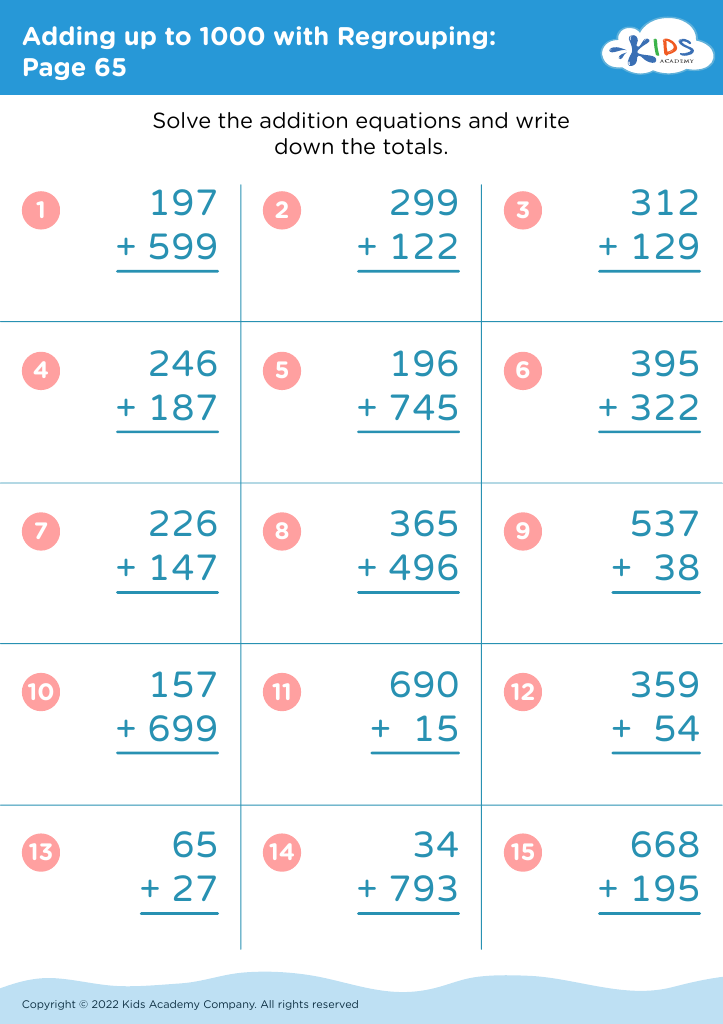
Adding up to 1000 with Regrouping: Page 65
Worksheet
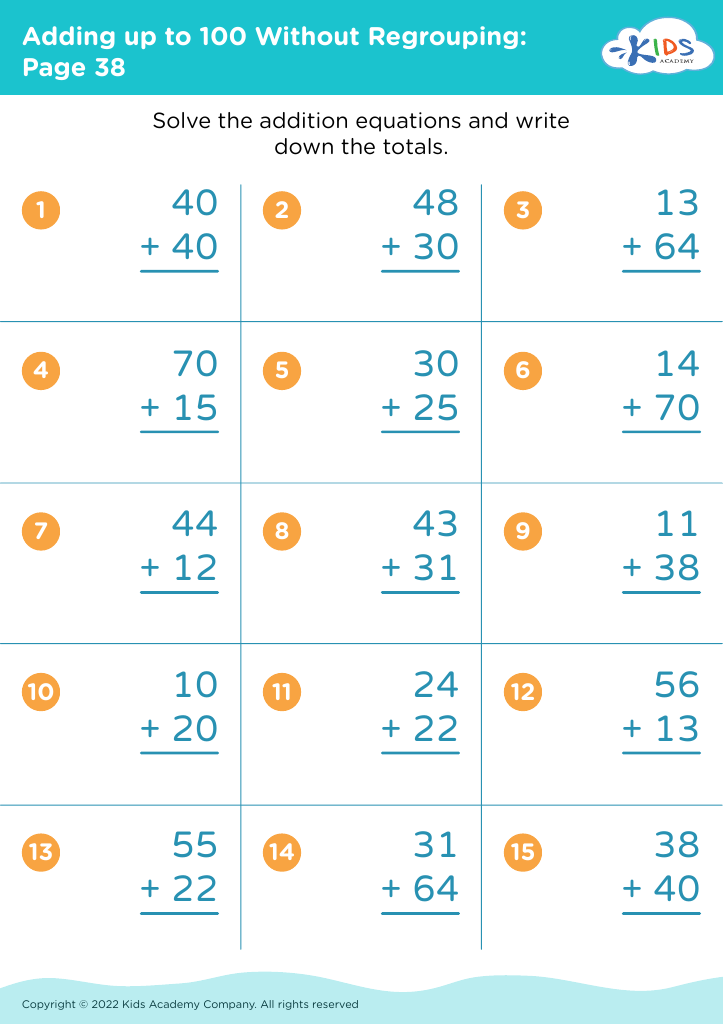
Adding up to 100 Without Regrouping: Page 38
Worksheet
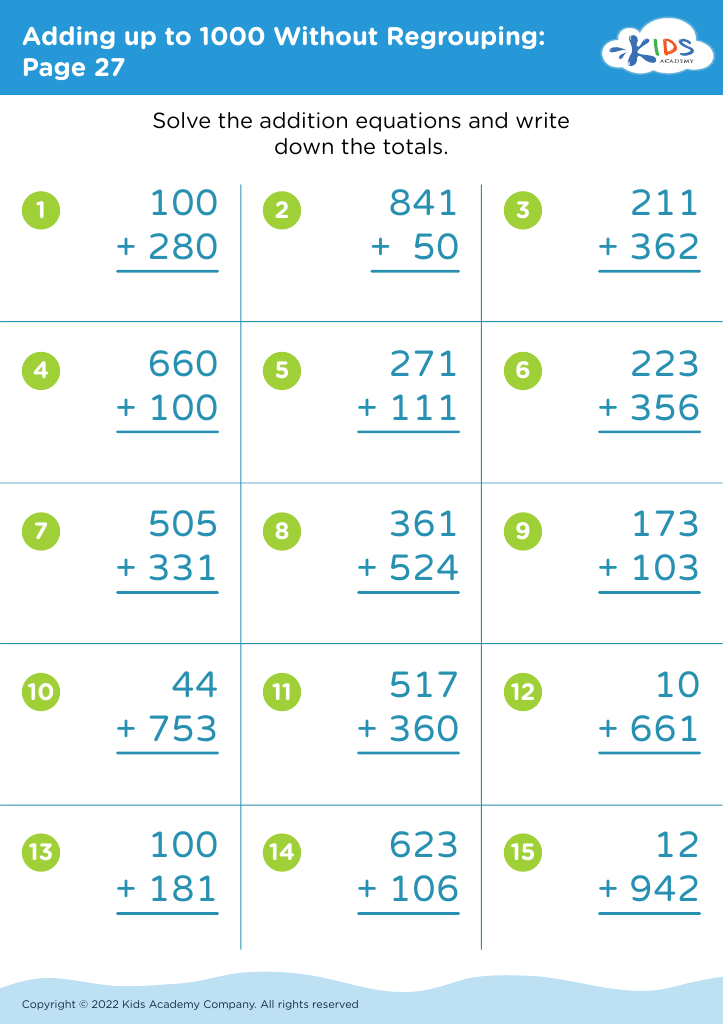
Adding up to 1000 Without Regrouping: Page 27
Worksheet
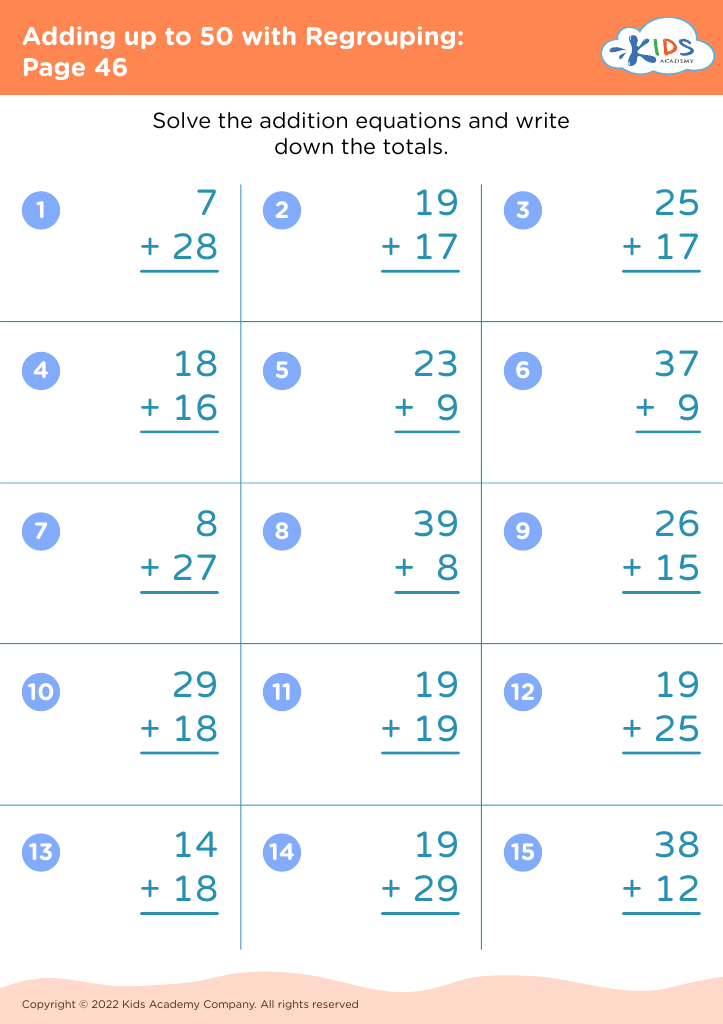
Adding up to 50 with Regrouping: Page 46
Worksheet
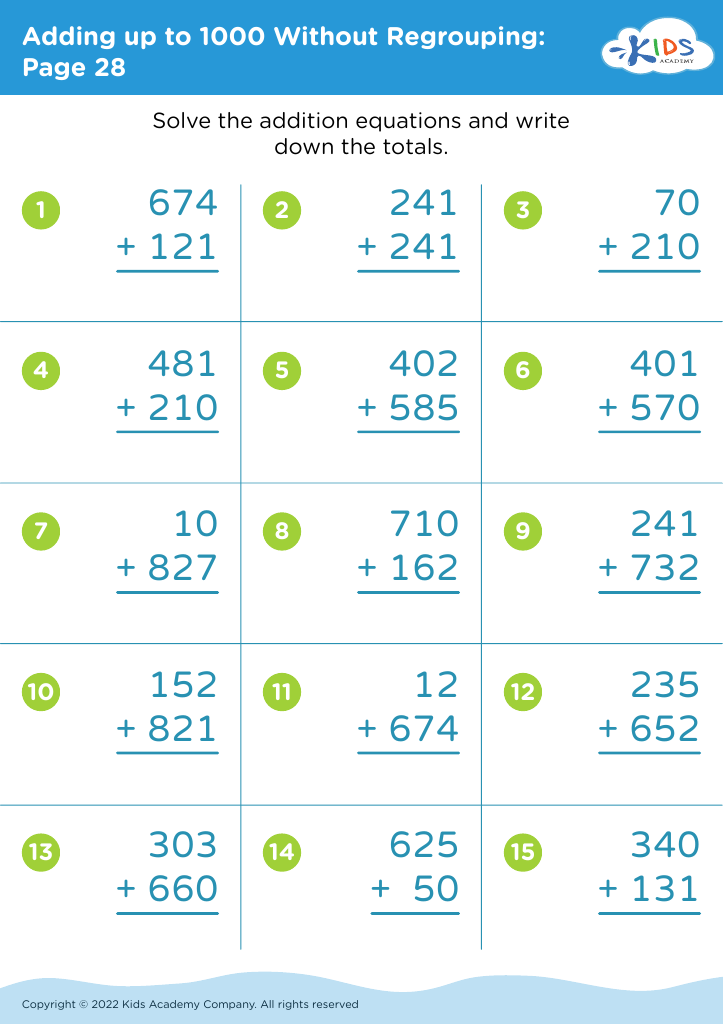
Adding up to 1000 Without Regrouping: Page 28
Worksheet
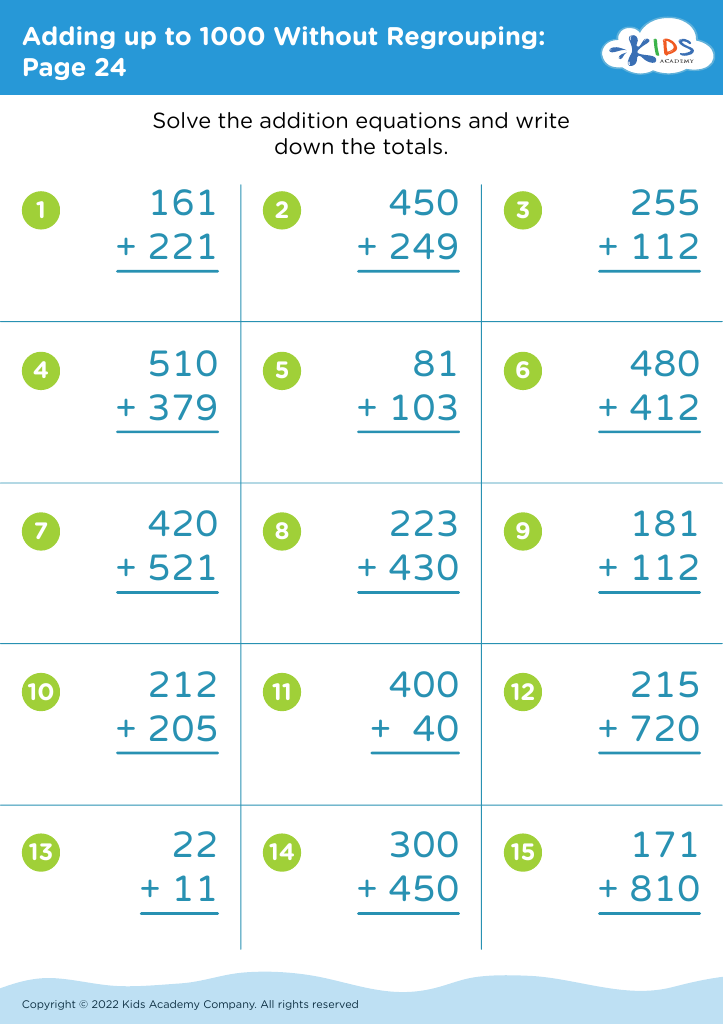
Adding up to 1000 Without Regrouping: Page 24
Worksheet


Simplifying fraction addition is crucial for 7-year-olds as it lays the foundation for their understanding of mathematics. At this age, children are developing their problem-solving skills and comprehension of basic concepts. Mastering fraction addition helps them grasp the idea of part-whole relationships, which is essential for everyday math and future academic success.

Parents and teachers should care because simplifying fractions encourages critical thinking. It allows children to see numbers in a new light, enhancing their analytical skills. Learning to simplify, rather than just relying on rote memorization of procedures, promotes deeper understanding.

Moreover, simplifying fractions builds confidence. When children learn that fractions can be easily combined by finding a common denominator and reducing them, they feel empowered in tackling more complex math topics. This fosters a positive attitude toward math, reducing anxiety associated with the subject.

Additionally, understanding this concept supports the national curriculum and prepares students for grade-level benchmarks. By investing time in understanding fraction addition early on, parents and teachers can ensure that children are well-equipped for more advanced mathematical concepts in the future, promoting long-term success in their education.