Fraction representation Math Worksheets for 7-Year-Olds
4 filtered results
-
From - To
Unlock the magic of fractions for your 7-year-old with our exciting Math Worksheets! Designed to make learning fun and interactive, these carefully crafted worksheets from Kids Academy help young minds grasp fraction representation through engaging visuals and practical exercises. Whether breaking down a pizza or sharing candies, our resources simplify complex concepts, enhancing understanding and confidence. By blending educational rigor with creativity, we ensure your child builds a solid foundation in mathematics. Perfect for both classroom use and home practice, these worksheets make mastering fractions enjoyable and accessible. Dive in and watch your child's math skills soar today!
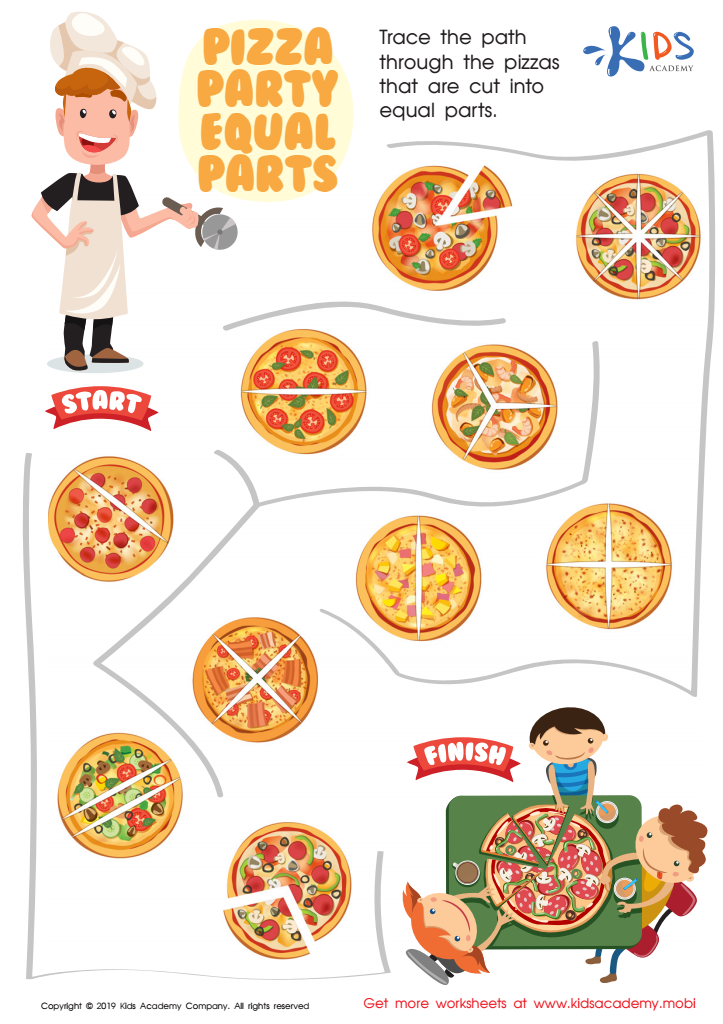
Pizza Party Equal Parts Worksheet
 Assign to My Students
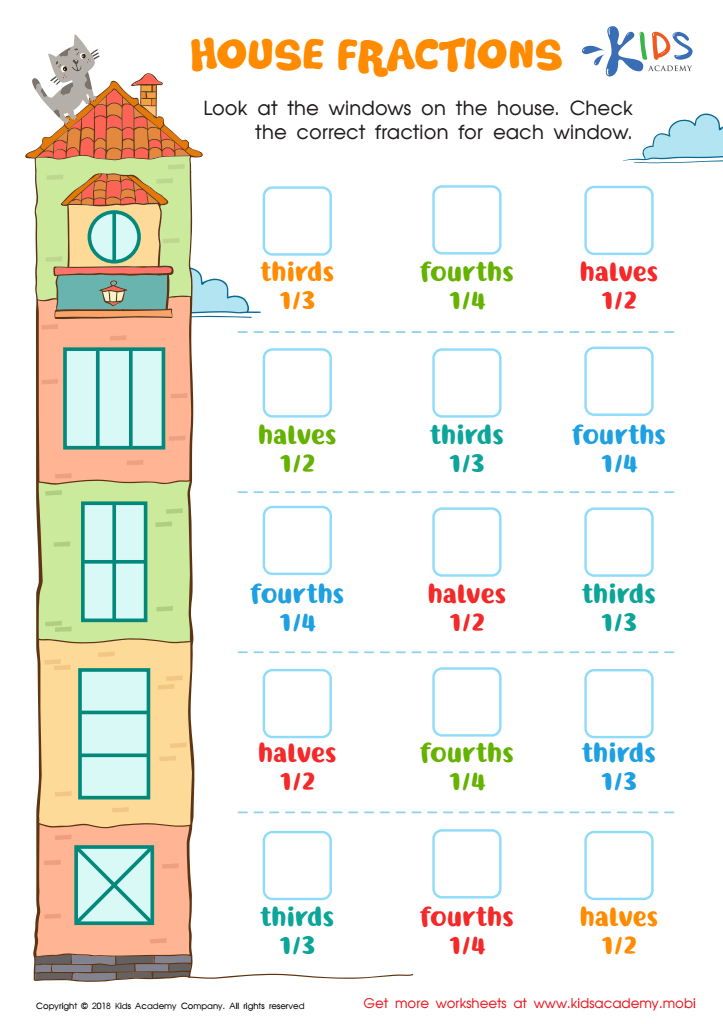
House Fractions Worksheet
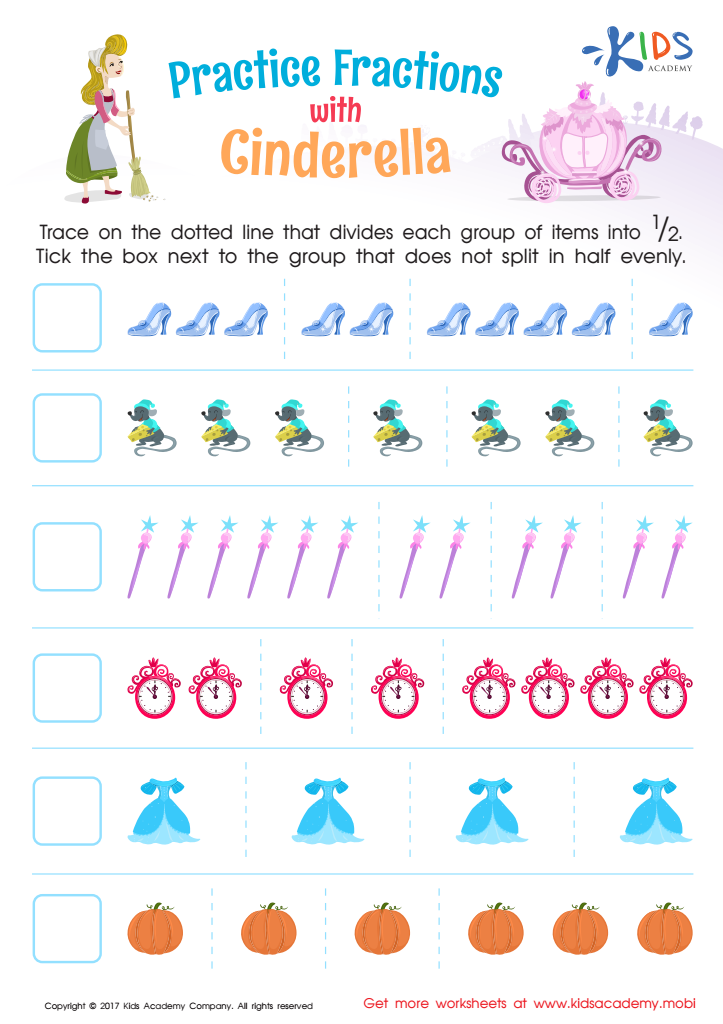
Fractions: Cinderella Printable








Fraction representation is a key milestone in a child's mathematical development, and it is crucial for both parents and teachers to prioritize it for their 7-year-olds. Firstly, understanding fractions lays the groundwork for more advanced mathematical concepts. Fractions are foundational in areas like algebra, geometry, and even calculus. Early familiarity with fractions promotes a smoother transition to these complex topics.
Secondly, learning fractions enhances problem-solving skills. When children manipulate fractions through activities like slicing a pizza or dividing a chocolate bar, they engage in critical thinking and reasoning. These practical applications foster a concrete understanding of abstract concepts.
Moreover, grasping fractions is indispensable beyond math; it applies to daily life decisions. For example, cooking often requires an understanding of fractional measurements, and shopping involves comparing prices or understanding discounts. These real-world applications make fractions relevant and essential.
Lastly, fostering a positive attitude towards fractions early on helps in reducing math anxiety. A solid grasp of fractional concepts builds confidence and instills a sense of achievement, encouraging continued interest and curiosity in mathematics.
In conclusion, focusing on fractions for 7-year-olds equips them with essential cognitive tools. It enhances their academic performance, supports comprehensive problem-solving abilities, and provides practical life skills, promoting a healthier, more confident approach to learning mathematics.








