Unlock the world of patterns with our engaging "Understanding Patterns Math Worksheets" designed specifically for 7-year-olds! These worksheets provide a fun and interactive way to help young learners recognize, create, and extend patterns using colors, shapes, numbers, and objects. As children explore these activities, they'll develop critical thinking and problem-solving skills essential for math success. Our easy-to-follow instructions and colorful designs make learning enjoyable and effective. Perfect for home or classroom use, these worksheets serve as a valuable resource to reinforce foundational math concepts, stimulate creativity, and support early cognitive development. Start your child’s pattern journey today!
Check out this FREE Trial Lesson on Math for age 7!

L

Favorites
With answer key
Interactive
  • 7
  • Understanding patterns
  • Math
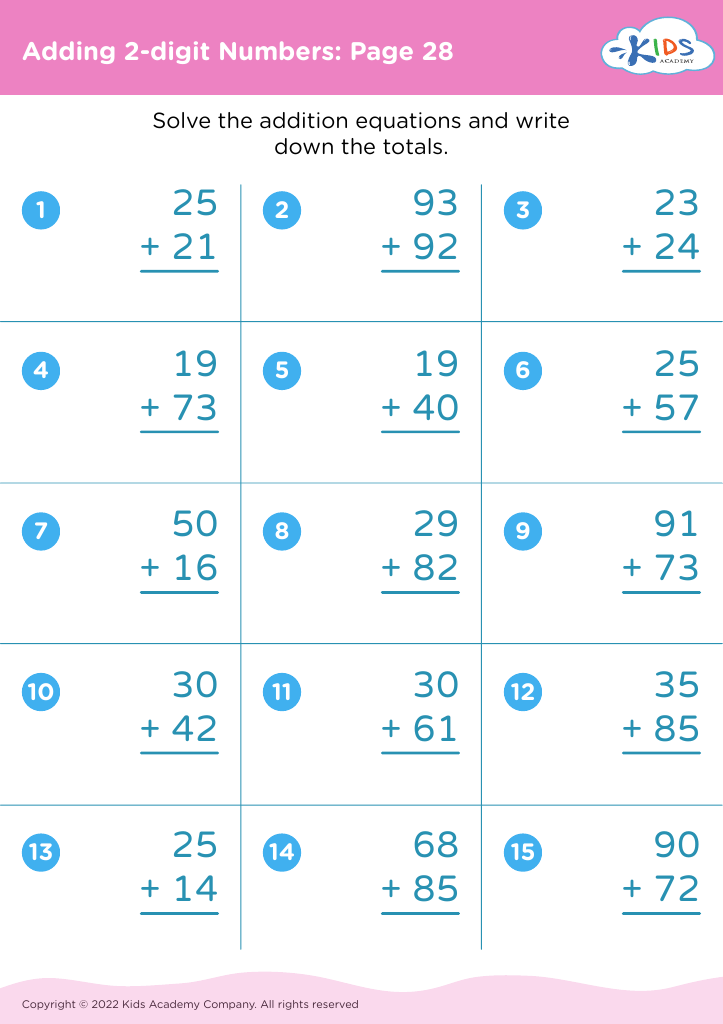
Adding 2-digit Numbers: Page 28

Adding 2-digit Numbers: Page 28

Adding 2-digit Numbers: Page 28
Worksheet
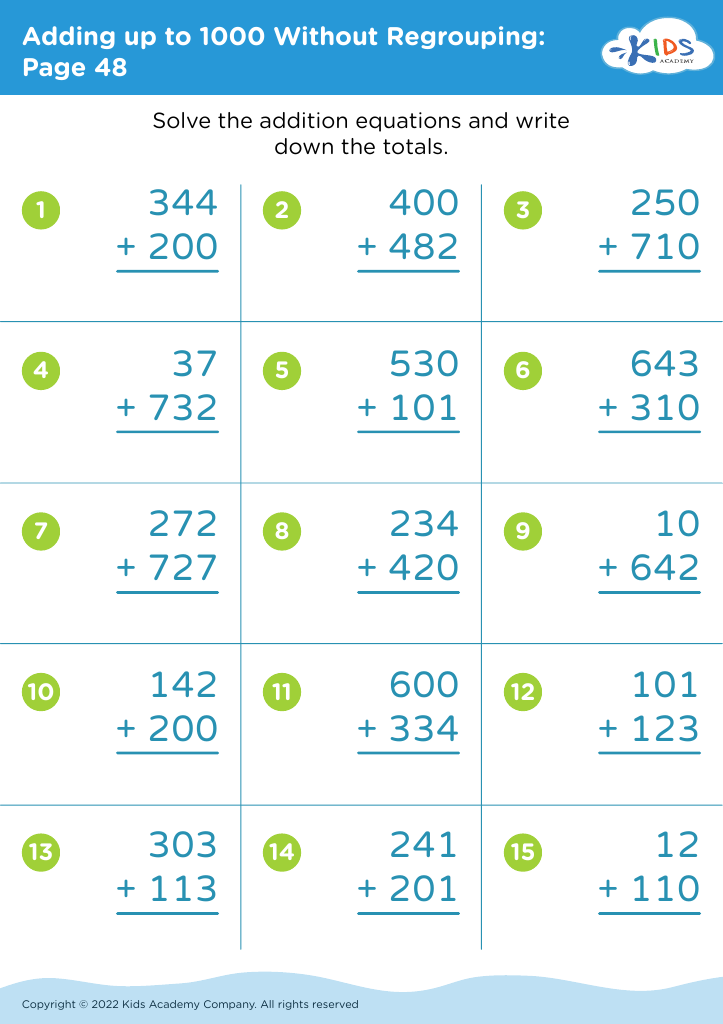
Adding up to 1000 Without Regrouping: Page 48
Worksheet
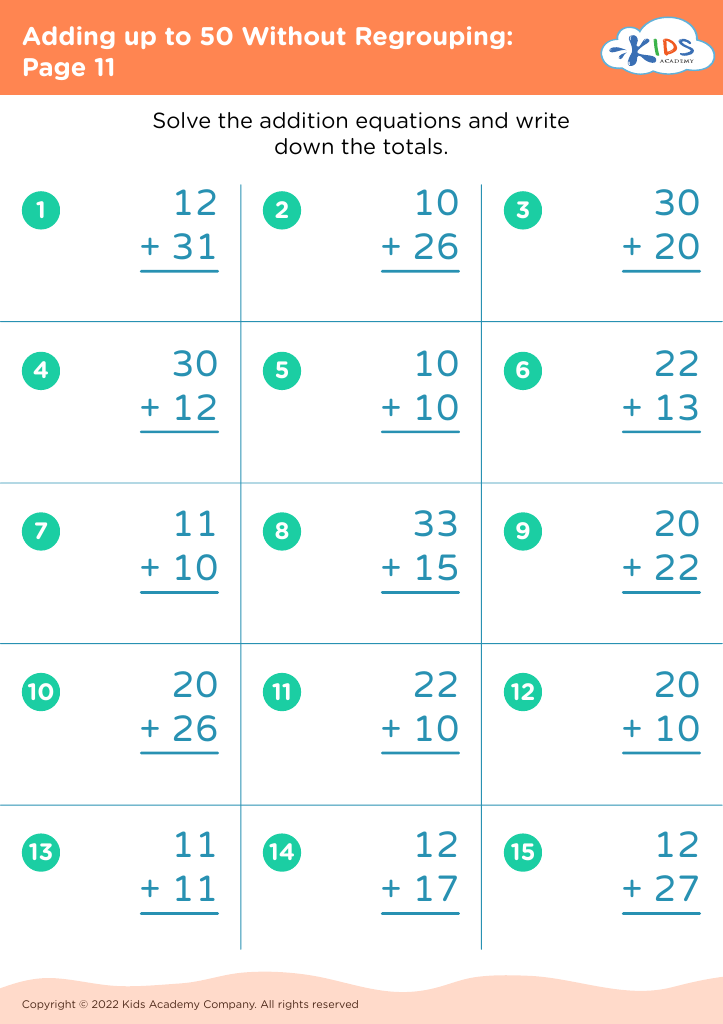
Adding up to 50 Without Regrouping: Page 11
Worksheet
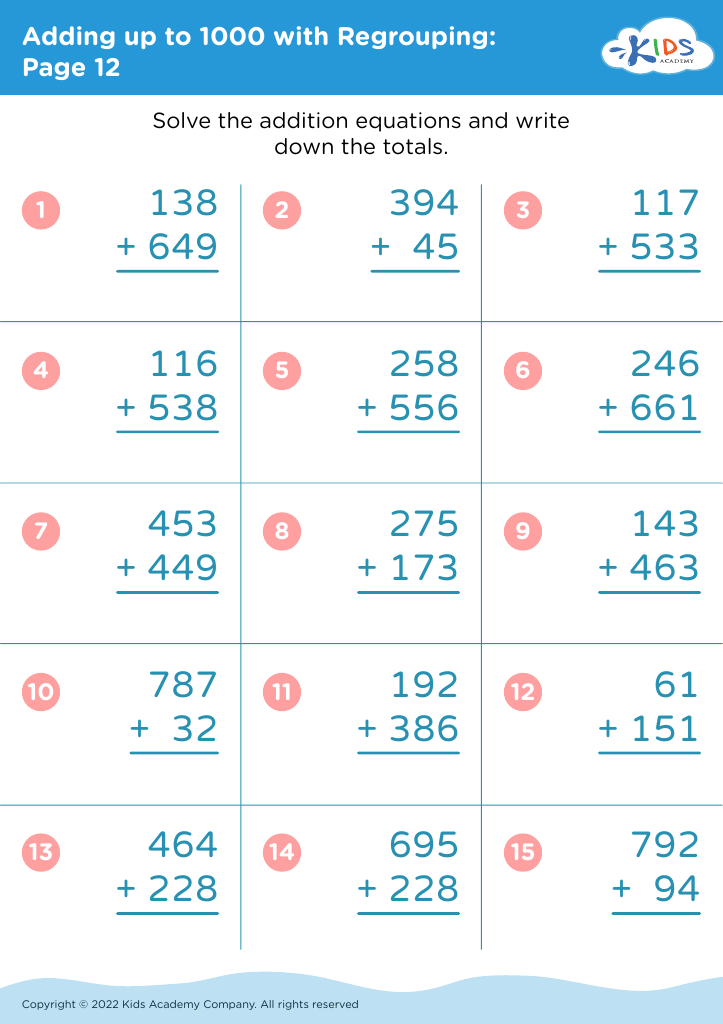
Adding up to 1000 with Regrouping: Page 12
Worksheet
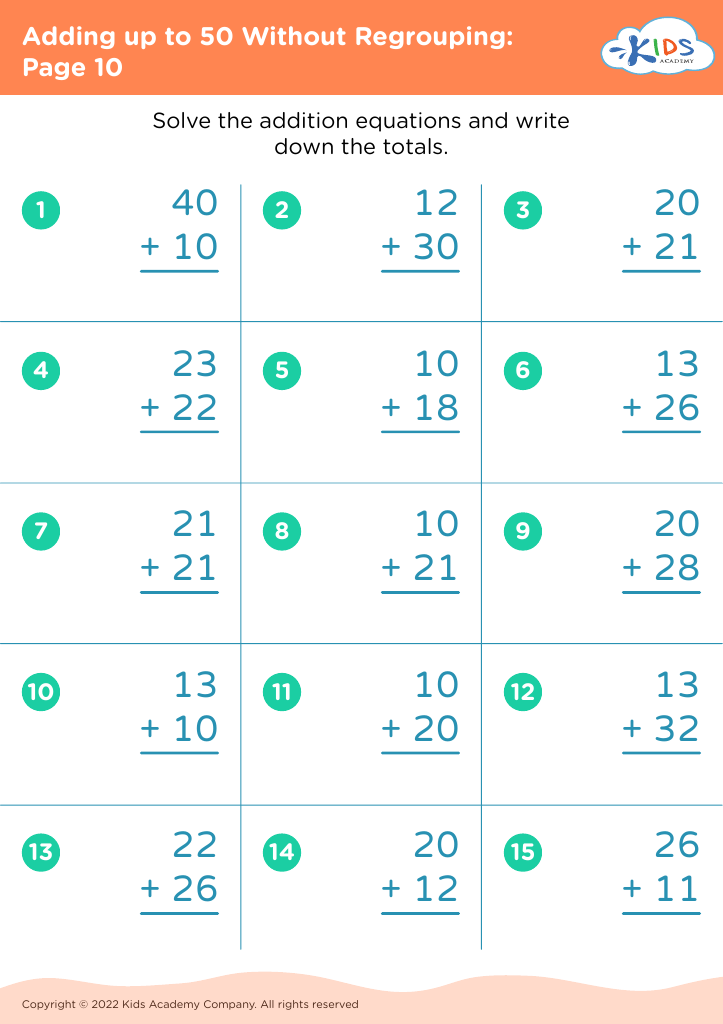
Adding up to 50 Without Regrouping: Page 10
Worksheet
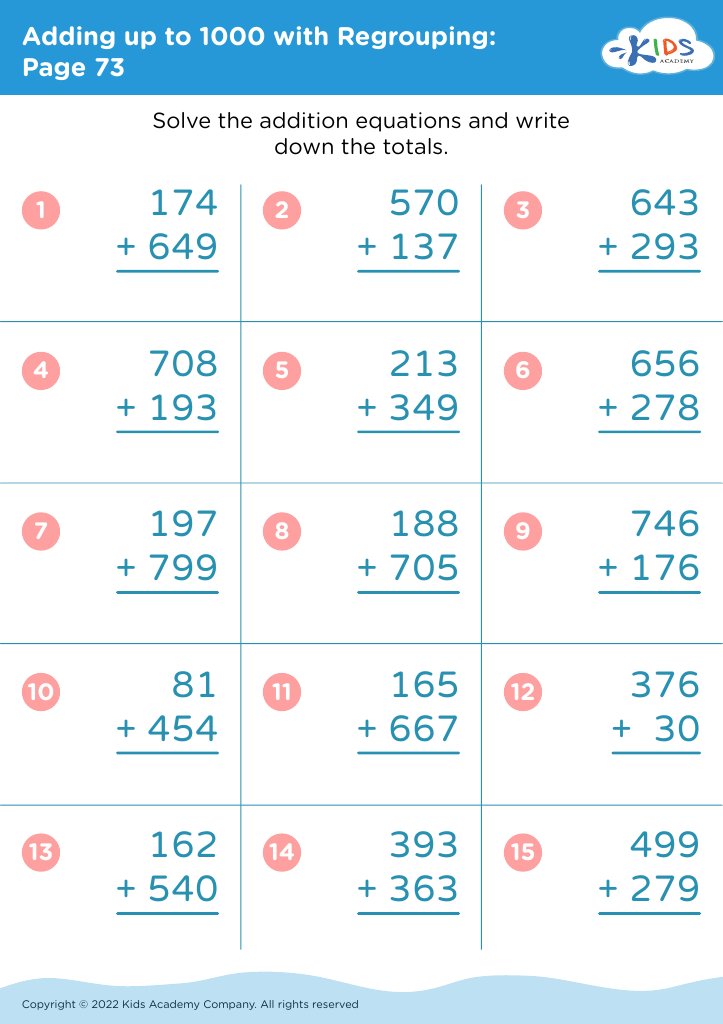
Adding up to 1000 with Regrouping: Page 73
Worksheet
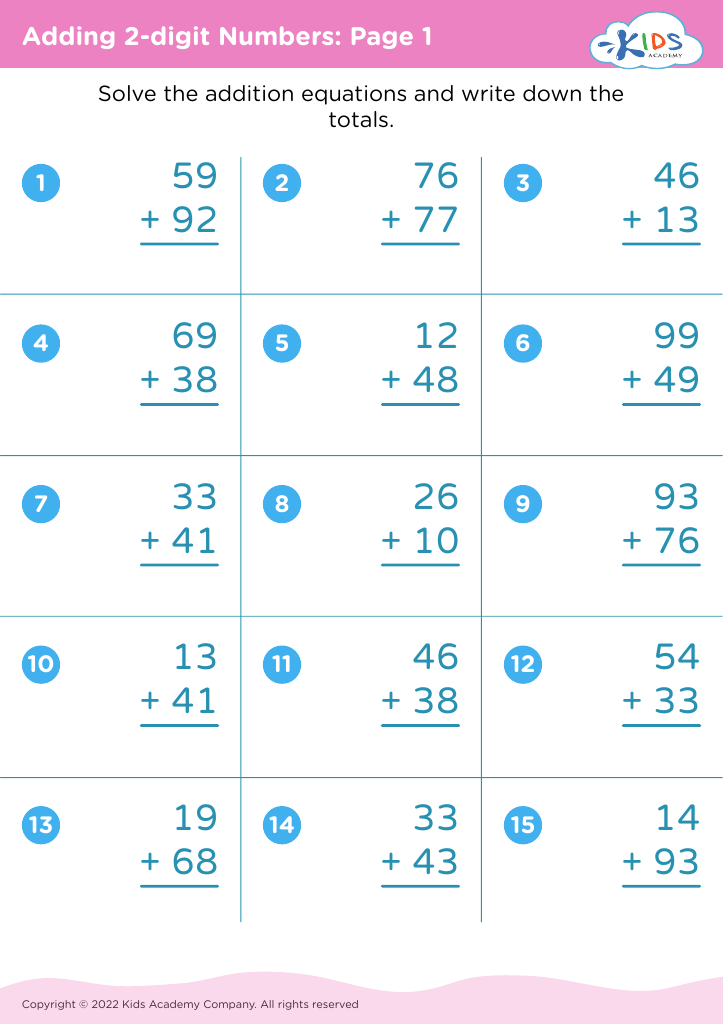
Adding 2-digit Numbers: Page 1

Adding 2-digit Numbers: Page 1

Adding 2-digit Numbers: Page 1
Worksheet
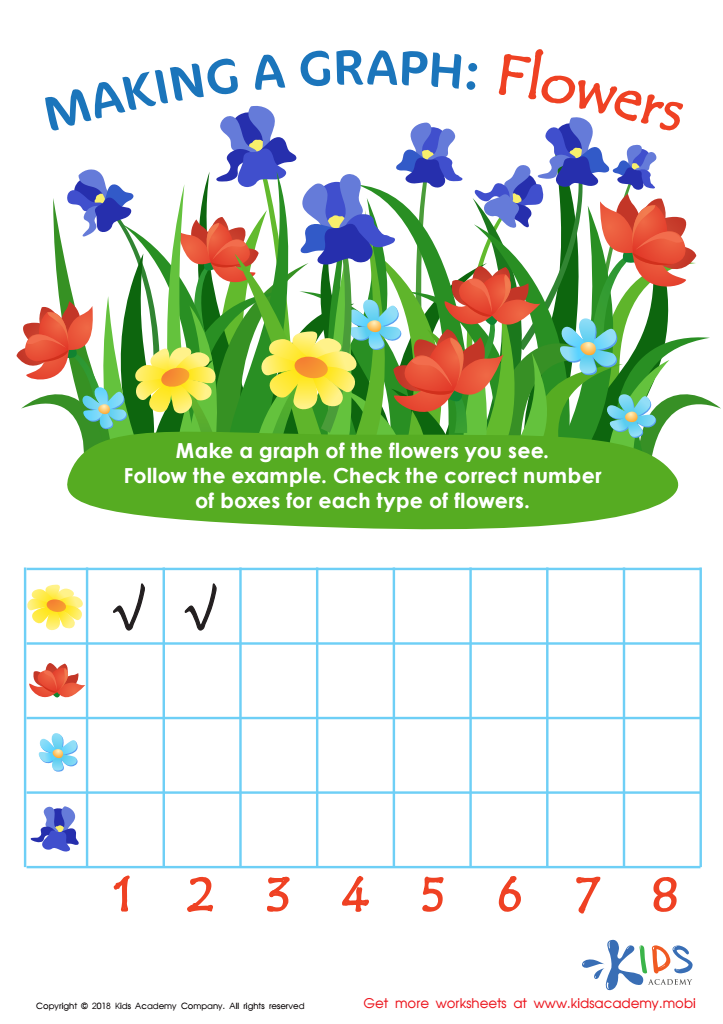
Making a Graph: Flowers Worksheet

Making a Graph: Flowers Worksheet

Kids will love this engaging PDF graph. They'll count flowers and use checkmarks to represent the number on the graph, tangibly seeing the differences in an organized way they contributed to. All while developing their number representation and concrete number sense skills without even realizing it!
Making a Graph: Flowers Worksheet
Worksheet
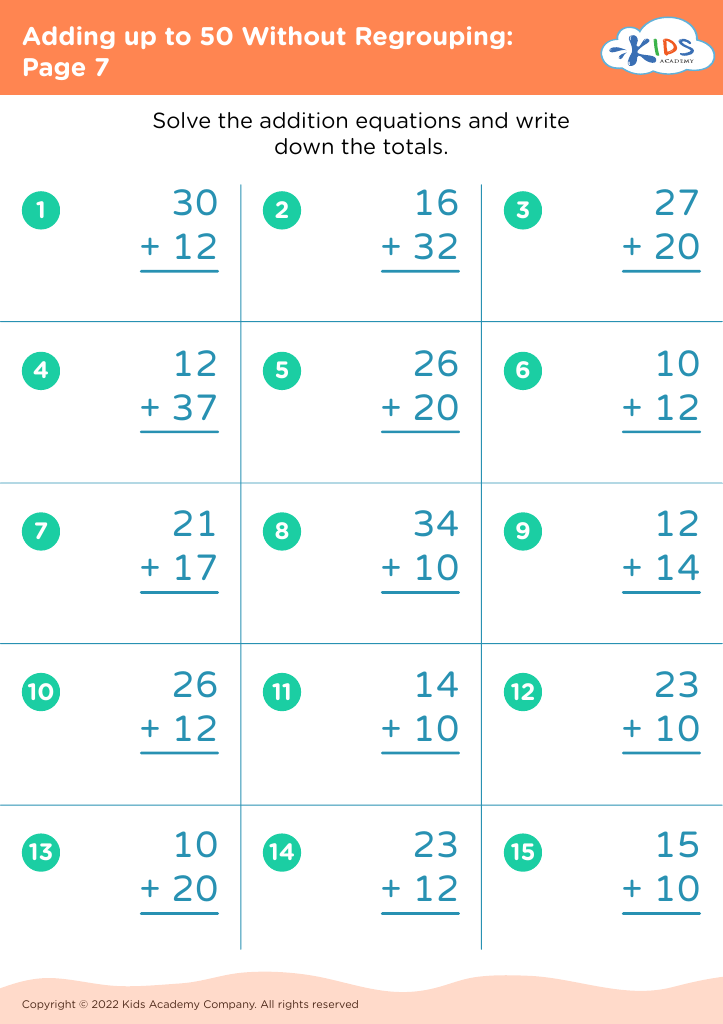
Adding up to 50 Without Regrouping: Page 7
Worksheet
Second Grade Math Worksheets

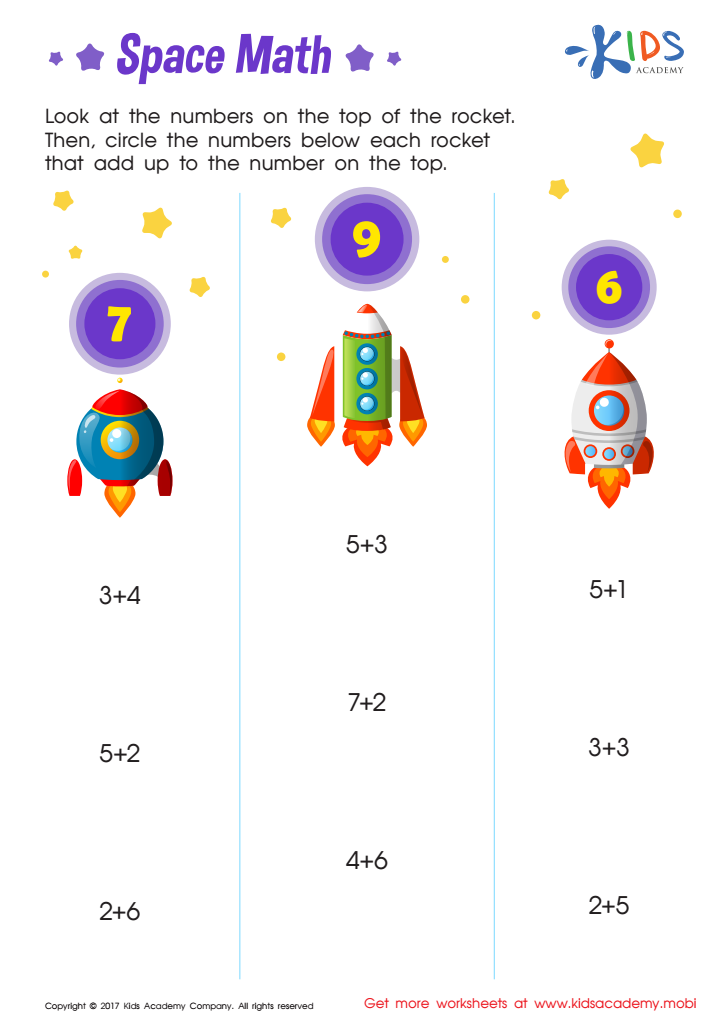
Addition: Space Math Worksheet

Fun and engaging space-themed practice with vivid pictures and matching numbers will make learning more meaningful. Take their math skills out of this galaxy today with Kids Academy!
Addition: Space Math Worksheet
Worksheet
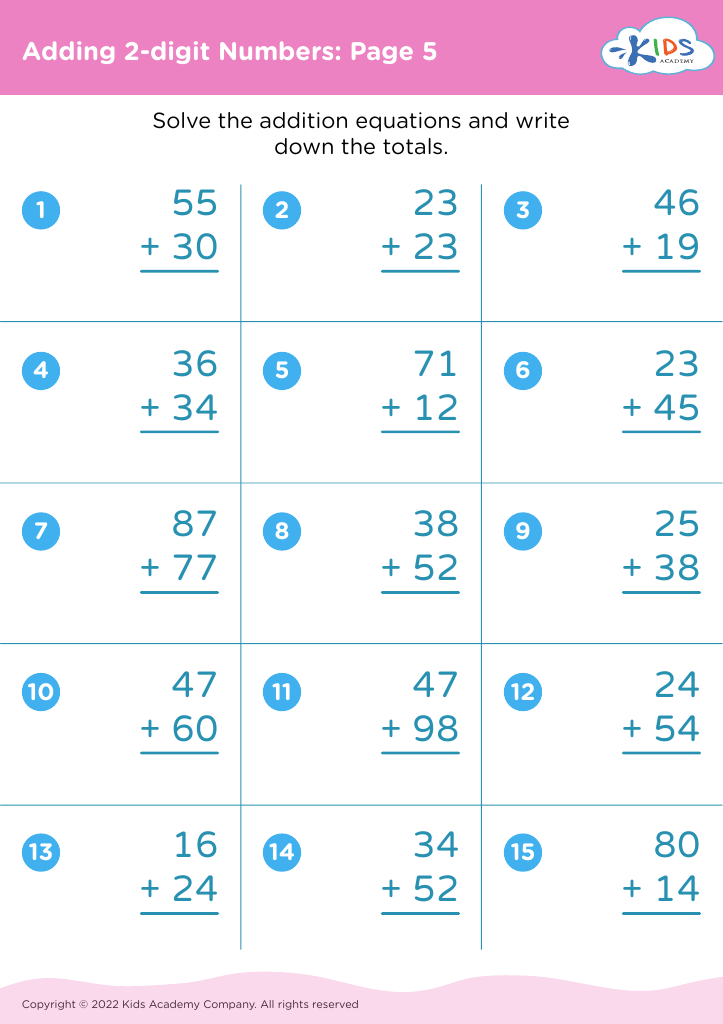
Adding 2-digit Numbers: Page 5

Adding 2-digit Numbers: Page 5

Adding 2-digit Numbers: Page 5
Worksheet
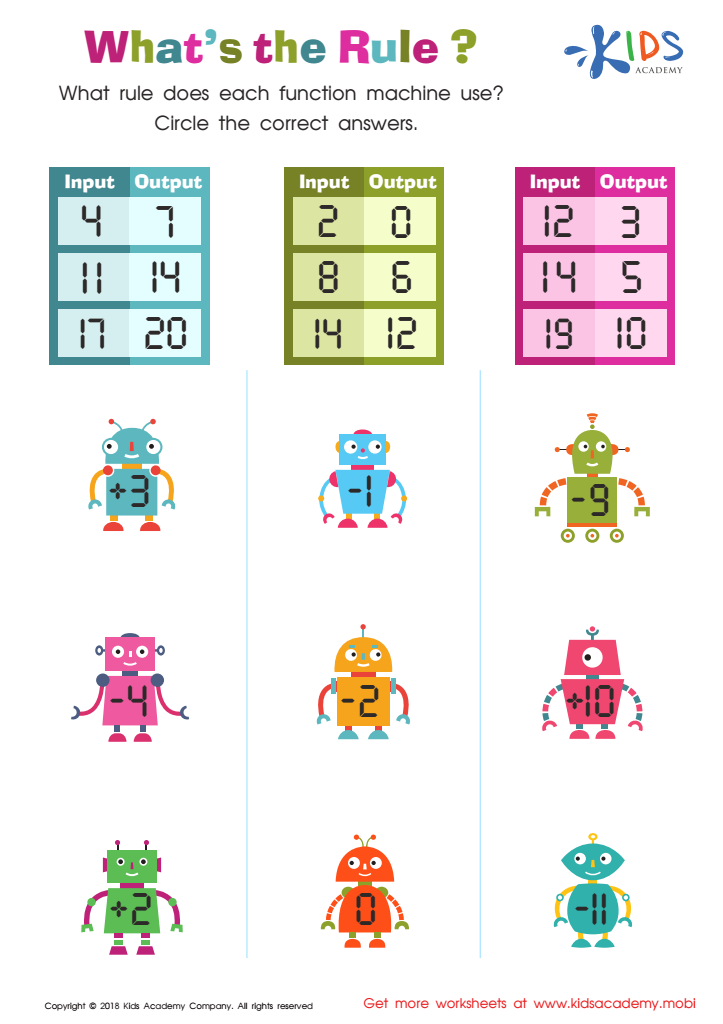
What's the Rule Worksheet
What's the Rule Worksheet
Robots are here to help your child find the relationship between each set of numbers! Adorably illustrated worksheets use vivid pictures that each contain a rule. Look at each function machine and find the pattern or relationship between the input and output. Then, complete the sheet by circling the correct answer!
What's the Rule Worksheet
Worksheet
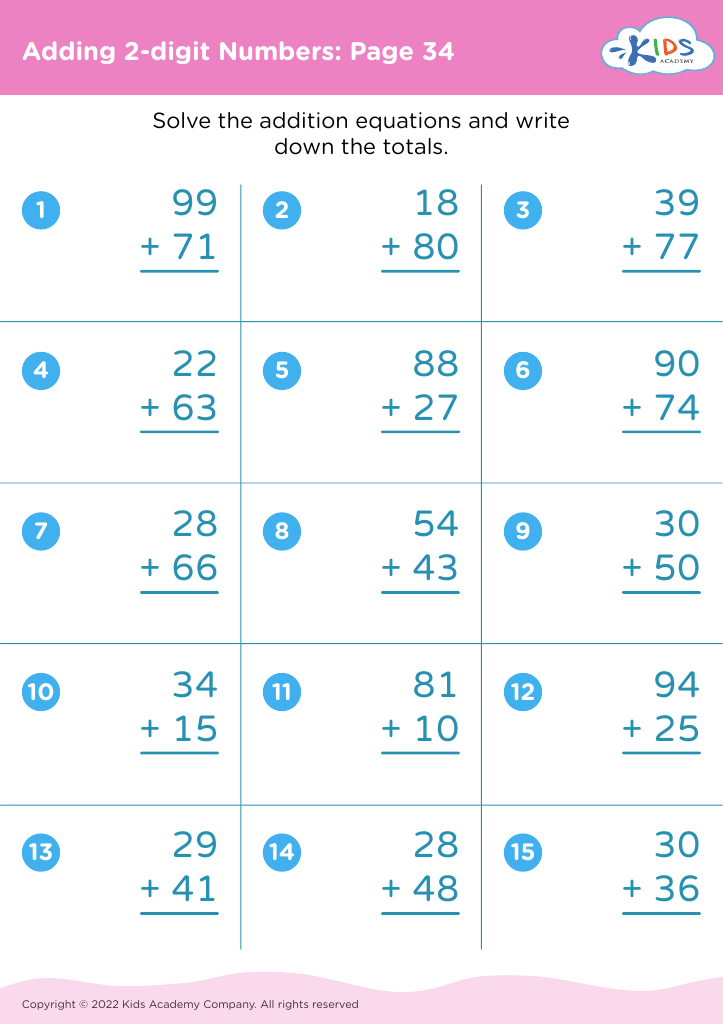
Adding 2-digit Numbers: Page 34

Adding 2-digit Numbers: Page 34

Adding 2-digit Numbers: Page 34
Worksheet
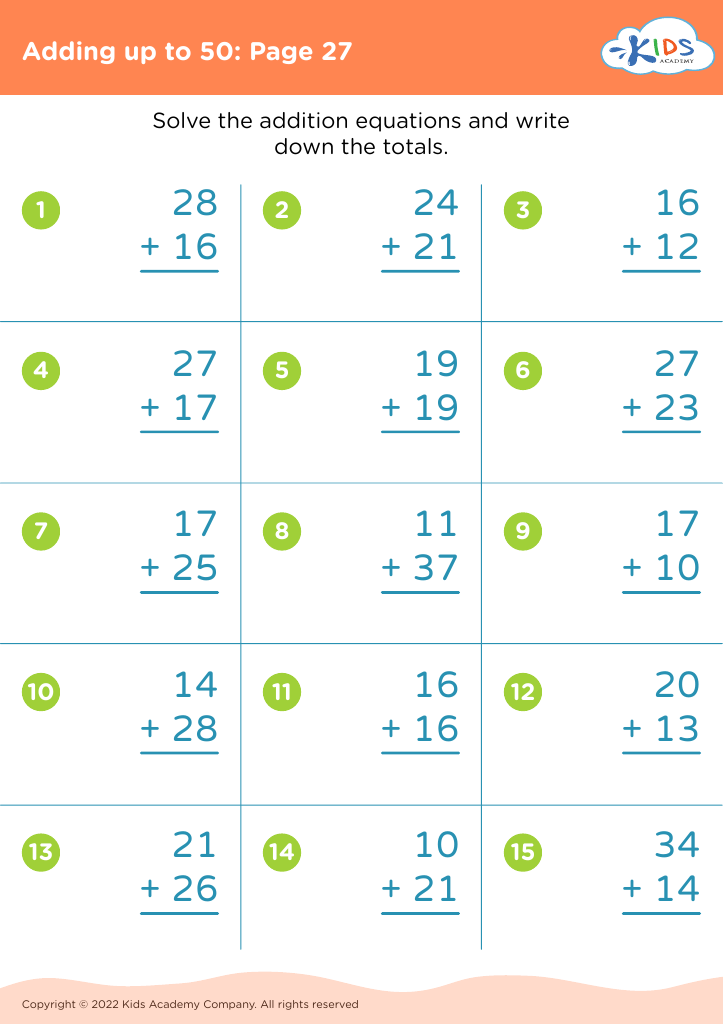
Adding up to 50: Page 27

Adding up to 50: Page 27

Adding up to 50: Page 27
Worksheet
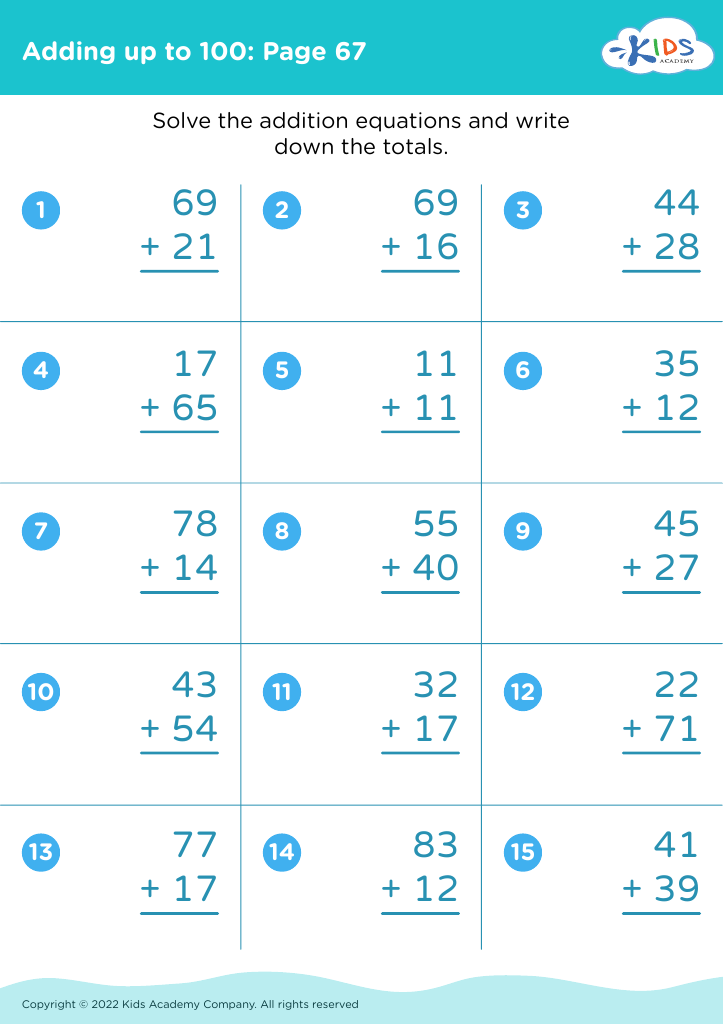
Adding up to 100: Page 67

Adding up to 100: Page 67

Adding up to 100: Page 67
Worksheet
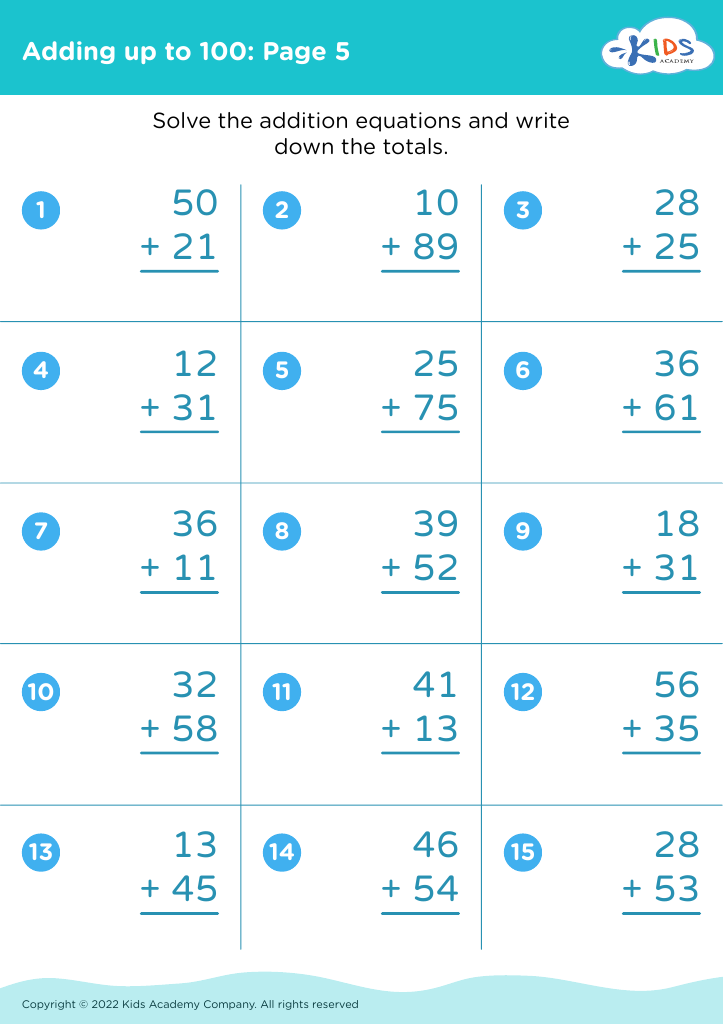
Adding up to 100: Page 5

Adding up to 100: Page 5

Adding up to 100: Page 5
Worksheet
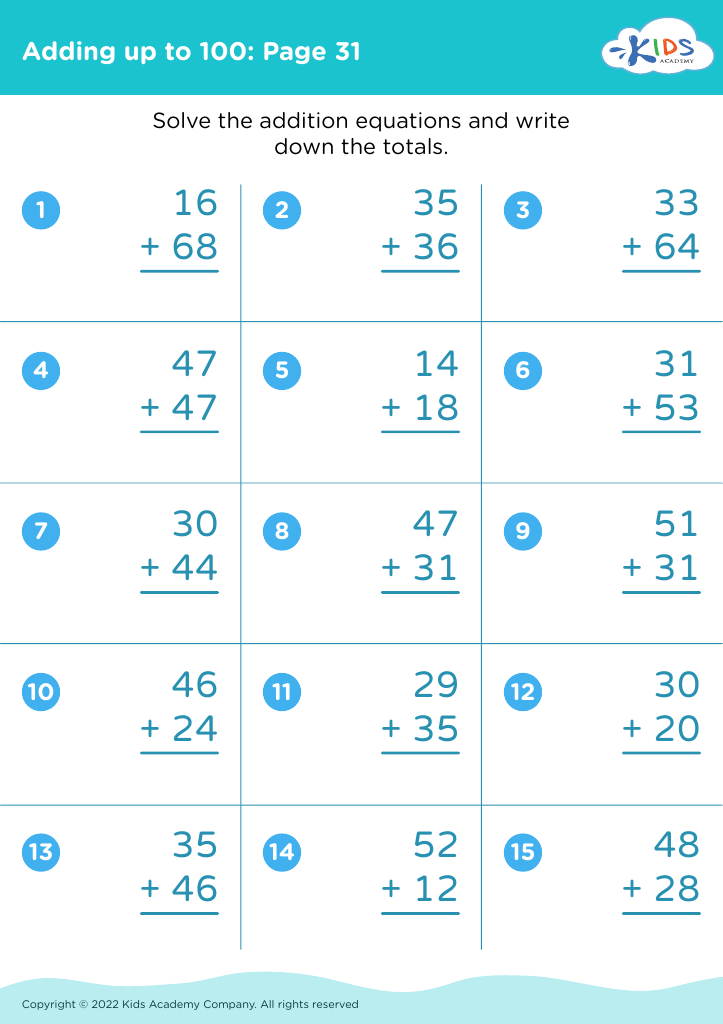
Adding up to 100: Page 31

Adding up to 100: Page 31

Adding up to 100: Page 31
Worksheet
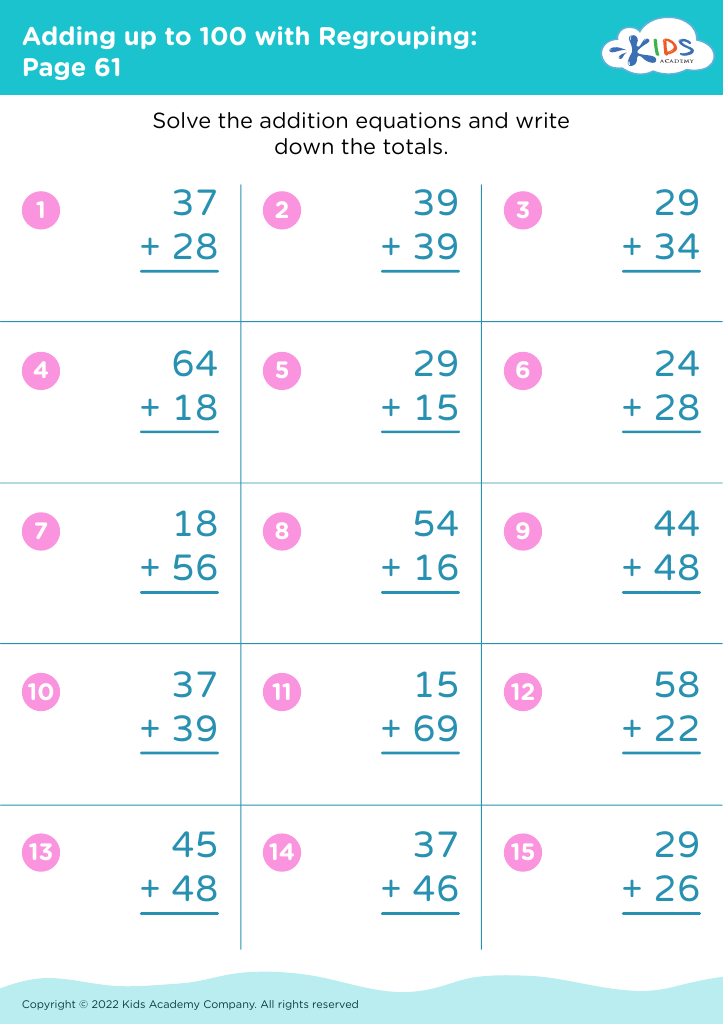
Adding up to 100 with Regrouping: Page 61
Worksheet
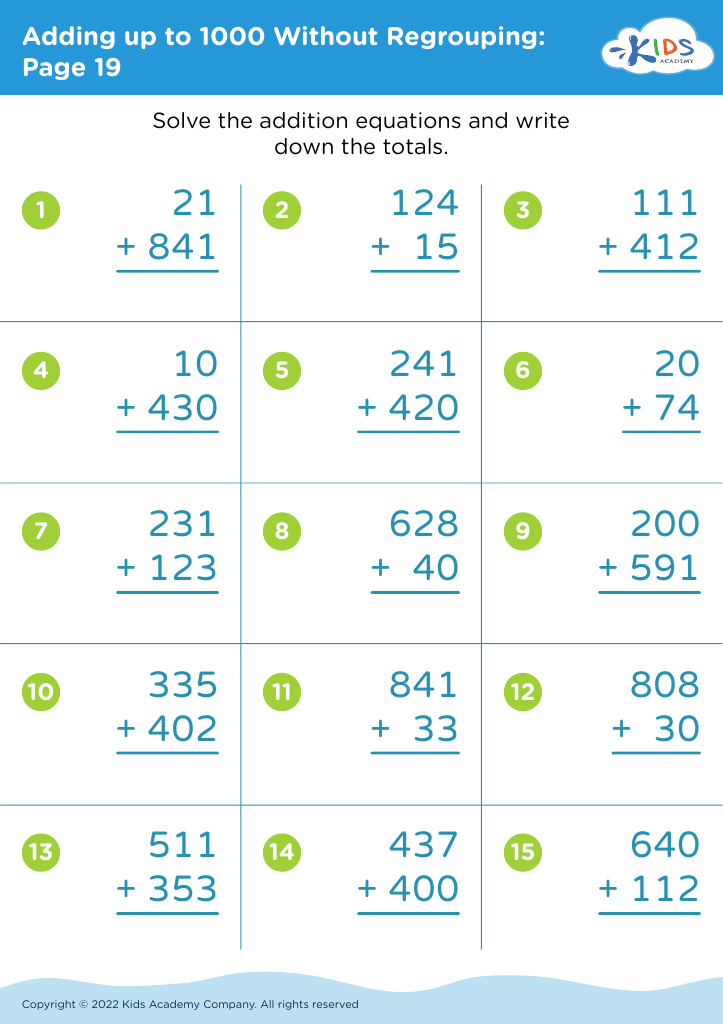
Adding up to 1000 Without Regrouping: Page 19
Worksheet
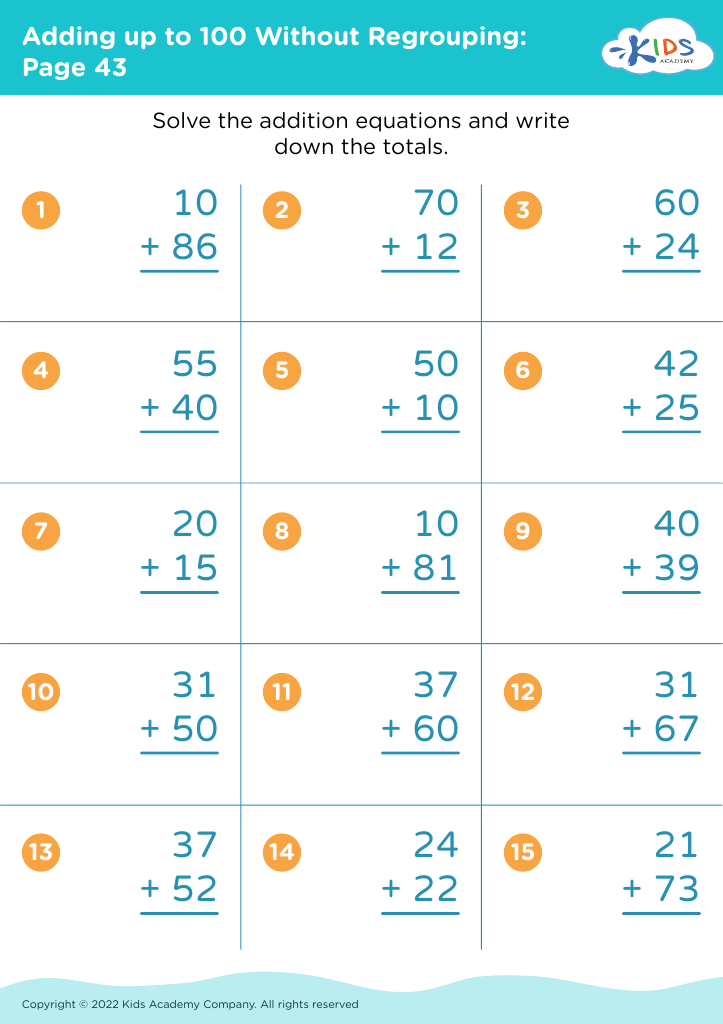
Adding up to 100 Without Regrouping: Page 43
Worksheet
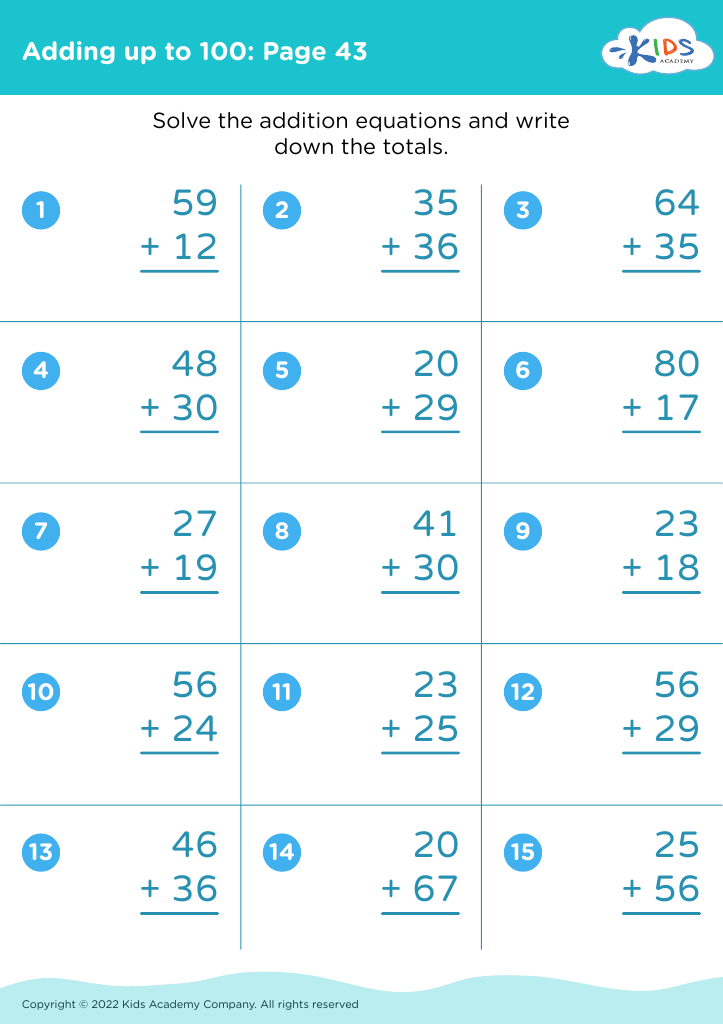
Adding up to 100: Page 43

Adding up to 100: Page 43

Adding up to 100: Page 43
Worksheet
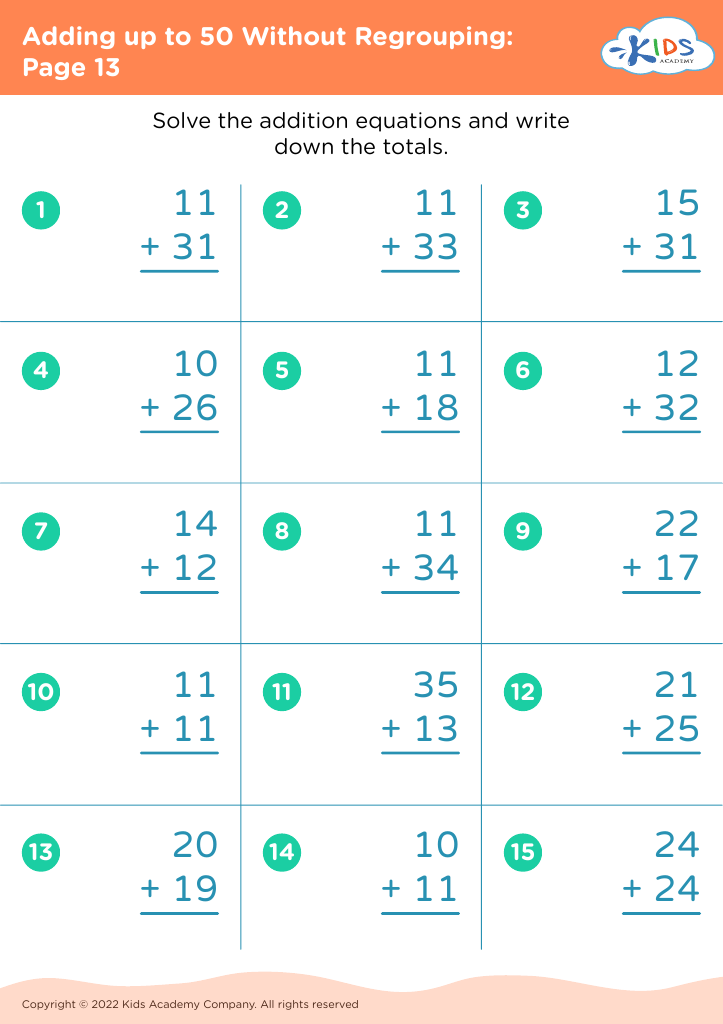
Adding up to 50 Without Regrouping: Page 13
Worksheet
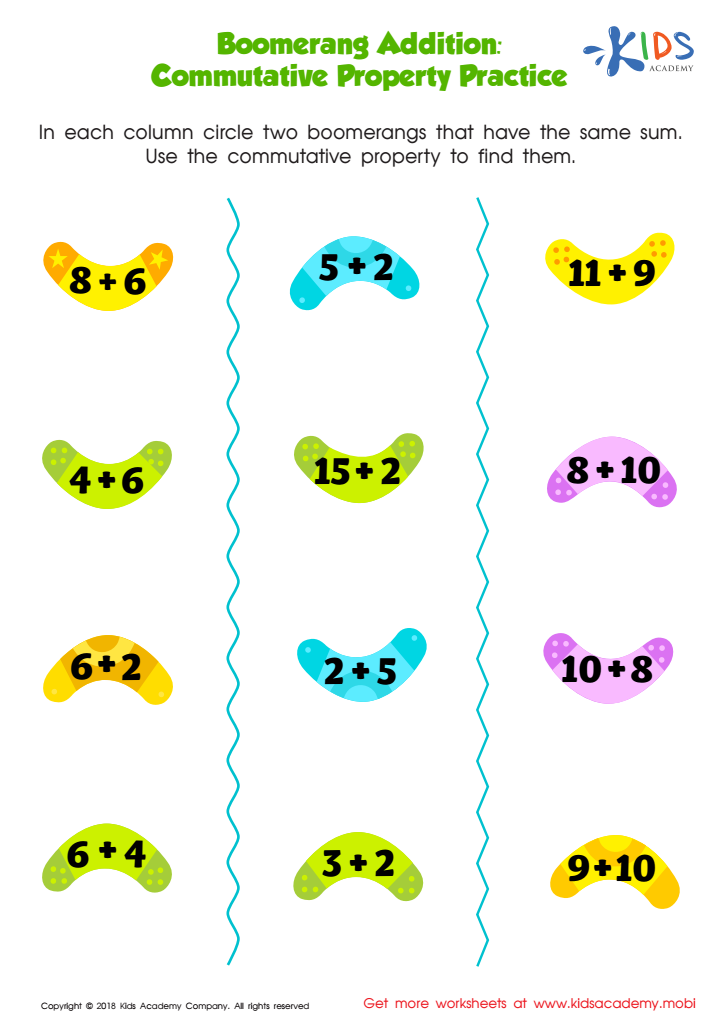
Boomerang Addition Worksheet

Boomerang Addition Worksheet

Kids know that when a boomerang is thrown, it reverses its path back. The same goes for addition: numbers can be rearranged and the sum will remain the same. Use this worksheet to find matching pairs of colorful boomerangs and equations. Look through each column and use the commutative property to find the pairs with the same sum.
Boomerang Addition Worksheet

Worksheet
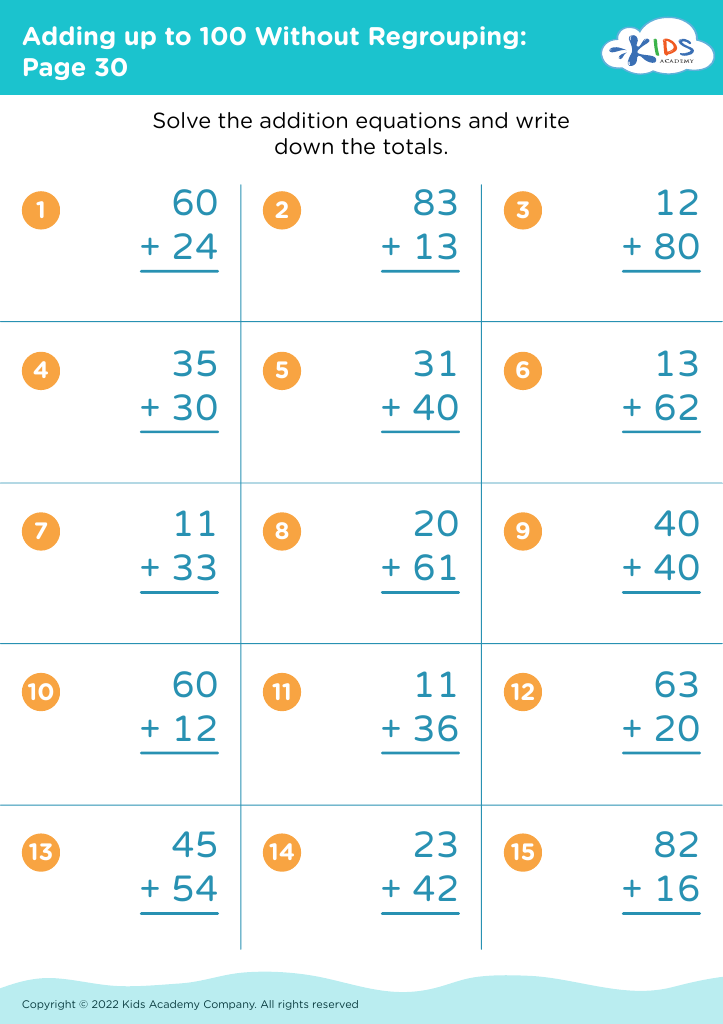
Adding up to 100 Without Regrouping: Page 30
Worksheet


Understanding patterns in math is crucial for 7-year-olds, and it’s essential for both parents and teachers to be invested in this area of learning. Recognizing patterns not only helps children develop critical thinking and problem-solving skills, but it also forms the foundation for more complex mathematical concepts. When children can identify and predict patterns, they enhance their computational skills and ability to make connections between different ideas, such as addition, subtraction, and even early algebra.

Moreover, engaging with patterns fosters curiosity and promotes a positive attitude toward math. When children discover patterns in numbers, shapes, or everyday life, they often experience a sense of accomplishment that builds their confidence and encourages further exploration. This engagement can lead to a deeper understanding of mathematical concepts, making learning more enjoyable and interactive.

Parents and teachers play a vital role in nurturing these skills by creating an environment rich in opportunities for pattern exploration, whether through games, discussions, or hands-on activities. By emphasizing the importance of pattern recognition, parents and teachers equip children with the tools they need for future academic success and help cultivate a lifelong love of learning in mathematics.