
Logical thinking Reading Worksheets for 7-Year-Olds
3 filtered results
Difficulty Level
Grade
Age
-
From - To
Subject
Activity
Standards
Enhance your child's logical thinking skills with our engaging reading worksheets designed specifically for 7-year-olds! These worksheets blend reading comprehension with critical thinking exercises, helping children make connections, analyze information, and draw conclusions. Each activity encourages kids to explore texts thoughtfully, fostering their ability to reason aloud and solve problems. Perfect for home or classroom use, our logically-focused reading tasks captivate young minds and promote independent thinking. With colorful illustrations and age-appropriate challenges, children will enjoy developing their skills while having fun! Visit our page to discover worksheets that nurture your child's analytical abilities today!
Favorites
With answer key
Interactive
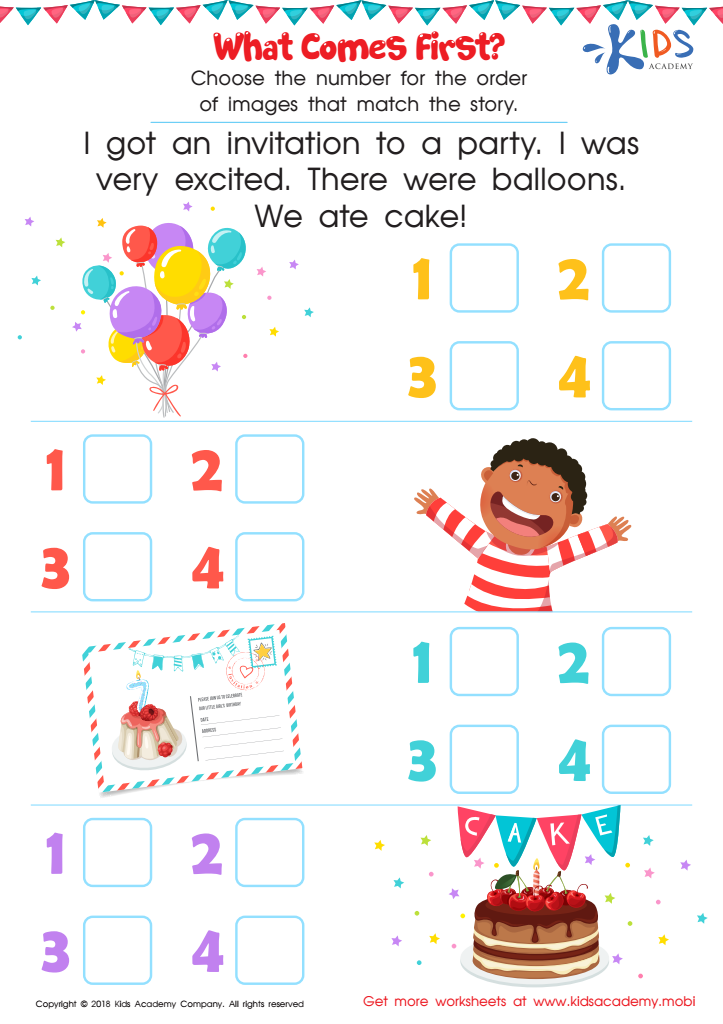
What Comes First Worksheet
Before you start, ask your child what they see in the picture. Read the story aloud together, then show them the images in order, numbered 1-5. Ask them to choose the numbers that match the story. Have fun and enjoy this party worksheet with your little one! (80 words)
 Assign to My Students
What Comes First Worksheet
Worksheet
Join Kids Academy for Free
Who is primarily going to use this learning content?








Logical thinking is a crucial skill for 7-year-olds, and it intersects significantly with reading. As children begin to absorb more complex stories and information, the ability to think logically enhances their comprehension. Logical thinking helps young readers analyze plots, understand character motivations, and infer meanings beyond the text. When parents and teachers encourage this skill, they empower children to become active readers rather than passive consumers of information.
Moreover, fostering logical thinking in reading develops critical thinking skills essential for problem-solving in everyday life. When children learn to evaluate the information in texts, they cultivate the ability to distinguish between facts, opinions, and biases, all of which are vital in today’s media-driven world.
Additionally, fostering logical thinking during reading also enhances vocabulary and language skills. As children navigate through stories, they make connections between words, ideas, and concepts, which contributes to better articulation and communication.
Overall, by prioritizing logical thinking in reading activities, parents and teachers facilitate improved academic performance, better decision-making abilities, and a lifelong love for learning. Encouraging logical thinking from an early age lays the foundation for deeper understanding and analytical skills that benefit children throughout their educational journey and beyond.








