Phonics Skills Reading Worksheets for 7-Year-Olds
6 filtered results
-
From - To
Boost your child's reading journey with our engaging Phonics Skills Reading Worksheets for 7-Year-Olds. Specially crafted by educational experts, these worksheets use fun activities to help kids master essential phonics skills. From blending sounds to identifying word patterns, each worksheet is designed to improve reading fluency and comprehension. Our colorful, easy-to-follow layout ensures that learning remains enjoyable and effective. Perfect for classroom use or at-home practice, these worksheets align with standard curriculums to provide consistent support. Equip your 7-year-old with the key tools to become a confident, skilled reader with Kids Academy’s phonics worksheets.
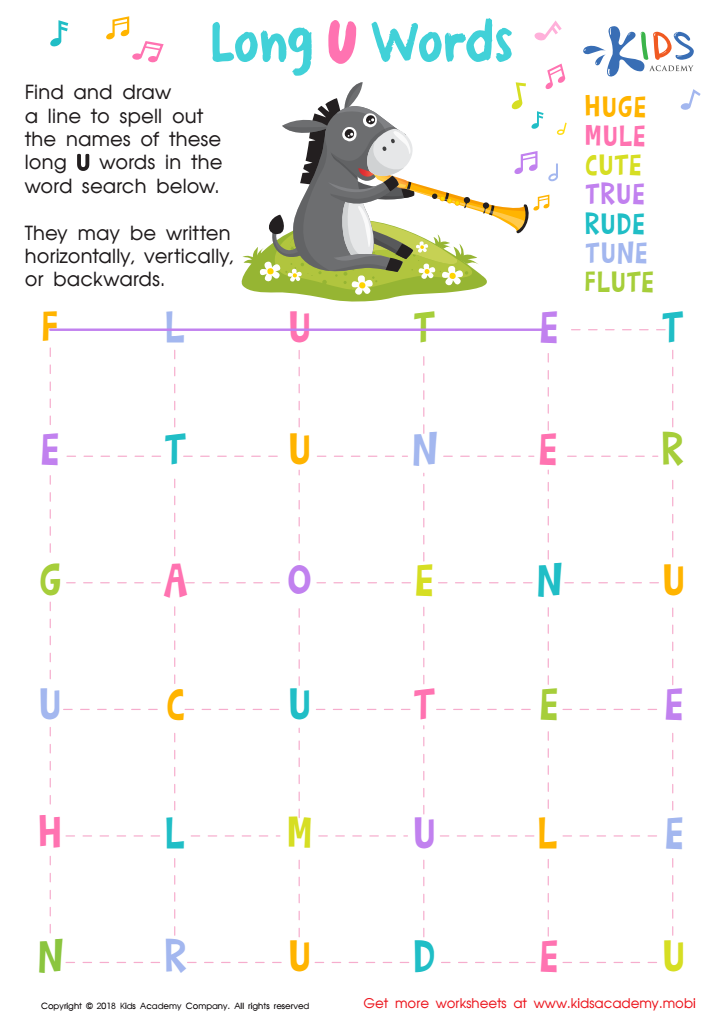
Long /u/ Words Worksheet
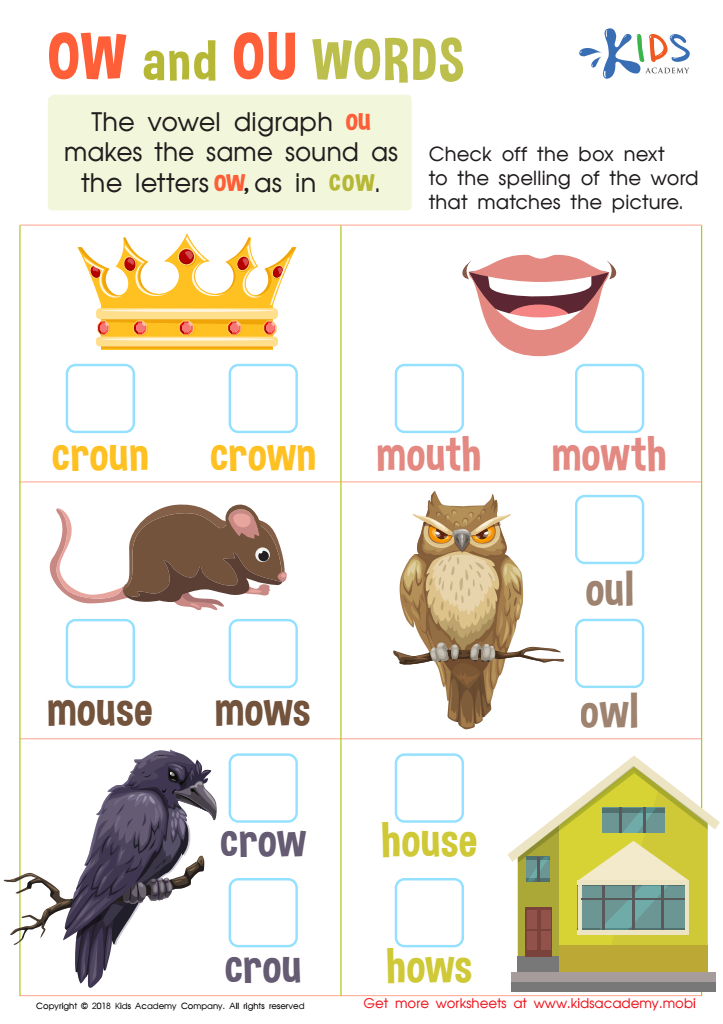
Reading: OW and OU Words Worksheet
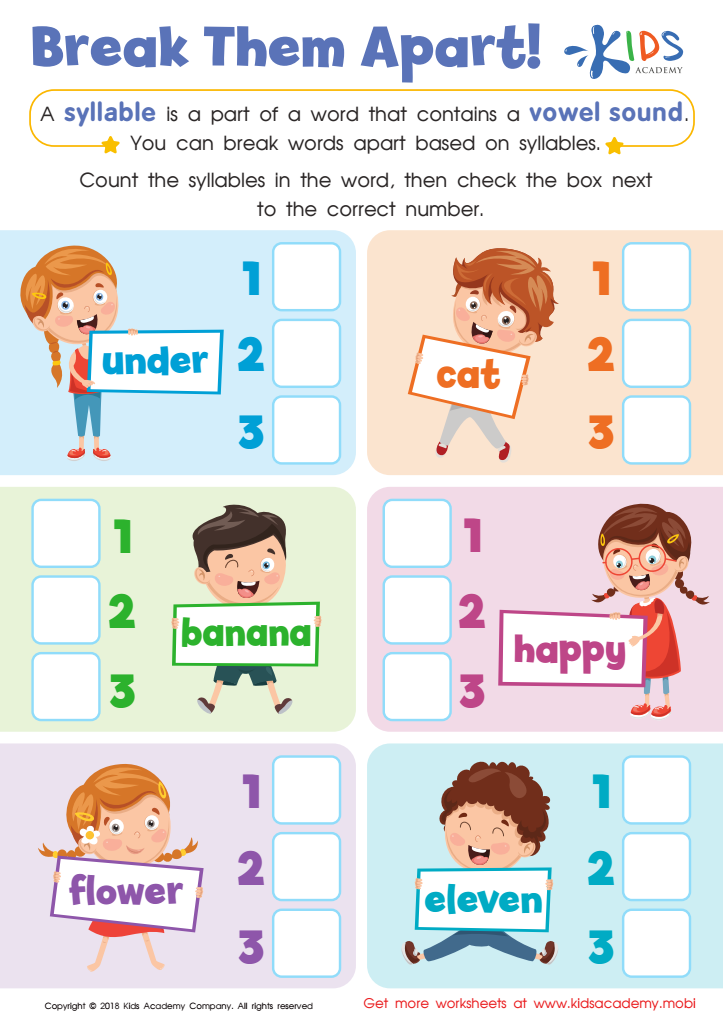
Reading: Break Them Apart Worksheet
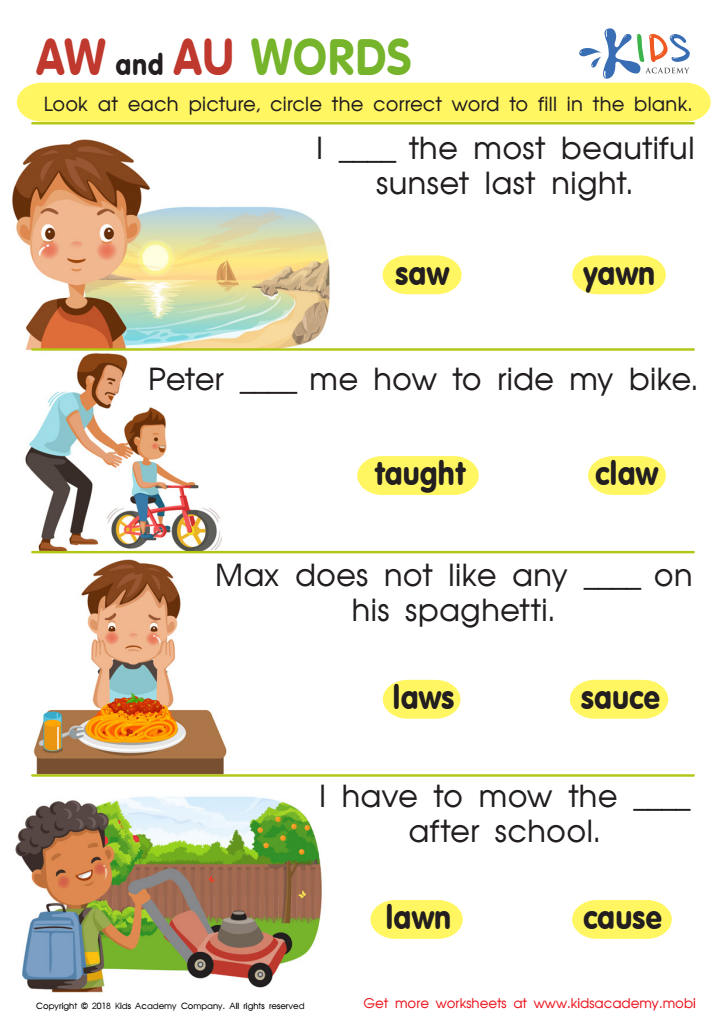
Reading: AW and AU Words Worksheet
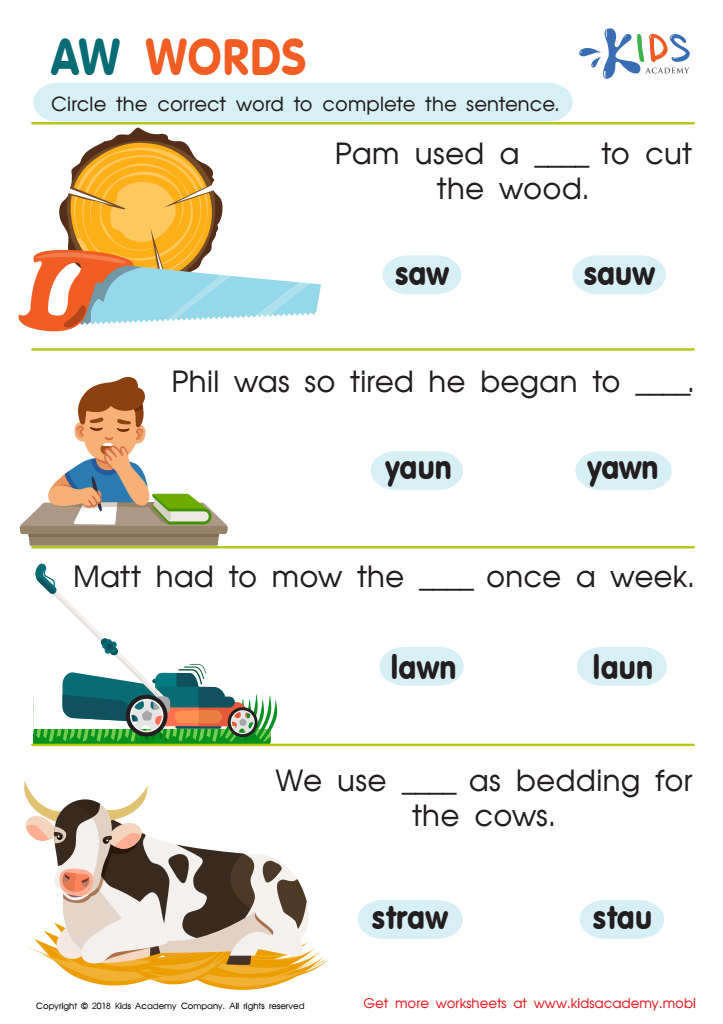
Reading: AW Words Worksheet
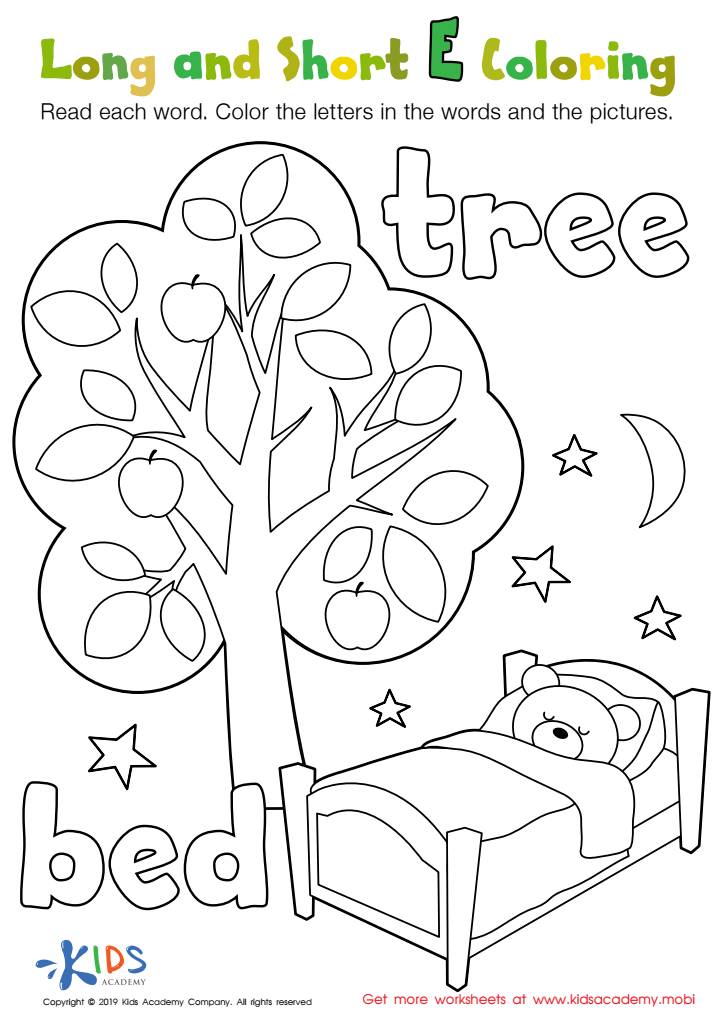
Long and Short E Worksheet
 Assign to My Students








Phonics skills are the building blocks of reading and are essential for 7-year-olds during their early education journey. By understanding the relationship between letters and sounds, children can decode words efficiently, leading to improved reading fluency and comprehension. At this developmental stage, youngsters are transitioning from recognizing simple words to reading more complex sentences. Strong phonics skills enable them to tackle new and challenging words with confidence.
For both parents and teachers, fostering these skills can significantly enhance a child's reading ability. Early mastery of phonics is linked to future academic success because proficient reading acts as a gateway to all other areas of learning. Children who are confident readers are more likely to enjoy reading, fostering a lifelong love of books and learning.
Moreover, solid phonics skills contribute to better writing abilities as children understand how to spell words correctly. By ensuring their children or students have robust phonics foundations, parents and teachers help prevent reading difficulties that could hinder academic progress. Phonics instruction should thus be interactive, engaging, and consistent, laying the groundwork for a literacy-rich future that extends beyond the classroom. Supporting young learners in this critical phase can set them up for a lifetime of thriving both academically and personally.








