Rhyming skills development Reading Worksheets for 7-Year-Olds
3 filtered results
-
From - To
Enhance your 7-year-old's reading abilities with our engaging Rhyming Skills Development Worksheets! Designed to make learning fun, these worksheets help young learners identify, create, and use rhymes effectively. Through colorful illustrations and interactive activities, children will strengthen their phonemic awareness and vocabulary while enjoying playful challenges. Our worksheets also encourage critical thinking and creativity, allowing kids to explore language in a dynamic way. Dive into a world of rhymes that supports literacy growth and boosts confidence in reading. Perfect for home or classroom use, these resources ensure a delightful learning experience for children as they master rhyming skills!
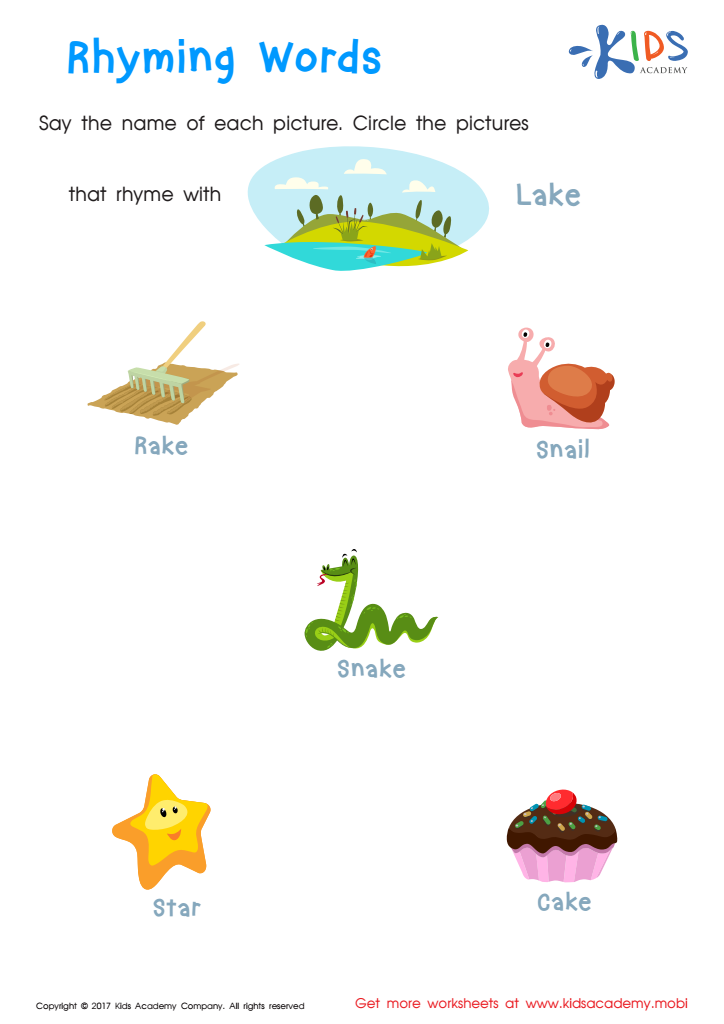
Rhyming Words Rhyming Worksheet
 Assign to My Students
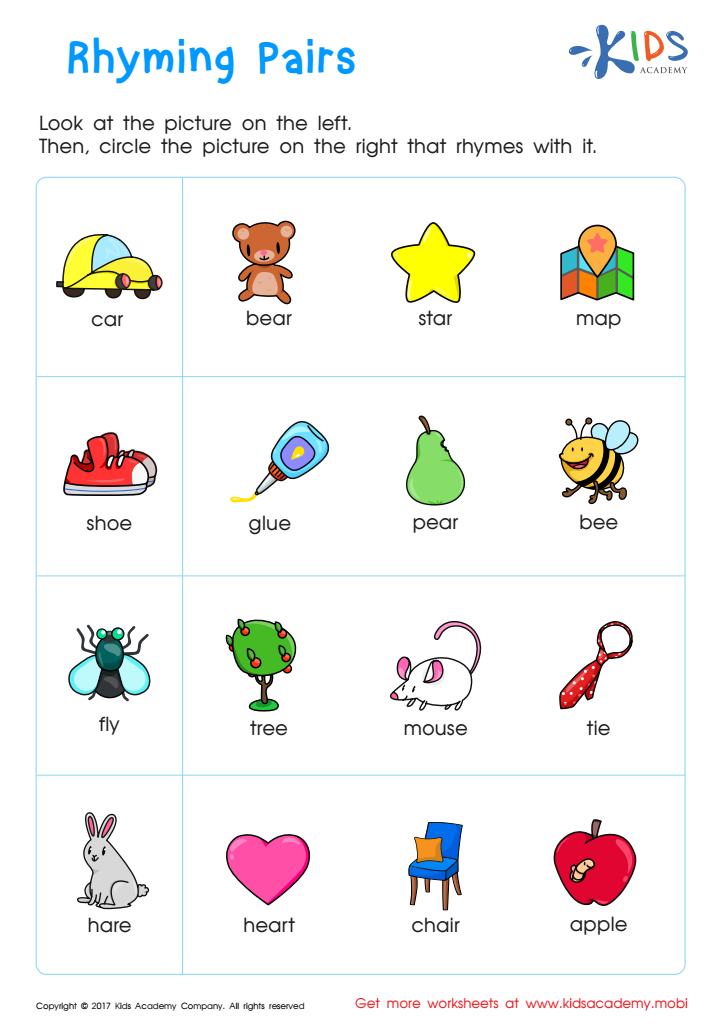
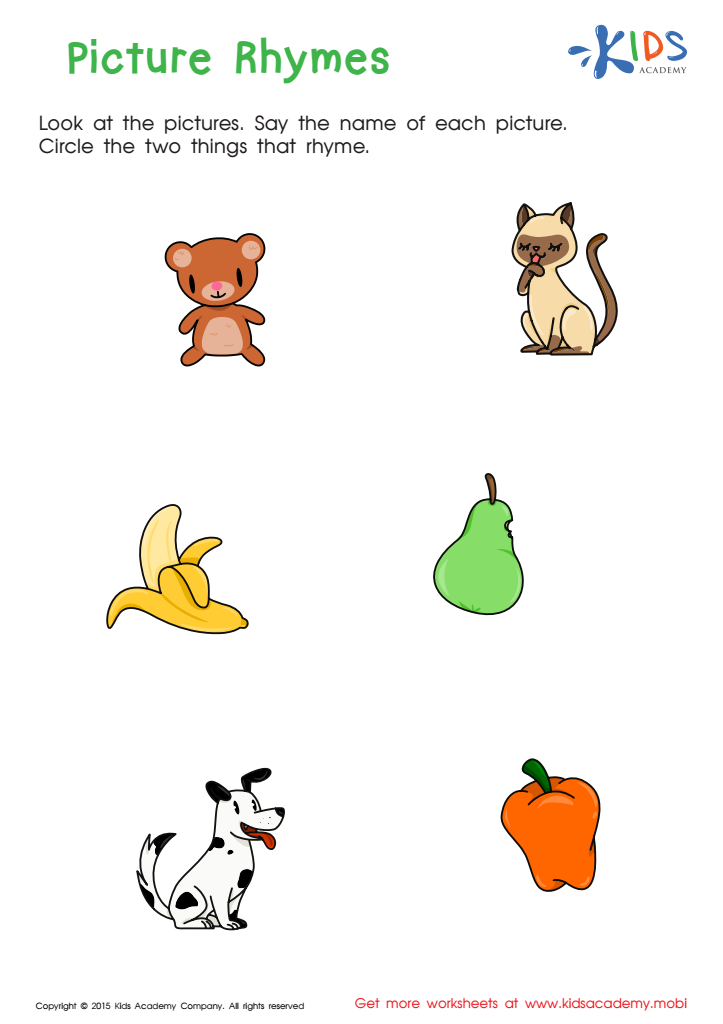
First Words: Picture Rhymes Worksheet





.jpg)


Rhyming skills are a crucial aspect of early literacy development for 7-year-olds. First and foremost, they enhance phonemic awareness, which is the ability to recognize and manipulate sounds in spoken words. This skill is foundational for learning how to read and write, as it assists children in decoding unfamiliar words. When kids can identify rhyming patterns, they become more adept at connecting sounds to letters, promoting better reading fluency.
Additionally, engaging with rhymes fosters vocabulary expansion. Through playful language and rhythmic patterns, children encounter new words and concepts in a memorable context, making it easier to incorporate them into their everyday language. This caters not only to their linguistic growth but also to their cognitive and social development, as rhymes can evoke joy and encouraging communication.
Furthermore, rhyming activities can strengthen critical thinking and comprehension skills. Children begin to make connections between words and meanings, developing a deeper understanding of narrative structures and themes in stories.
Ultimately, fostering rhyming skills not only supports reading readiness but also cultivates a lifelong love for language and literature, making it essential for both parents and teachers to prioritize in young learners' education.








