Sequencing Skills Reading Worksheets for 7-Year-Olds
6 filtered results
-
From - To
Discover our engaging Sequencing Skills Reading Worksheets designed specifically for 7-year-olds! These interactive resources help young learners develop essential skills in understanding the order of events in a story. By working through our thoughtfully crafted worksheets, children will enhance their reading comprehension, boost critical thinking, and improve their ability to retell narratives accurately. Parents and educators can utilize these worksheets for fun classroom activities or at-home practice, fostering a love for reading while building confidence in literacy skills. Perfect for varied learning styles, our worksheets cater to every child's unique needs, ensuring that everyone enjoys the journey of learning sequencing!
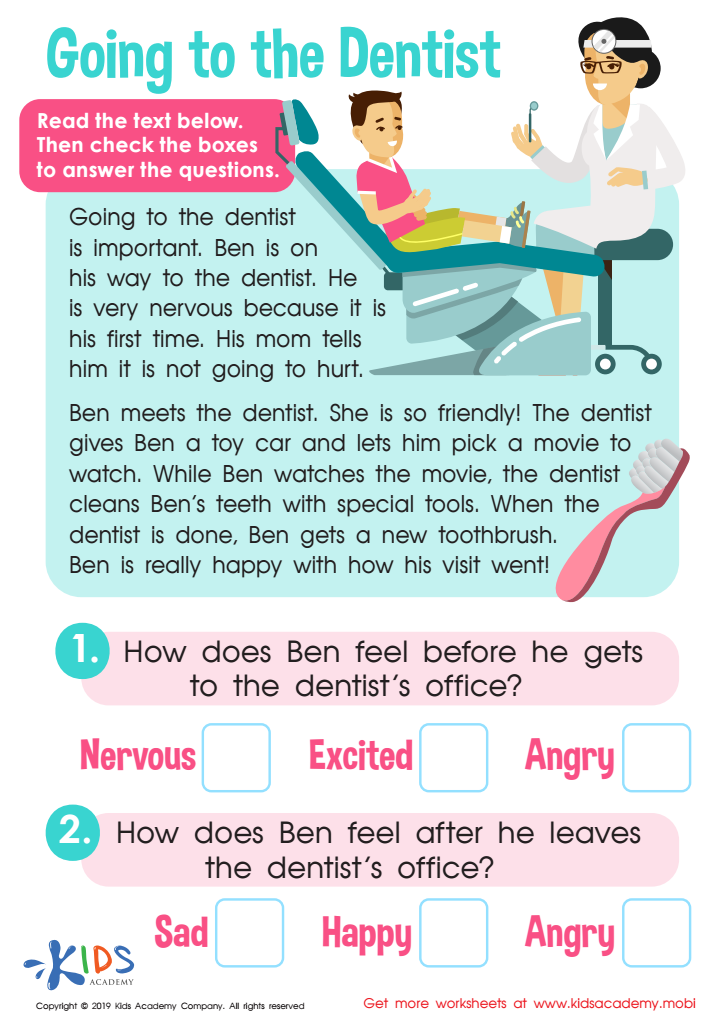
Going to the Dentist Worksheet
 Assign to My Students
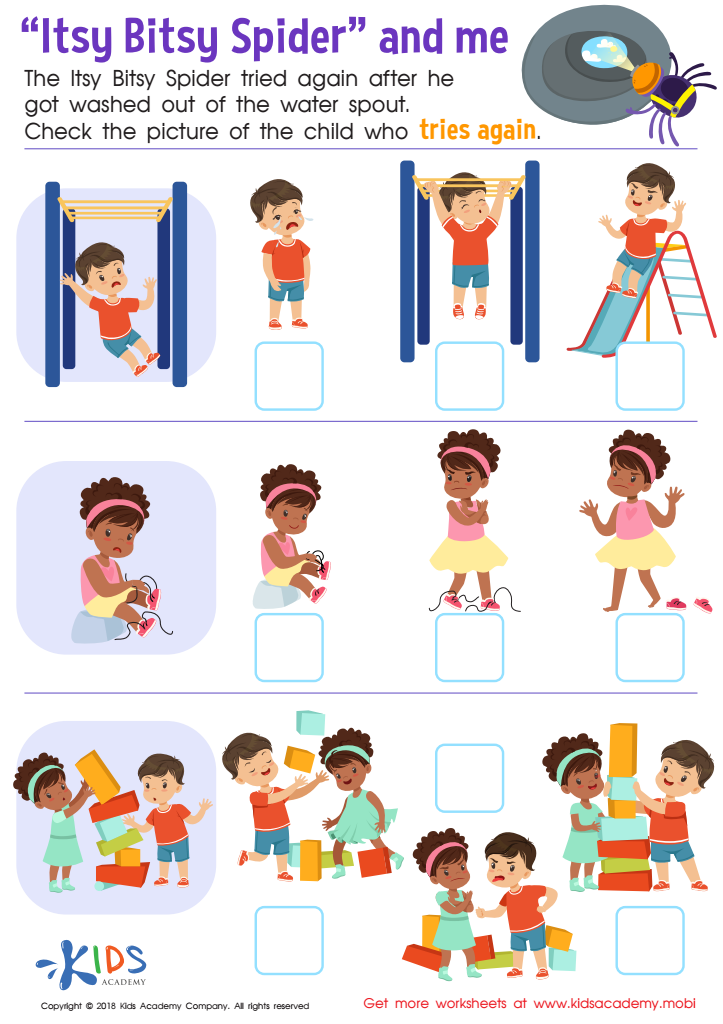
Itsy Bitsy Spider and Me Worksheet
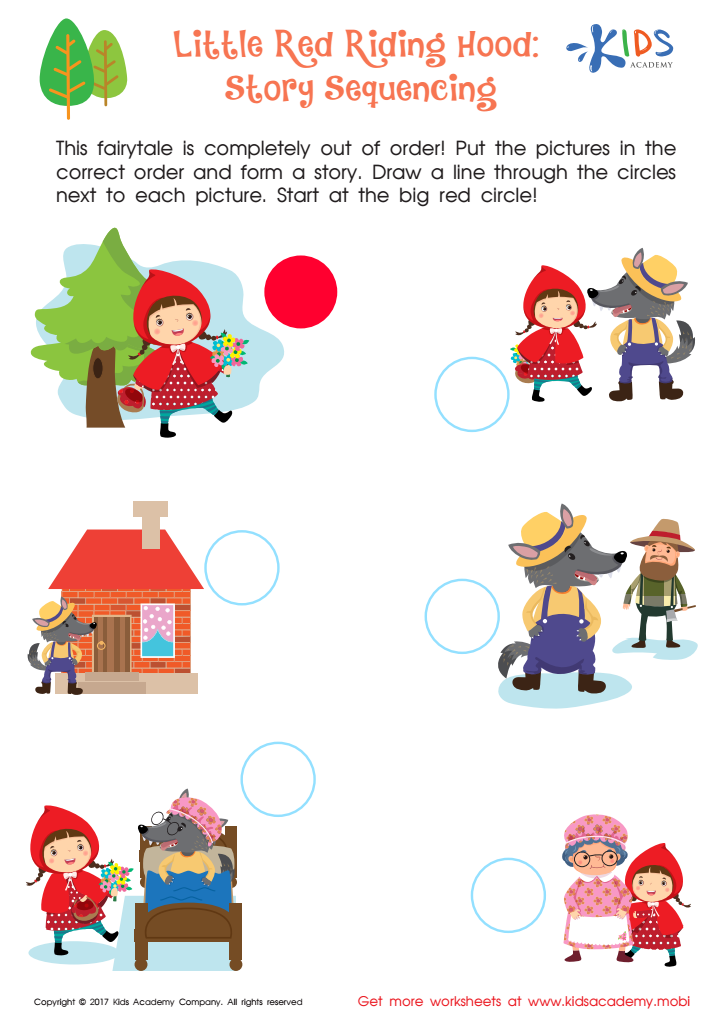
Story Sequencing Printable
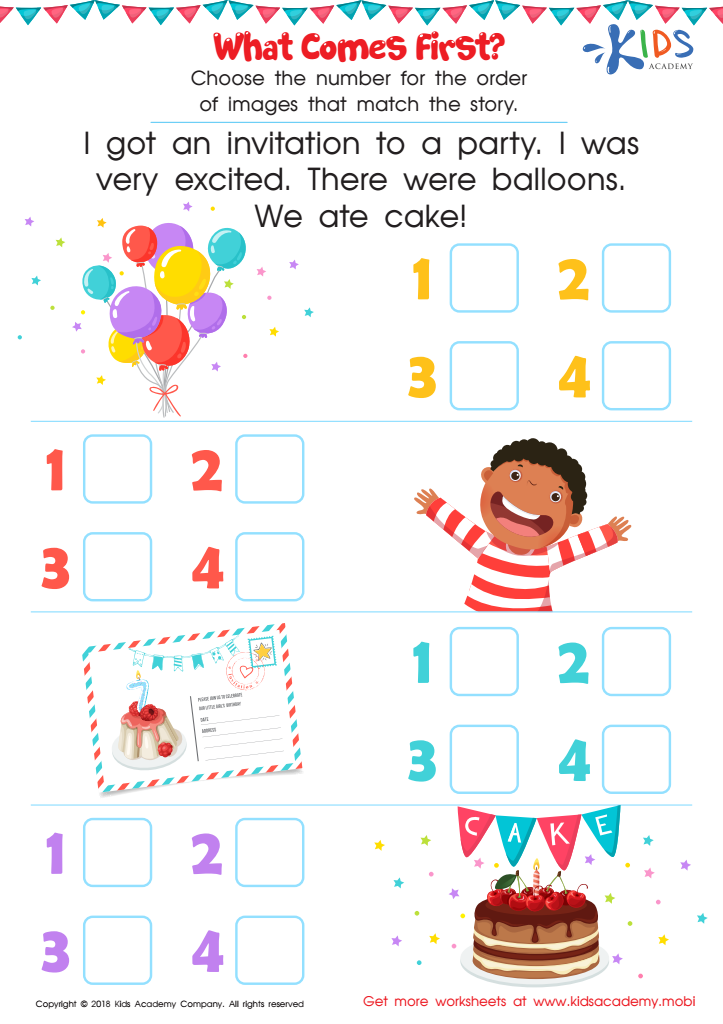
What Comes First Worksheet
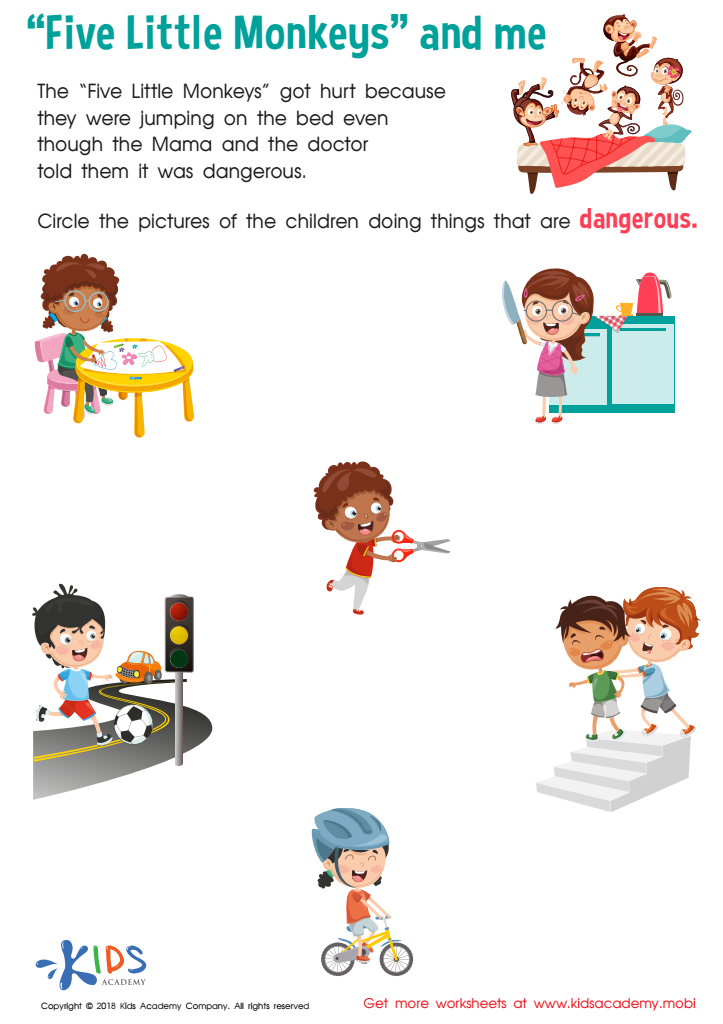
Five Little Monkeys and Me Worksheet







Sequencing skills are essential for 7-year-olds as they serve as the foundation for reading comprehension and overall academic success. At this age, children begin to explore more complex texts, moving beyond simple stories to those with multiple events and characters. When parents and teachers prioritize sequencing skills, they empower children to understand the order of events, recognize cause and effect, and identify key details, which are all critical for effective reading comprehension.
Harnessing sequencing skills also enhances a child's cognitive development. It encourages logical thinking, as kids learn to organize thoughts coherently, which aids in both reading and writing. By engaging in activities that promote sequencing—like retelling stories or using picture cards to arrange events—children improve their ability to summarize narratives and predict outcomes, fostering a deeper understanding of the material.
Moreover, strong sequencing skills translate beyond literacy; they are invaluable in other subjects and in life. Children learn to follow instructions, solve problems, and make connections amongst various ideas. By nurturing these skills through reading and related activities, parents and teachers play a crucial role in laying the groundwork for lifelong learning and critical thinking. Investing time in sequencing ensures that children become more proficient and confident readers.








